
Three Gorges Dam
World's largest power station by installed capacity (22,500 MW).

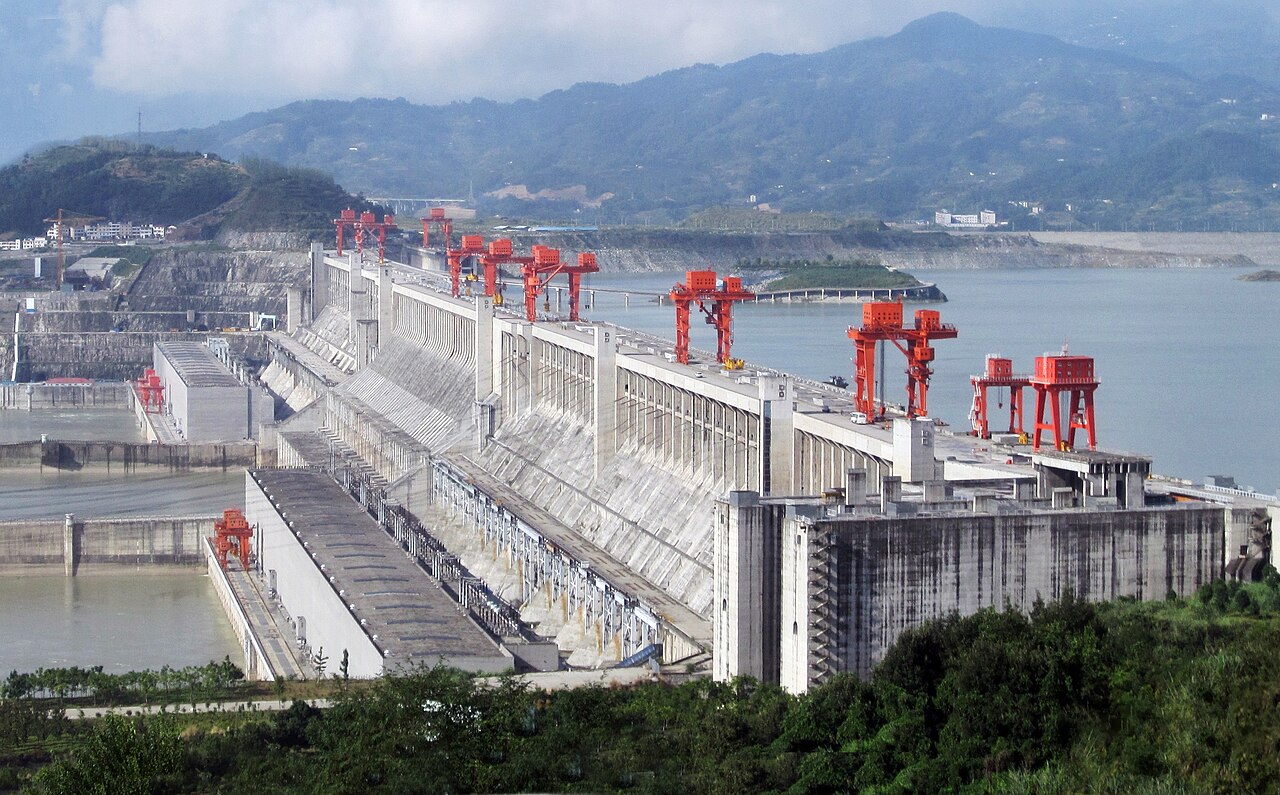
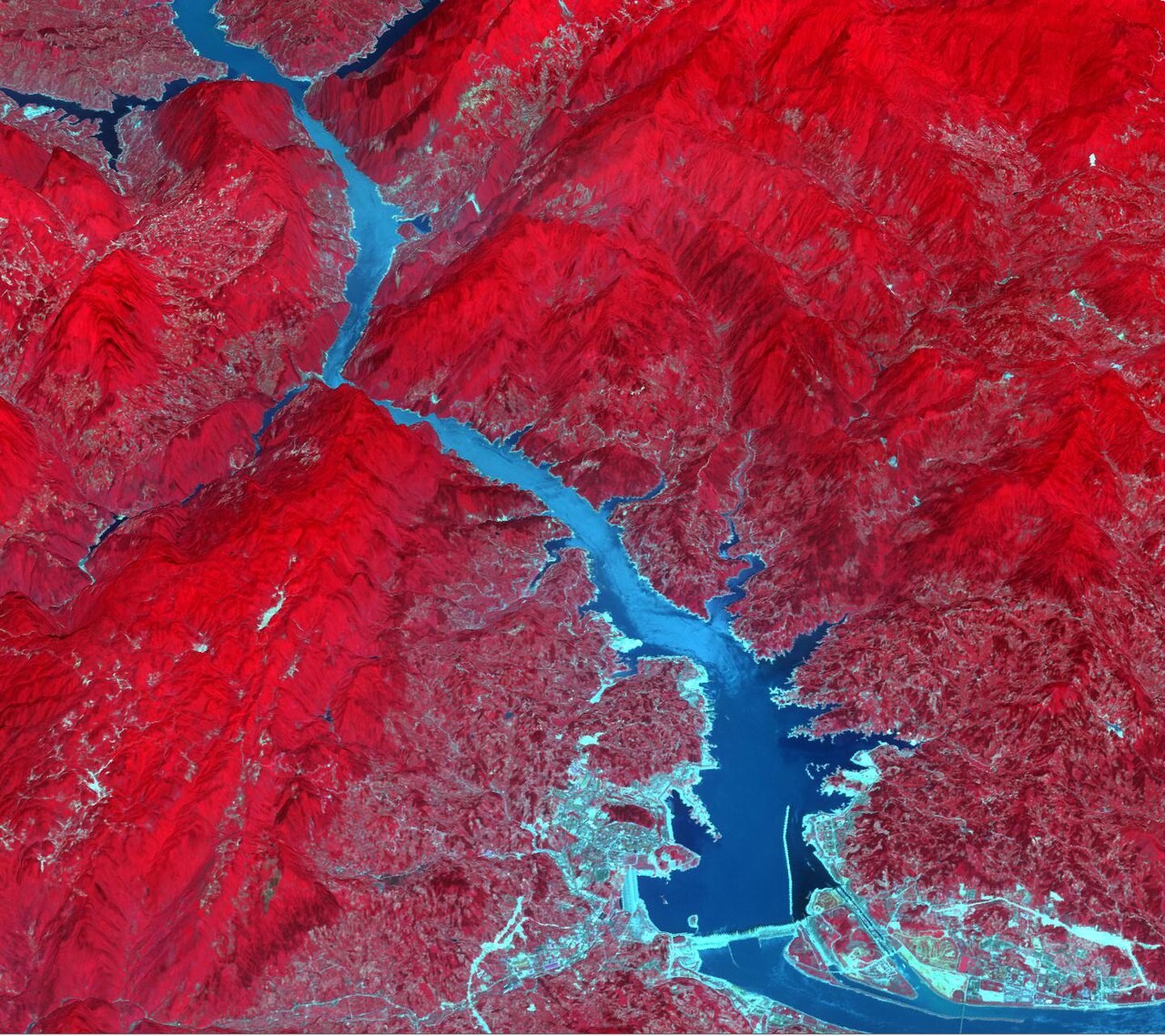
NASA/METI/AIST/Japan Space Systems, and U.S./Japan ASTER Science Team · Public domain
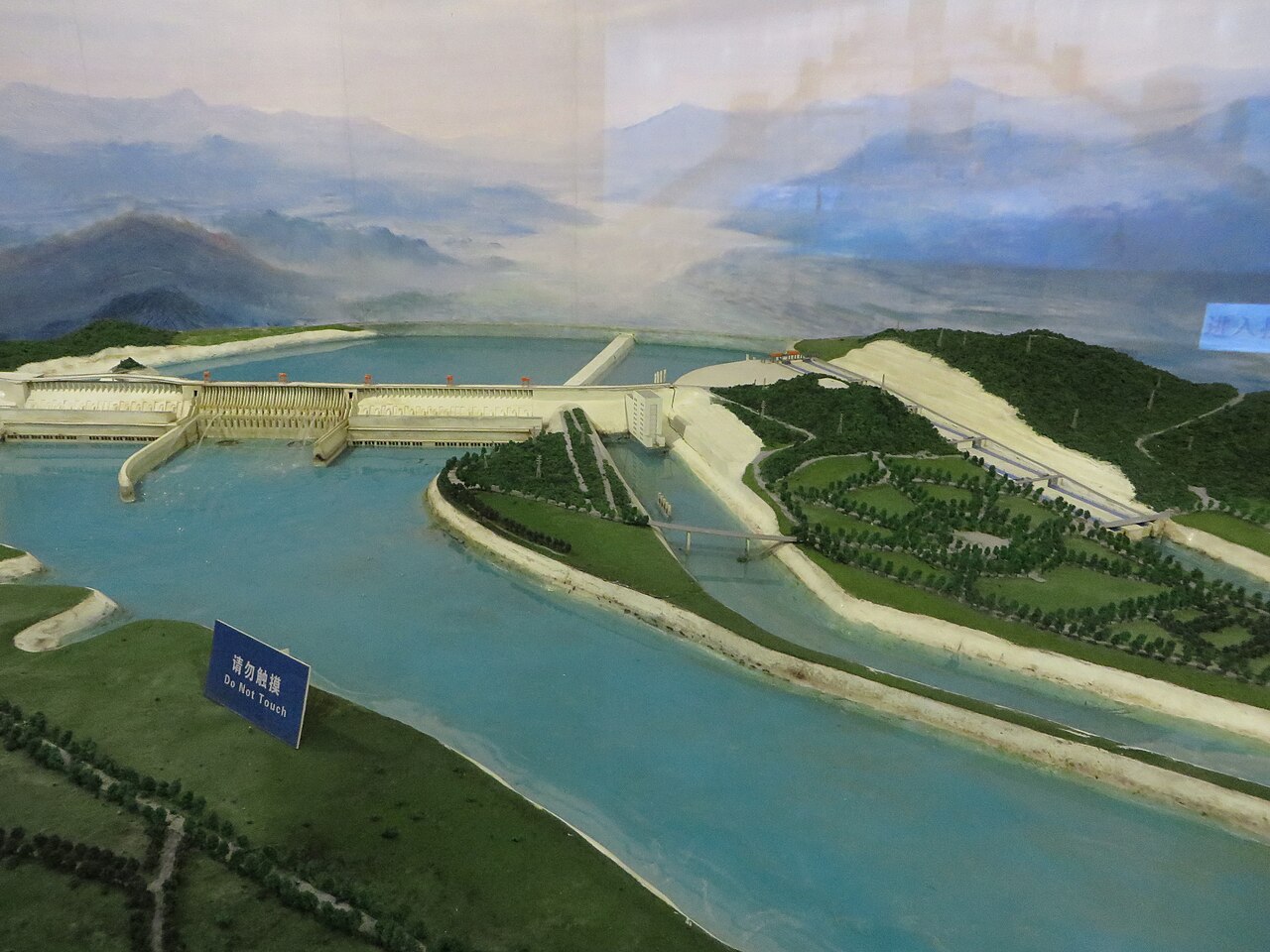
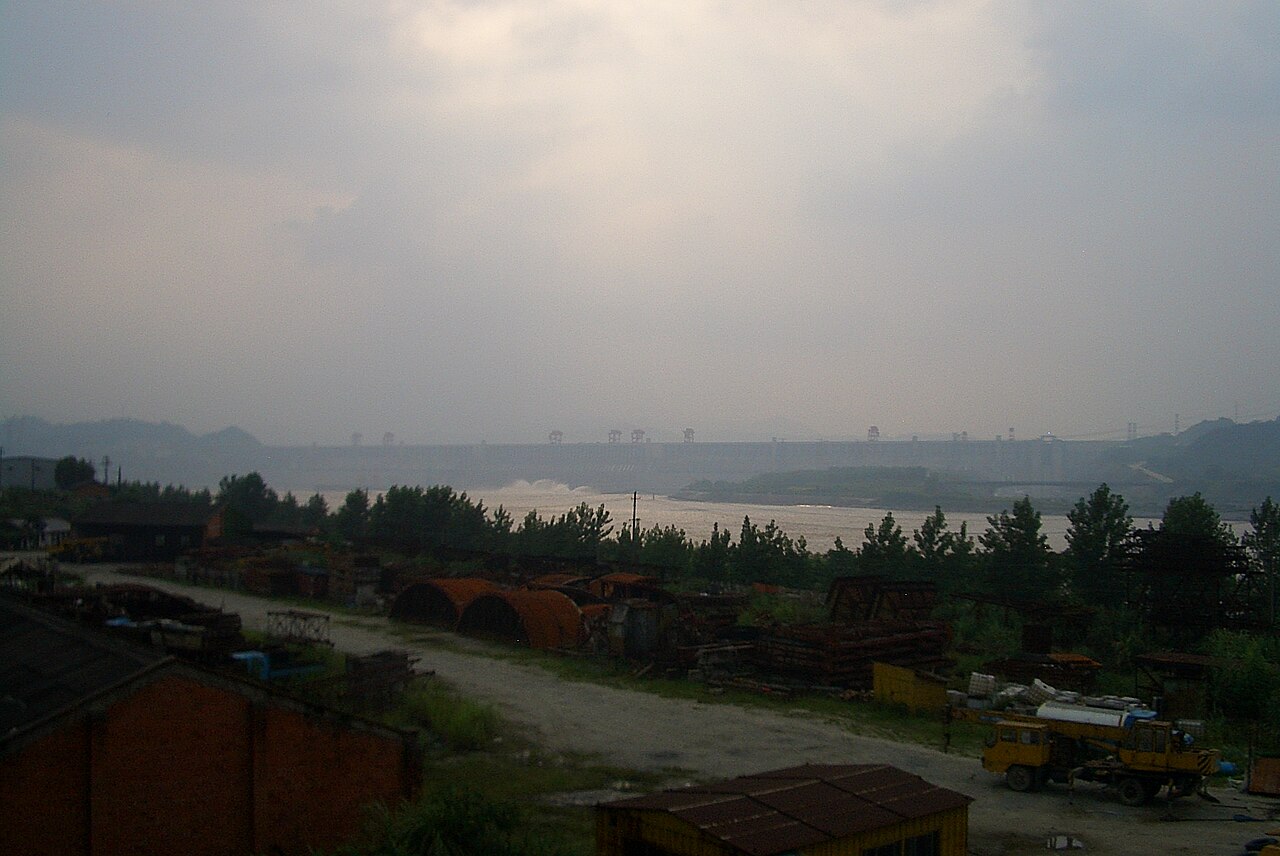
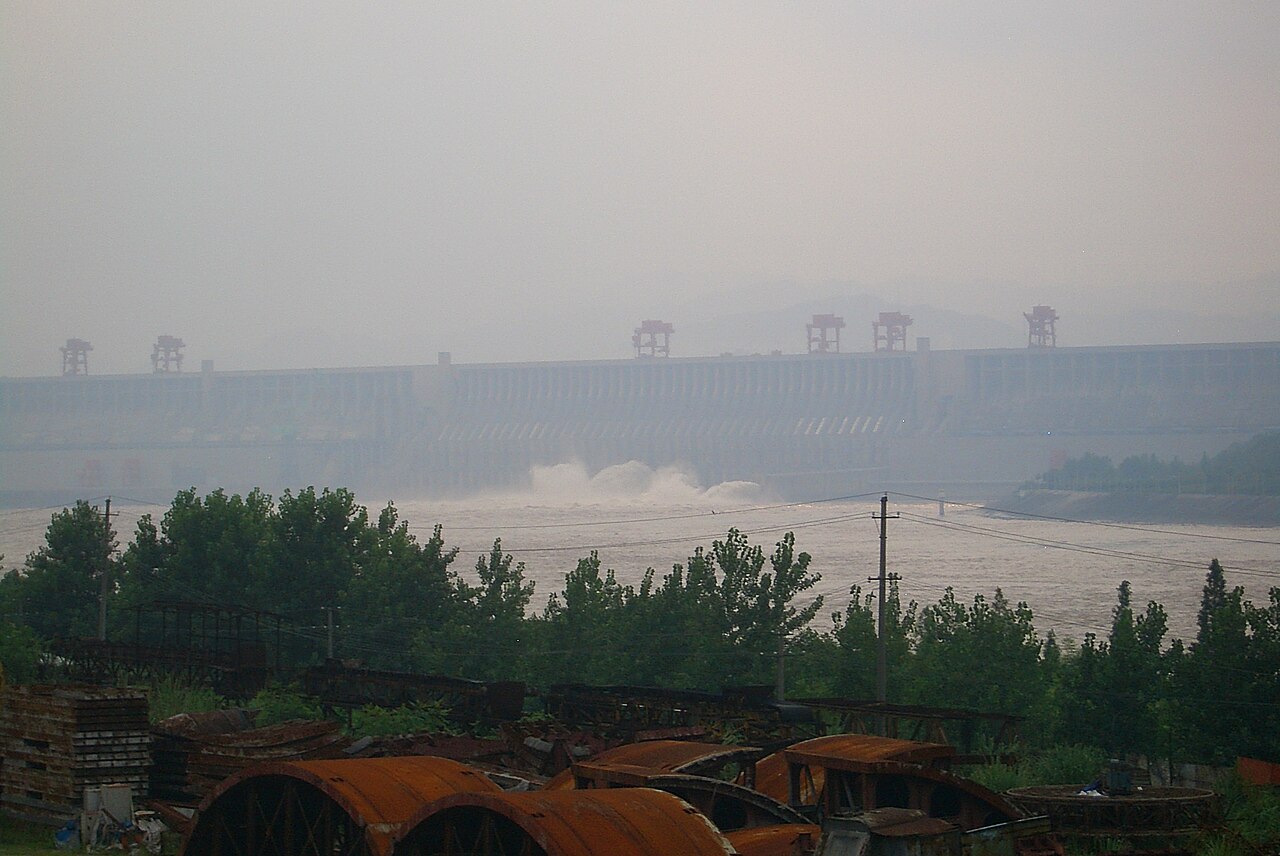
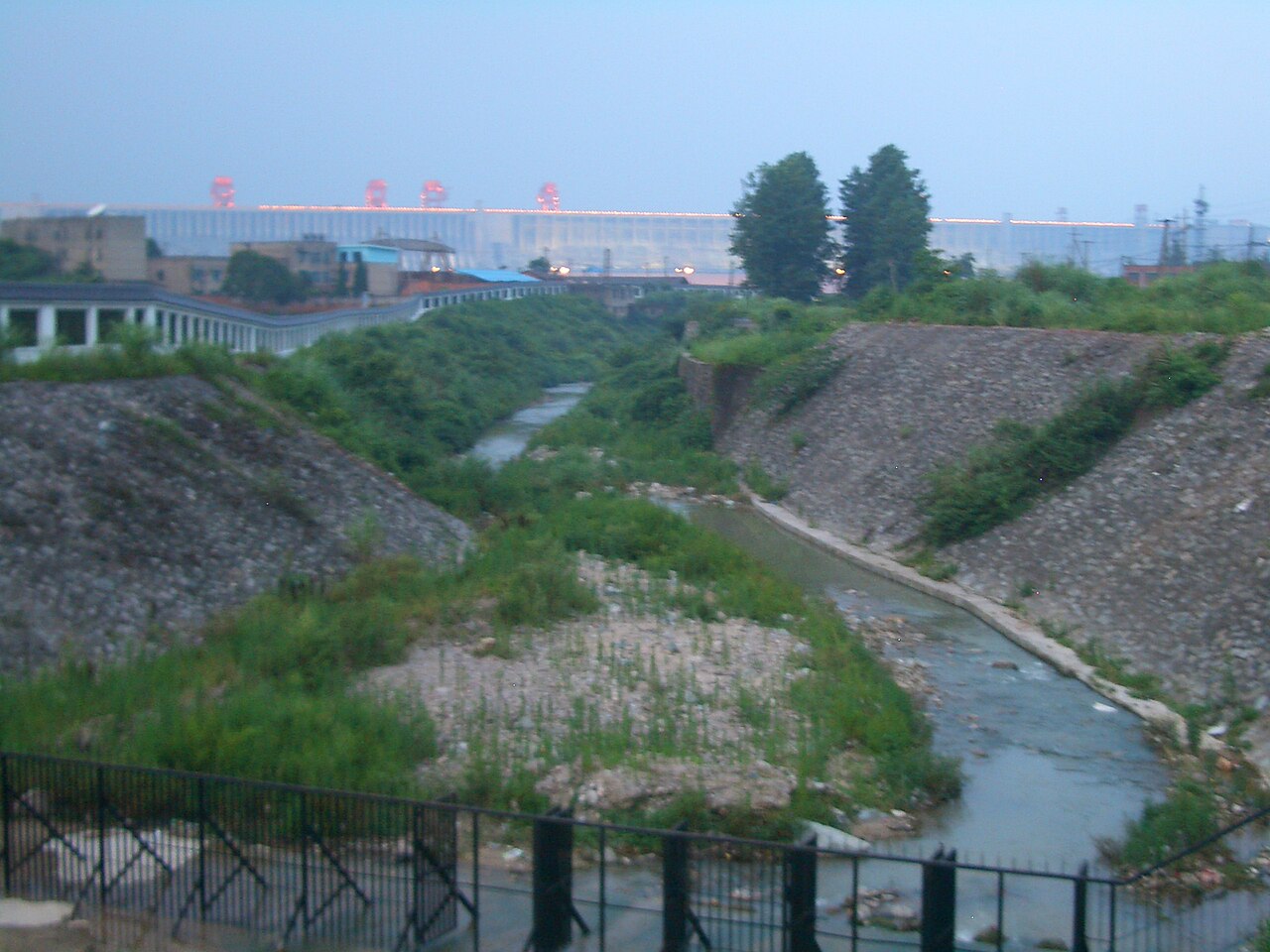
The Three Gorges Dam, whose official name is the Yangtze River Three Gorges Water Conservancy Project, is a concrete-and-steel gravity dam built across the Yangtze River near Sandouping in Yiling District, Yichang, Hubei province, central China, just downstream of the Three Gorges. It holds the title of the world’s largest power station by installed capacity, at 22,500 MW, and typically produces between 75 and 115 TWh of electricity each year, depending on rainfall in the river basin. In 2020, after heavy monsoons, it generated nearly 112 TWh, breaking the previous annual record of 103 TWh set by the Itaipu Dam in 2016. The dam’s main structure, 185 meters tall and 2,309 meters wide, was finished in 2006. The power plant reached full operation in 2012, when the last of its 32 main underground turbines came online. The final major component, a ship lift, was completed in 2015. Each of those 32 turbines, cutting-edge when installed, produces 700 MW. Together with two 50 MW generators that power the plant itself, the dam can generate about 22,500 MW—far exceeding the next-largest hydroelectric plant, the 16,000 MW Baihetan Dam, also in China.
The dam improves shipping on the Yangtze River and helps control floods, protecting millions of people on the Yangtze Plain from severe flooding. Its hydroelectric output has also supported China’s economic growth. For these reasons, the Chinese government views the project as a source of national pride and a major social and economic achievement. However, it remains controversial both within China and abroad. Estimates of the number of people displaced range from 1.13 million to 1.4 million. Construction flooded ancient and culturally important sites, and the dam’s operation has caused ecological changes, including a higher risk of landslides.
The idea for a large dam on the Yangtze dates back to Sun Yat-sen, who described a 22 GW dam downstream of the Three Gorges in his 1919 work *The International Development of China*. In 1932, Chiang Kai-shek’s Nationalist government began preliminary planning. During the Second Sino-Japanese War in 1939, Japanese forces occupied Yichang and surveyed the area. In 1944, John L. Savage, the head design engineer of the U.S. Bureau of Reclamation, surveyed the site and proposed a “Yangtze River Project.” Fifty-four Chinese engineers then trained in the U.S. The original plan included a unique ship-moving method: vessels would enter locks at the dam’s upper and lower ends, and cranes would lift them between locks, moving groups together for efficiency. It is unclear whether this design was chosen to save water or because engineers thought the height difference between the river above and below the dam was too great for other methods. No construction occurred due to the Nationalists’ declining position in the Chinese Civil War.
After the 1949 Communist Revolution, Mao Zedong supported the project but first started the nearby Gezhouba Dam. Economic troubles, including the Great Leap Forward and the Cultural Revolution, slowed progress. Following the 1954 Yangtze River floods, Mao wrote the poem “Swimming” in 1956, expressing his fascination with a dam on the river. In 1958, after the Hundred Flowers Campaign, some engineers who opposed the project were imprisoned. During the early Reform and Opening Up period, the Communist Party revived dam plans, proposing construction in 1986 and stressing the need for hydroelectric power. The Chinese People’s Political Consultative Conference became a center of opposition, convening expert panels that recommended delaying the project. The National People’s Congress approved the dam in 1992: of 2,633 delegates, 1,767 voted in favor, 177 against, 664 abstained, and 25 did not vote—an unusually low approval rate of 67.75%. Construction began on December 14, 1994. The dam was expected to be fully operational by 2009, but additional projects, including an underground power plant with six extra generators, delayed full operation until 2012. The ship lift was finished in 2015. The reservoir’s water level rose to 172.5 meters above sea level by 2008 and reached its designed maximum of 175 meters by 2010.
Made of concrete and steel, the dam is 2,335 meters long and 185 meters above sea level at its top. The project used 27.2 million cubic meters of concrete (mostly for the dam wall), 463,000 tonnes of steel (enough for 63 Eiffel Towers), and moved about 102.6 million cubic meters of earth. The concrete wall itself is 181 meters high above the rock foundation. At its maximum water level of 175 meters above sea level—110 meters higher than the river downstream—the reservoir averages about 660 kilometers in length and 1.12 kilometers in width. It holds 39.3 cubic kilometers of water and covers a total surface area of 1,045 square kilometers. The reservoir flooded 632 square kilometers of land, compared to the 1,350 square kilometers flooded by the Itaipu Dam.
The Chinese government estimated the project would cost 180 billion yuan (US$22.5 billion). By the end of 2008, spending had reached 148.365 billion yuan, with 64.613 billion yuan on construction, 68.557 billion yuan on relocating residents, and 15.195 billion yuan on financing.
- field
- Hydroelectric dam
- nationality
- China
- known_for
- World's largest power station by installed capacity (22,500 MW)
- height
- 185 meters
- width
- 2,309 meters
- installed_capacity
- 22,500 MW
- annual_generation
- 95±20 TWh (average)
Verified Timeline
Lore & Background
Sun Yat-sen envisioned a large dam across the Yangtze River in *The International Development of China* (1919), writing that a dam capable of generating 30 million horsepower (22 GW) was possible downstream of the Three Gorges. In 1932, the Nationalist government, led by Chiang Kai-shek, began preliminary work on plans in the Three Gorges. In 1939, during the Second Sino-Japanese War, Japanese military forces occupied Yichang and surveyed the area. In 1944, the United States Bureau of Reclamation's head design engineer, John L. Savage, surveyed the area and drew up a dam proposal for a 'Yangtze River Project'. Some 54 Chinese engineers went to the US for training. No construction work was performed because of the Nationalists' worsening situation in the Chinese Civil War. After the 1949 Communist Revolution, Mao Zedong supported the project, but began the Gezhouba Dam project nearby first, and economic problems including the Great Leap Forward and the Cultural Revolution slowed progress. After the 1954 Yangtze River Floods, in 1956, Mao wrote 'Swimming', a poem about his fascination with a dam on the Yangtze River. In 1958, after the Hundred Flowers Campaign, some engineers who spoke out against the project were imprisoned. During China's emphasis on the Four Modernizations during its early period of Reform and Opening Up, the Communist Party revived plans for the dam and proposed to start construction in 1986. The Chinese People's Political Consultative Conference became a center of opposition, convening panels of experts who recommended delaying the project. The National People's Congress approved the dam in 1992: of 2,633 delegates, 1,767 voted in favour, 177 voted against, 664 abstained, and 25 members did not vote, giving the legislation an unusually low 67.75% approval rate. Construction started on December 14, 1994. The dam's body, 185 meters high and 2,309 meters wide, was completed in 2006. The power plant became fully operational in 2012, when the last of the 32 main water turbines in the underground plant began production. The last major component of the project, the ship lift, was completed in 2015.
Reader's Guide
The Three Gorges Dam is a hydroelectric gravity dam that spans the Yangtze River near Sandouping in Yiling District, Yichang, Hubei province. It is the world's largest power station by installed capacity (22,500 MW). The dam has 34 generators: 32 main generators, each with a capacity of 700 MW, and two plant power generators, each with capacity of 50 MW. Among the 32 main generators, 14 are installed on the dam's north side, 12 on the south side, and the remaining six in the underground power plant in the mountain south of the dam. Each of the 32 turbines, considered state-of-the-art at the time of their installation, can generate 700 MW. Combined with the two 50 MW generators, the dam can generate some 22,500 MW—far more than the next-biggest hydroelectric plant, the 16,000 MW Baihetan Dam, also in China. The dam improves the Yangtze River's shipping capacity and provides flood control, helping to protect millions of people from severe flooding on the Yangtze Plain. Estimates of the number of people displaced by the dam's construction range from 1.13 million to around 1.4 million. Its construction has also inundated ancient and culturally significant sites. In operation, the dam has caused some ecological changes, including an increased risk of landslides. The Chinese government considers the project a source of national pride and a major social and economic success. The entire cost of the Three Gorges Dam was recovered by December 20, 2013.
Did You Know?
- After the monsoons of 2020, the dam produced nearly 112 TWh in a year, breaking the record of 103 TWh set by the Itaipu Dam in 2016.
- The dam's 32 main generators each weigh about 6,000 tonnes and are designed to produce more than 700 MW of power each.
- The project used 27.2 million m³ of concrete and 463,000 tonnes of steel—enough to build 63 Eiffel Towers.
- The dam raised the water level in the reservoir to 172.5 m above sea level by 2008 and to the designed maximum level of 175 m by 2010.
- The entire cost of the Three Gorges Dam was recovered by December 20, 2013.
Colossal Scale and Engineering Ambition
The Three Gorges Dam stands as one of the most massive concrete structures ever assembled by human hands. Rising 185 metres above the riverbed and stretching more than 2,300 metres across the Yangtze near Sandouping in Hubei province, the gravity dam demanded an astonishing quantity of materials: roughly 27.2 million cubic metres of concrete for the wall alone, 463,000 tonnes of structural steel—enough, by comparison, to erect sixty-three Eiffel Towers—and the movement of over 102 million cubic metres of earth. Behind the wall, the reservoir stretches an average of 660 kilometres upstream, averaging 1.12 kilometres in width, and holds approximately 39.3 cubic kilometres of water across a surface exceeding 1,000 square kilometres. The dam's main body was finished in 2006, yet the project's full scope extended well beyond that date: the underground power station's final turbine entered service in 2012, and the ship lift, the last major component, was not completed until 2015.
Unmatched Power Output and Economic Payoff
With a total installed capacity of 22,500 megawatts, the Three Gorges power station holds the title of the world's largest hydroelectric facility. Its thirty-two main turbines, each rated at 700 megawatts, were state-of-the-art when installed, and two additional 50-megawatt generators supply the plant's own electrical needs. In a typical year the dam yields roughly 95 terawatt-hours of electricity, though output swings with seasonal rainfall. After the heavy monsoon season of 2020, annual generation climbed to nearly 112 terawatt-hours, surpassing the 103-terawatt-hour record that Itaipu Dam had set in 2016. The facility dwarfs the next-largest hydro plant, China's own Baihetan Dam at 16,000 megawatts. Economically, the project was projected to cost around 180 billion yuan, and by 2008 actual spending had already reached 148.4 billion, with nearly 69 billion allocated to relocating residents. Officials anticipated full cost recovery once cumulative generation hit 1,000 terawatt-hours; in practice, the entire investment was recouped by December 2013, well ahead of the ten-year timeline initially projected.
A Century of Vision and Political Turmoil
The dream of taming the Yangtze at the Three Gorges stretches back to 1919, when Sun Yat-sen sketched a vision of a dam capable of producing thirty million horsepower in his book The International Development of China. Preliminary surveys followed under the Nationalist government in the early 1930s, and in 1944 a team led by American engineer John L. Savage produced a detailed proposal that even included a crane-based system for ferrying ships between locks. Fifty-four Chinese engineers were sent to the United States for training, yet the Chinese Civil War halted all construction. After 1949, Mao Zedong endorsed the idea, yet the Great Leap Forward and the Cultural Revolution stalled momentum; in 1958, engineers who voiced opposition were imprisoned. Plans were revived during the Four Modernizations era, but the Political Consultative Conference mounted sustained resistance. The National People's Congress finally gave the green light in 1992 with a notably narrow 67.75 percent approval—664 of 2,633 delegates abstained. Ground was broken on 14 December 1994, and the reservoir reached its full 175-metre design level by 2010.
Displacement, Ecology, and Enduring Controversy
For every megawatt the dam produces, a human and environmental price has been paid. Estimates of the people displaced by the reservoir's flooding range from 1.13 million to roughly 1.4 million, and the inundation swallowed 632 square kilometres of land, including ancient settlements and culturally significant heritage sites. Ecologists have documented shifts in the river's ecosystem, among them a heightened risk of landslides along the steep reservoir banks. Domestically, the project has been a flashpoint: the unusually large block of abstentions in the 1992 parliamentary vote, the earlier imprisonment of dissenting engineers, and the Political Consultative Conference's expert panels all testify to deep-seated disagreement. Internationally, the dam draws criticism on both environmental and humanitarian grounds. Yet the Chinese government frames the achievement as a source of national pride, crediting it with protecting millions on the Yangtze Plain from catastrophic flooding, expanding the river's shipping capacity, and supplying clean electricity that has helped drive the country's rapid economic expansion.
Gallery
Frequently Asked Questions
Who is Three Gorges Dam?
Three Gorges Dam is a hydroelectric gravity dam built across the Yangtze River near Sandouping in Yichang, Hubei province, China. It stands 185 meters tall and stretches 2,309 meters wide, holding the record as the world's largest power station by installed capacity at 22,500 MW.
What are Three Gorges Dam's powers/role?
The dam produces an average of roughly 95 TWh of electricity each year, expands the Yangtze's shipping capacity, and acts as a major flood-control barrier for downstream regions. Together, these functions make it a multi-purpose infrastructure asset for central China.
How does Three Gorges Dam's story end?
Because it is a functioning piece of infrastructure rather than a bounded narrative, the dam has no definitive 'ending'; it continues generating power and managing water flow while its long-term environmental and social consequences remain an open question.
Why is Three Gorges Dam important?
It is a cornerstone of China's energy grid, supplying a substantial share of national electricity and underpinning decades of economic growth. Its sheer scale—22,500 MW of installed capacity—also makes it a landmark achievement in large-scale civil engineering.
What is Three Gorges Dam's biggest controversy?
The project flooded large stretches of river valley, displacing hundreds of thousands of residents and submerging cultural heritage sites. Critics argue that the human and ecological costs have never been fully offset by the dam's energy and flood-control benefits.
More in Construction And Engineering 1-18
Spotted an error? Know more?
This is a living reference — every entry is fact-audited, and reader corrections feed straight into our audit queue. Suggest an edit · See this site's audit record