Pledge of Allegiance
A recited pledge of loyalty to the U.S. flag and republic.

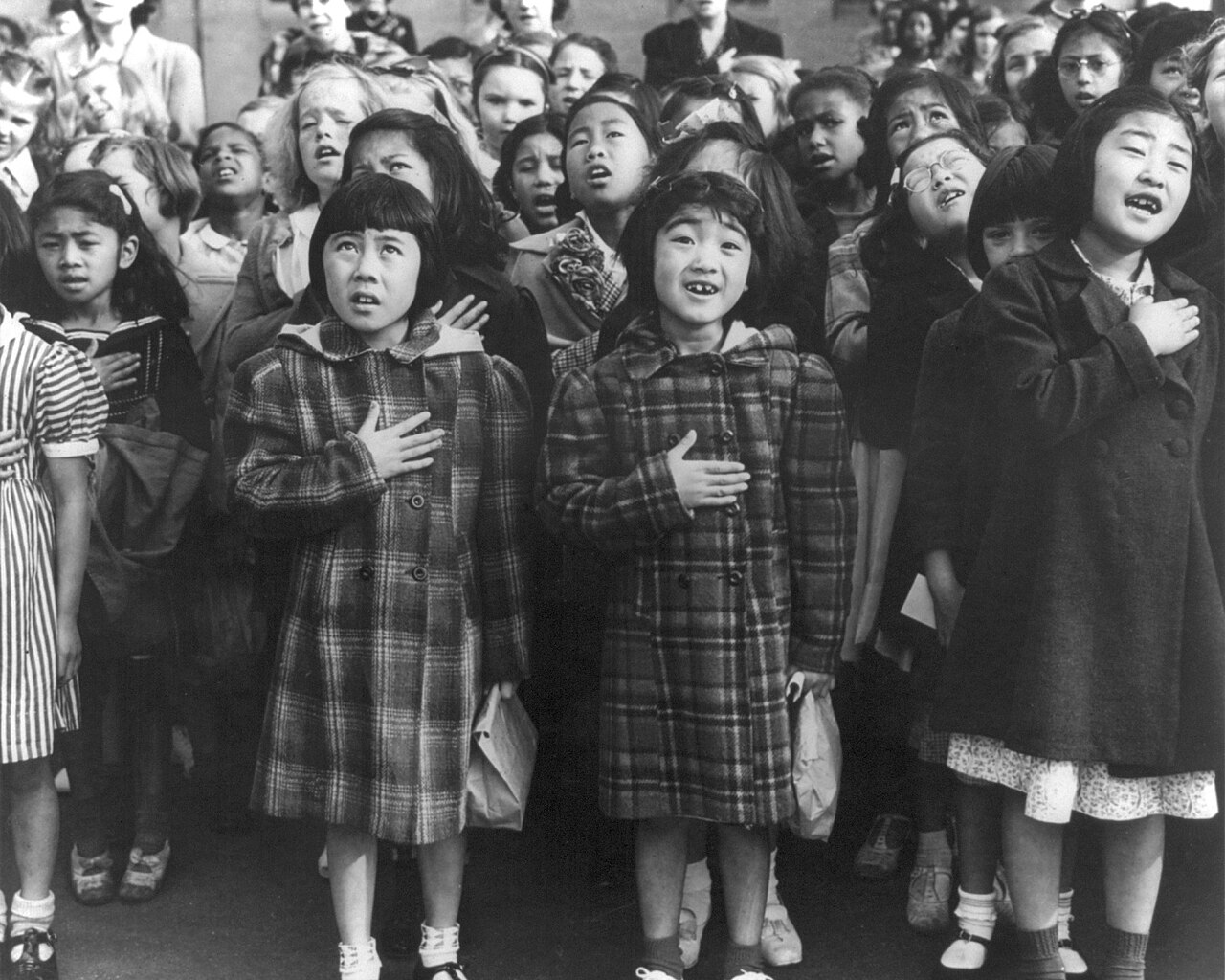
Dorothea Lange · Public domain
The Pledge of Allegiance is a recited promise of loyalty to the U.S. flag and the republic it represents. Its earliest version was written in 1885 by George Thatcher Balch, a Union Army officer who later authored a book on teaching patriotism in public schools. In 1892, Francis Bellamy revised Balch’s verse as part of a magazine promotion tied to the World’s Columbian Exposition, which marked the 400th anniversary of Columbus’s arrival in the Americas. Bellamy, circulation manager for *The Youth’s Companion*, helped persuade President Benjamin Harrison to establish Columbus Day as a national holiday and lobbied Congress for a school celebration. The magazine distributed leaflets with Bellamy’s pledge to schools, and on October 21, 1892, over 10,000 children recited it together.
Bellamy’s version—though his authorship is disputed—closely resembles the one Congress formally adopted in 1942. The official name “Pledge of Allegiance” was set in 1945. The last wording change came on Flag Day, June 14, 1954, when Congress added “under God” and President Dwight D. Eisenhower signed it into law.
Congressional sessions and many government and private meetings open with the pledge. All states except Nebraska, Hawaii, Vermont, and Wyoming require regular recitation in public schools, though many allow exemptions. California, for instance, mandates a daily “patriotic exercise” that the pledge satisfies, but it is not enforced. The Supreme Court ruled in *West Virginia State Board of Education v. Barnette* that students cannot be forced to recite the pledge or punished for refusing. Some states also require a state flag pledge after the U.S. pledge.
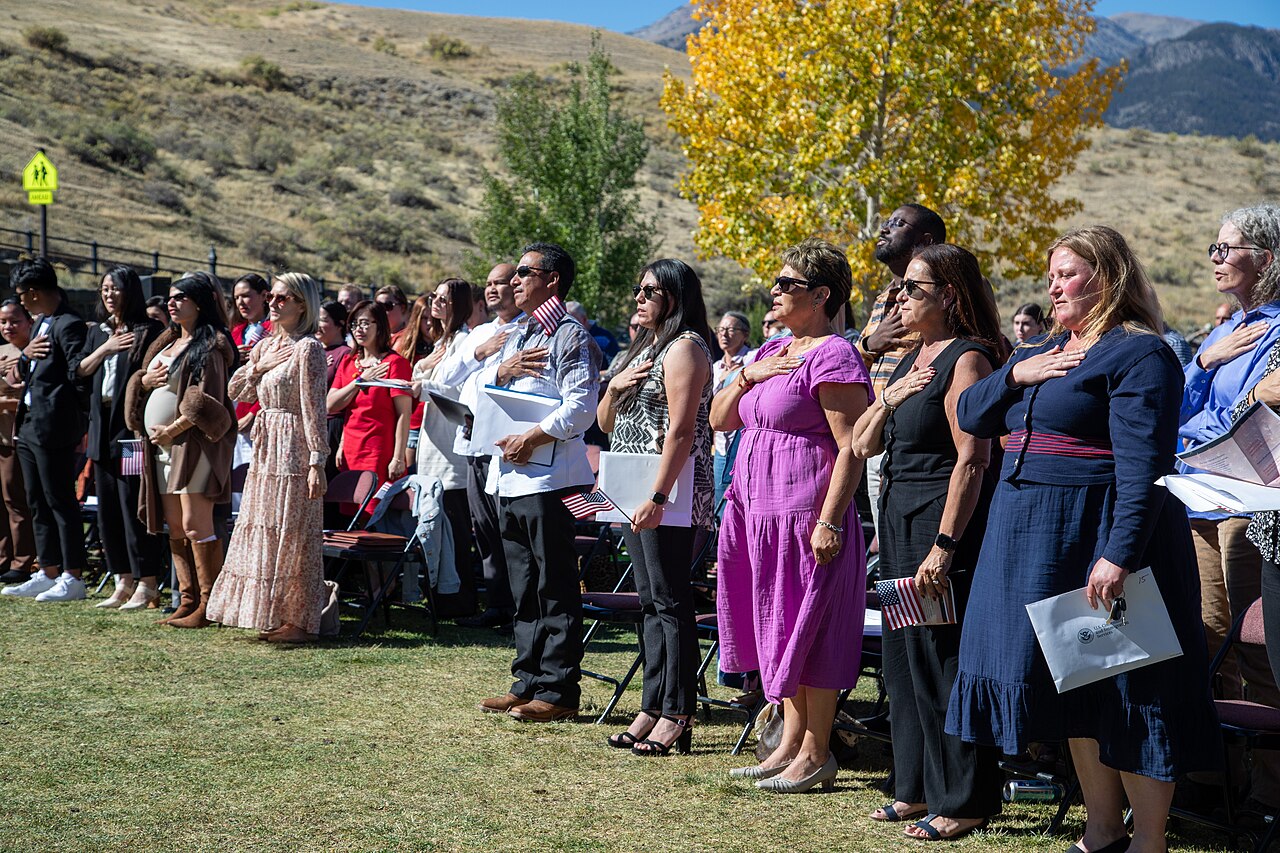
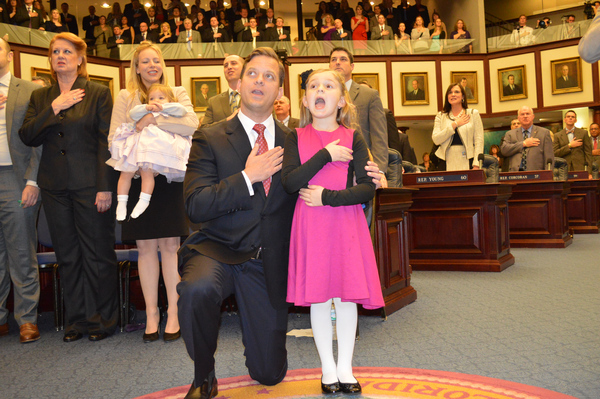
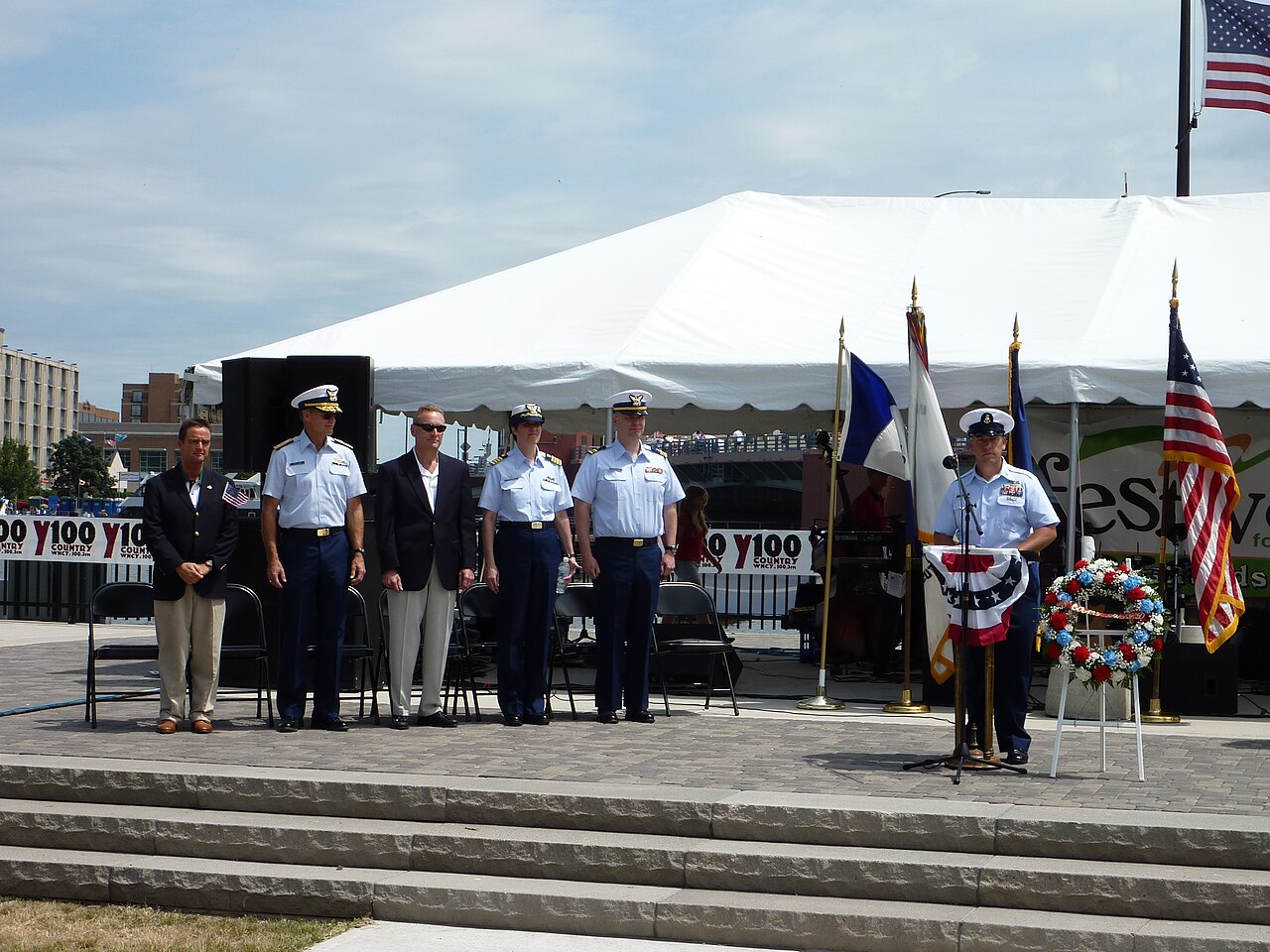
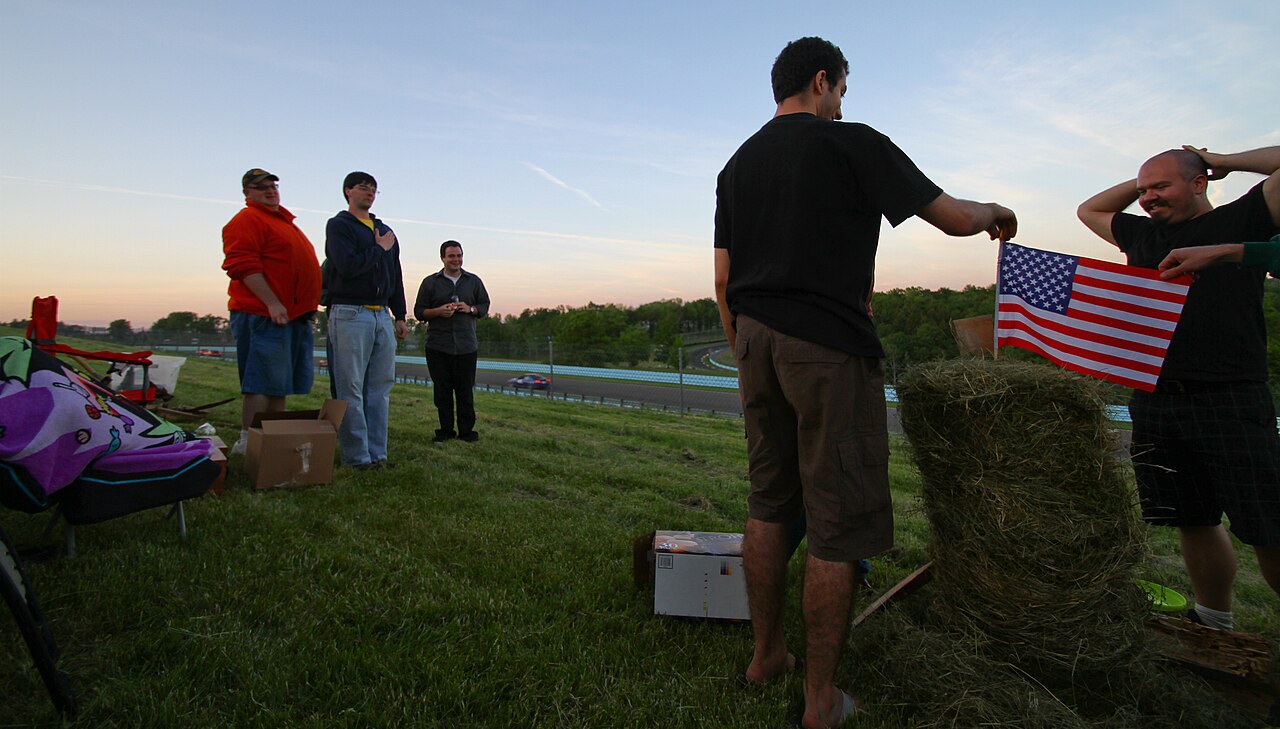
The current U.S. Flag Code specifies: “I pledge allegiance to the Flag of the United States of America, and to the Republic for which it stands, one Nation under God, indivisible, with liberty and justice for all.” It should be recited standing at attention, facing the flag, right hand over heart. Men not in uniform remove non-religious headwear with the right hand and hold it at the left shoulder, hand over heart. Those in uniform remain silent, face the flag, and give the military salute. Armed Forces members not in uniform and veterans may also salute.
Historians note surges in patriotic pledges after the Civil War, amid lingering political tensions, and in the 1880s, as immigration rose sharply.
Balch’s 1887 pledge, recited alongside Bellamy’s until the 1923 National Flag Conference, read: “We give our heads and hearts to God and our country; one country, one language, one flag!” Balch, a Civil War veteran and later auditor of the New York Board of Education, advocated teaching loyalty to children, especially immigrants. He wrote a book on the subject and worked with government and private groups to place flags in every classroom. His pledge was adopted by many schools, the Daughters of the American Revolution until the 1910s, and the Grand Army of the Republic until 1923, but is often overlooked in pledge history.
The pledge that evolved into today’s form was composed in August 1892 by Francis Bellamy for *The Youth’s Companion*. Bellamy, a Baptist minister, Christian socialist, and cousin of author Edward Bellamy, called Balch’s pledge “too juvenile and lacking in dignity.” His version first appeared in the magazine’s September 8, 1892, issue as part of the National Public-School Celebration of Columbus Day. The event was conceived by James B. Upham, a magazine marketer, to instill nationalism and encourage children to raise flags at schools. Author Margarette S. Miller noted that Upham’s campaign combined patriotic vision with commercial interest; he reportedly told his wife, “If I can instill into the minds of our American youth a love for their country… I shall not have lived in vain.” In 1957, a congressional report by Kenneth Keating confirmed that Bellamy, not Upham, wrote the September 8 article. Keating represented New York’s 38th district, which included Bellamy’s birthplace, Mount Morris.
Bellamy’s original pledge: “I pledge allegiance to my Flag and the Republic for which it stands, one nation, indivisible, with liberty and justice for all.” He designed it to be quick and direct.
- original_author
- Captain George Thatcher Balch
- revised_by
- Francis Bellamy
- field
- Patriotic ritual and education
Reader's Guide
The Pledge of Allegiance holds significant historical and cultural importance as a ritual of national unity and patriotism in the United States. The pledge is recited in many government meetings and public schools, though the Supreme Court ruled in West Virginia State Board of Education v. Barnette that students cannot be compelled to recite it. Its contested authorship and ongoing use in educational settings underscore its role as both a unifying symbol and a subject of legal and cultural debate. The pledge remains a fixture in American civic life, with all states except Nebraska, Hawaii, Vermont, and Wyoming requiring regular recitation in public schools, though exemptions exist.
Did You Know?
- The Supreme Court ruled in West Virginia State Board of Education v. Barnette that students cannot be compelled to recite the Pledge.
Origins and the Question of Authorship
The roots of the Pledge of Allegiance stretch back to the turbulent aftermath of the Civil War, when the nation grappled with lingering questions of political loyalty. Historians trace a surge in patriotic oaths to this period, compounded by the dramatic rise in immigration during the 1880s. Into this climate stepped Captain George T. Balch, a Union veteran who later served as auditor of the New York Board of Education. Five years later, Francis Bellamy—a Baptist minister, Christian socialist, and cousin of novelist Edward Bellamy—dismissed Balch's text as too juvenile and lacking in dignity, and crafted his own more formal alternative. The debate over who truly authored the words that would become the nation's most familiar recitation has persisted to this day.
The 1892 Columbus Day Campaign
The pledge most Americans recognize today was born out of a magazine marketing campaign tied to the 400th anniversary of Christopher Columbus's arrival in the Americas. The event was conceived by marketer James B. Upham, who saw both a patriotic mission and a commercial opportunity in getting children to raise flags above their schools. Bellamy and Upham secured the backing of the National Education Association and persuaded President Benjamin Harrison to issue a proclamation for a national public-school celebration of Columbus Day. Bellamy deliberately kept the text brief—designed to be delivered in roughly fifteen seconds—and, as a socialist, he briefly considered inserting the words equality and fraternity before ultimately settling on the shorter phrasing familiar today.
From Magazine Page to Federal Law
President Dwight D. Eisenhower signed the amendment into law, embedding a theological reference into what had previously been a purely civic declaration. That single addition remains the most recent change to the pledge's text. The coexistence of two competing pledges for decades illustrates how fluid the text's history was before it settled into the single, standardized verse that Americans recite today.
Recital, Ritual, and the Law
Today the Pledge of Allegiance opens congressional sessions, local government meetings, and gatherings of numerous private organizations. At the state level, every state except Nebraska, Hawaii, Vermont, and Wyoming mandates a regularly scheduled recitation in public schools, though the degree of enforcement varies. California, for example, requires a daily patriotic exercise that the pledge would satisfy, but does not strictly compel its use. In several states, a separate state flag pledge follows the national one. The U.S. Flag Code prescribes the physical ritual: participants stand at attention facing the flag with the right hand over the heart, men remove any non-religious headdress and hold it at the left shoulder, and those in uniform render a military salute in silence. Veterans and service members not in uniform may also salute. Crucially, the Supreme Court's ruling in West Virginia State Board of Education v. Barnette established that no student may be compelled to recite the pledge or punished for declining to do so, a safeguard that continues to shape how schools navigate the practice.
Gallery
Frequently Asked Questions
What is the Pledge of Allegiance?
It is a short recited verse that expresses loyalty to the flag of the United States and to the republic it symbolizes. It functions as a patriotic ritual most commonly encountered in educational settings.
Who originally wrote the Pledge of Allegiance?
Captain George Thatcher Balch is credited as the original author of the verse. The text was later revised before reaching the form most people recognize today.
Who revised the Pledge of Allegiance into its familiar version?
Francis Bellamy is recognized as the reviser who refined the language of the pledge. His edits shaped the wording while keeping the core promise of allegiance to the flag and the republic.
What role does the Pledge of Allegiance play in American civic life?
It operates as a recurring ritual in schools and public gatherings, reinforcing a shared sense of civic identity. Its primary field is patriotic ritual and education.
Why does the Pledge of Allegiance come up in constitutional and rights-law discussions?
It sits at the crossroads of civic tradition and individual free-speech rights, since courts have grappled with whether reciting it can be made compulsory. Its history reflects ongoing debates about government-compelled expression.
More in Constitutional And Rights Law 1-19
Spotted an error? Know more?
This is a living reference — every entry is fact-audited, and reader corrections feed straight into our audit queue. Suggest an edit · See this site's audit record