Jean Sibelius
Finnish composer of the late Romantic and early modern periods, known for his seven symphonies and works like Finlandia.
Last updated

via Wikipedia: Jean Sibelius · see source
Jean Sibelius, born Johan Christian Julius Sibelius in 1865, was a Finnish composer whose work bridges the late Romantic and early modern eras. He is celebrated as Finland’s foremost composer, and his music is widely recognized for helping to forge a stronger national identity during a period of Russification pressures in the late 19th century.
His central achievement is a series of seven symphonies, which, along with his other major pieces, remain staples of the international concert repertoire. Among his most famous works are the tone poem Finlandia, the Karelia Suite, Valse triste, the Violin Concerto, the choral symphony Kullervo, and The Swan of Tuonela from the Lemminkäinen Suite. His output also includes pieces inspired by nature, Nordic mythology, and the Finnish national epic, the Kalevala, as well as over a hundred songs for voice and piano, incidental music for plays, a one-act opera, chamber and piano works, Masonic ritual music, and 21 publications of choral music.
Sibelius composed steadily until the mid-1920s. After completing his Seventh Symphony in 1924, the incidental music for The Tempest in 1926, and the tone poem Tapiola also in 1926, he ceased producing major works for the final three decades of his life—a period often called the "silence of Järvenpää," after his home. Although he is thought to have stopped composing, he did attempt further work, including abortive efforts on an eighth symphony.
In later years, he wrote Masonic music, revised earlier pieces, and followed new musical developments with an active but not always favorable interest. His early retirement has puzzled scholars, but Sibelius himself explained it simply: he felt he had written enough. His image appeared on the Finnish 100 mark note until the adoption of the euro in 2002, and since 2011, his birthday, 8 December, has been celebrated as a flag flying day and the Day of Finnish Music.
Lore & Background
Sibelius was born on 8 December 1865 in Hämeenlinna in the Grand Duchy of Finland, an autonomous state within the Russian Empire. He was the son of the Swedish-speaking medical doctor Christian Gustaf Sibelius and Maria Charlotta Sibelius (née Borg). His father died of typhoid in July 1868.
Sibelius was brought up in a female environment; the only male influence came from his uncle, Pehr Ferdinand Sibelius, who gave him a violin when he was ten. He studied law at the Imperial Alexander University but soon moved to the Helsinki Music Institute (now the Sibelius Academy), studying from 1885 to 1889. He continued his studies in Berlin (1889–1890) with Albert Becker, and in Vienna (1890–1891) with Robert Fuchs and Karl Goldmark.
He married Aino Järnefelt in 1892. He composed prolifically until the mid-1920s, but after completing his Seventh Symphony (1924), the incidental music for The Tempest (1926), and the tone poem Tapiola (1926), he stopped producing major works in his last 30 years—a retirement commonly referred to as the 'silence of Järvenpää'. He died on 20 September 1957.
Symphonies and a Vast Catalogue
Sibelius's compositional output spans the late Romantic and early modern eras, with his seven symphonies forming the architectural heart of his legacy. These large-scale works, alongside pieces such as Finlandia, the Karelia Suite, Valse triste, the Violin Concerto, the choral symphony Kullervo, and The Swan of Tuonela from the Lemminkäinen Suite, remain staples of concert halls and recording studios worldwide. Beyond these landmarks, his catalogue is remarkably broad: more than a hundred voice-and-piano songs, incidental music for numerous theatrical productions, the one-act opera The Maiden in the Tower, chamber and piano works, Masonic ritual music, and twenty-one separate choral publications. His thematic wellsprings drew heavily on the Finnish landscape, Nordic mythological tradition, and the national epic Kalevala, weaving a distinctly Finnish sonic identity into the broader European symphonic conversation.
The Silence of Järvenpää
After a period of extraordinary productivity that carried him through the mid-1920s, Sibelius brought his major compositional career to a close with the Seventh Symphony in 1924, followed by the incidental music for The Tempest and the tone poem Tapiola, both completed in 1926. For the remaining three decades of his life he produced no further large-scale works, a withdrawal that the musical world came to call the "silence of Järvenpää," named for the Finnish village where his family home stood. The episode has long baffled scholars, yet Sibelius himself offered a straightforward explanation: he simply believed he had written enough.
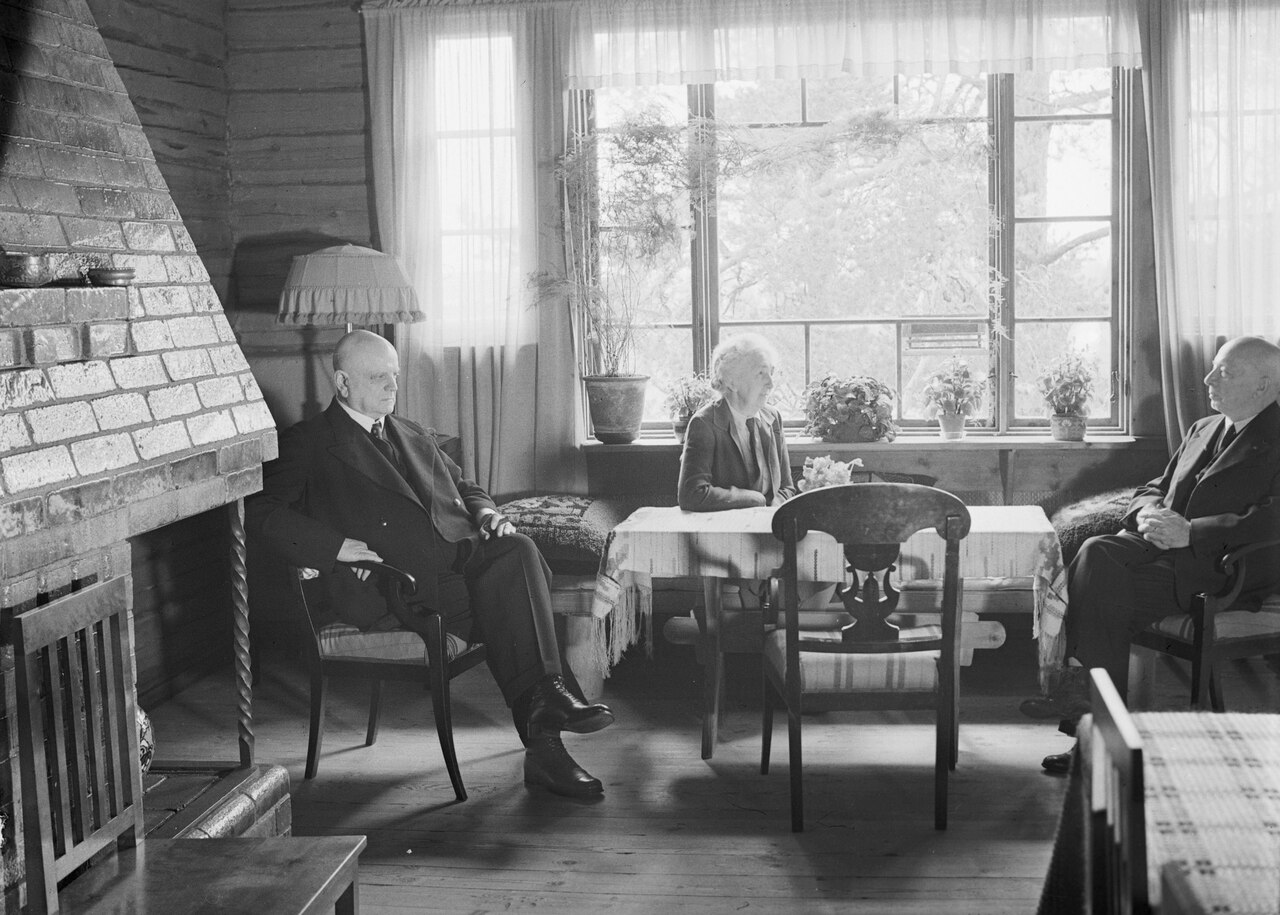
That said, the silence was not absolute. He made at least one abortive attempt at an eighth symphony, composed additional Masonic music, and re-edited certain earlier pieces. He also kept a watchful, if not always approving, eye on the evolving currents of contemporary music.
A National Icon and Enduring Legacy
Sibelius is widely regarded as Finland's greatest composer, and his music is frequently credited with playing a pivotal role in forging a stronger Finnish national identity during the late nineteenth century, a period when the country endured repeated campaigns of Russification under imperial rule. His cultural stature has been woven into the fabric of everyday Finnish life: the 100 mark banknote bore his portrait until the euro replaced it in 2002, and since 2011 the nation has observed a flag-flying day on 8 December, his birthday, which doubles as the Day of Finnish Music. The 150th anniversary of his birth in 2015 prompted a wave of commemorative concerts and public events, particularly in Helsinki. His symphonies and signature works continue to be performed and recorded across Finland and internationally, ensuring that his voice remains a living presence in the global musical landscape.
Childhood, Loss, and the First Violin
Born Johan Christian Julius Sibelius on 8 December 1865 in Hämeenlinna, then part of the Grand Duchy of Finland within the Russian Empire, the future composer lost his father, a Swedish-speaking physician, to typhoid fever when he was still a small child. The resulting debts forced his mother to sell the family home, and the household relocated to the house of his widowed grandmother, Katarina Borg. Raised in what was essentially an all-female environment, the young Janne—his childhood nickname—found his most significant male mentor in Uncle Pehr Ferdinand, a music-loving relative who handed him a violin at age ten and gently steered his budding interest in composition. Sibelius also developed a deep attachment to the outdoors, spending summers in coastal Loviisa, which he later recalled as a place of "sun and happiness" and "freedom." By his early teens he was already improvising at the piano, playing in trios with his siblings, and joining quartets with neighbours, laying the groundwork for a lifelong devotion to both performance and composition.
Reader's Guide
The core of his oeuvre is his set of seven symphonies. His other best-known compositions are Finlandia, the Karelia Suite, Valse triste, the Violin Concerto, the choral symphony Kullervo, and The Swan of Tuonela (from the Lemminkäinen Suite).
His other works include pieces inspired by nature, Nordic mythology, and the Kalevala; over a hundred songs for voice and piano; incidental music for numerous plays; the one-act opera The Maiden in the Tower; chamber music, piano music, Masonic ritual music, and 21 publications of choral music. The Finnish 100 mark note featured his image until 2002. Since 2011, Finland has celebrated a flag flying day on 8 December, the composer's birthday, also known as the Day of Finnish Music.
Frequently Asked Questions
Who is Jean Sibelius?
Jean Sibelius (1865–1957) was a Finnish composer active during the late Romantic and early modern eras. Born in Hämeenlinna, he is broadly regarded as Finland's most significant composer.
How many symphonies did Sibelius complete?
Sibelius finished seven symphonies between 1899 and 1926. He reportedly began an Eighth Symphony but destroyed the manuscript, and no verified complete score has ever surfaced.
More in Composers & Musicians
Sources
Compiled from Wikipedia and the sources listed below. Text from Wikipedia is available under CC BY-SA 4.0; this entry is adapted from it.
- Wikipedia: Jean Sibelius (CC BY-SA 4.0).
Spotted an error? Know more?
Reader corrections go straight into our review queue. Suggest an edit · How this site is sourced