Guillaume Du Fay
Leading European composer of the early Renaissance, known for his cosmopolitan style and influential sacred works.
Last updated

via Wikipedia: Guillaume Du Fay · see source
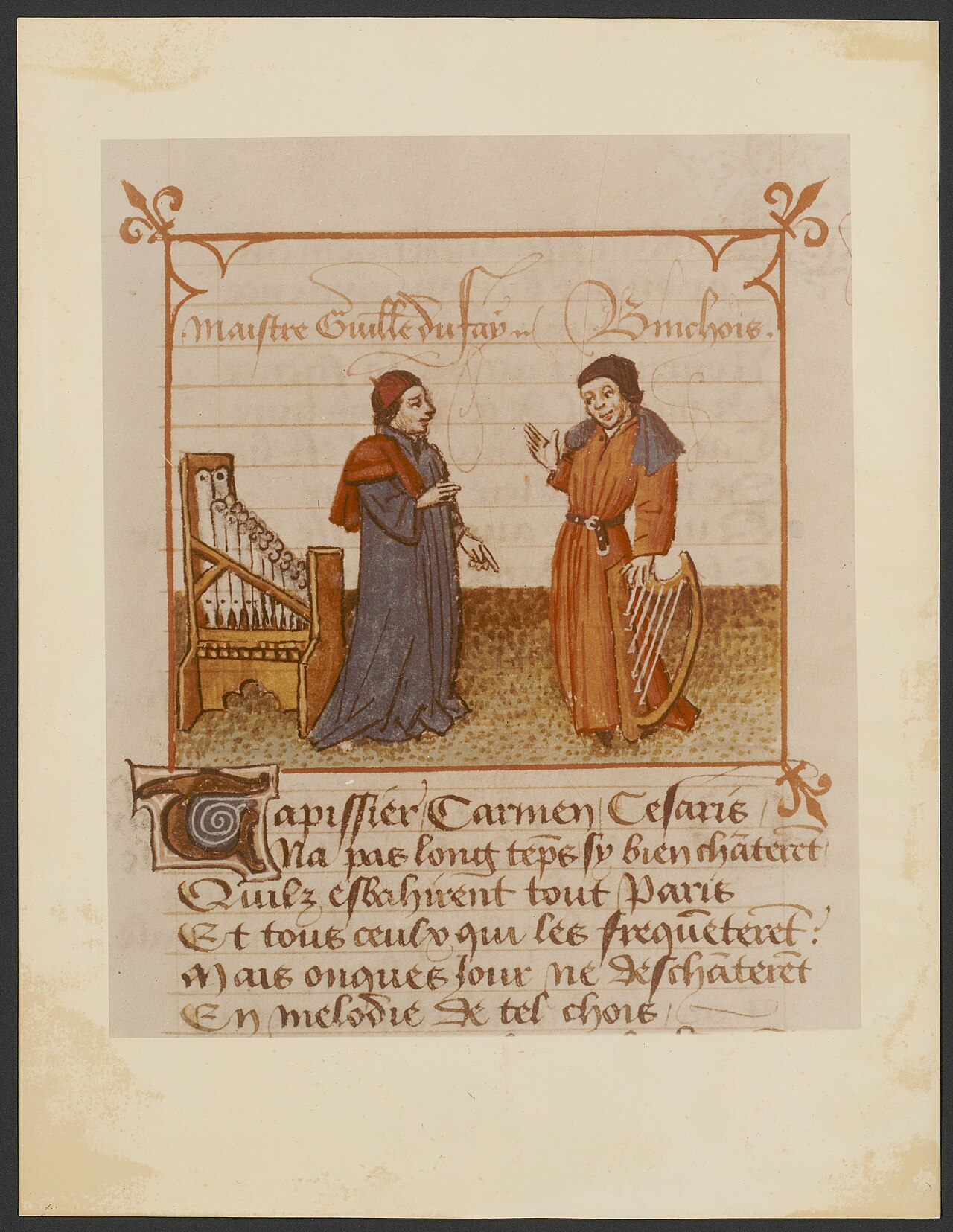
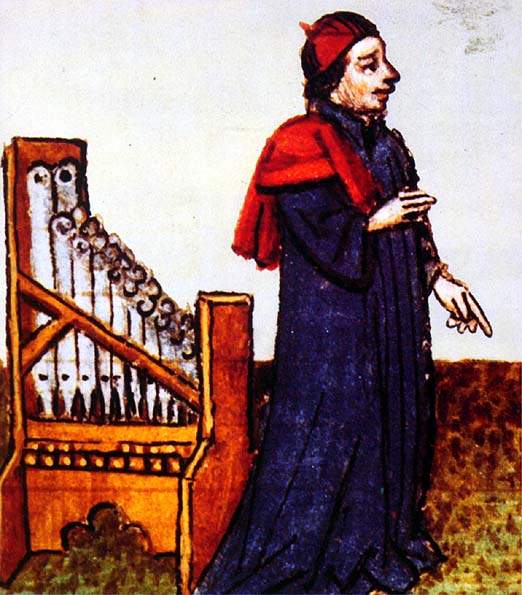
Guillaume Du Fay (also Dufay, Du Fayt; 5 August 1397 – 27 November 1474) was a composer and music theorist of early Renaissance music, who is variously described as French or Franco-Flemish. Considered the leading European composer of his time, his music was widely performed and reproduced. Du Fay was well-associated with composers of the Burgundian School, particularly his colleague Gilles Binchois, but was never a regular member of the Burgundian chapel himself. Du Fay’s life is exceptionally well-documented for a fifteenth-century composer, thanks largely to the meticulous records kept by Cambrai Cathedral, which survived where many other northern French archives were lost.
Early life
He was probably born in Beersel, near Brussels, the illegitimate child of a priest and a woman named Marie Du Fayt. His mother moved with him to Cambrai, where a relative who was a canon secured his place at the cathedral. Recognized early for his musical gifts, he trained as a choirboy from 1409, studying under Nicolas Malin and later Richard Loqueville. By 1414 he had been given a benefice as chaplain at St. Géry, and he likely attended the Council of Konstanz.
Cambrai to Italy and Savoy
After returning to Cambrai, he served as a subdeacon before leaving in 1420 to work across Europe, including for the Malatesta family in Rimini and Pesaro, and under Louis Aleman in Bologna, where he was ordained a priest. His fame growing, he joined the papal choir in Rome in 1428 under Popes Martin V and Eugene IV, composing motets such as Balsamus et munda cera and Supremum est mortalibus. Amid Rome’s turmoil in the 1430s, he served Amadeus VIII, Duke of Savoy. In 1436 he returned to Italy to write his celebrated motet Nuper Rosarum Flores for the consecration of Brunelleschi’s Florence Cathedral dome.
Final years in Cambrai
He later worked in Bologna and Ferrara, then spent eleven years in Cambrai under Philip the Good, possibly writing now-lost theoretical works. After brief returns to Savoy and Italy, he settled permanently in Cambrai in 1458, focusing on cyclic masses like the Missa Ave regina celorum and Missa L’Homme armé. In his final years he wrote a now-lost requiem and influenced younger composers including Johannes Ockeghem and Antoine Busnois. Du Fay’s cosmopolitan career and synthesis of styles, particularly the English contenance angloise of John Dunstaple, made him the leading figure of his generation.
Quick Facts
- Born
- 5 August 1397? (probably Beersel, near Brussels)
- Field
- Composer
Facts from the source article.
Lore & Background
Du Fay's birth and family are shrouded with uncertainty, though he was probably the illegitimate child of a priest. He was educated at Cambrai Cathedral, where his teachers included Nicolas Grenon and Richard Loqueville. For the next decade, Du Fay worked throughout Europe: as a subdeacon in Cambrai, under Carlo I Malatesta in Rimini, for the House of Malatesta in Pesaro, and under Louis Aleman in Bologna, where he was ordained priest.
As his fame began to spread, he settled in Rome in 1428 as musician of the prestigious papal choir, first under Pope Martin V and then Pope Eugene IV, where he wrote the motets Balsamus et munda cera and Ecclesie militantis. Amid Rome's financial and political disorder in the 1430s, Du Fay took a leave of absence from the choir to serve Amadeus VIII, Duke of Savoy. Du Fay returned to Italy in 1436, writing his most admired work, the complex motet Nuper Rosarum Flores, which celebrated the consecration of Filippo Brunelleschi's dome for the Florence Cathedral.
A Cosmopolitan Career Across Europe
Du Fay's professional life was defined by constant movement. After his formative years in Cambrai, he spent roughly a decade shuttling between courts and institutions across Western Europe. He served as a subdeacon in Cambrai, then traveled to Italy to work under Carlo I Malatesta in Rimini and for the House of Malatesta in Pesaro.
In Bologna, he entered the service of Cardinal Louis Aleman, where he was ordained priest. His fame eventually drew him to Rome in 1428, where he joined the papal choir under Popes Martin V and Eugene IV. When political and financial turmoil gripped Rome in the 1430s, he took leave to serve Amadeus VIII, Duke of Savoy.
He later returned to Italy, joined the papal court in Bologna, and was associated with the House of Este in Ferrara. After eleven years in Cambrai serving Philip the Good, he settled there permanently in 1458. This relentless geographic mobility produced what scholars call a cosmopolitan style, drawing on the musical traditions of every region he touched.
Mysterious Origins and a Cathedral Education
Du Fay's birth circumstances remain uncertain. He was probably the illegitimate child of an unknown priest and a woman named Marie Du Fayt, likely born in Beersel near Brussels. His mother moved with him to Cambrai, where they stayed with a relative who held a canonry at the cathedral.
This family connection to Cambrai Cathedral is the sole reason so much is known about his early years, since the institution kept meticulous records of all affiliated persons. His musical talent was quickly recognized by cathedral authorities, who provided him with thorough training. He studied with Rogier de Hesdin in the summer of 1409, was listed as a choirboy from 1409 to 1412, and studied under Nicolas Malin and Richard Loqueville.
In 1411, the authorities gave him his own copy of Villedieu's Doctrinale Puerorum, a highly unusual gesture for a boy so young. By June 1414, at around sixteen, he already held a chaplaincy at St. Géry. That same year, he likely traveled to the Council of Konstanz, where he met members of the Malatesta court he would later serve.
Defining Works and a Shifting Artistic Focus
Du Fay's compositional output spanned virtually every polyphonic genre of his era, and his most celebrated works mark distinct phases of his career. In Rome, he wrote motets including Balsamus et munda cera, Ecclesie militantis, and Supremum est mortalibus. His most admired composition, the complex motet Nuper Rosarum Flores, was written in 1436 to celebrate the consecration of Filippo Brunelleschi's dome for the Florence Cathedral. In his final Cambrai years, his artistic focus shifted markedly: he moved away from song and motet toward English-inspired cyclic masses based on cantus firmus.
This late period produced the Missa Ave regina celorum, the Missa Ecce ancilla Domini, the Missa L'Homme armé, and the Missa Se la face ay pale. He also composed a requiem, now lost, during these years. His style synthesized the contenance angloise of John Dunstaple with the famous Missa Caput tradition and techniques of younger contemporaries, creating a richly layered musical language that set new standards for European polyphony.
Legacy, Influence, and the Composer as Profession
Du Fay occupies a unique position in music history as a leading figure of the first generation of European musicians primarily identified as composers by occupation. His music was widely performed and reproduced across the continent, and he was regarded as the leading European composer of his time. Though closely associated with the Burgundian School and his colleague Gilles Binchois, he was never a regular member of the Burgundian chapel. In his final Cambrai years, he met and directly influenced the leading musicians of his generation, including Antoine Busnois, Loyset Compère, Johannes Tinctoris, and particularly Johannes Ockeghem.
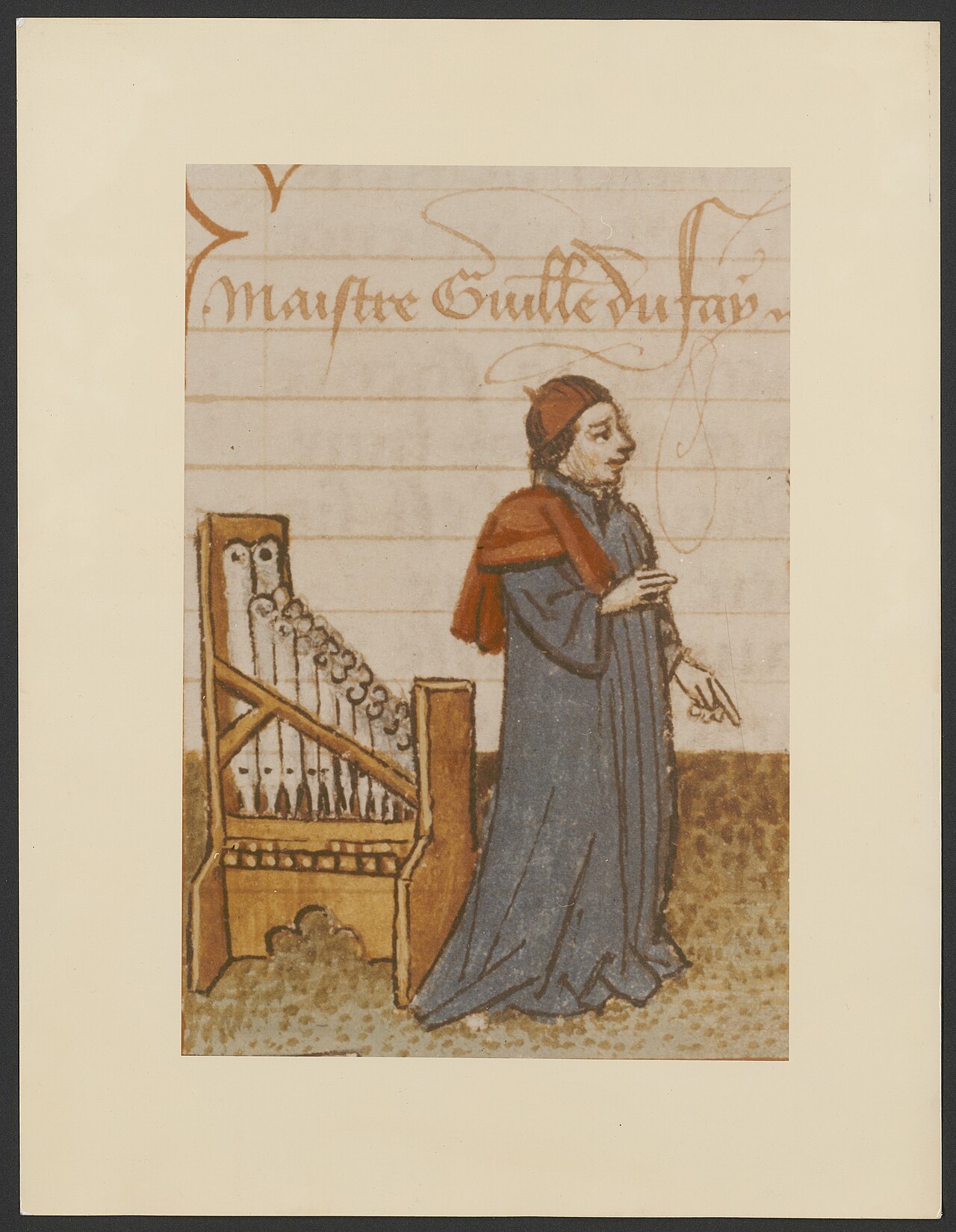
His extensive oeuvre, shaped by his peripatetic career, represented virtually every polyphonic genre of the fifteenth century. He is among the best-documented composers of his era, owing to the thorough record-keeping of the institutions he served and the biographical anecdotes woven into his compositions. Archival evidence also revealed that his parents spelled the surname Du Fayt, but the composer altered the spelling during his Italian years.
Reader's Guide
Du Fay’s career was marked by movement across Western Europe, which shaped a cosmopolitan musical language that blended influences from the regions where he worked. He composed in virtually every polyphonic genre of his time, and his music was widely performed and reproduced, reflecting his status as the leading European composer of his era. A key stylistic influence was the contenance angloise of John Dunstaple, which Du Fay, like his colleague Gilles Binchois, absorbed and synthesized with other traditions, including the style of the Missa Caput and the techniques of younger figures such as Johannes Ockeghem and Antoine Busnois.
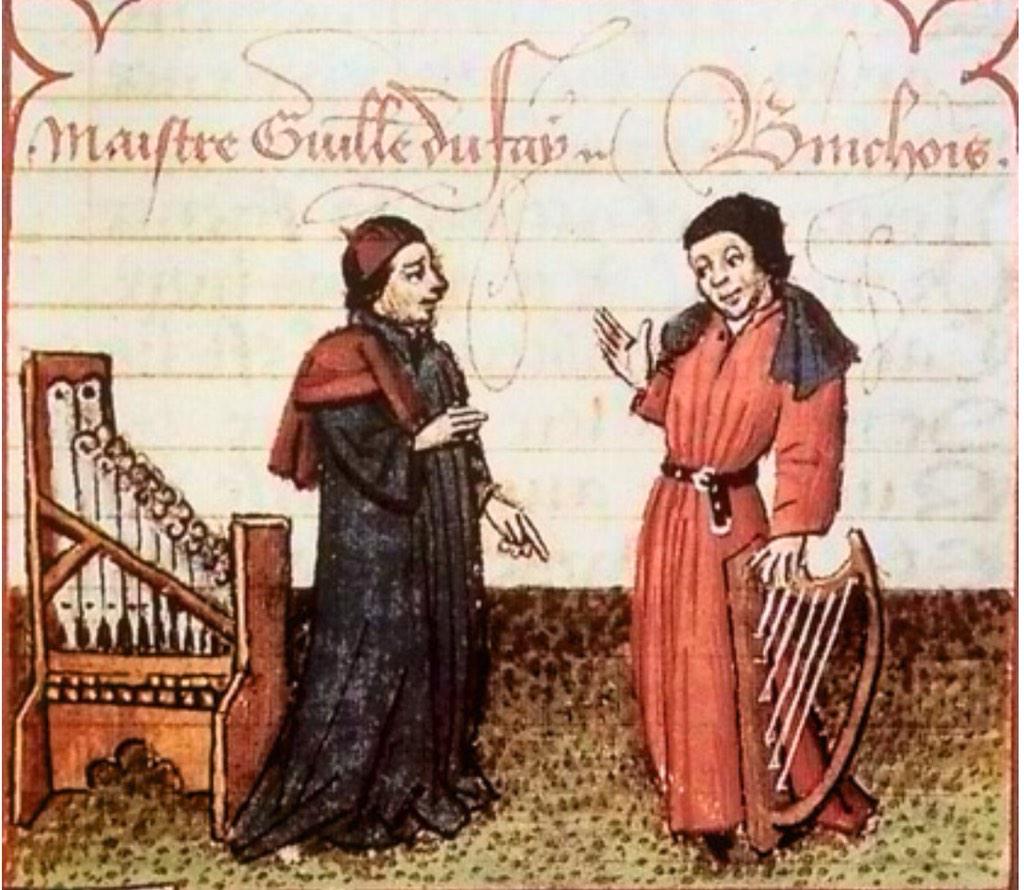
Du Fay’s output included complex motets, such as his celebrated work for the consecration of Brunelleschi’s dome in Florence, and later in life he focused on English-inspired cyclic masses built on a cantus firmus. He also wrote a now-lost requiem and theoretical works. His extensive oeuvre and wide-ranging career made him a central figure in the first generation of musicians who were primarily considered composers by occupation, and he both met and influenced leading musicians of his time, including Ockeghem, Busnois, Loyset Compère, and Johannes Tinctoris.
Frequently Asked Questions
Who is Guillaume Dufay?
Guillaume Dufay (1397–1474) was a Franco-Flemish composer of the early Renaissance, widely regarded as the most prominent European composer of his era. His works were extensively copied and performed across the continent during his lifetime.
When and where was Guillaume Dufay born?
Dufay is believed to have been born on 5 August 1397, most likely in Beersel, a small town near present-day Brussels. The exact date carries a question mark in historical records, but the location is generally accepted.
What school of music is Guillaume Dufay associated with?
He is most closely linked to the Burgundian School, particularly through his close professional relationship with fellow composer Gilles Binchois. Despite this strong association, Dufay was never a permanent member of the Burgundian chapel itself.
What are the different name variants for Guillaume Dufay?
His name appears in sources as Guillaume Dufay, Du Fay, or Du Fayt, reflecting different transliterations of the same individual. The spelling 'Dufay' is the most commonly used form in modern musicological writing.
More in Composers & Musicians
Sources
Compiled from Wikipedia and the sources listed below. Text from Wikipedia is available under CC BY-SA 4.0; this entry is adapted from it.
- Wikipedia: Guillaume Du Fay (CC BY-SA 4.0).
Spotted an error? Know more?
Reader corrections go straight into our review queue. Suggest an edit · How this site is sourced