
Emirates (airline)
Flag carrier of Dubai; world's largest long haul airline.

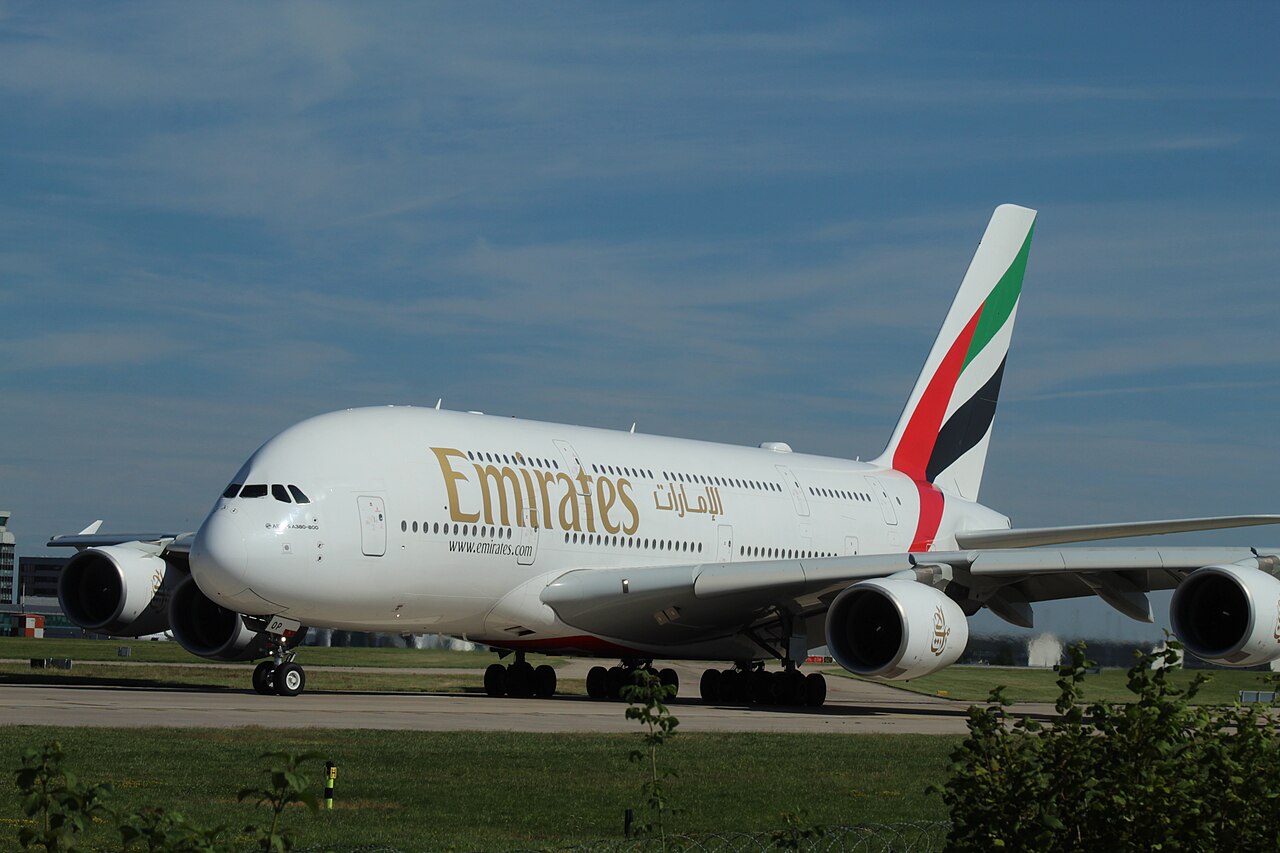
Krixnadelapaz · CC BY-SA 4.0
Emirates is one of the United Arab Emirates’ two flag carriers, with its base in Al Garhoud, Dubai. It is part of The Emirates Group, which is owned by the Dubai government through the Investment Corporation of Dubai. The airline operates the world’s largest long-haul network and is the biggest carrier in the Middle East, running over 3,600 flights each week from its home at Terminal 3 of Dubai International Airport. It serves more than 150 cities across 80 countries on six continents, using a fleet of over 250 aircraft. Its cargo arm is Emirates SkyCargo. By scheduled revenue passenger-kilometers, Emirates ranks third globally, and it is second worldwide in freight tonne-kilometers flown.
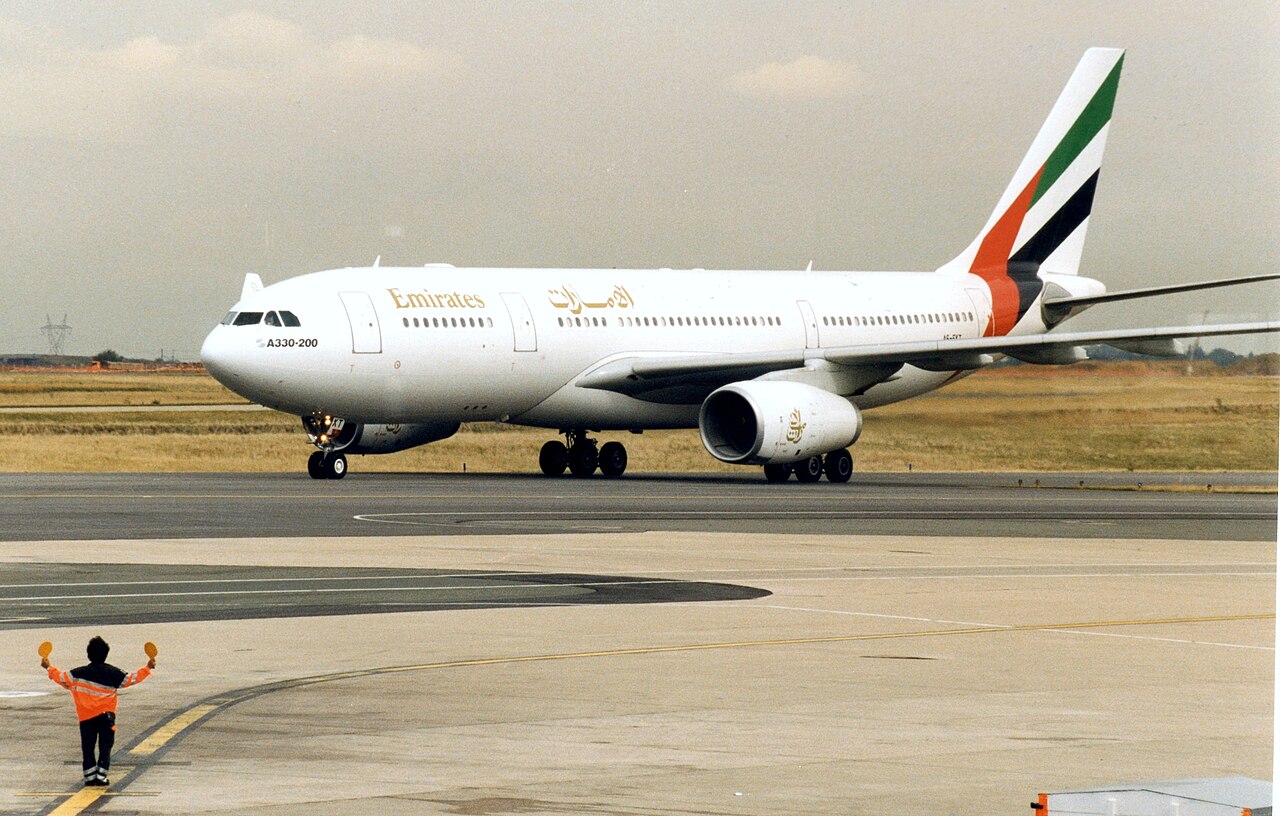
The airline was founded on 15 March 1985 after Gulf Air reduced its services to Dubai. Backed by Dubai’s royal family, it started with $10 million in capital and two aircraft provided by Pakistan International Airlines, which also offered free training for cabin crew at Karachi Airport. Ahmed bin Saeed Al Maktoum, the current chairman, founded the airline. It was required to operate without government subsidies. In its early years, it grew rapidly, averaging 30% annual expansion. The Gulf War boosted business because Emirates was the only airline still flying in the final ten days of the conflict. Shortly after the war ended, in June 1991, it secured slots at London Heathrow. In 1996, it received its first Boeing 777-200, followed by the extended-range version in 1997, and in 1999 the Airbus A330-200 and Boeing 777-300. In 2000, it ordered many new aircraft, including the Boeing 777-300ER and the Airbus A380, and launched its Skywards frequent flyer program. In October 2008, all Emirates operations moved to Terminal 3 at Dubai International Airport. The airline continued expanding its fleet and network, focusing on connecting the world through Dubai and competing with major international carriers. This growth drew criticism from other airlines, who claimed unfair advantages and called for an end to open-skies policies with the UAE. In 2017, Emirates ordered several Boeing 787 Dreamliners for $15.1 billion, a deal the Wall Street Journal called a “painful loss” for Airbus. At the 2023 Dubai Airshow, Emirates and its sister airline flyDubai ordered $50 billion worth of Boeing jets, with Emirates taking 90 aircraft including both versions of the new long-haul jet. In April 2024, Emirates announced plans to move its hub to Al Maktoum Airport once that facility is fully completed. In 2026, the airline temporarily suspended operations due to the Iran War.
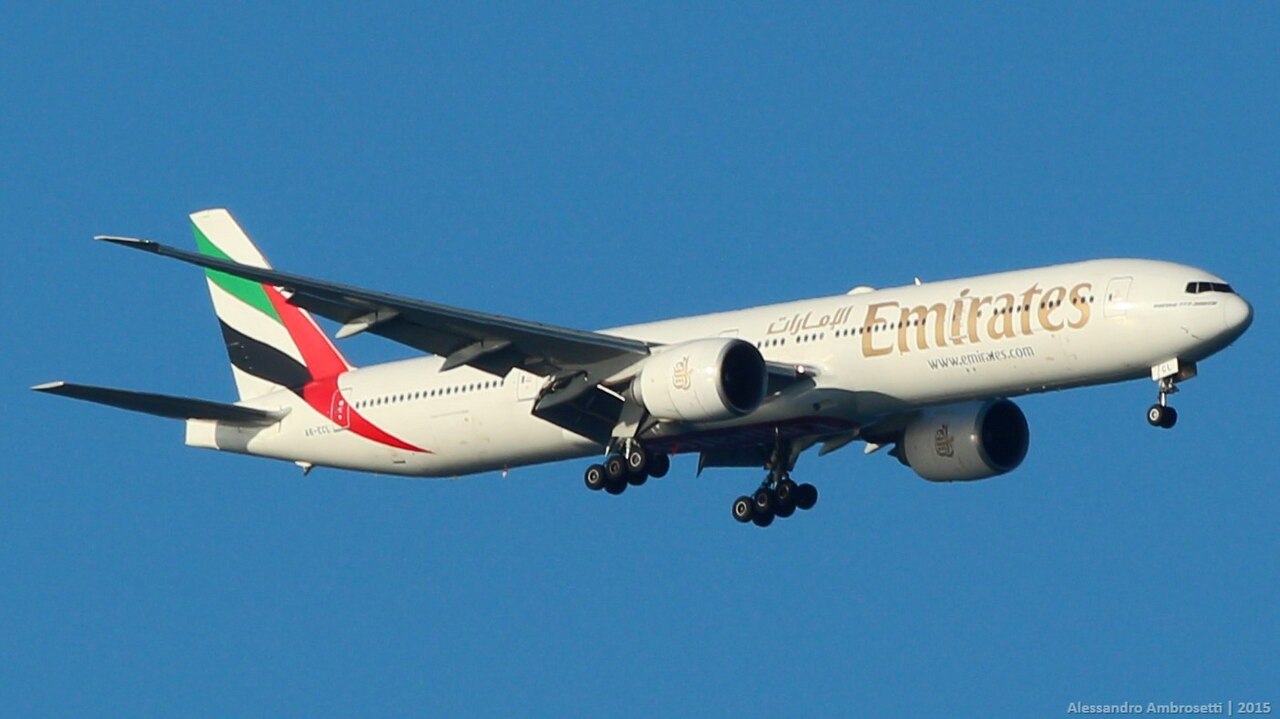
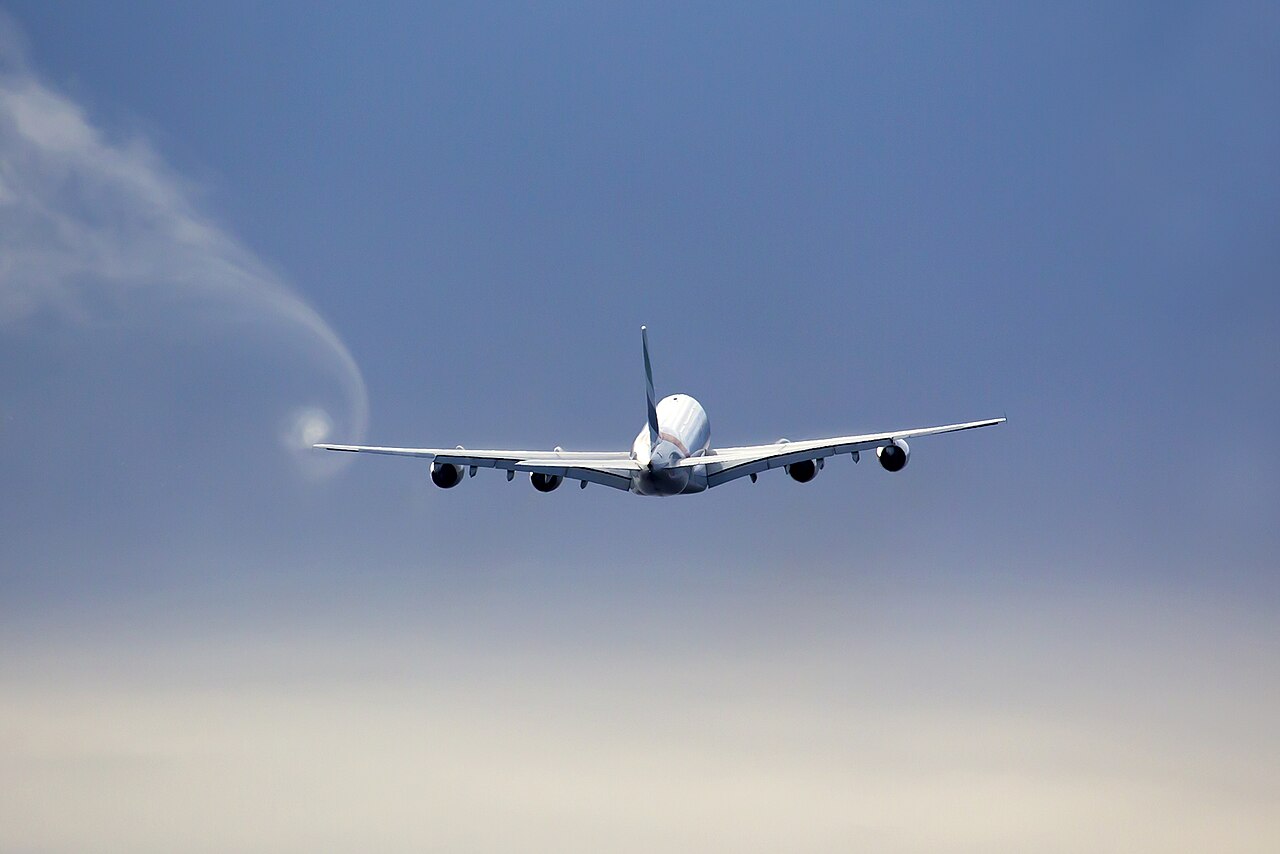
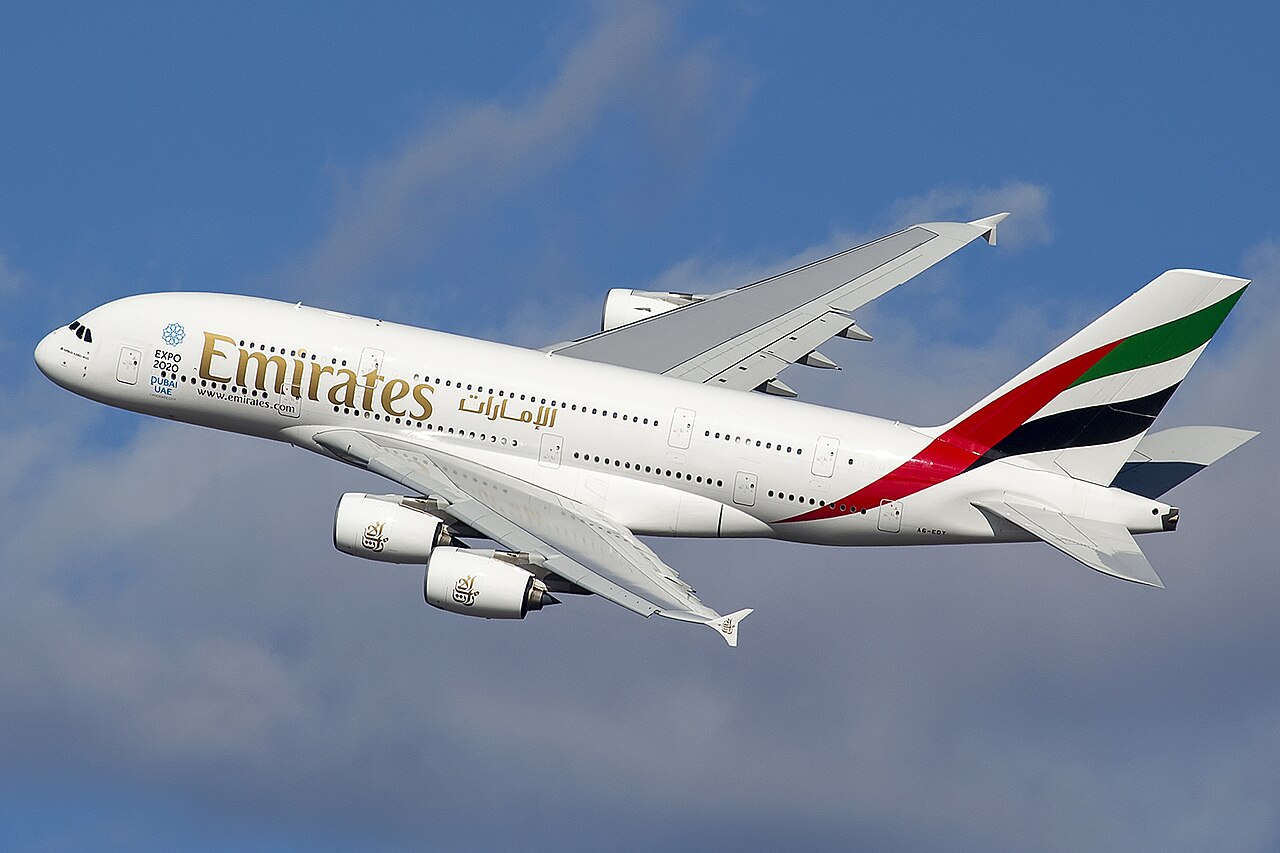
Emirates operates a mixed fleet of Airbus and Boeing wide-body aircraft and is one of the few airlines with an all-wide-body fleet (excluding Emirates Executive). As of January 2026, it is the world’s largest operator of the Airbus A380, with 116 in service, and the largest operator of the Boeing 777, with 133 in service. The A380 has become a key part of its long-haul, high-density routes. The airline has won several awards, including “Best Overall Airline in the Middle East” at the 2026 APEX Awards.
The airline is a subsidiary of The Emirates Group, which itself is owned by the Dubai government’s Investment Corporation of Dubai. Emirates has posted a profit every year except its second, and its growth has never fallen below 20% annually. In its first 11 years, it doubled in size every 3.5 years, and every four years since. In 2015, it paid dividends of AED 2.6 billion (US$708 million), up from AED 1 billion (US$272 million) in 2014. Since dividends began in 1999, the government has received AED 14.6 billion from Emirates, having provided an initial $10 million in start-up capital and about $80 million more at the airline’s founding. The Dubai government is the sole owner but does not invest new money or interfere in operations.
Emirates has expanded into related fields such as airport services, engineering, catering, and tour operations. It has seven subsidiaries, and its parent company has over 50. As of 31 March 2020, the airline employed 59,519 staff: 21,789 cabin crew, 4,313 flight deck crew, 3,316 in engineering, 12,627 in other roles, 5,376 at overseas stations, and 12,098 at subsidiaries. The Emirates Group as a whole employed 105,730 people. Employees receive benefits like comprehensive health plans, paid maternity and sick leave. The airline uses profit sharing and merit pay as part of its performance management. In 2023, employees received a bonus of 24 weeks’ pay; in 2024, they got 20 weeks’ pay. In 2025, the group awarded its employees a bonus.
- founder
- Ahmed bin Saeed Al Maktoum
- headquarters
- Al Garhoud, Dubai, United Arab Emirates
Lore & Background
Emirates, one of two flag carriers of the United Arab Emirates, is based in Al Garhoud, Dubai, and operates as a subsidiary of The Emirates Group, itself owned by the government’s Investment Corporation of Dubai. It is the world’s largest long-haul airline and the largest in the Middle East, running over 3,600 weekly flights from its hub at Terminal 3 of Dubai International Airport. The airline serves more than 150 cities across 80 countries on six continents with a fleet exceeding 250 aircraft, all of which are wide-body models—making it one of the few carriers with an all-wide-body fleet, excluding its Emirates Executive service. Emirates is the global leader in Airbus A380 operations, with 116 of these aircraft in service, and also operates the largest Boeing 777 fleet, numbering 133 planes. Its cargo division is Emirates SkyCargo. The airline ranks third worldwide by scheduled revenue passenger-kilometers and second by freight tonne-kilometers flown. Founded on 15 March 1985 after Gulf Air reduced services to Dubai, the airline received backing from Dubai’s royal family and initial aircraft from Pakistan International Airlines, which also provided free cabin crew training at Karachi Airport. With $10 million in start-up capital, it was mandated to operate without government subsidies. Ahmed bin Saeed Al Maktoum, the current chairman, founded the airline. Rapid expansion followed, and in October 2008 all operations moved to Terminal 3 at Dubai International. The airline has won awards including “Best Overall Airline in the Middle East” at the 2026 APEX Awards.
Reader's Guide
Its growth has been rapid and sustained, with the airline doubling in size every 3.5 years for its first 11 years and every four years thereafter. It has recorded a profit every year except its second, and has never seen annual growth fall below 20%. The airline's success has attracted criticism from competitors who claim unfair advantages and have called for an end to open-skies policies with the UAE. Its environmental and operational strategies, combined with its all-wide-body fleet, have made it a benchmark for long-haul air travel.
Founded in March 1985 with backing from Dubai’s ruler, the airline began with two aircraft provided by Pakistan International Airlines and $10 million in start-up capital, required to operate without government subsidies. Pakistan International Airlines also trained its early cabin crew in Karachi. The Gulf War boosted business, as Emirates was the only airline still flying during the conflict’s final ten days, and shortly after hostilities ended in 1991, it secured slots at London Heathrow. The airline rapidly expanded its fleet and destinations, introducing the Boeing 777-200 in 1996, the extended-range 777 in 1997, and both the Airbus A330-200 and Boeing 777-300 in 1999. In 2000, it ordered the Boeing 777-300ER and the Airbus A380, launching its Skywards frequent flyer program. It now operates the world’s largest A380 and Boeing 777 fleets, with 116 and 133 aircraft respectively, and is the largest long-haul and Middle Eastern airline, running over 3,600 weekly flights from Terminal 3 at Dubai International Airport to more than 150 cities across 80 countries. Cargo is handled by Emirates SkyCargo. The airline has received awards including “Best Overall Airline in the Middle East” at the 2026 APEX Awards. In 2017, it ordered Boeing 787 Dreamliners, and in 2023, it placed a $50 billion order for Boeing jets alongside sister airline flyDubai. In April 2024, it announced plans to relocate its hub to Al Maktoum Airport upon completion. Operations were temporarily suspended in 2026 due to the Iran War. The airline is a subsidiary of The Emirates Group, owned by the Dubai government’s Investment Corporation of Dubai, and has paid dividends since 1999, returning over $14 billion on an initial investment of $10 million plus $80 million. It employs over 59,000 staff, with benefits including profit-sharing bonuses—such as 24 weeks’ p
Did You Know?
- Emirates was founded with $10 million in start-up capital and was required to operate independently of government subsidies.
- Emirates has recorded a profit every year except its second year, and its growth has never fallen below 20% annually.
Pioneering the Region's Low-Cost Sky
That royal mandate made the carrier the first low-fare airline in the Middle East. What impressed observers most was its immediate financial discipline: the carrier broke even within its very first year of commercial operations. That early success set the stage for broader ambitions. In early 2007, Air Arabia opened its books to public investors through an initial public offering, selling 55 percent of its shares. The airline's headquarters sits in the Sharjah airport Freight Center, a property just fifteen kilometres from central Dubai, anchoring its identity firmly to the emirate that gave it life.
A Web of Joint Ventures Across Three Continents
Air Arabia grew far beyond a single Sharjah-based carrier by weaving a network of co-branded subsidiaries and joint ventures. In Nepal, a 2007 deal with Yeti Airlines spawned Fly Yeti, a short-lived but notable foray into South Asia.
An All-Airbus Identity and a Distinctive Livery
Air Arabia and its co-branded subsidiaries fly an exclusively Airbus A320-family fleet, a commitment that has defined its operational character since inception. Visually, the airline is unmistakable. Its livery paints the fuselage in red, grey, and white, with a stylized bird emblem representing Sharjah on the tail and engines.
Weathering Financial Storms
Air Arabia's financial journey has been marked by both resilience and sharp setbacks. The situation escalated when the carrier sued Abraaj founder Arif Naqvi in the Sharjah courts. Recovery was gradual. Despite these headwinds, the airline had reported figures exceeding AED 19 billion in the fourth quarter of 2019, underscoring the scale it had built before the disruptions hit.
Gallery

More in Companies And Conglomerates 1-21
Spotted an error? Know more?
This is a living reference — every entry is fact-audited, and reader corrections feed straight into our audit queue. Suggest an edit · See this site's audit record