
Costco
Membership-only warehouse club retailer with global operations.

Chris Light · CC BY-SA 4.0
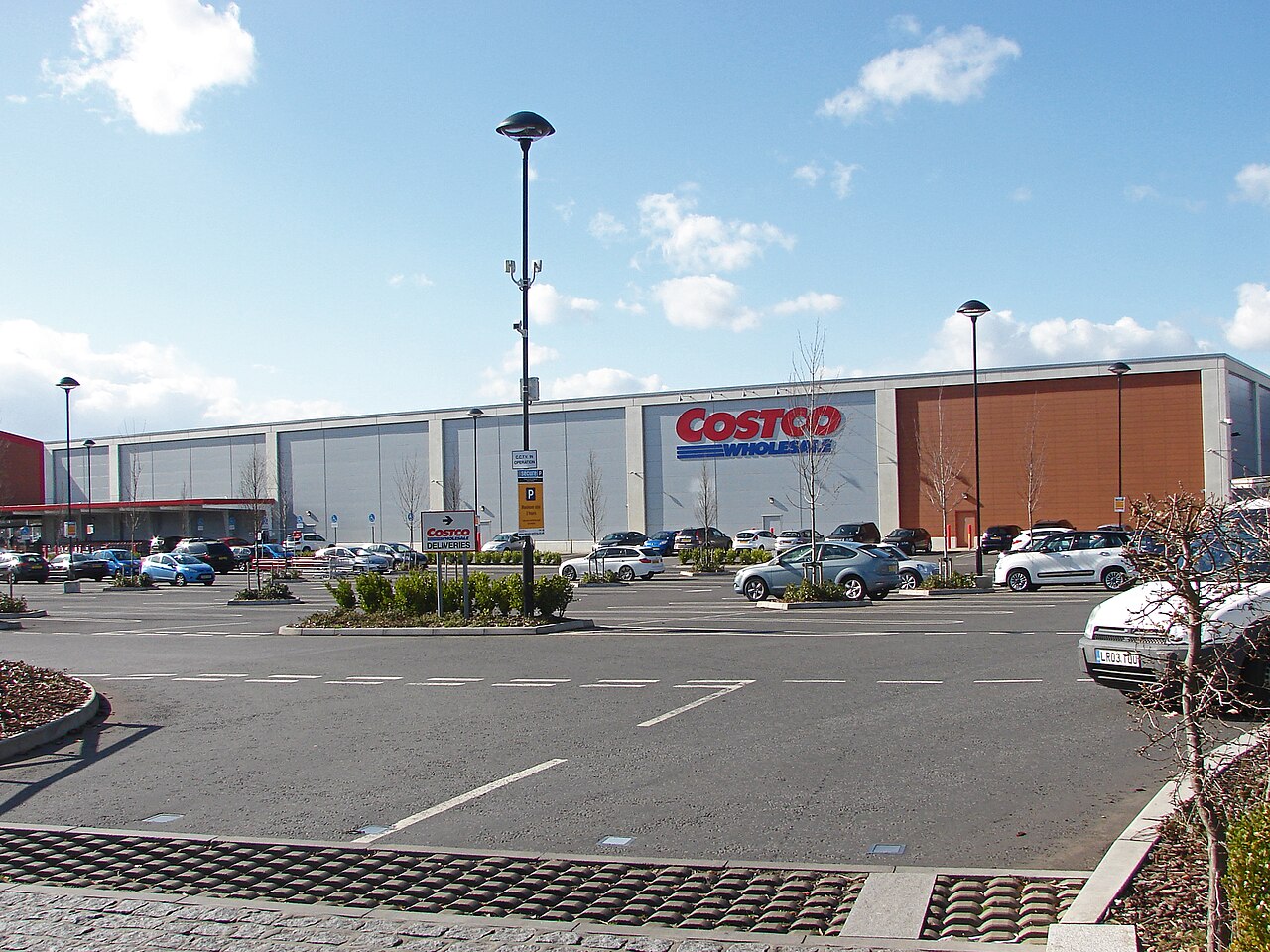
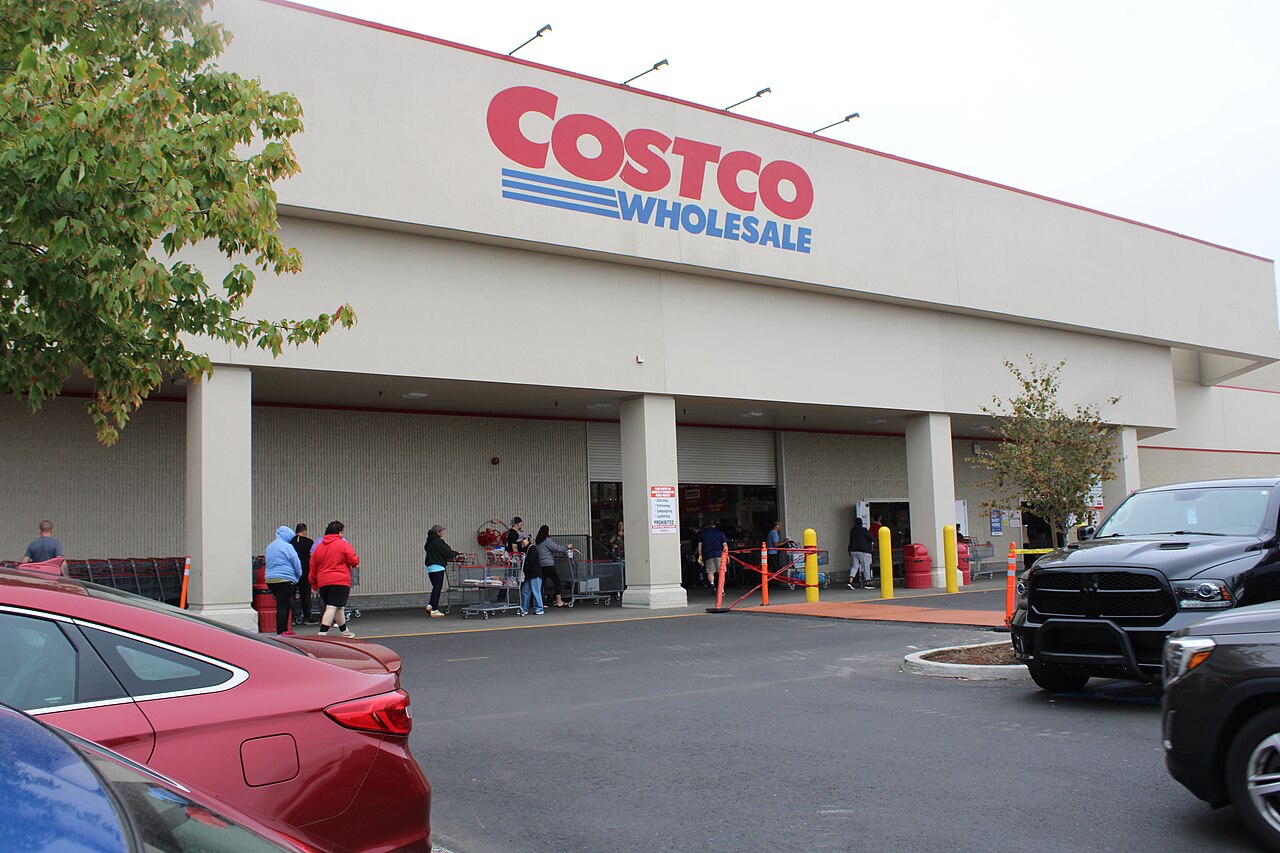
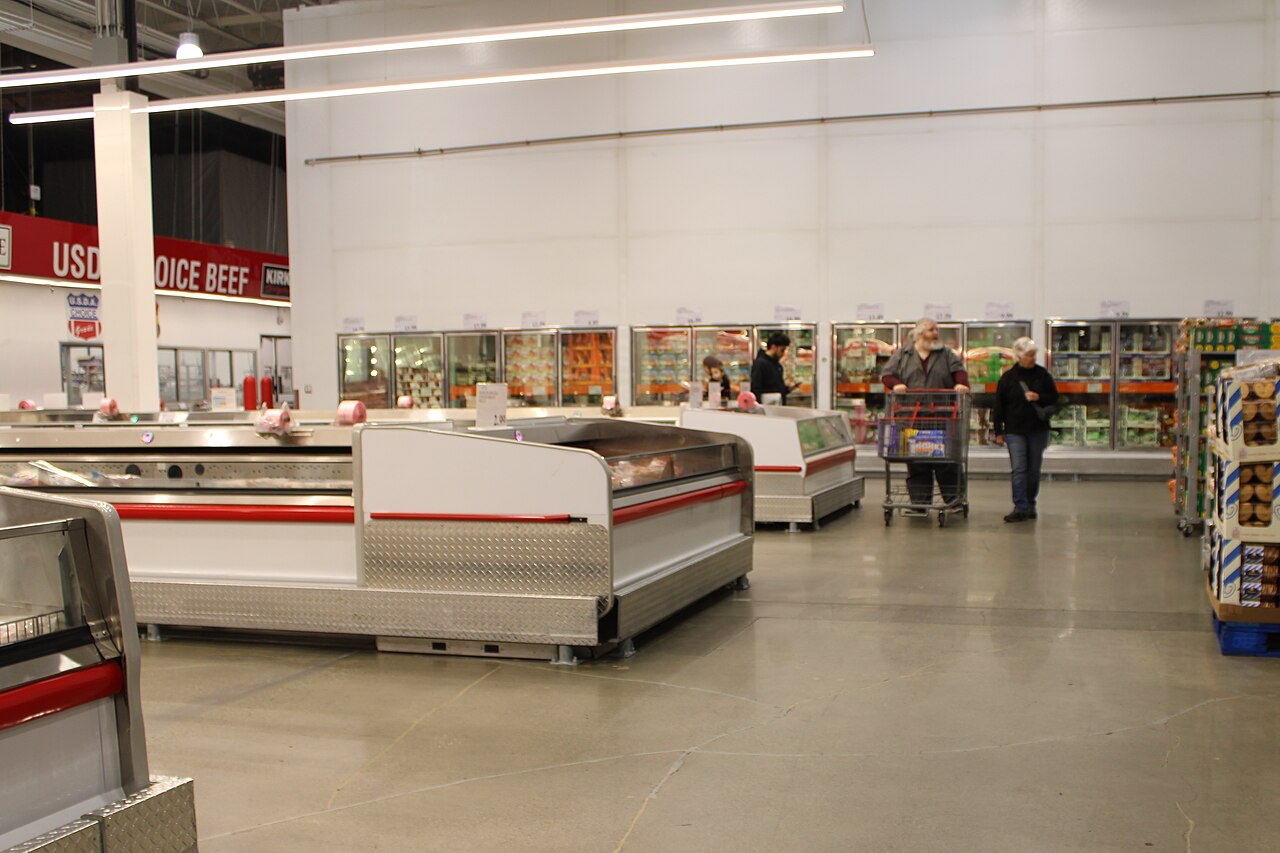
Costco Wholesale Corporation runs a chain of membership-only big-box retail warehouses. The company is American and multinational. Its global headquarters sit in Issaquah, Washington, an eastern suburb of Seattle. By 2025, Costco ranked as the third-largest retailer worldwide. As of August 2024, it was the world’s top seller of beef, poultry, organic produce, and wine, with nearly one in three American consumers shopping at its warehouses regularly. In 2026, Costco placed 12th on the Fortune 500 list of largest U.S. corporations by revenue and was also the biggest grocery retailer in Canada.
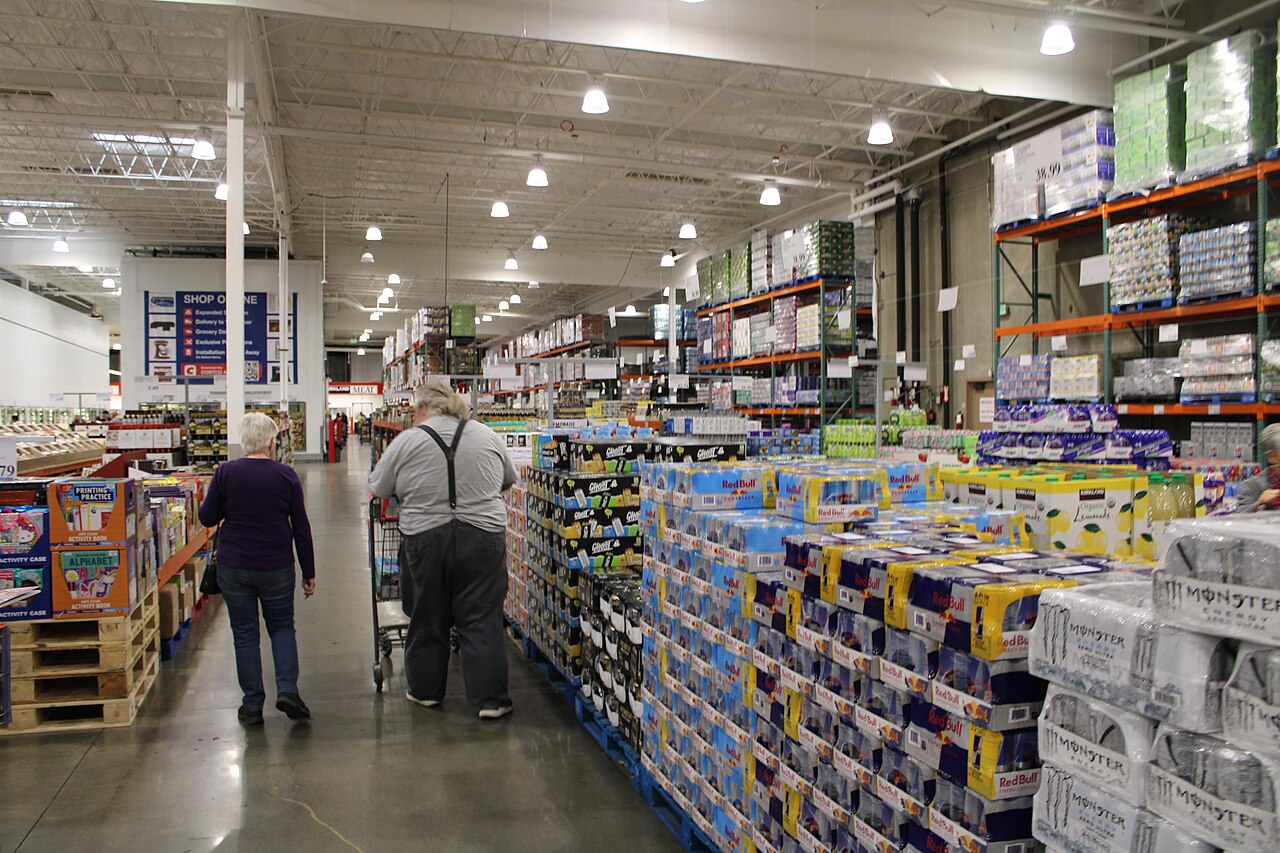
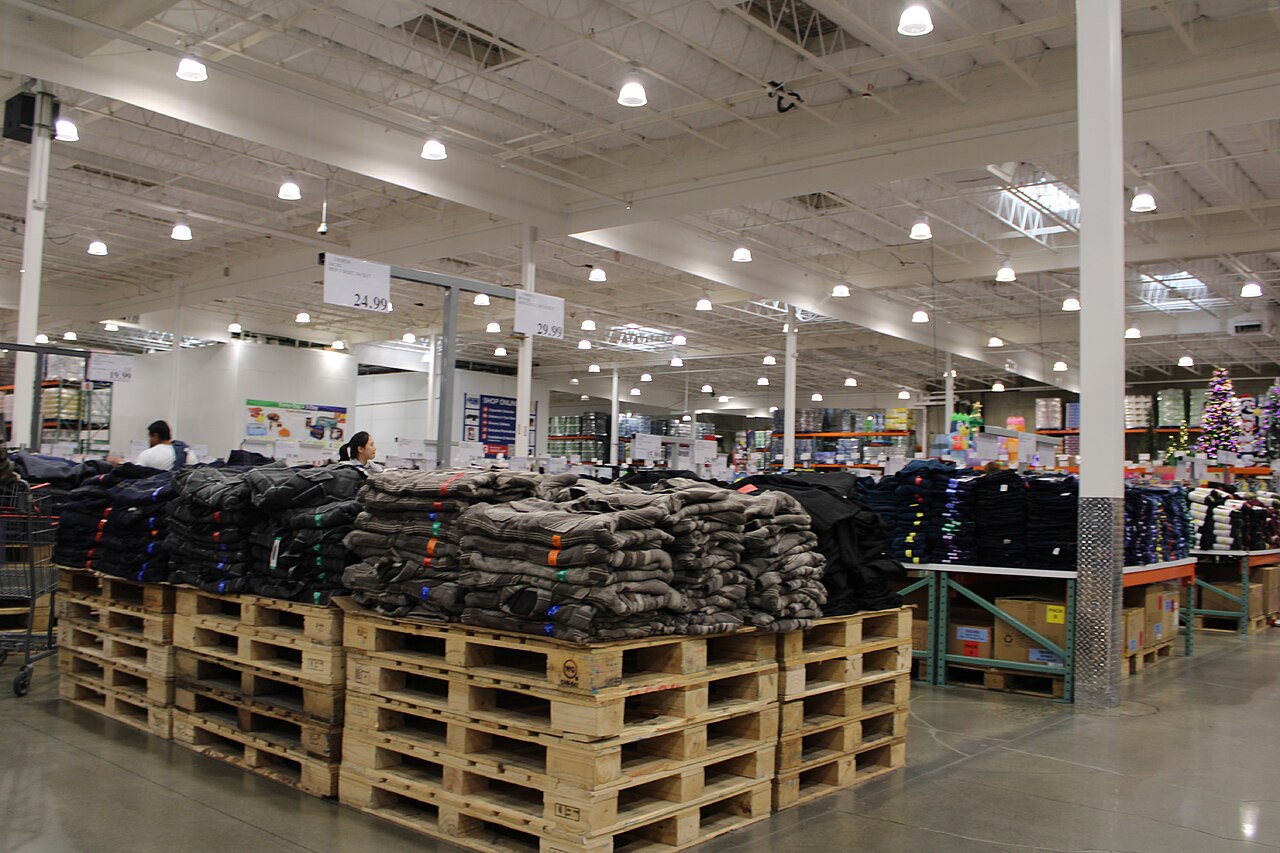
The Kirkland Signature house label takes its name from Kirkland, another eastern Seattle suburb where the company was once based. Costco opened its first warehouse—the chain’s term for its retail outlets—in Seattle in 1983. Through mergers, its corporate history stretches back to 1976, when its former competitor Price Club was founded in San Diego, California. Costco originally targeted businesses as members, selling wholesale goods, but later began enrolling individual consumers and offering products for them, including its own private-label brand. As of March 2026, Costco operated 924 warehouses worldwide, with 85 percent located in North America (the United States, Canada, and Mexico).
**History**
**Price Club** Costco’s earliest predecessor, Price Club, opened its first store on July 12, 1976, on Morena Boulevard in San Diego, California. Sol Price and his son Robert founded it three months earlier after a dispute with the new owners of FedMart, Price’s previous membership-only discount store. Price Club was among the first retail warehouse clubs, starting in a series of old airplane hangars once owned by Howard Hughes. That store, known as Costco Warehouse #401, still operates today. Price Club’s sales model focused on small business owners, selling bulk items at discounted prices in no-frills outlets accessible only with an annual membership fee. The company went public in 1980 and, by early 1986, had expanded to 24 locations in the Southwest and 1.1 million members. It entered Canada in 1986 with a Montreal store, then opened a Mexico City store in 1992 through a joint venture with hypermarket chain Controladora Comercial Mexicana. Price Club also announced plans for stores in Spain and Portugal via its Canadian subsidiary.
**Costco opens** Jim Sinegal and Jeffrey H. Brotman opened the first Costco warehouse in Seattle on September 15, 1983. Sinegal had worked for Sol Price at FedMart, starting as a grocery bagger; Brotman, an attorney from an old Seattle retailing family, had been involved in retail distribution from a young age. At launch, Costco sold goods to small businesses at a markup of only 8 or 9 percent over wholesale. A second store opened in Portland, Oregon, in October 1983, and a third in Spokane in December. In December 1985, Costco went public on the NASDAQ at $10 per share, with 17 warehouses nationally and 1,950 employees. The company was initially headquartered at its first Seattle warehouse but moved to Kirkland in 1987.
**The “PriceCostco” merger** In 1993, Costco and Price Club agreed to merge after Price turned down an offer from Walmart to combine Price Club with Sam’s Club. The two companies had similar business models and sizes, making the merger natural. The combined company was named PriceCostco, and memberships became universal—a Price Club member could shop at Costco and vice versa. PriceCostco had 206 locations and $16 billion in annual sales. Initially led by executives from both companies, the Prices left in 1994 to form PriceSmart, a warehouse club chain in Central America and the Caribbean unrelated to today’s Costco. Costco moved its headquarters from Kirkland to Issaquah in 1996, building a new campus next to a warehouse so buyers could check sales and merchandise. The company had originally planned to move to Redmond by December 1993, but road construction delays near the warehouse site caused a change of plans. The former Kirkland headquarters, a 10.7-acre campus, was sold in late 1996. Costco began testing store conversions to its own branding across the Southwestern United States in late 1996, and PriceCostco officially reverted to the Costco name and stock symbol in February 1997, with all remaining Price Club locations rebranded. In March 2020, Costco announced the acquisition of Innovel, a logistics company, for one billion dollars.
**Other company milestones** The first Costco warehouse in Seattle was replaced with a new building on an adjacent lot to the north in March 2005; the company arranged to keep the same address for the new building, which sat on land acquired from Seattle Public Schools. The original building was demolished and replaced by a parking lot, gas station, and car wash—the company’s first—which opened in 2006. In 2014, Costco was the third-largest retailer in the United States. That year, it announced plans to open an online store in China using Alibaba Group. Costco entered the Chinese market without a physical store, initially only as an online retailer, selling food and household items to Chinese consumers on Tmall, an Alibaba-owned e-commerce platform. This allowed Costco to enter the Chinese market without a brick-and-mortar presence.
Lore & Background
Costco Wholesale Corporation operates a chain of membership-only big-box warehouse club retail stores. Its warehouses, as the company terms its retail outlets, are characterized by a no-frills, bulk-sales model originally aimed at small business owners, later expanded to include individual consumers. The company’s private-label brand, Kirkland Signature, takes its name from the company’s former headquarters location in Kirkland, Washington, an eastern suburb of Seattle; its current worldwide headquarters are in Issaquah, another eastern Seattle suburb. Costco’s earliest predecessor, Price Club, opened its first store in 1976 in San Diego, California, inside a series of old airplane hangars once owned by Howard Hughes. That original location, known as Costco Warehouse #401, remains in operation. The company’s defining characteristics include a markup of only 8 or 9 percent over wholesale price on goods sold to small businesses at launch, and a membership model that became universal after the 1993 merger of Costco and Price Club, allowing members of either chain to shop at both. Costco is the third-largest retailer in the world as of 2025, and as of August 2024, it is the world’s largest retailer of beef, poultry, organic produce, and wine, with just under a third of American consumers regularly shopping at its warehouses. As of 2026, it ranks 12th on the Fortune 500 and is the largest grocery retailer in Canada. The company operates 924 warehouses worldwide, with 85 percent located in North America, including the United States, Canada, and Mexico.
Reader's Guide
Costco's significance lies in its pioneering and sustained dominance of the membership warehouse club model. It was the first company to grow from $0 to $3 billion in sales in under six years. Its Kirkland Signature private-label brand, named after its former location in Kirkland, Washington, is a key differentiator. Its legacy includes influencing retail logistics and consumer buying habits, while its expansion into China via both online (through Alibaba's Tmall) and physical stores illustrates adaptation to global markets. Competitors include Sam's Club and BJ's Wholesale Club.
Did You Know?
- The company's Kirkland Signature brand is named after its former headquarters location in Kirkland, Washington.
Fortune 500 Standing
Costco Wholesale holds the #12 position on the Fortune 500 list, a ranking that places it firmly among the largest corporations in the United States. Its position in the national rankings sits between Amazon at #2 and Microsoft at #15, meaning it is sandwiched between two of the most recognized technology and retail giants in the country. The relatively tight clustering of these three names in the top fifteen of the Fortune 500 underscores the extraordinary depth of corporate power concentrated in the Pacific Northwest. For a single metropolitan area to claim three of the top fifteen companies on the list is a testament to the region's outsized role in the broader American economy.
Seattle Metro Area Ecosystem
This concentration of major corporate headquarters in a single metro area is a defining feature of the region's economic identity. The other nine companies span a remarkably wide range of industries: Amazon in internet retail, Microsoft in technology, Starbucks in coffee, Paccar in manufacturing, Nordstrom in clothing, Weyerhaeuser in forestry, Expeditors International in logistics, Alaska Airlines in aviation, and Expedia in travel. Costco's presence among this group highlights the diversity of the Seattle business ecosystem, where a wholesale retailer sits alongside a coffee chain, an airline, a timber company, and a travel booking platform. The fact that all ten share a single metropolitan area as their home base speaks to the region's ability to attract and retain companies of vastly different scales and sectors.
Local Ranking Hierarchy
Within the Seattle metro area's Fortune 500 roster, Costco Wholesale's #12 national ranking places it in a distinctive upper tier. This means that in terms of the Fortune 500 metric, Costco is one of only two companies in the Seattle area ranked in the top fifteen nationally, alongside Amazon at #2. The spread between the top and bottom of the local list—spanning from #2 to #500—illustrates the enormous range of corporate scale within a single metropolitan area. Costco's position, sitting just three spots above Microsoft and eleven spots below Amazon, marks it as a genuine heavyweight in the local corporate landscape rather than a mid-tier player.
Broader Business Environment
Costco Wholesale operates within a Seattle metropolitan area that hosts companies across an extraordinary breadth of sectors far beyond the Fortune 500 names. The region is home to firms in biotechnology, including Alder Biopharmaceuticals, Seagen, and Juno Therapeutics; computer hardware companies like Cray and F5 Networks; consulting firms such as Alvarez and Marsal and Slalom; food and beverage brands including Beecher's Handmade Cheese, Jones Soda, and Theo Chocolate; healthcare institutions like the Fred Hutchinson Cancer Research Center; insurance providers such as PEMCO and Safeco; publishing houses like Fantagraphics Books and Mountaineers Books; video game studios including PopCap and Sucker Punch Productions; and transportation companies ranging from Alaska Airlines to Holland America Line. Costco's position as a Fortune 500 company in this environment reflects a metro area where major retail operations coexist with supercomputer manufacturers, cancer research centers, and indie game developers.
Gallery
Frequently Asked Questions
How does Costco's membership model work?
Shoppers must hold a paid annual membership card before they can make purchases inside any Costco warehouse. A meaningful share of the company's profit comes from those recurring membership fees rather than from high product markups.
What makes Costco different from other big-box retailers?
Costco limits its product assortment to a curated set of high-volume items and keeps markups deliberately low, relying on membership fees for much of its profit. This bulk-format, low-price approach sets it apart from conventional discount or department stores.
Why is Costco important in the retail landscape?
Its low-markup, high-volume strategy has reset consumer price expectations and pressured competitors to tighten their own margins. The loyalty generated by the membership model also gives Costco a remarkably stable, repeat-traffic customer base.
More in Companies And Conglomerates 1-21
Spotted an error? Know more?
This is a living reference — every entry is fact-audited, and reader corrections feed straight into our audit queue. Suggest an edit · See this site's audit record