
DuPont
A chemical company that developed many synthetic materials.

Michael Rivera · CC BY-SA 3.0
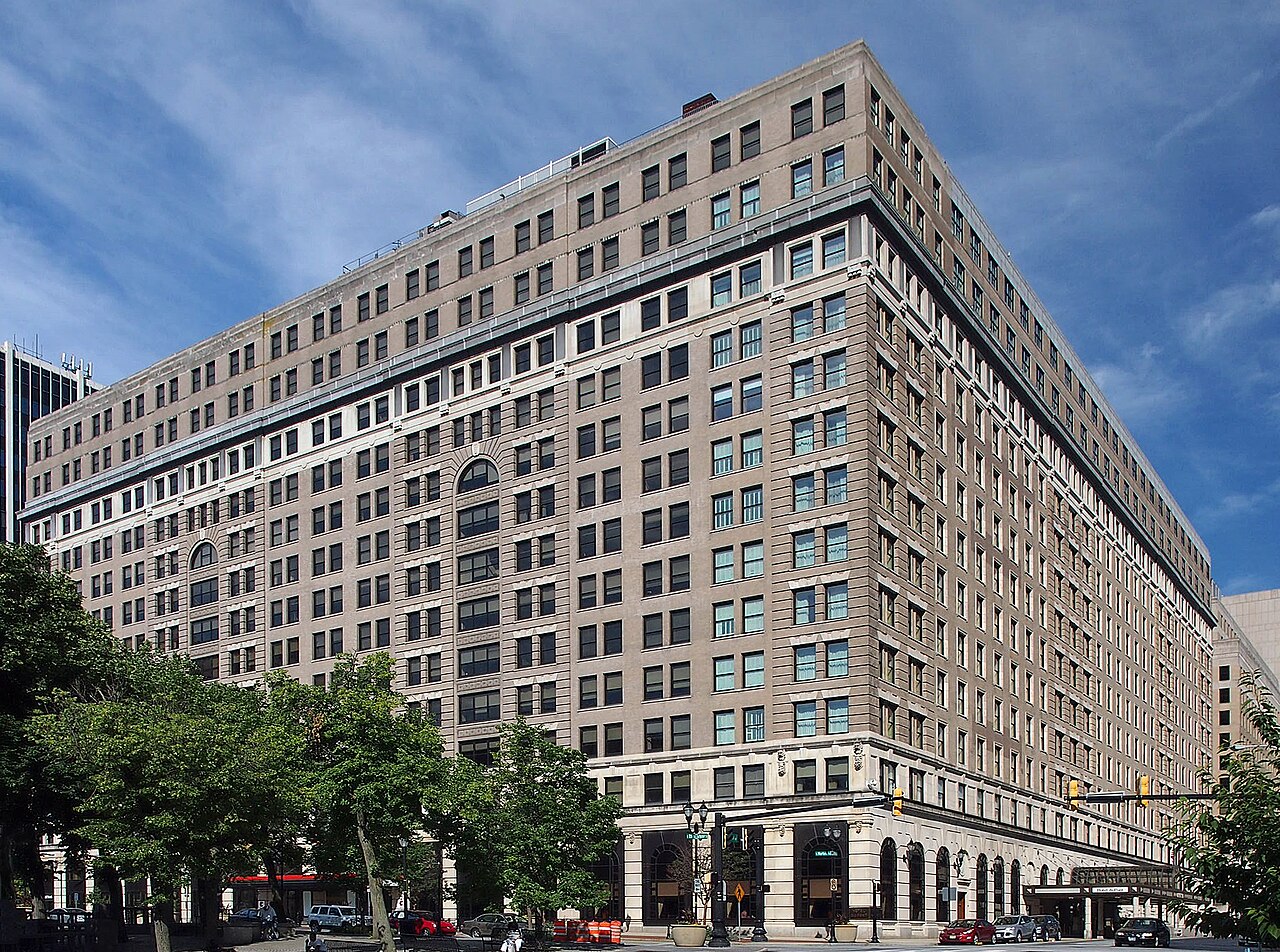
DuPont, officially DuPont de Nemours, Inc., is a Delaware-based company serving healthcare, water, construction, and industrial markets. It was founded in 1802 by French-American chemist and industrialist Éleuthère Irénée du Pont de Nemours. The business began as a gunpowder manufacturer and played a major role in Delaware’s development. Today, it operates two divisions: Healthcare & Water Technologies (47% of 2025 revenue) makes medical packaging like Tyvek and Tychem protective suits, plus Amberlite resins, Filmtec reverse osmosis and nanofiltration elements, and Inge and Itegratec ultrafiltration modules. Diversified Industrials (53% of 2025 revenue) produces repair-and-remodel construction products such as Tyvek house wrap, Styrofoam insulation, Corian, Vespel shapes and parts, Molykote lubricants, Betaforce, and Betaseal.
DuPont was the world’s largest chemical company by sales. Its scientists developed many polymers in the 20th century, including Vespel, neoprene, nylon, Corian, Teflon, Mylar, Kapton, Kevlar, Zemdrain, Nomex, Tyvek, Sorona, viton, Corfam, and Lycra. They also created chemicals like Freon (chlorofluorocarbons) for refrigerants, and synthetic pigments and paints such as ChromaFlair. In July 2015, DuPont spun off its chemicals operations into Chemours. In August 2017, it merged with Dow Chemical to become DowDuPont. After 18 months, DowDuPont spun off its material science divisions into a new Dow Chemical entity and its agribusiness divisions into Corteva, while reverting to the DuPont name and keeping the specialty products divisions.
**History**
DuPont was founded in 1802 by Éleuthère Irénée du Pont, using capital raised in France and gunpowder machinery imported from there. He started the company at Eleutherian Mills on Brandywine Creek near Wilmington, Delaware, two years after his family fled France to escape the French Revolution and religious persecution of Huguenot Protestants. The business grew quickly, and by the mid-19th century it was the largest supplier of gunpowder to the U.S. military, providing one-third to one-half of the powder used by the Union Army in the Civil War. The Eleutherian Mills site is now a museum and National Historic Landmark.
In the 1880s, DuPont began producing dynamite, and in the 1890s, smokeless powder. By the early 20th century, it controlled nearly two-thirds of the explosives market. After president Eugene du Pont died in 1902, surviving partners sold the company to three great-grandsons of the founder. Charles Lee Reese became director and centralized research departments. The DuPont Experimental Station, established in 1903, was one of the first U.S. industrial research labs. The company bought several smaller chemical firms, leading to a 1912 antitrust ruling that declared its explosives dominance a monopoly and ordered divestment. This created Hercules Powder Company (later part of Ashland Inc.) and Atlas Powder Company (later part of AkzoNobel). DuPont kept single-base nitrocellulose powders, while Hercules held double-base powders. DuPont later developed the Improved Military Rifle (IMR) line of smokeless powders. In 1910, it published "Farming with Dynamite," a brochure on using dynamite for stumps and obstacles. DuPont also established two early industrial labs and began work on cellulose chemistry, lacquers, and non-explosive products. DuPont Central Research was set up at the Experimental Station, across the creek from the original powder mills.
In 1914, Pierre S. du Pont invested in General Motors (GM), joined its board in 1915, and invested $25 million in 1917, increasing to $50 million in 1919. He became GM’s president in 1920 and chairman in 1923, leading it to become the world’s largest automaker. However, in June 1957, the U.S. Supreme Court forced DuPont to divest its GM shares under the Clayton Antitrust Act due to DuPont’s influence.
In 1920, DuPont formed a joint venture with French textile company Comptoir des Textiles Artificiels (CTA) to produce artificial silk (viscose) at the Yerkes plant in Buffalo, New York. This material had existed for decades, with European and American Viscose dominating markets. In 1924, the U.S. officially renamed it Rayon, though Europe kept the term viscose. In 1923, the two companies formed a second joint venture to produce Cellophane at the same site. DuPont bought the French interests in both ventures in March 1928. Throughout the 1920s, DuPont emphasized materials science, hiring Wallace Carothers to lead research.
- founder
- Éleuthère Irénée du Pont de Nemours
- headquarters
- Delaware
- industry
- Chemicals, materials science
- known_for
- Development of polymers such as nylon, Teflon, Kevlar, and Lycra; major role in the Manhattan Project
Lore & Background
He started the company at the Eleutherian Mills, on the Brandywine Creek, near Wilmington, Delaware, two years after du Pont and his family left France to escape the French Revolution and religious persecution against Huguenot Protestants. The company began as a manufacturer of gunpowder, and by the mid-19th century had become the largest supplier of gunpowder to the United States military, supplying one-third to one-half the powder used by the Union Army during the American Civil War. In the 20th century, DuPont developed many polymers such as Vespel, neoprene, nylon, Corian, Teflon, Mylar, Kapton, Kevlar, Zemdrain, Nomex, Tyvek, Sorona, viton, Corfam and Lycra. Its scientists also developed Freon (chlorofluorocarbons) for the refrigerant industry. During World War II, DuPont played a major role in the Manhattan Project, designing, building and operating the Hanford Site plutonium producing plant in Hanford, Washington.
Reader's Guide
DuPont's significance lies in its transformation from a gunpowder manufacturer to a leading chemical and materials science company. Its development of synthetic polymers and chemicals, including nylon, Teflon, Kevlar, and Freon, had widespread impact on consumer goods, industrial applications, and the refrigerant industry. The company also contributed to the U.S. military, supplying gunpowder during the Civil War and participating in the Manhattan Project. DuPont's legacy includes its role in the development of Delaware and its influence on the automotive industry through investments in General Motors, though antitrust actions later forced divestment. The company's research laboratories, such as the DuPont Experimental Station, were among the first industrial research labs in the United States.
Did You Know?
- DuPont supplied one-third to one-half of the gunpowder used by the Union Army during the American Civil War.
- DuPont scientists invented Freon (chlorofluorocarbons) for the refrigerant industry.
- DuPont designed, built, and operated the Hanford Site plutonium producing plant for the Manhattan Project.
- DuPont developed Kevlar in the 1960s, leading to bulletproof vests and body armor.
Early Life and Education
His parents were Mary Belin and Lammot du Pont I, and his lineage traced directly back to Éleuthère Irénée du Pont, the man who had founded the company generations earlier. That family connection, however, came at a brutal cost. When Irénée was just eight years old, his father was killed in a catastrophic explosion at the DuPont works in Repauno, New Jersey, leaving a young boy to grow up in the shadow of the very industry that had taken his parent. His education followed a path typical of the era's elite. A year later he added a master's degree in chemical engineering from the same institution. During his time at MIT, he joined the Phi Beta Epsilon fraternity, a small but notable part of his formative years.
Rise Through DuPont's Ranks
Before ever setting foot in a DuPont facility, Irénée spent several years working for Fenn's Manufacturing Contracting Company, gaining practical experience outside the family business. From there his career climbed steadily: he served as assistant treasurer, then as assistant to the general manager, and eventually took the helm of the developmental department. By the time World War I began, he had reached the rank of vice president, and just a year after that he was named chairman of the executive committee. Historians credit him with steering DuPont away from its narrow dependence on explosives and toward a far broader industrial portfolio. Yet his presidency was not without dark chapters: during his watch, three workers were fatally poisoned by tetraethyl lead, and in the 1920s and 1930s the company supported German rearmament and collaborated with the chemicals giant IG Farben.
Family, Fortune, and the Xanadu Estate
Irénée du Pont I married his second cousin, Irene Sophie du Pont, and together they raised a large family of nine children—eight daughters and a single son. The family's social standing was matched by extraordinary personal wealth. That wealth found dramatic physical expression in Varadero, Cuba, where he built a grand mansion he named Xanadu, a name evoking the fantastical palace from Tennyson's poetry and signaling his taste for the grandiose. The estate became a symbol of the old-money extravagance that characterized the Du Pont family at its peak. His personal papers, including letters exchanged with his older sister Louisa d'Andelot du Pont Copeland, are preserved in the Sophie du Pont May collection at the Hagley Museum and Library, offering a rare glimpse into the private world of one of America's most powerful industrial families.
Political Convictions and Controversy
A registered Republican throughout his adult life, Irénée du Pont I carved out a distinct political identity that ran counter to the prevailing liberal currents of the twentieth century. He was a vocal advocate for the repeal of Prohibition and a fierce opponent of the New Deal programs championed by President Franklin Roosevelt, viewing the left-leaning agenda as an unacceptable expansion of government into the economy. His opposition was not merely rhetorical; he was a founding member of the American Liberty League, the organization created to rally business interests against Roosevelt's policies. Whether or not he played a direct role, the association cemented his reputation as a figure willing to operate in murky spaces between corporate power and political ambition. Beyond politics, he also served as head of the Du Pont trust, a role that gave him influence over the family's vast holdings well beyond the company's boardroom. His political and business legacies remain intertwined in the public memory of the Du Pont name.
Gallery




Frequently Asked Questions
What are DuPont's signature 'powers' or contributions?
The company is best known for pioneering landmark synthetic polymers such as nylon, Teflon, Kevlar, and Lycra, materials that reshaped everything from textiles to aerospace. Its R&D pipeline effectively defined modern polymer chemistry.
How does DuPont's story end?
DuPont is still very much active today, operating across healthcare, water treatment, construction, and industrial markets from its Delaware base. Rather than a single dramatic finale, its narrative continues as an ongoing corporate presence in global manufacturing.
Why is DuPont considered important in the broader canon?
Beyond its consumer-facing materials, DuPont played a major role in the Manhattan Project, lending its chemical expertise to one of the 20th century's most consequential programs. It also helped build Delaware's economy, making the state a lasting beneficiary of its operations.
More in Companies And Conglomerates 1-21
Spotted an error? Know more?
This is a living reference — every entry is fact-audited, and reader corrections feed straight into our audit queue. Suggest an edit · See this site's audit record