
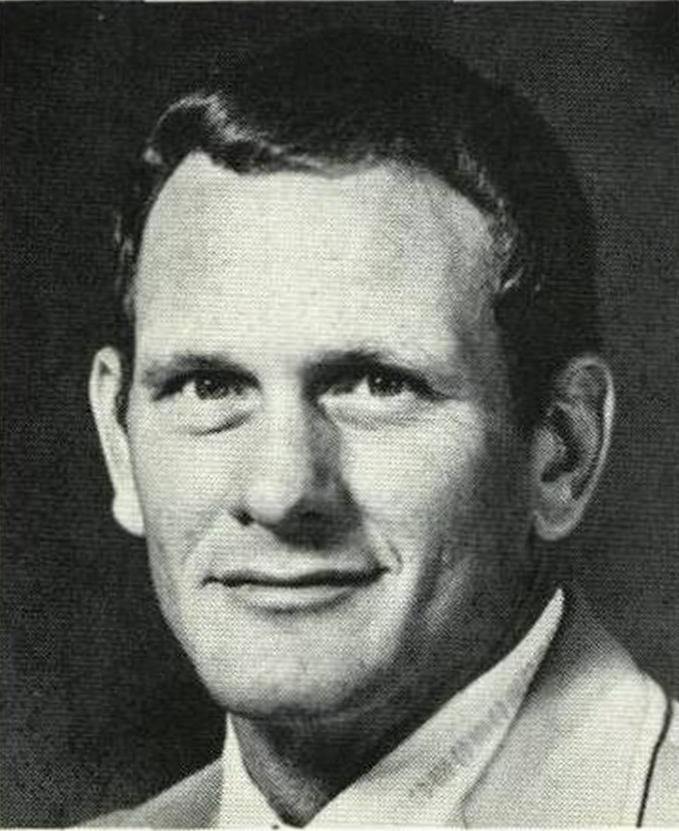
Bill Hicks
American stand-up comedian known for dark, controversial social satire.

via Wikipedia: Bill Hicks · see source
Bill Hicks was born on December 16, 1961, in Valdosta, Georgia, and died of pancreatic cancer on February 26, 1994, at age 32. He worked as a stand-up comedian and satirist, covering religion, politics, and philosophy with a dark, controversial edge. Though he toured widely in the United States and appeared on several major TV shows in the 1980s, his biggest audiences came in the United Kingdom, where he sold out large venues during a 1991 tour. He also played guitar and wrote songs.
Hicks grew up in Alabama, Florida, and New Jersey before his family settled in Houston, Texas, when he was seven. He had an older sister, Lynn, and an older brother, Steve. As a child, he copied Woody Allen and Richard Pryor, and wrote comedy routines with his friend Dwight Slade. At Stratford High School and the University of Houston, he performed for classmates, mostly using Allen’s material. At home, he wrote his own one-liners and slipped them under Steve’s door for feedback; Steve told him to keep going. Hicks mocked his family’s Southern Baptist beliefs early on, once joking to the Houston Post that they were “Yuppie Baptists” who worried about leaving notes after scratching a neighbor’s Subaru. Biographer Cynthia True recorded a typical argument: Hicks’s father insisted the Bible was God’s literal word; Bill countered that beliefs were fine to cherish but not to share as truth. Despite these clashes, he stayed close to his family and never rejected spirituality altogether, instead seeking alternative experiences. Kevin Slade, Dwight’s older brother, introduced him to Transcendental Meditation, taking him and Dwight to a residence course in Galveston over Thanksgiving. At 17, his worried parents sent him to a psychoanalyst; Hicks said the analyst told him after one session, “It’s them, not you.”
Hicks began performing at the Comedy Workshop in Houston at age 16, part of the Texas Outlaw Comics group there. By January 1986, he was using recreational drugs and running low on money. His career picked up in 1987 when he appeared on Rodney Dangerfield’s Young Comedians Special. That year he moved to New York City and for the next five years did about 300 shows annually. On the album *Relentless*, he joked that he quit drugs because “once you’ve been taken aboard a UFO, it’s kind of hard to top that,” though he continued praising LSD, marijuana, and psychedelic mushrooms in his act. He eventually fell back on chain-smoking, which became a recurring theme. In 1988, he hired his first professional manager, Jack Mondrus. On the track “Modern Bummer” from his 1990 album *Dangerous*, he said he quit drinking alcohol in 1988. His first video, *Sane Man*, came out in 1989; a remastered version with extra footage was released in 1999.
In 1990, Hicks released *Dangerous*, performed on HBO’s *One Night Stand*, and appeared at Montreal’s Just for Laughs festival. He was engaged to his manager, Colleen McGarr, who booked him there. That November, he was part of a group of American comedians performing in London’s West End. He became a huge hit in the UK and Ireland, touring there through 1991. That year he returned to Just for Laughs and filmed his second video, *Relentless*. In 1992, he made a brief musical detour with the *Marble Head Johnson* album, collaborating with high school friend Kevin Booth and drummer Pat Brown. Also in 1992, he toured the UK, recording the *Revelations* video for Channel 4, closing with his often-quoted line “It’s Just a Ride.” That tour’s stand-up set was released as the double CD *Salvation*. Rolling Stone named him “Hot Standup Comic” in 1993.
Progressive metal band Tool invited Hicks to open several concerts during its 1993 Lollapalooza appearances. At one show, he asked the audience to look for a lost contact lens, and thousands of people complied. Tool members felt they and Hicks “were resonating similar concepts.” To raise awareness of his material, Tool dedicated their triple-platinum 1996 album *Ænima* to him. After his death, his work gained wider acclaim, especially through posthumous album releases, building a substantial cult following. In 2007, Channel 4 ranked him number six on its “100 Greatest Stand-Up Comics” list; he rose to number four in 2010. Rolling Stone placed him at number 13 on its 2017 list of the 50 best stand-up comics of all time.
- born
- December 16, 1961, Valdosta, Georgia
- died
- February 26, 1994, pancreatic cancer, age 32
- field
- Stand-up comedy, satire, music
- nationality
- American
- known_for
- Controversial dark comedy on religion, politics, and philosophy; posthumous cult
Verified Timeline
Lore & Background
Hicks was born in Valdosta, Georgia, the son of James Melvin 'Jim' Hicks and Mary (Reese) Hicks. He had an older sister, Lynn, and an older brother, Steve. The family lived in Alabama, Florida, and New Jersey before settling in Houston, Texas, when Hicks was seven. He was drawn to comedy at an early age, emulating Woody Allen and Richard Pryor, and wrote routines with his friend Dwight Slade. At age 16, he began performing at the Comedy Workshop in Houston. He attended Stratford High School and the University of Houston, performing comedy for classmates. At home, he wrote one-liners and slid them under his brother Steve's door for analysis. Early on, Hicks mocked his family's Southern Baptist beliefs, but remained close with his family and did not reject spiritual ideology; he sought alternative methods of experiencing it, including Transcendental Meditation introduced by Kevin Slade.
Reader's Guide
Hicks's career began in the Texas Outlaw Comics group at the Comedy Workshop. After a downturn in 1986, his career rose in 1987 with an appearance on Rodney Dangerfield's Young Comedians Special. He moved to New York City, performing about 300 times a year for five years. He released his first album, Dangerous, in 1990, and performed on HBO's One Night Stand and at Montreal's Just for Laughs. He was a huge hit in the UK and Ireland, touring there throughout 1991. He recorded the Revelations video for Britain's Channel 4 and was voted 'Hot Standup Comic' by Rolling Stone in 1993. Progressive metal band Tool invited him to open concerts in its 1993 Lollapalooza appearances and dedicated their album Ænima to him. His final Late Show with David Letterman appearance in October 1993 was entirely cut from broadcast due to producer concerns about material on religion and anti-abortion; Letterman later aired the routine in 2009 and took responsibility. Hicks died of pancreatic cancer on February 26, 1994. Posthumous album releases led to a substantial cult following. In 2007, he was number six on Channel 4's list of the '100 Greatest Stand-Up Comics', rising to No. 4 in 2010. In 2017, Rolling Stone ranked him number 13 on its list of the 50 best stand-up comics of all time.
Did You Know?
- At age 17, Hicks's parents took him to a psychoanalyst; after the first group session, the analyst told him, 'You can continue coming if you want to, but it's them, not you.'
- During Tool's 1993 Lollapalooza appearances, Hicks asked the audience to look for a lost contact lens, and thousands of people complied.
- Hicks's final Late Show with David Letterman appearance in October 1993 was entirely cut from broadcast; Letterman later aired the routine in full on January 30, 2009, and took responsibility for the original decision.
- Hicks was voted 'Hot Standup Comic' by Rolling Stone magazine in 1993.
- Tool's triple-platinum album Ænima (1996) was dedicated to Hicks, and its final track 'Third Eye' contains samples from his Dangerous and Relentless albums.
Roots in the South and the Seeds of Satire
Born in Valdosta, Georgia, in December 1961, William Melvin Hicks grew up in a family that shuffled through Alabama, Florida, and New Jersey before putting down roots in Houston when he was seven. His older brother Steve and sister Lynn formed part of a household where, as Hicks later joked to the Houston Post in 1987, the family were "Yuppie Baptists" who fretted over trivial social etiquette. It was in this environment that his comedic instincts first sharpened. A teenager emulating Woody Allen and Richard Pryor, he wrote routines alongside a friend named Dwight Slade and performed material for classmates at Stratford High School and the University of Houston. At home, he drafted one-liners and slipped them under Steve's bedroom door for feedback; Steve's reply—"Keep it up. You're really good at this"—became an early validation. Even as he poked fun at his family's religious convictions in a recurring father-son debate about the Bible's literalness, Hicks never abandoned spirituality itself. Through Kevin Slade, elder brother of Dwight, he explored Transcendental Meditation and other contemplative practices, including a residence course in Galveston over Thanksgiving weekend. At age 17, his worried parents took him to a psychoanalyst, who told Hicks after the first group session, "You can continue coming if you want to, but it's them, not you."
From the Comedy Workshop to the World Stage
At sixteen, Hicks began honing his craft at Houston's Comedy Workshop, where he became part of the Texas Outlaw Comics collective. By January 1986, however, his finances had eroded and he was using recreational drugs. The turning point arrived in 1987 with a slot on Rodney Dangerfield's Young Comedians Special, after which he relocated to New York City and settled into a punishing schedule of roughly three hundred performances a year for the next five years. That relentless grind produced his first album, Dangerous, in 1990, an HBO special called One Night Stand, and a slot at Montreal's Just for Laughs festival. The same year he was engaged to his booking agent Colleen McGarr. The breakthrough on the international stage came in the UK and Ireland, where he became a massive live draw and filled large venues throughout a 1991 tour. He followed that with the Relentless video, a 1992 UK run that yielded the Channel 4 recording Revelations and the double-CD set Salvation, and a brief foray into music with the Marble Head Johnson album alongside old Houston friends Kevin Booth and Pat Brown. Rolling Stone named him "Hot Standup Comic" in 1993.
Resonance with Tool and the Lollapalooza Stage
In 1993, progressive metal band Tool invited Hicks to open a series of their Lollapalooza dates, an unusual pairing that produced one of the most memorable moments of that festival run: Hicks asking thousands of concertgoers to help him find a lost contact lens, and thousands of them actually looking. The band's members felt a deep creative kinship, describing the two acts as "resonating similar concepts." That connection deepened after Hicks's death. Tool dedicated their triple-platinum 1996 album Ænima to him, weaving his ideas directly into the record's fabric. The lenticular album sleeve and the chorus of the title track both reference a sketch from his Arizona Bay album in which he imagines Los Angeles sliding into the Pacific Ocean. The closing track, "Third Eye," incorporates audio samples pulled from his Dangerous and Relentless recordings. An alternate version of the Ænima artwork features a painting of Hicks labeled "Another Dead Hero," cementing his place in the band's mythology and, by extension, in the broader landscape of alternative music culture.
A Posthumous Ascent and Lasting Cultural Footprint
Hicks's life was cut short on February 26, 1994, when pancreatic cancer claimed him at just thirty-two. Yet his influence accelerated rather than faded after his death. A wave of posthumous album releases introduced his work to new audiences, and his material—spanning religion, politics, philosophy, and darkly comic social observation—found a devoted cult following in creative circles well beyond the stand-up world. The critical recognition followed steadily. In 2007, Channel 4 placed him at number six on its "100 Greatest Stand-Up Comics" list; by the 2010 revision he had climbed to fourth. Rolling Stone's 2017 ranking of the fifty best stand-up comics of all time settled him at number thirteen. His legacy extends past comedy into music, where Tool's Ænima album carries his voice and ideas, and into the broader conversation about free thought, spiritual inquiry, and the role of the satirist in public life. A teenager who slid jokes under his brother's door in Houston became, within a decade, a figure whose words still echo across genres and generations.
Gallery

Frequently Asked Questions
Who is Bill Hicks?
Bill Hicks was an American stand-up comedian and satirist born in Valdosta, Georgia, in 1961. He built a reputation in the 1980s and early '90s for confrontational, darkly comic material that dissected religion, politics, and mainstream culture.
What made Bill Hicks's comedy stand out from other comedians of his time?
His sets blended profanity-laced ranting, philosophical tangents, and sharp social criticism into a performance style that felt closer to a furious lecture than a traditional joke routine. That intensity made his material deeply controversial while also drawing a fiercely loyal audience.
How did Bill Hicks die?
He died on February 26, 1994, at age 32, after a diagnosis of pancreatic cancer. His early death turned him into a figure many fans view as a tragic loss to the comedy world.
Why does Bill Hicks still have a huge following decades later?
Although he never achieved mainstream stardom while alive, his 1991 UK tour filled large venues and his posthumous recordings ignited a cult following that has only grown. Fans often point to his unfiltered honesty and willingness to challenge comfortable assumptions as the reason his voice still feels urgent.
Did Bill Hicks do anything besides stand-up?
Yes—he was also a guitarist and songwriter, weaving live music into his comedy performances. His musical work, while less widely circulated than his stand-up recordings, added a distinct creative layer to his overall artistic output.
More in Comedians And Satirists 1-20
Spotted an error? Know more?
This is a living reference — every entry is fact-audited, and reader corrections feed straight into our audit queue. Suggest an edit · See this site's audit record