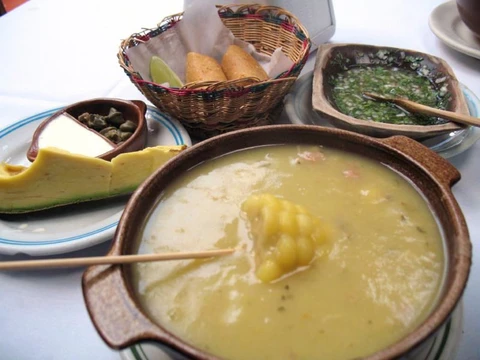
Mazamorra
A diverse family of maize-based dishes across Spanish-speaking regions.

Mazamorra, or masamorra, is the name for numerous traditional dishes in Spanish and Hispanic American regional cuisines. The term derives from Andalusian Arabic and ultimately from Ancient Greek, influenced by Spanish 'masa' (dough). The dish varies widely by region, ranging from cold soups and stews to desserts and beverages, all typically based on maize or other local ingredients.
Quick Facts
- Region
- Spain and Hispanic America
- Course
- Drink, dessert
Facts from the source article.
Lore & Background
In Spain, Andalusian mazamorra is a cold soup made with bread, almonds, garlic, olive oil, and vinegar, similar to ajoblanco. In La Guardia, Toledo, it is a combination of fried vegetables. In Argentina, mazamorra is a traditional dessert with native roots, made from white maize, water, sugar, and vanilla, often with milk added; it is commonly eaten on national holidays like 25 May and Independence Day.
In Colombia, mazamorra has indigenous and colonial origins as a maize-based dish, but today it is more commonly a corn-based beverage or soft, mushy corn dish. In Antioquia, it accompanies panela and is a side dish to meals such as bandeja paisa. In Cundinamarca and Boyacá, it is cooked with onions, coriander, garlic, faba beans, potatoes, and meat, known as mazamorra chiquita. In the Dominican Republic and Cuba, the dish is called majarete, a thick pudding made with corn, milk, butter, sugar, and cinnamon; both countries claim to have originated it, and due to migration the origin is lost.
In Ecuador, mazamorra is a simpler, pudding-like dish made from corn cooked with milk, sugar or panela, sometimes fruit, eaten as dessert or breakfast, distinct from the festive colada morada. In Paraguay, known as kaguyjy in Guaraní, it is made with locro maize and gained popularity during the Paraguayan War as a nutritious substitute. In Peru, purple mazamorra uses purple corn rich in anthocyanin, cooked with pineapple, cinnamon, and sweet potato flour, especially for the Lord of Miracles day celebrations. In Uruguay, it has been consumed since colonial times as a dessert or a cazuela with meat and vegetables. In Costa Rica, it is a corn porridge with milk, clove, and vanilla. In Puerto Rico, it is a fresh corn custard with coconut cream, evaporated milk, and spices.
Reader's Guide
Mazamorra represents a remarkable example of culinary adaptation across the Spanish-speaking world, with each region transforming a basic concept—cooked maize or bread—into a distinct dish reflecting local ingredients and traditions. From the cold almond soup of Andalusia to the purple corn pudding of Peru, mazamorra illustrates how a single name can encompass a wide range of preparations, including soups, stews, desserts, beverages, and porridges. Its historical significance is evident in Argentina, where it is tied to national holidays, and in Paraguay, where it served as a vital food during the Paraguayan War. In Colombia, the dish evolved from a sailor's stew to a common street food and side dish, while in the Dominican Republic and Cuba, the shared majarete highlights cultural exchange. The diversity of mazamorra underscores the importance of maize in Hispanic American cuisine and the way food traditions travel and transform across borders. Its legacy continues in everyday meals and festive occasions alike, making it a versatile and enduring element of regional gastronomy.
Did You Know?
- In Paraguay, mazamorra (kaguyjy) gained popularity during the Paraguayan War as a nutritious substitute for regular meals.
- In Peru, purple mazamorra is made specially in October for the celebrations of the Lord of Miracles day.
More in Colombian cuisine 1-24
Spotted an error? Know more?
Reader corrections go straight into our review queue. Suggest an edit · How this site is sourced