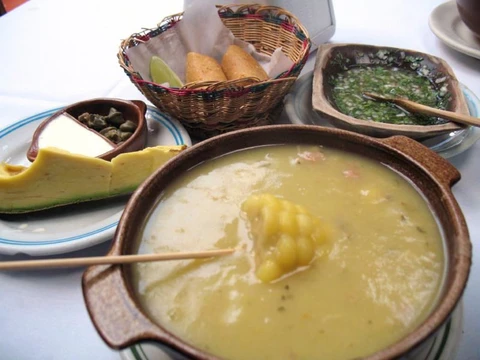
Buñuelo
Fried dough fritter with deep roots in Mediterranean and Iberian tradition.

Buñuelos are fried dough fritters found in Spain, Latin America, the Philippines, and other regions with a historical connection to Spaniards or Sephardic Jews, including Southwest Europe, the Balkans, Anatolia, and parts of Asia and North Africa. They are traditionally prepared at Christmas, Easter, and Hanukkah, and similar fried dough fritters existed in Iberia and the Mediterranean long before, including in Roman and medieval Christian contexts. Buñuelos typically consist of a simple, wheat-based yeast dough, often flavored with anise, that is thinly rolled, cut or shaped into individual pieces, then fried and finished off with a sweet topping. They may be filled with a variety of things, sweet or savory, and can be round in ball shapes or disc-shaped.
Quick Facts
- Country
- Spain
- Region
- Southwest Europe, Latin America, Southeast Europe, Turkey, Israel, and Spanish influenced parts of Africa and Asia
- Course
- Snack, bread
- Served
- Hot or room temperature
- Cookbook
- Buñuelo
Facts from the source article.
Lore & Background
Similar fried dough fritters existed in Iberia and the Mediterranean long before the Morisco period, including in Roman and medieval Christian contexts. The word 'buñuelo' and its variations derive from the Old Spanish *boño or bonno, which itself derives from the Germanic Gothic language *𐌱𐌿𐌲𐌲𐌾𐍉 (*buggjō, 'lump'), and ultimately from Proto-Indo-European *bʰenǵʰ- (thick, dense, fat). The French beignet is etymologically cognate via the Germanic Frankish language. Dough fritters are known in Mediterranean cuisine from the work of Cato the Elder, who included a recipe with the name 'balloons' in his book De Agri Cultura, written in the second century BC, where flour and cheese balls were fried and served with a spread made of honey and poppy seeds.
Reader's Guide
Buñuelos hold significance as a versatile fried dough fritter that appears across many cultures with historical ties to Spain and Sephardic Jews. Their preparation and consumption vary widely by region: in Spain, they are a dessert and snack typical in many autonomous communities during regional holidays, with the buñuelo de viento being well-known. In Latin America, they are seen as a symbol of good luck and are often served with syrups made from piloncillo, panela, or chancaca. In Colombia, they are a traditional Christmas dish made with small curd white cheese and cassava flour. In the Philippines, they are commonly eaten with tsokolate, the local hot chocolate drink. The dish's legacy is reflected in its many regional adaptations, from pumpkin buñuelos in Valencia to cassava-based versions in the Dominican Republic and Nicaragua. Buñuelos also appear in Sephardic Jewish cuisine, where they are traditionally made from yeasted wheat dough and covered in a honey glaze. December 16 is National Buñuelo Day, and the dish was featured on the Netflix TV series Street Food in season 2.
Did You Know?
- The word 'buñuelo' derives from the Germanic Gothic word *buggjō, meaning 'lump'.
- In Latin America, buñuelos are seen as a symbol of good luck.
- Buñuelos are often enjoyed during the Novena de Aguinaldos, but there is no official National Buñuelo Day.
Roots in a Layered Culinary Tradition
Colombian cuisine is not a single monolithic tradition but a rich tapestry woven from at least three major cultural threads: Indigenous Colombian, Spanish, and African culinary heritage, with a faint Arab imprint in certain coastal areas. Before European contact, the Tairona people thrived along the Caribbean shore while the Muisca cultivated the highlands to the south, each contributing foundational foodways that would later merge with imported European and Afro-Caribbean practices. Buñuelos, the deep-fried dough balls that anchor the Colombian Christmas table, emerge from precisely this layered history. They are not the product of one single culture but of centuries of exchange, adaptation, and reinvention across the country's six principal culinary regions—Insular, Caribbean, Pacific, Andean, Orinoco, and Amazonian. Understanding buñuelos therefore requires understanding the broader story: a cuisine that has continuously absorbed, blended, and reinterpreted the ingredients and techniques of every tradition that has touched Colombian soil.
The Christmas Table
Buñuelos occupy a distinctive and celebrated position in Colombian food culture as the quintessential deep-fried dough balls of the Christmas season. They are not everyday fare but a seasonal marker, a dish that signals the holiday period and gathers families around the table. In the broader taxonomy of Colombian representative dishes, buñuelos are grouped alongside other iconic appetisers and soups such as sancocho de gallina, ajiaco, and patacones, placing them firmly in the category of dishes that open a meal or serve as a shared first course. Their seasonal exclusivity gives them a special emotional weight: they are the flavour of December in Colombia, a tradition that recurs year after year and binds generations through the simple act of gathering to eat fried dough balls together. In a country where the everyday table already features an extraordinary range of dishes—from arepas to empanadas to the elaborate bandeja paisa—buñuelos stand out precisely because they are reserved for the most important celebration of the year.
A Place Among Colombia's Iconic Dishes
To understand where buñuelos sit in the Colombian culinary landscape, it helps to see the full constellation of representative dishes. They share the appetiser and soup category with sancocho de gallina, ajiaco, and patacones, while the broader menu stretches from arepas and empanadas to the massive bandeja paisa of Medellín, the slow-boiled Tamales Tolimenses of the Tolima highlands, and the seafood-rich rondon of the San Andrés islands. Buñuelos also connect to the wider tradition of fried foods in Colombian eating culture, a tradition that finds its most informal expression in piqueteaderos—rustic eateries where platters of fried specialties are set on the table for sharing. The common ingredient palette that underpins all of these dishes—cereals like maize and rice, tubers like potato and cassava, legumes, assorted meats, and tropical fruit—provides the raw material from which buñuelos and every other representative dish are built. In this sense, buñuelos are both a specific seasonal item and a node in a vast, interconnected web of Colombian food identity.
Regional Identity and Shared Heritage
Colombia's six culinary regions—Insular, Caribbean, Pacific, Andean, Orinoco, and Amazonian—each boast their own signature dishes and flavour profiles, from the spicy fish and lobster of the Caribbean coast to the broiled guinea pig of Nariño's Andean highlands and the barbecued ternera llanera of the Llanos. Yet buñuelos transcend any single region's claim. They appear in the national list of representative appetisers rather than being pinned to one locality, suggesting a shared heritage that cuts across the country's geographic and cultural diversity. This universality is all the more remarkable in a cuisine where even the humblest sauce, ají, comes in dozens of regional varieties ranging from sweet to fifty thousand Scoville units of heat. Buñuelos, as a Christmas-season deep-fried dough ball, function as a common thread: a dish that a family in Bogotá, a coastal town on the Caribbean, and a village in the Amazonian interior can all recognise and celebrate, uniting six distinct culinary worlds under one seasonal tradition.
Frequently Asked Questions
What exactly is a Colombian buñuelo?
It is a small, deep-fried fritter made from a simple wheat-based yeast dough—often anise-flavored—that is rolled thin, cut into individual rounds, and fried until golden. It belongs to a wider family of fried-dough treats rooted in Mediterranean and Iberian cooking traditions.
When do Colombians traditionally serve buñuelos?
Buñuelos are most closely tied to Christmas, Easter, and Hanukkah, appearing on holiday tables during those observances. They function as a festive, celebratory item rather than an everyday snack.
What does a buñuelo taste and feel like?
The flavor is mild and gently sweet, with a warm anise note running through the wheat dough. The exterior is crisp from deep-frying while the interior stays soft and pillowy.
Where does the word 'buñuelo' come from?
The name traces back to the Germanic Gothic root *buggjō, meaning 'lump,' which fits the small, rounded shape of the fritter. French 'beignet' is a close cognate sharing that same linguistic lineage.
What does a buñuelo symbolize in Colombian culture?
In Latin American tradition the buñuelo is regarded as a symbol of good luck, making it a meaningful presence at holiday gatherings. Its round, golden form is associated with prosperity and positive fortune for the season ahead.
More in Colombian cuisine 1-24
Spotted an error? Know more?
Reader corrections go straight into our review queue. Suggest an edit · How this site is sourced