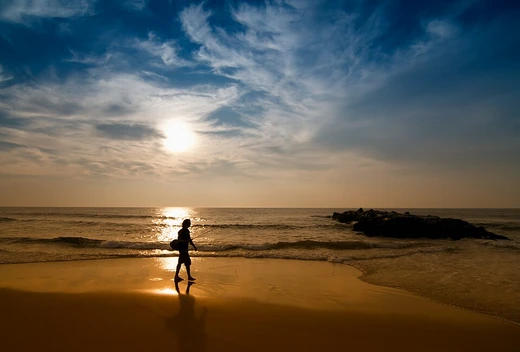
Beach evolution
Natural shoreline change from sediment accumulation and erosion.
Beaches take shape over centuries as sand builds up from the ongoing erosion of rock and sediment by water. River deltas also add silt carried from upstream, gradually extending shorelines. Sudden, violent events like tsunamis, hurricanes, and storm surges can speed up this natural process.
Quick Facts
- Diameter of surtsey island
- 800 meters (2,600 ft)
- Buildings damaged in pozzuoli
- 8,000
Facts from the source article.
Accretion and erosion
Tsunamis can cause significant erosion and sediment displacement, stripping away years of accumulated sand from beaches and devastating coastal vegetation. These powerful waves can flood inland areas far beyond the typical high-tide mark, and their swift currents can demolish homes and other coastal structures. A storm surge is an onshore gush of water associated with a low pressure weather system, and can cause both beach accretion and erosion. Historically notable storm surges occurred during the North Sea Flood of 1953, Hurricane Katrina, and the 1970 Bhola cyclone. Both geological events and the climate can change the relative height of the Earth's surface to sea-level progressively or suddenly, continuously altering coastlines. Volcanic activity can create new islands; Surtsey Island in Iceland, with a diameter of 800 meters (2,600 ft), was created between November 1963 and June 1967 from undersea vents of the Vestmannaeyjar submarine volcanic system, and though partially eroded, is expected to last another 100 years. Some earthquakes create sudden variations of relative ground level, dramatically changing coastlines; structurally controlled coasts include the San Andreas Fault zone in California and the seismic Mediterranean belt from Gibraltar to Greece. The Bay of Pozzuoli in Italy experienced hundreds of tremors between August 1982 and December 1984, peaking on October 4, 1983, damaging 8,000 buildings and raising the sea bottom by almost 2 m, rendering the bay too shallow for large craft. The gradual evolution of beaches often comes from the interaction of longshore drift, a wave-driven process moving sediments along a beach shore, and other sources of erosion or accretion such as nearby rivers. Deltas are nourished by alluvial systems and accumulate sand and silt, growing where sediment flux from land is large enough to avoid complete removal by coastal currents, tides, or waves.
Beach management
Integrated coastal zone management minimizes negative human impacts on coasts, enhances coastal defense, and mitigates risk associated with sea level rise and other natural hazards. Beach erosion is a type of bioerosion that alters coastal geography through beach morphodynamics, with numerous incidents of modern recession mainly due to longshore drift and coastal development hazards related to human activities. Solutions range from a do-nothing approach to a move-beach-seaward approach using elements of hard and soft engineering. Interventionist methods, such as move beach seaward, combine hard engineering methods like constructing structures (accropodes) with soft engineering methods like sand dune stabilization, aimed at preventing erosion caused by longshore drift and coastal development hazards, as well as facilitating beach evolution and expansion. Five generic planning approaches in coastal defense are: abandonment of shore (do nothing, let natural processes take over); managed retreat, also called realignment; hold the shoreline using shoreline hardening techniques such as permanent concrete and rock constructions like groynes; move beach seaward using hard and soft intervention techniques, usually in areas of high economic significance; and limited intervention, usually in areas of low economic significance, often including the succession of haloseres such as salt marshes and sand dunes. Hard engineering methods, also called structural methods, include seawalls, revetments, groynes, and breakwaters; headland groynes are a combination of breakwater and groyne.
Status of beaches
For thousands of years, Mediterranean deltas have been building outward. This steady growth started about six or seven millennia ago when sea levels stopped rising, allowing rivers, seasonal streams, and other natural processes to deposit sediment. Until recent centuries, human impact on coastlines was minimal—except around the Nile delta—so natural forces largely shaped the beaches. In Barcelona, the shoreline grew naturally until harbor construction in the late Middle Ages sped things up. The ancient Greek port of Ephesus, once a major city, was gradually choked by river sediment and now sits five kilometers inland. Similarly, Ostia, Rome’s old harbor, is also miles from the sea because the coast slowly advanced. Bruges became a port in the early Middle Ages and was reachable by ship until about 1050, when its natural waterway clogged. A storm surge in 1134 carved a new channel called the Zwin, which, with a canal, kept Bruges connected to the sea until the 1400s. The city later relied on outports like Damme and Sluis, and a new seaport opened at Zeebrugge in 1907. Today, many low-lying coasts are shrinking as sand is lost and beaches narrow. This erosion can happen fast, driven by both natural and human factors. Examples include Sète, parts of California, Poland, Aveiro in Portugal, the Netherlands, and other North Sea areas. Across Europe, at least seventy percent of the coastline is eroding, though the problem is unevenly spread.
More in Coastal Landforms
Spotted an error? Know more?
Reader corrections go straight into our review queue. Suggest an edit · How this site is sourced