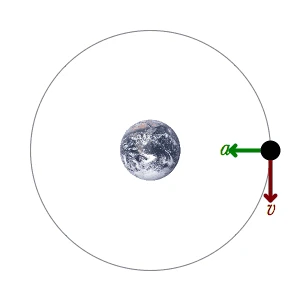
Inertia
Objects persist in motion or rest unless compelled by force.

Janusz88pl · CC BY-SA 4.0
Inertia describes how objects behave when left alone: things that are moving keep moving, and things that are still stay still, unless a force changes their speed or direction. This idea is a cornerstone of classical physics and appears in Isaac Newton’s first law of motion, which is often called the Principle of Inertia. Newton wrote that every object continues in its state of rest or straight-line motion unless forces act on it. In his 1687 work *Philosophiæ Naturalis Principia Mathematica*, he defined inertia as an innate force of matter—a power of resisting change, by which each body tries to stay as it is, whether at rest or moving uniformly forward.
The history of inertia stretches back centuries. According to Professor John H. Lienhard, the earliest known description comes from the Chinese text *Mozi*, dating to the Warring States period (475–221 BCE). Before the European Renaissance, Western philosophy followed Aristotle (384–322 BCE), who thought objects on Earth only move while a force pushes them. He believed that all moving things eventually stop unless an external power keeps them going, and he explained projectiles by claiming the surrounding medium continued to push them. Aristotle’s view was challenged over nearly two thousand years. Lucretius, following Epicurus, argued that matter’s default state was motion, not stillness. In the 6th century, John Philoponus pointed out a contradiction in Aristotle: if a medium helps projectiles move, why would it hinder motion in a void? Philoponus suggested motion came from a property imparted to the object, not from the medium—though he still thought a power was needed to keep it moving. This idea was opposed by Averroes and many scholastics, but it gained supporters in the Islamic world, including Ibn Sina (Avicenna) in the 11th century, who claimed a projectile in a vacuum would not stop unless acted upon.
In the 14th century, Jean Buridan rejected the idea that this motion-generating property, which he called impetus, faded on its own. He argued that a moving object would be stopped by air resistance and its own weight, which opposed the impetus. Buridan also said impetus grew with speed, making his idea similar to modern momentum, though he still saw a fundamental difference between motion and rest and believed impetus could be circular, explaining celestial orbits. His student Albert of Saxony and the Oxford Calculators ran experiments that weakened Aristotle’s model, and Nicole Oresme later graphed these laws of motion. Shortly before Galileo, Giambattista Benedetti refined the impetus theory to involve only straight-line motion, noting that a rock in a sling naturally wants to move in a straight line but is forced into a curve.
According to science historian Charles Coulston Gillispie, inertia entered science as a physical consequence of Descartes’ view of space and matter combined with God’s immutability. Isaac Beeckman, in 1614, was the first physicist to fully abandon Aristotle’s model. The term “inertia” itself was coined by Johannes Kepler in his *Epitome Astronomiae Copernicanae* (1617–1621), from the Latin for “idleness” or “laziness.” But Kepler meant it only as resistance to movement, assuming rest was natural and needed no explanation. It took the later work of Galileo and Newton to unify rest and motion into a single principle, giving inertia its modern meaning.
- field
- Classical physics
- known_for
- Fundamental principle of motion; first law of motion
Lore & Background
Before the European Renaissance, the prevailing theory of motion, derived from Aristotle, held that objects on Earth move only as long as a force is applied to them, a view that was disputed on several occasions over nearly two millennia. The philosopher Lucretius, following Epicurus, stated that the default state of matter was motion, not stasis. In the 6th century, John Philoponus criticized Aristotle’s inconsistency regarding projectiles and proposed that motion was maintained not by the surrounding medium but by a property imparted to the object when set in motion, a fundamental step toward the modern concept. In the 11th century, the Persian polymath Ibn Sina (Avicenna) claimed that a projectile in a vacuum would not stop unless acted upon. In the 14th century, Jean Buridan rejected the notion that this motion-generating property, which he called impetus, dissipated spontaneously, arguing that a moving object would be arrested only by air resistance and the weight of the body. Buridan’s idea of impetus increased with speed, similar to the modern concept of momentum, though he still maintained a fundamental difference between motion and rest. Shortly before Galileo, Giambattista Benedetti modified the theory to involve linear motion alone, citing the motion of a rock in a sling as an example of inherent linear motion forced into circular motion. The term “inertia” was first introduced by Johannes Kepler, derived from the Latin for “idleness,” but he defined it only as resistance to movement, assuming rest was the natural state. It was not until the later work of Galileo and Isaac Newton that rest and motion were unified into one principle, with Newton defining inertia as a property in his 1687 work *Philosophiæ Naturalis Principia Mathematica*. Inertia is the natural tendency of objects in motion to stay in motion and objects at rest to stay at rest, unless a force changes their velocity, and it is one of the primary manifestations of mass.
Reader's Guide
In the 14th century, Jean Buridan rejected the notion that impetus dissipated spontaneously, maintaining that a moving object would be arrested by air resistance and weight. His theory was followed by Albert of Saxony and the Oxford Calculators, and elaborated by Nicole Oresme. Giambattista Benedetti modified the theory to involve linear motion alone. Johannes Kepler introduced the term 'inertia,' derived from Latin for 'idleness,' but defined it only as resistance to movement. Galileo later recognized that a body moving on a level surface will continue at constant speed unless disturbed, a precursor to Newton's rectilinear inertia. Newton codified the principle in his first law of motion, though he viewed inertia as an innate resistive force. Most physicists no longer think in these terms, and the term now simply describes the phenomenon.
Did You Know?
- John Philoponus in the 6th century criticized Aristotle's explanation of projectile motion and proposed motion was maintained by a property imparted to the object.
- Ibn Sina (Avicenna) claimed in the 11th century that a projectile in a vacuum would not stop unless acted upon.
Conceptual Role and Key Distinctions
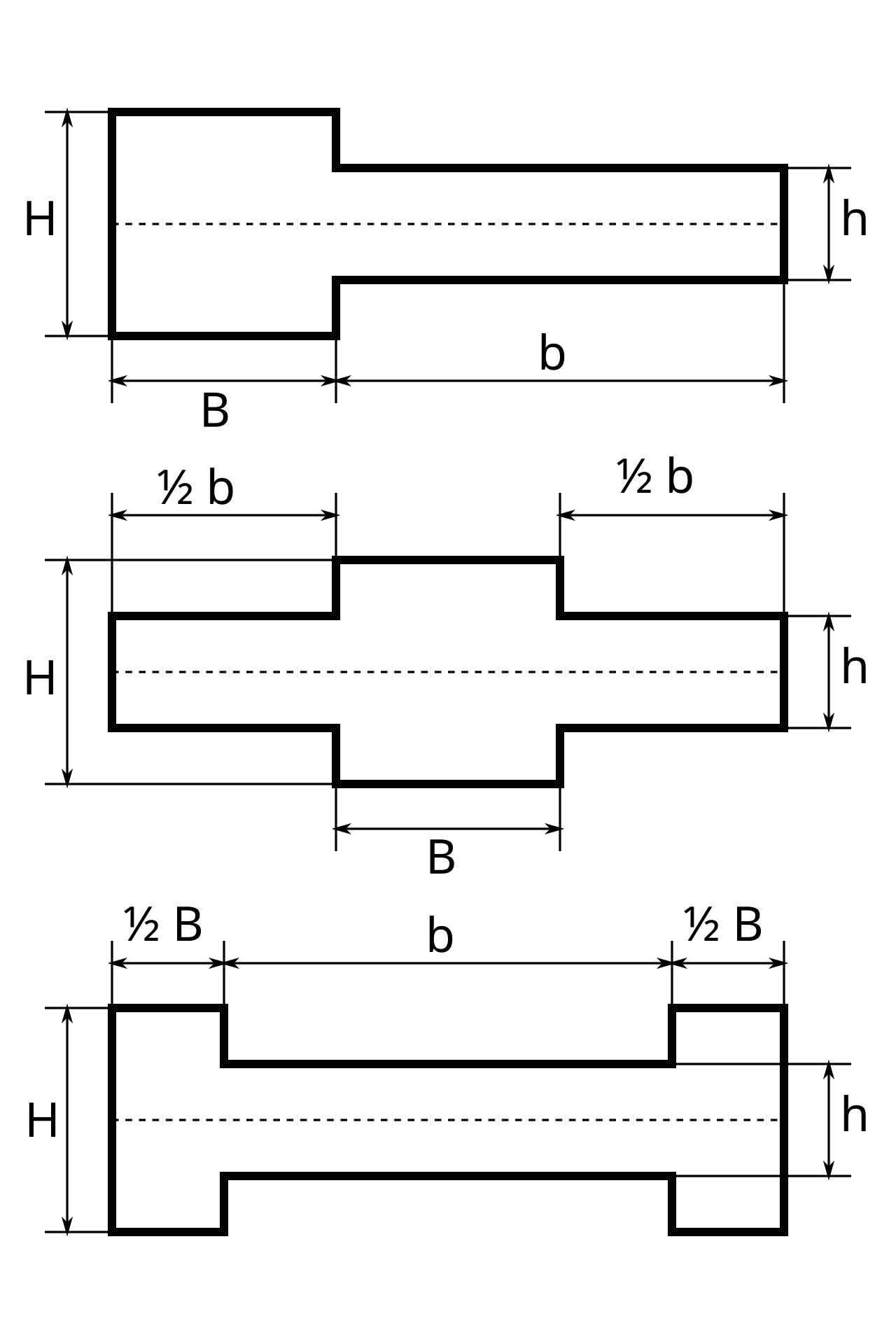
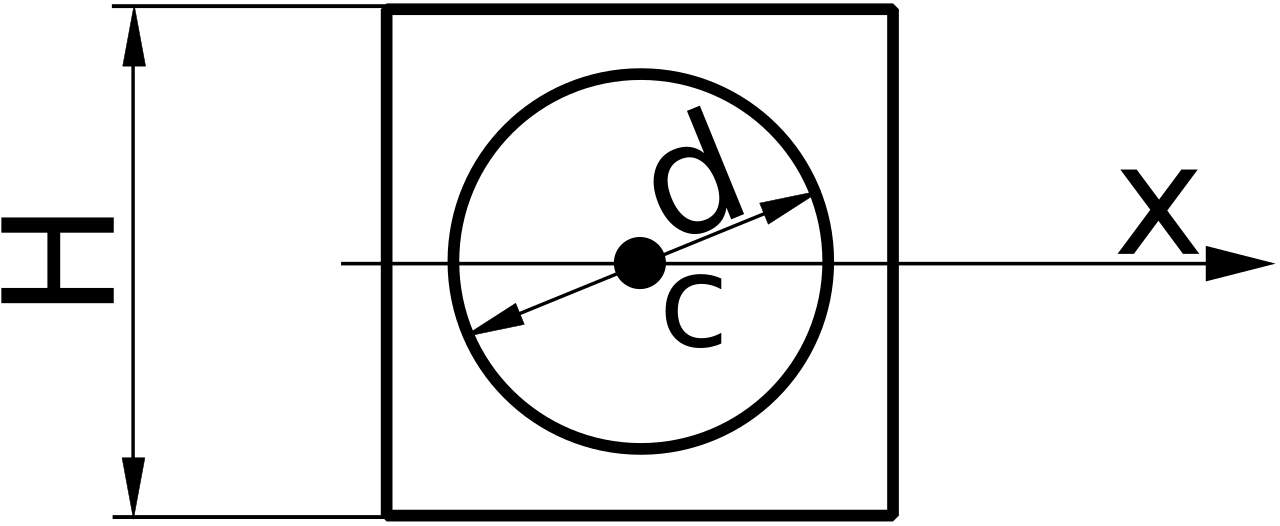
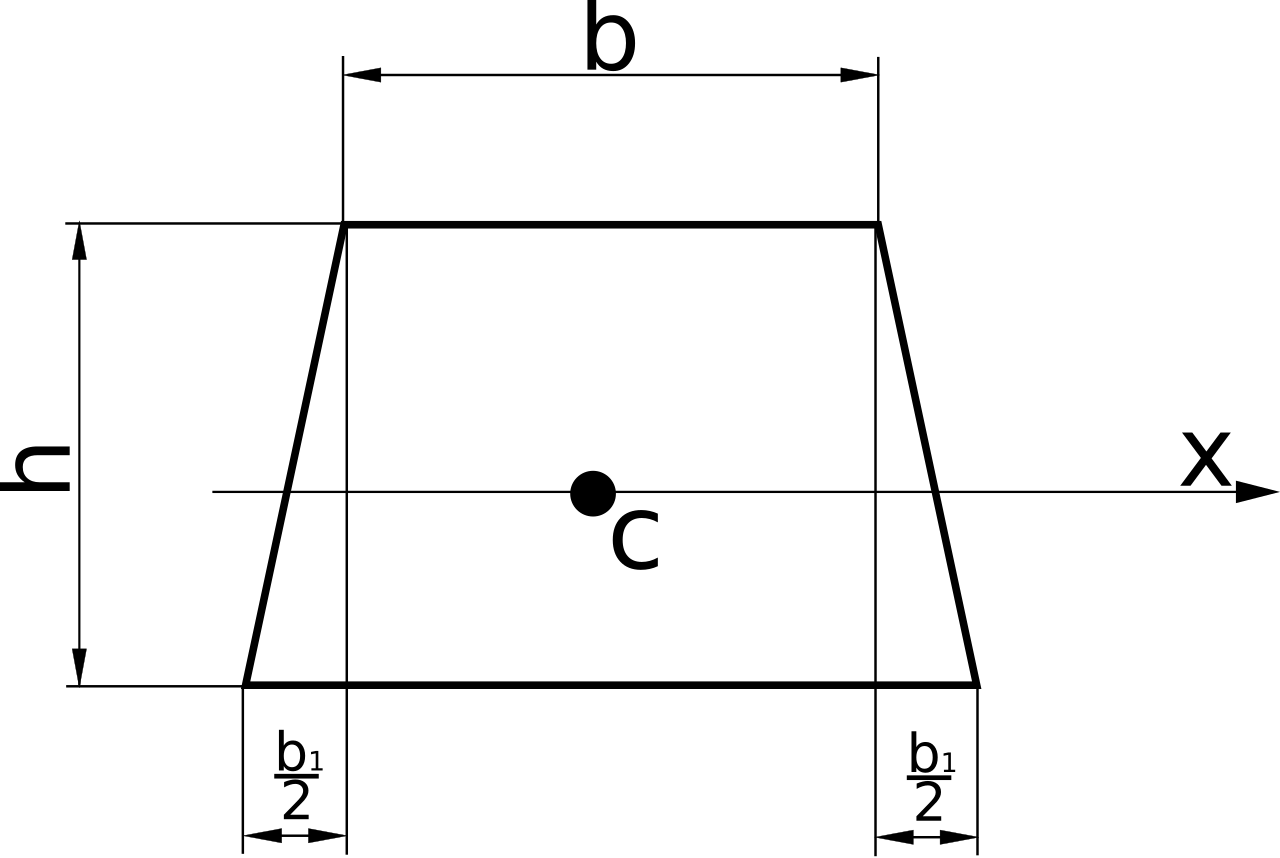
The moment of inertia, typically written as I, quantifies how strongly a body resists being spun up around a given axis. It plays for rotation exactly the role that ordinary mass plays for straight-line motion: a larger value means more torque is needed to produce the same angular acceleration. Because it multiplies a mass by the square of a distance, its dimensional units are ML² — mass times length squared. This dimensional signature is a useful diagnostic, because it immediately separates the quantity from the second moment of area, which carries units of L⁴ and belongs to the world of beam and structural engineering rather than rigid-body dynamics. In everyday physics language the term is also called rotational inertia or, less commonly, angular mass, all pointing to the same underlying idea: a measure of rotational heaviness that depends not just on how much matter is present but on how far that matter sits from the axis of rotation.
Calculation Strategies and Foundational Theorems
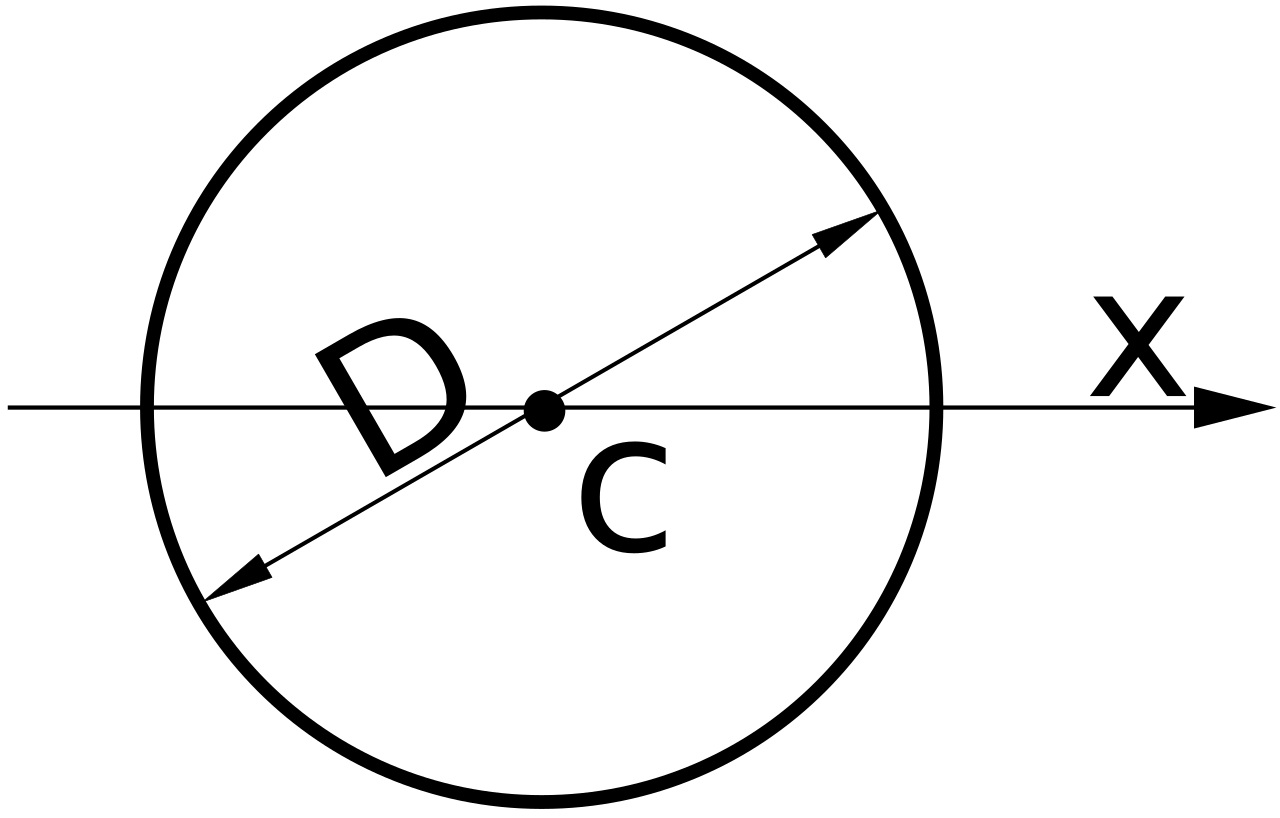
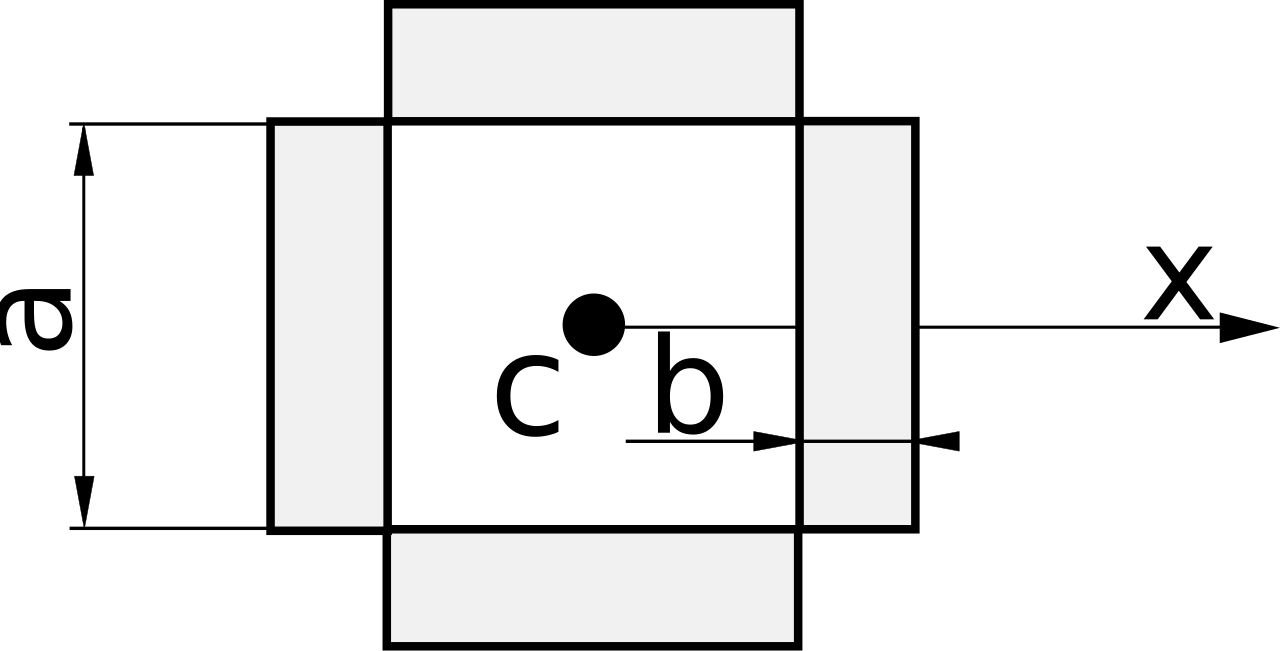
For bodies that possess geometric symmetry and a uniform density, the moment of inertia can often be written down as a neat closed-form expression. In a handful of cases the density need not be perfectly constant; it may vary across the object and still yield a tractable formula. Beyond those well-behaved cases, however, the task grows considerably harder. Shapes with irregular mass distributions or no obvious symmetry generally resist a clean symbolic answer, and one must fall back on numerical integration or approximation. Two powerful tools make the work of computing moments of inertia far more manageable. First, the quantity is additive: the total moment of inertia of a composite body equals the sum of the moments of its parts, provided each is referenced to the same axis. Second, the parallel axis theorem and the perpendicular axis theorem let a practitioner shift an axis or relate components without redoing the full integral from scratch. Together, these theorems turn what could be a laborious calculation into a sequence of simpler, well-known steps.
Hollow Versus Solid Bodies and the Dimensional Ratio
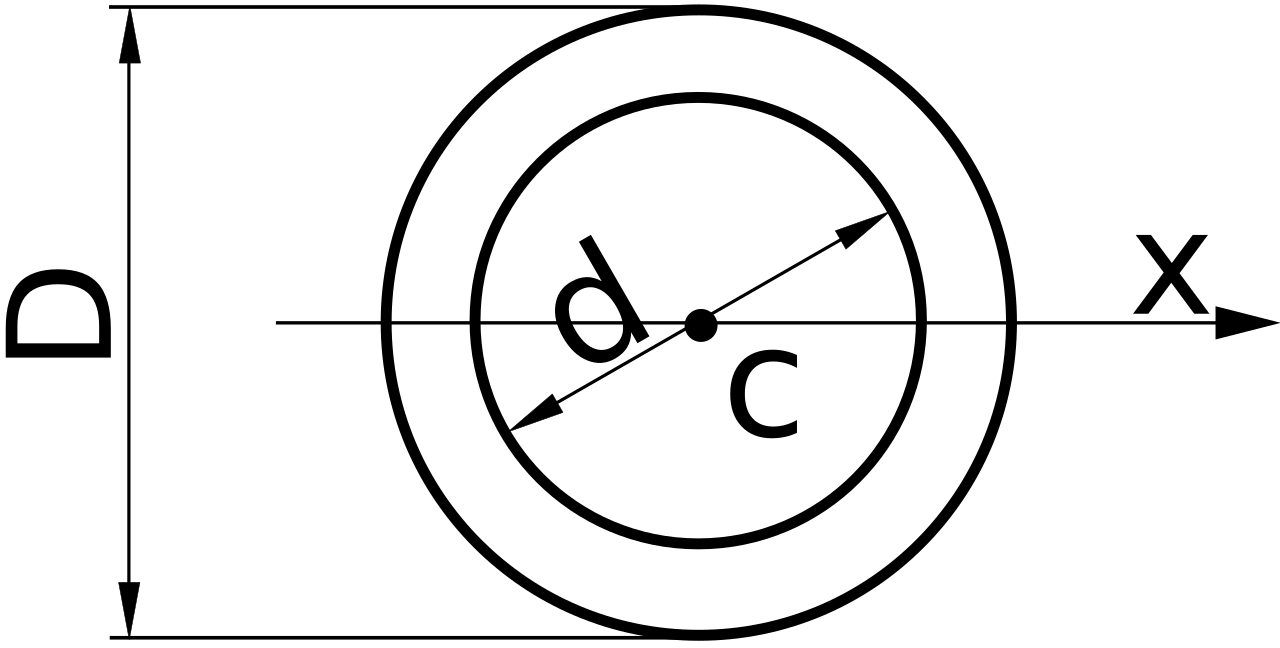
A striking pattern emerges when one compares a solid body with its hollow counterpart — that is, a version generated by scaling the solid outward from a point on the rotation axis, a process known as a homothety. In n spatial dimensions the ratio of the hollow body's moment of inertia to the solid one is always (n + 2) divided by n. A concrete illustration: a solid disk is a two-dimensional object, and its hollow analogue is a simple circle. Plugging n equals 2 into the formula gives a ratio of 2, meaning the ring resists rotation twice as strongly as the filled disk of the same outer radius. The same factor of 2 applies to a thin cylindrical shell versus a solid cylinder, because the hollowing is again a two-dimensional scaling about the central axis. Moving to three dimensions, a hollow sphere compared with a solid sphere yields a ratio of 5 over 3, reflecting the three-dimensional homothety about the centre. Regular polyhedra follow analogous ratios, and a hollow cone, scaled about the centre of its base, obeys the same rule for any axis passing through that base centre.
The Tensor Framework and Principal Axes
While introductory treatments often present the moment of inertia as a single scalar, the full mathematical object is in fact a tensor. For any rigid body the inertia is described by a second-rank tensor, usually tabulated along the body's principal axes, where the tensor is diagonal and the off-diagonal coupling terms vanish. To recover the familiar scalar moment about an arbitrary axis, one projects the tensor onto a unit vector n that defines that axis. The projection is written as n dot I dot n, which, in index notation with the Einstein summation convention, expands to n_i I_ij n_j. In practice, choosing n to be one of the Cartesian basis vectors e_x, e_y, or e_z extracts the corresponding principal moment I_x, I_y, or I_z directly from the tensor. This tensor viewpoint unifies the scalar formulas for disks, rods, spheres, and other standard shapes under a single geometric language and makes clear why the resistance to rotation depends on the orientation of the axis relative to the body's mass distribution.
Gallery
Frequently Asked Questions
Who is Inertia?
Inertia is the fundamental tendency of any object to maintain its current state—whether at rest or moving at constant velocity—unless an external force intervenes. It is the core principle behind Newton's first law of motion and sits at the very foundation of classical mechanics.
What is Inertia's role in the story?
Inertia acts as the default behavior of all matter: it keeps bodies persisting in their current motion or rest until a net force compels a change in velocity. Without it, every object would instantaneously respond to the slightest push, and the predictable structure of classical physics would collapse.
How does Inertia's arc resolve?
Inertia never truly ends; rather, its effects are overcome whenever a net external force acts on a body, producing acceleration. In that sense, Inertia's story is one of constant tension between the status quo and the forces that disrupt it.
Why is Inertia so important to the canon?
It provides the baseline against which all forces and accelerations are measured, making it the reference point for Newton's second and third laws. Without the principle of inertia, the entire framework of classical mechanics would lack its foundational starting condition.
Who first introduced Inertia into the canon?
While early descriptions appear in Chinese Warring States texts, the principle was formally articulated by Isaac Newton as his first law of motion. Centuries of philosophical and scientific refinement across multiple cultures preceded Newton's definitive statement.
More in Classical Mechanics 1-21
Spotted an error? Know more?
This is a living reference — every entry is fact-audited, and reader corrections feed straight into our audit queue. Suggest an edit · See this site's audit record