Oleg Popov
The Soviet clown who became a goodwill ambassador and won hearts worldwide.
Last updated

via Wikipedia: Moscow Circus on Tsvetnoy Boulevard · see source
Oleg Konstantinovich Popov (31 July 1930 – 2 November 2016) was a Soviet and Russian clown and circus artist, honored as a People's Artist of the USSR in 1969. Born to a clock-repairman, he began working at age twelve as an apprentice typographer for the newspaper Pravda, where he also joined the paper’s athletic club. In 1945, a suggestion led him to apply to Moscow’s State College of Circus and Variety Arts, known as the Moscow Circus School.
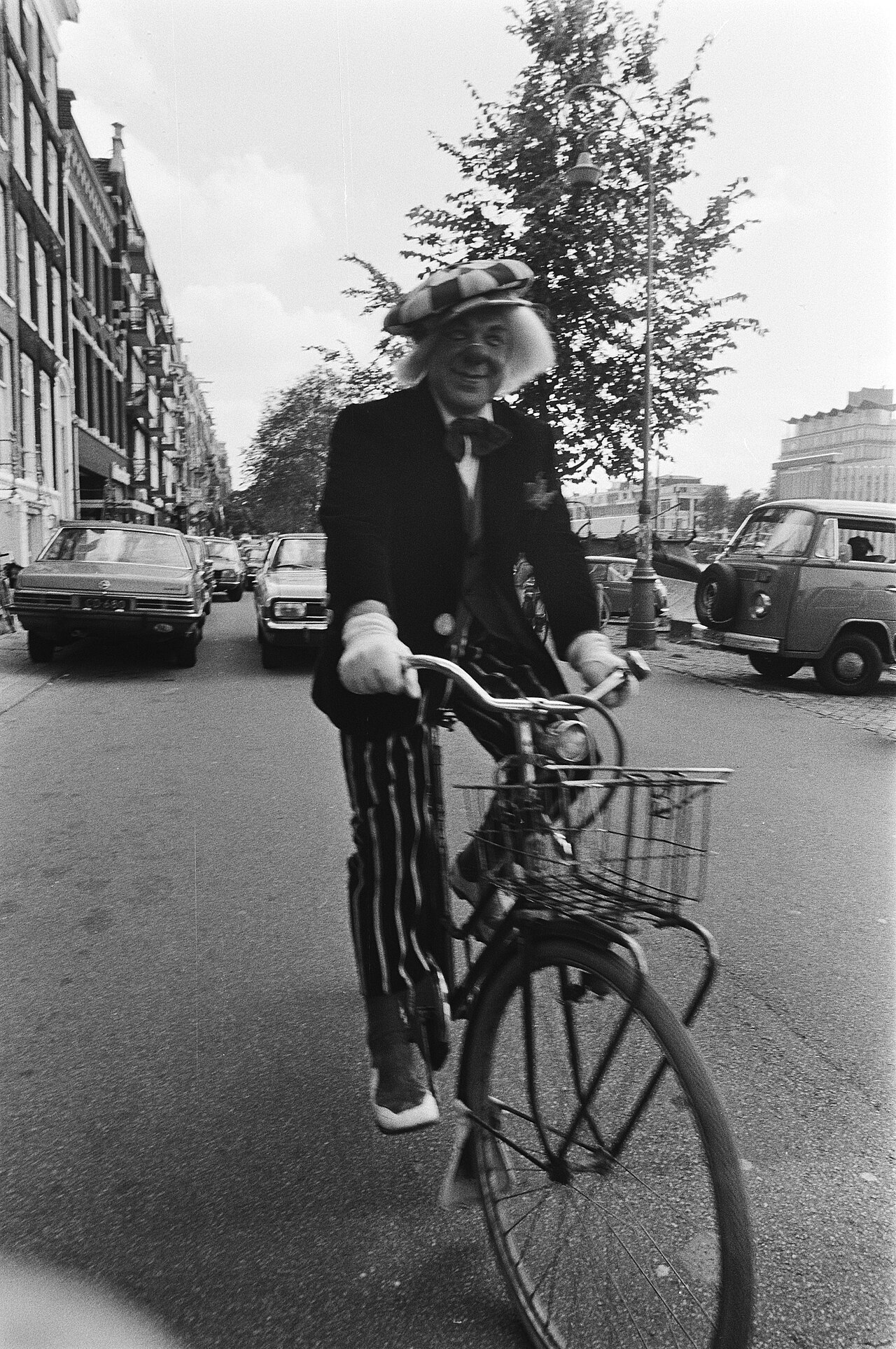
He studied acrobatics, juggling, and other circus disciplines there, graduating in 1949. His professional debut came in 1952 at the Tbilisi Circus in the Georgian SSR, after which he performed at the Moscow Circus on Tsvetnoy Boulevard. Popov first performed abroad in 1955 in Warsaw, and the following year toured France, Belgium, and England with the Moscow Circus. The press quickly elevated him to stardom, and the Soviet regime used his international success to cast him as a goodwill ambassador.
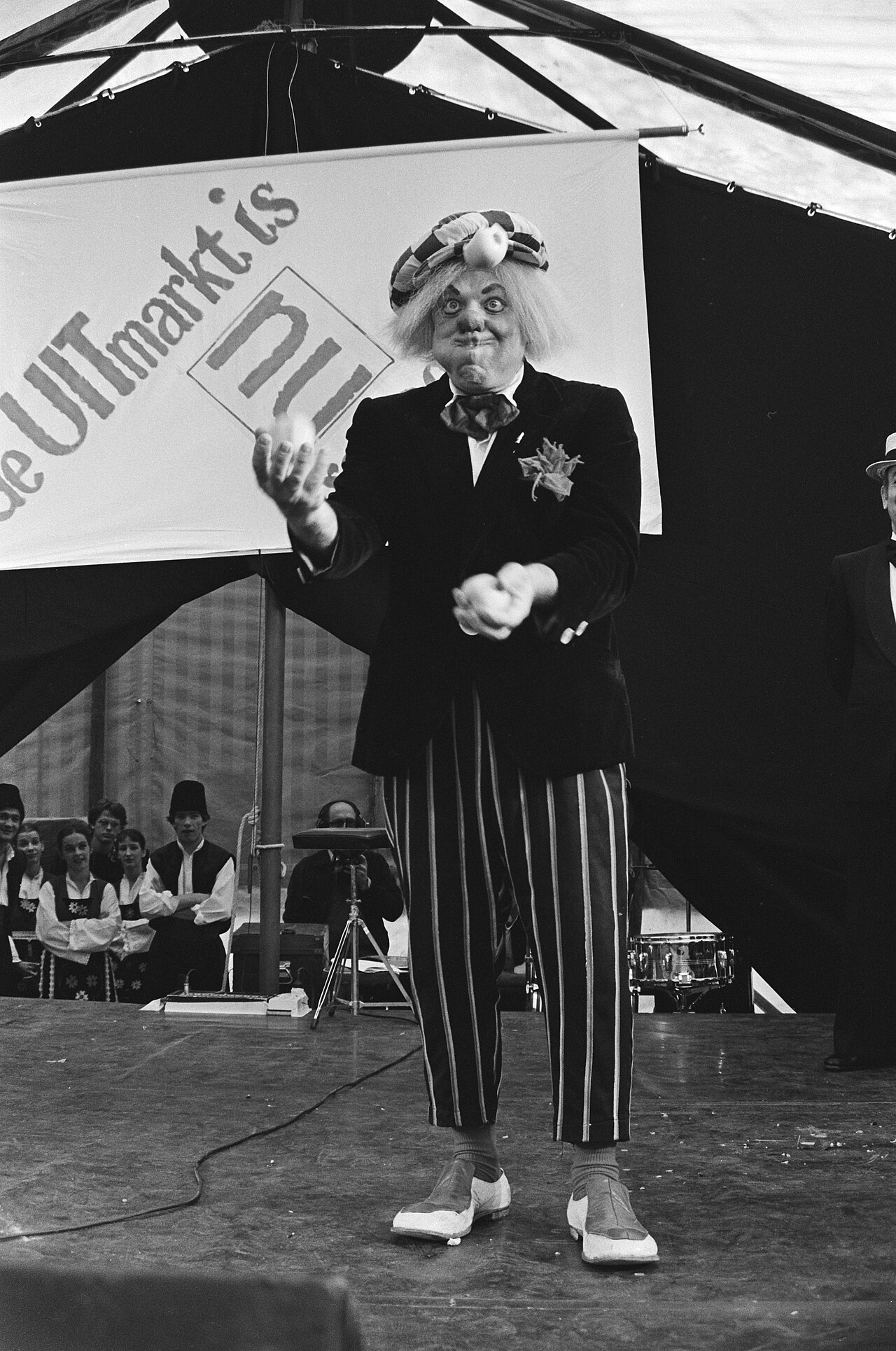
He appeared at the 1958 Brussels World Fair and was broadcast on American television from Moscow in 1957. He toured the United States in 1963 and 1972. His clown persona combined mime, tightrope walking, and juggling, rooted in the Russian folk character Ivanushka.
Career
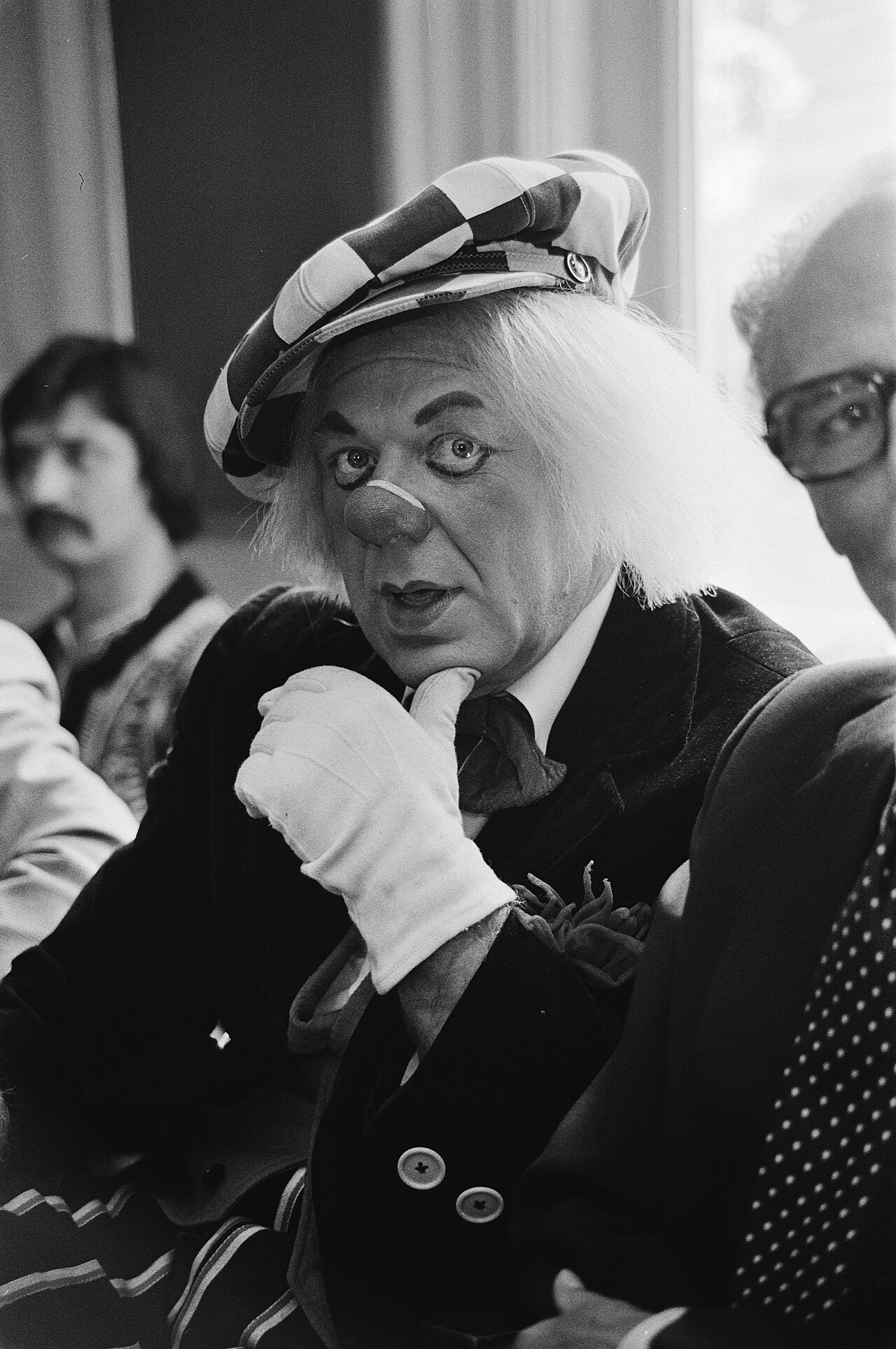
In 1981, he received the Golden Clown award at the 8th International Circus Festival of Monte-Carlo. After the Soviet Union’s collapse, Popov toured Germany with a Moscow Circus unit and eventually settled there, performing in circuses, television, and his own show. He married German circus performer Gabriela Lehmann in 1991. In 2006, at age 75, he performed at the 30th anniversary of the Monte-Carlo festival to a standing ovation.
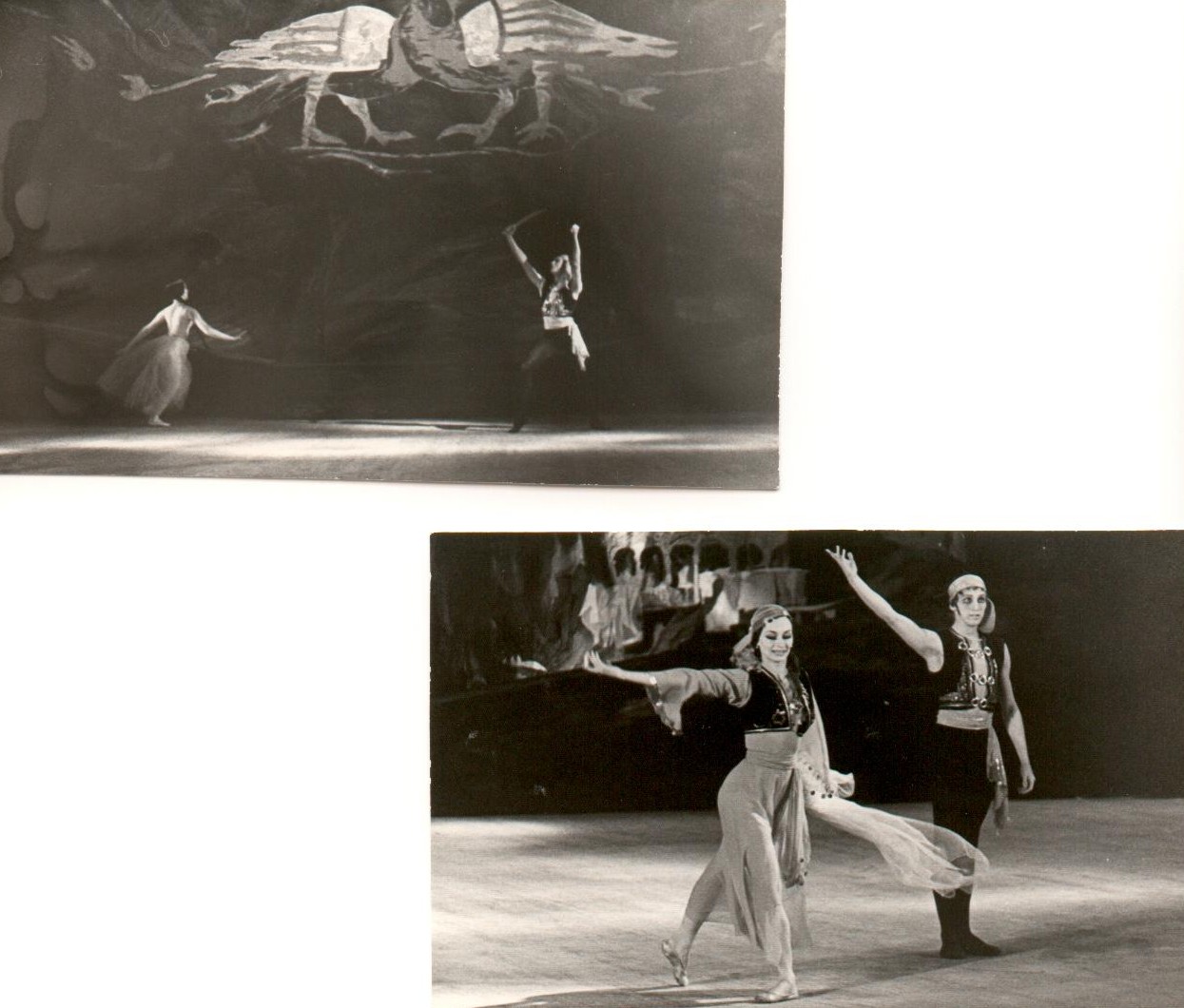
He returned to Russia in 2015 after 28 years abroad for the first “Master” gala at the Sochi State Circus, receiving a long ovation and a message from President Vladimir Putin. Popov appeared in four films, including The Blue Bird (1976), and published a memoir in 1967, translated into English as Russian Clown. He died on 2 November 2016 from cardiac arrest while on tour in Rostov-on-Don.
Last updated 2026-09-28 from the source article.
Lore & Background
Popov was born on 31 July 1930, the son of a clock-repairman. At age 12, he began working as an apprentice typographer for the newspaper Pravda, and he later joined Pravda's Athletic Club. There, in 1945, someone suggested that he apply for Moscow's State College of Circus and Variety Arts (better known as the 'Moscow Circus School').
He was accepted and studied acrobatics, juggling, and other circus skills there, graduating in 1949. He made his debut in 1952 at the Tbilisi Circus in the Georgian SSR. Afterwards, he continued his career at the Moscow Circus on Tsvetnoy Boulevard (today Circus Nikulin). In 1955, Popov performed abroad for the first time, in Warsaw, and the following year, he toured with the Moscow Circus in France, Belgium, and England.
He appeared at the Brussels World Fair in 1958 and was broadcast from Moscow on American television in 1957. He toured the United States in 1963 and 1972 with the Moscow Circus. In 1969, Popov was honored with the title of People's Artist of the USSR.
In Australia, he was named King of Moomba (1971). At the 8th International Circus Festival of Monte-Carlo in 1981, he received the Golden Clown award. In the early 1990s, after the fall of the Soviet Union, he toured with a unit of the Moscow Circus in Germany for a number of years, where he eventually settled. He married Gabriela Lehmann, a German circus performer, in 1991.
In 2006, Popov was invited to perform at the 30th anniversary of the International Circus Festival of Monte Carlo. In 2015, he returned for the first time to Russia after 28 years of living in Germany; it was at the First 'Master' gala event at the Sochi State Circus. Popov died on 2 November 2016, aged 86, from a cardiac arrest while on tour at a hotel in Rostov-on-Don.
More in Circus & Performance Art
Sources
Compiled from Wikipedia and the sources listed below. Text from Wikipedia is available under CC BY-SA 4.0; this entry is adapted from it.
- Wikipedia: Oleg Popov (CC BY-SA 4.0).
Spotted an error? Know more?
Reader corrections go straight into our review queue. Suggest an edit · How this site is sourced