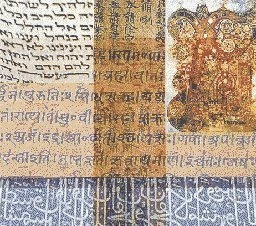
Book of Lamentations

The Book of Lamentations is a collection of five poetic laments mourning the destruction of Jerusalem in 586 BCE. Its title derives from the first word of the Hebrew text, meaning "how." In the Hebrew Bible, it is placed among the Ketuvim, or Writings, as one of the Five Megillot, alongside the Song of Songs, Ruth, Ecclesiastes, and Esther. In the Christian Old Testament, it follows the Book of Jeremiah due to the traditional ascription of authorship to the prophet Jeremiah. However, by the mid-19th century, German scholars began to doubt this attribution, and the prevailing scholarly consensus now holds that Jeremiah was not the author; the writer or writers remain anonymous. Most scholars also agree that the book was composed shortly after Jerusalem’s fall.
The poems exhibit motifs of the traditional Mesopotamian "city lament," including mourning the city’s abandonment by God, its destruction, and the eventual return of the deity. They also parallel the funeral dirge, where the bereaved bewails and addresses the dead. The tone is bleak: God never speaks, suffering is overwhelming, and hope for future redemption is minimal. Nevertheless, the author repeatedly acknowledges that the city and the people have sinned greatly against God, justifying divine wrath. God is portrayed as righteous, just, and occasionally merciful.
The book’s structure consists of five separate poems. The first four chapters are alphabetic acrostics, each verse beginning with successive letters of the Hebrew alphabet (22 letters for chapters 1, 2, and 4; 66 verses in chapter 3, with three lines per letter). The fifth chapter is not acrostic but still contains 22 lines. The acrostic form likely conveys a sense of completeness, from the first to the last letter. Notably, the ordering of letters in chapters 2, 3, and 4 places the 17th letter before the 16th, a sequence also found in the Dead Sea Scrolls version of chapter 1, though the Masoretic Text of chapter 1 uses the modern alphabetical order. The first four poems also employ a qinah meter of three stresses followed by two, a rhythm absent from the fifth chapter.
The book combines the kinah, a funeral dirge for the city, with the communal lament pleading for restoration. It reflects the view, traceable to Sumerian literature, that the holy city’s destruction was divine punishment for communal sin. Unlike earlier Sumerian laments,
- field
- Biblical literature
- language
- Hebrew
- traditional_author
- Jeremiah (disputed)
- number_of_chapters
- 5
- genre
- Poetic lament / city lament
- liturgical_use
- Tisha B'Av (Jewish); Tenebrae (Christian)
Lore & Background
The Book of Lamentations is a collection of five poetic laments mourning the destruction of Jerusalem in 586 BCE. In the Hebrew Bible, it appears in the Ketuvim as one of the Five Megillot. In the Christian Old Testament, it follows the Book of Jeremiah, as Jeremiah was traditionally considered its author, though by the mid-19th century German scholars doubted this, and that view became the prevailing consensus. Most scholars agree it was composed shortly after Jerusalem’s fall. The book exhibits motifs of a traditional Mesopotamian “city lament,” such as mourning the city’s desertion by God, its destruction, and the deity’s eventual return, alongside elements of a funeral dirge. The tone is bleak: God does not speak, suffering is overwhelming, and hope for redemption is minimal. However, the author repeatedly states that the city and the author himself have sinned greatly, justifying God’s wrath and portraying God as righteous and merciful. The first four chapters are alphabetic acrostics, each verse beginning with successive letters of the Hebrew alphabet; chapter 3 has 66 verses, with each letter beginning three lines. The fifth chapter is not acrostic but has 22 lines. The poems use a qinah meter of three stresses followed by two, though chapter 5 lacks this. English translations rarely capture the acrostic form; those by Ronald Knox and David R. Slavitt map the 22 Hebrew letters to A through V, omitting W, X, Y, and Z. The acrostic ordering in chapters 2, 3, and 4 places the letter ayin before pe, unlike standard alphabetical order; the Dead Sea Scrolls version applies this order even in chapter 1.
Reader's Guide
Lamentations combines elements of a funeral dirge and a communal lament, reflecting the view that the destruction of the holy city was a punishment by God for communal sin. Unlike earlier Sumerian city laments, which had optimistic endings tied to temple rebuilding, Lamentations was written before the return and rebuilding, containing only lamentations and pleas with no resolution. The tone is bleak: God does not speak, suffering is overwhelming, and expectations of future redemption are minimal. The author presents God as righteous and just, not blameworthy. The book is recited annually by Jews on Tisha B'Av and used in Christian Holy Week liturgies, particularly the Tenebrae service.
Did You Know?
- The first four chapters are alphabetic acrostics, each verse beginning with successive letters of the Hebrew alphabet.
- In chapters 2–4, the letter pe (17th) comes before ayin (16th), unlike standard alphabetical order.
- The book is recited annually by Jews on the fast day of Tisha B'Av, mourning the destruction of both the First and Second Temples.
- In many manuscripts, Lamentations 5:21 is repeated after verse 22 so the reading does not end with a painful statement.
Frequently Asked Questions
Who wrote the Book of Lamentations?
It was traditionally attributed to the prophet Jeremiah, but modern scholars widely reject that claim. The actual author or authors remain unknown, and the text is treated as anonymous.
Where does the Book of Lamentations sit in the Bible?
In the Christian Old Testament it is placed immediately after the Book of Jeremiah. In the Hebrew Bible it belongs to the Ketuvim (Writings) section as one of the Five Megillot, or Scrolls.
Why is the Book of Lamentations important?
It is one of the earliest surviving examples of Hebrew city-lament poetry and gives voice to communal grief over a catastrophic national event. Its raw emotional honesty has made it a central reference for expressions of mourning, repentance, and hope in both Jewish and Christian traditions.
More in Christian Sacred Texts 1-24
Spotted an error? Know more?
This is a living reference — every entry is fact-audited, and reader corrections feed straight into our audit queue. Suggest an edit · See this site's audit record