William Sterndale Bennett
English composer, pianist, conductor and music educator.
Last updated

via Wikipedia: William Sterndale Bennett · see source
Sir William Sterndale Bennett, born in 1816 and dying in 1875, was an English musician—composer, pianist, conductor, and teacher. He entered the Royal Academy of Music in London at age ten and stayed for a decade.
By twenty, he had earned a reputation as a concert pianist, and his early compositions won high praise, notably from Felix Mendelssohn, who invited him to Leipzig, where Bennett spent three winters working. In 1866, he became Principal of the RAM, saving it from closure, and held the post until his death. Knighted in 1871, he died in London and was buried in Westminster Abbey.
Quick Facts
- Born
- 13 April 1816
- Died
- 1 February 1875
- Place of birth
- Sheffield, Yorkshire
- Place of death
- London
- Burial
- Westminster Abbey
- Knighted
- 1871
Facts from the source article.
Biography
William Sterndale Bennett was born in Sheffield, Yorkshire, to Robert Bennett, the organist of Sheffield parish church, and his wife Elizabeth. He was their third child and only son. His mother died when he was two, and his father, after remarrying, died the following year. Orphaned at three, Bennett was raised in Cambridge by his grandfather John Bennett, a professional bass singer who performed in the choirs of King's, St John's, and Trinity colleges.
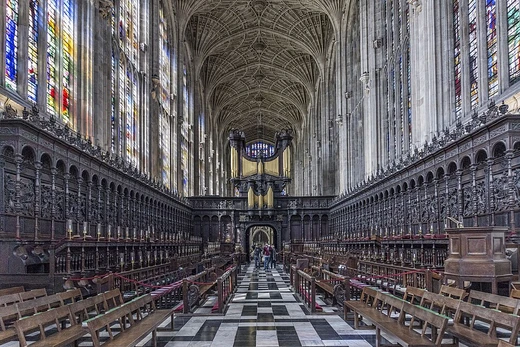
His grandfather gave him his first music lessons. In February 1824, Bennett joined the choir of King's College Chapel, staying for two years. At age ten, in 1826, he was admitted to the Royal Academy of Music. The examiners were so struck by his ability that they covered all his tuition and board costs.
He remained a student there for a decade. Initially, at his grandfather's request, he focused on violin, studying under Paolo Spagnoletti and later Antonio James Oury. He also learned piano from W. H. Holmes, and after five years, with his grandfather's approval, switched to piano as his main instrument. He studied composition with the RAM's principal, William Crotch, and then with Cipriani Potter, who became principal in 1832.
At the Academy, he befriended the future critic J. W. Davison. In 1830, the RAM staged a student production of The Marriage of Figaro, and the fourteen-year-old Bennett was given the mezzo-soprano role of Cherubino. The Observer noted dryly that they would not discuss the page, but admitted Bennett sang agreeably and pleased the audience. The Harmonicon, however, dismissed his performance as a complete blemish on the show.
Music
Bennett's student compositions included a piano concerto (No. 1 in D minor, Op. 1), a symphony and an overture to The Tempest. The concerto received its public premiere at an orchestral concert in Cambridge on 28 November 1832, with Bennett as soloist. Performances soon followed in London and, by royal command, at Windsor Castle, where Bennett played in April 1833 for King William IV and Queen Adelaide. The RAM published the concerto at its own expense as a tribute.
In May 1835 Bennett made his first appearance at the Philharmonic Society of London, playing the premiere of his Second Piano Concerto (in E-flat major, Op. 4), and in the following year he gave there the premiere of his Third Concerto (in C minor, Op. 9). In 1836, Bennett travelled to Düsseldorf to attend the Lower Rhenish Music Festival for the first performance of Mendelssohn's oratorio St Paul. Inspired by his journey up the Rhine, Bennett began work on his overture The Naiads (Op. 15).
After Bennett left for home, Mendelssohn wrote to Thomas Attwood, 'I think him the most promising young musician I know, not only in your country but also here, and I am convinced if he does not become a very great musician, it is not God's will, but his own'. Bennett made his debut at the Gewandhaus as the soloist in his Third Piano Concerto with Mendelssohn conducting. He later conducted his Naiads overture. During this visit he also arranged the first cricket match ever played in Germany.
Reception
Bennett's compositions received high praise from the start. The critic of The Harmonicon wrote of his 1833 London performance: '[T]he most complete and gratifying performance was that of young Bennett, whose composition would have conferred honour on any established master, and his execution of it was really surprising, not merely for its correctness and brilliancy, but for the feeling he manifested, which, if he proceed as he has begun, must in a few years place him very high in his profession.'
In the audience was Felix Mendelssohn, who was sufficiently impressed to invite Bennett to the Lower Rhenish Music Festival in Düsseldorf. Bennett asked, 'May I come to be your pupil?' Mendelssohn replied, 'No, no. You must come to be my friend'.
Davison wrote in 1834 that Bennett's overture Parisina was 'the best thing that has been played at the Society's concerts'. In later years, Bennett's later works, though popular, were considered old-fashioned and did not arouse as much critical enthusiasm as his youthful compositions had done.
Legacy
Bennett had a significant influence on English music, not solely as a composer but also as a teacher, as a promoter of standards of musical education and as an important figure in London concert life. He taught at the RAM for twenty years, later also teaching at Queen's College, London. Among his pupils during this period were Arthur Sullivan, Hubert Parry, and Tobias Matthay. He was Professor of Music at the University of Cambridge from 1856 until 1875.
In 1866 he became Principal of the RAM, rescuing it from closure, and remained in this position until his death. He was knighted in 1871. He died in London in 1875 and was buried in Westminster Abbey. In recent years, appreciation of Bennett's compositions has been rekindled and a number of his works, including a symphony, his piano concerti, some vocal music and many of his piano compositions, have been recorded. In his bicentenary year of 2016, several concerts of his music and other related events took place.
More in Choristers of the Choir of King's College, Cambridge
Sources
Compiled from Wikipedia and the sources listed below. Text from Wikipedia is available under CC BY-SA 4.0; this entry is adapted from it.
- Wikipedia: William Sterndale Bennett (CC BY-SA 4.0).
Spotted an error? Know more?
Reader corrections go straight into our review queue. Suggest an edit · How this site is sourced