Three Gorges
Three sequential gorges on the Yangtze, famed for scenery and history.

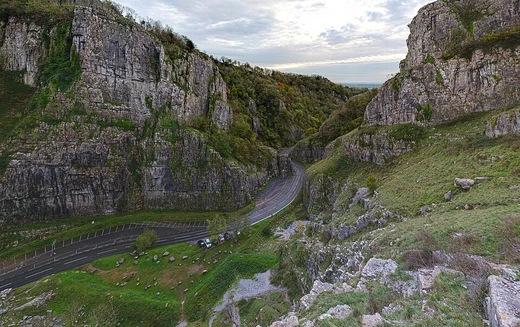
The Three Gorges are three sequential gorges along the middle reaches of the Yangtze River in China, known for their scenery. They consist of the Qutang, Wu, and Xiling gorges, stretching from Baidicheng in Chongqing in the west to Nanjin Pass in Yichang, Hubei Province, in the east. This section of the river, called Chuanjiang, was historically the only waterway connecting Sichuan and Guizhou to eastern China. The gorges were formed by the Yanshanian mountain folding around 70 million years ago, which created the Wu Mountains. As the river eroded through rising crust, it carved narrow valleys in hard limestone, forming precipitous cliffs, and wider valleys in softer sandstone and shale. The region is historically and culturally important, with many settlements and archaeological sites now submerged by the Three Gorges Dam reservoir. The natural beauty has been celebrated for centuries. In the Northern Wei dynasty, Li Daoyuan described seamless mountains stretching over 200 miles, where overlapping rocks block the sun except at noon and the moon only at midnight. He noted that in summer, rising waters blocked all boats, yet an urgent decree from Baidi could reach Jiangling by sunset, a distance of about 373 miles, faster than a horse or flight. Yuan Shansong of the Eastern Jin dynasty wrote of initially hearing warnings about horrific currents, but upon visiting, he found overlapping cliffs, elegant peaks, and grotesque structures far beyond expression, spending two nights there forgetting to return. Li Bai’s poem depicted monkeys howling on both sides as a boat swiftly passed thousands of mountains. Between winter and spring, green pools reflect rocks and woods, with cascades plunging among cypresses on high peaks. Monkeys howling from peaks sound sad and strange, lingering in valleys, leading local fishers to consider the Wu Gorge the longest.
- location
- Middle reaches of the Yangtze River, People's Republic of China
- component_gorges
- Qutang, Wu, Xiling
- western_end
- Baidicheng, Chongqing
- eastern_end
- Nanjin Pass, Yichang, Hubei
- known_for
- Scenery, historical and cultural importance, Three Gorges Dam
Lore & Background
The Three Gorges consist of three adjacent, sequential gorges along the middle reaches of the Yangtze River: the Qutang, the Wu, and the Xiling. They begin at Baidicheng in Chongqing and end at Nanjin Pass in Yichang, Hubei Province, passing through Fengjie and Wushan counties of Chongqing, as well as Badong and Zigui counties of Hubei. The gorges themselves occupy about a portion of the larger Three Gorges Reservoir Region. Their valleys vary in width due to differing rock types: narrow, precipitous cliffs form where the river cuts through hard limestone, as water erodes along deep vertical fractures and undercuts the rock, causing it to fall. Wider valleys occur where the river flows through softer sandstone and shale, which erode more easily. Geologists generally agree that the gorges were carved by the Yangtze as the crust rose, following mountain folding from the Yanshanian movement around 70 million years ago. The region has long been famed for its scenery, described in the Northern Wei dynasty by Li Daoyuan, who noted the towering, seamless mountains on both sides that block sun and moon except at midday and midnight. He also recorded that summer floods could block all boat traffic, yet an urgent decree from Baidi could reach Jiangling in a single day—a distance faster than a galloping horse. The Eastern Jin writer Yuan Shansong, upon visiting, was astonished by the overlapping cliffs, elegant peaks, and grotesque rock structures, finding the landscape far beyond what words could express. He spent two nights there, forgetting to return, feeling he had found a kindred spirit in the mountains and waters. The poet Li Bai also celebrated the swift passage through the gorges, noting how the boat sped past thousands of mountains while monkeys howled on both banks. Between winter and spring, green pools reflect rocks and woods, while cascades plunge among cypresses on high peaks; in autumn mornings, cold forests and streams echo with the sad, strange cries of monkeys, which local fishers say makes the Wu Gorge the longest of the three.
Reader's Guide
The Three Gorges region is historically and culturally important in China, attracting global attention due to the Three Gorges Dam, which changed the culture and environment of the region. The gorges were formed through geological processes including the Yanshanian movement around 70 million years ago, with erosion carving narrow valleys in limestone and wider valleys in softer sandstone and shale. Shipbuilding and navigation advances in the Tang and Song dynasties allowed regular transport through the gorges, but passage remained dangerous until the introduction of motorized boats, with manual labor used to some extent until the 1970s.
Did You Know?
- Li Daoyuan of the Northern Wei dynasty described the gorges in his Commentary on the Water Classic, noting mountains stretching more than 200 miles.
- The gorges were formed through the Yanshanian movement around 70 million years ago.
- Manual labor was used to navigate the gorges to some extent until the 1970s.
More in Caves & Gorges 1-23
Spotted an error? Know more?
This is a living reference — every entry is fact-audited, and reader corrections feed straight into our audit queue. Suggest an edit · See this site's audit record