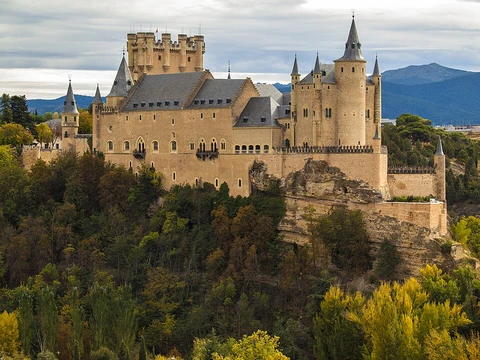
The Tower of London
Historic castle, prison, and home of the Crown Jewels.

The Tower of London—officially called His Majesty's Royal Palace and Fortress of the Tower of London—sits on the north bank of the River Thames in the London Borough of Tower Hamlets, separated from the City of London by the open area of Tower Hill. It was founded near the end of 1066, during the Norman Conquest. The White Tower, which gives the whole castle its name, was built by William the Conqueror in 1078 and was initially seen as an unwelcome symbol of domination. Early on, it was a grand palace and royal home. The castle is actually a collection of buildings inside two concentric rings of defensive walls and a moat. Major expansions happened under kings Richard I, Henry III, and Edward I in the 12th and 13th centuries.
The Tower has been besieged several times, and whoever held it held a key to controlling the country. Over the centuries, it has been an armoury, a treasury, a menagerie, the site of the Royal Mint, a public record office, and the home of the Crown Jewels. From the early 1300s until the reign of Charles II in the 1600s, monarchs traditionally spent several nights at the Tower before processing to Westminster Abbey for their coronation. In the late 1400s, the Princes in the Tower were kept there and then vanished, presumed murdered. Under the Tudors, the Tower was used less as a royal residence, and attempts to strengthen its defences couldn’t keep up with the development of artillery.
Its peak as a prison came in the 1500s and 1600s, when figures who had fallen out of favour—like Elizabeth I before she became queen, Sir Walter Raleigh, and Elizabeth Throckmorton—were locked up there. This gave rise to the phrase “sent to the Tower.” Despite its dark reputation for torture and death, pushed by 16th-century religious propaganda and 19th-century writers, only seven people were executed inside the Tower before the world wars of the 20th century. Most executions happened on Tower Hill to the north, where 112 took place over 400 years. In the late 1800s, institutions like the Royal Mint moved out, leaving many buildings empty. Anthony Salvin and John Taylor then restored the Tower to what was thought to be its medieval look.
During the First and Second World Wars, the Tower was again used as a prison, and 12 men were executed there for espionage. After the Second World War, damage from the Blitz was repaired, and the castle reopened to the public. Today, it is the ninth most popular tourist attraction in the country, drawing 2,817,852 visitors in 2025. It is under the ceremonial charge of the Constable of the Tower, run by the Resident Governor and Keeper of the Jewel House, guarded by the Yeomen Warders, and cared for by the charity Historic Royal Palaces. It is also a World Heritage Site.
**Architecture**
**Layout**
The Tower’s strongest defences faced Saxon London, which archaeologist Alan Vince thinks was intentional. It would have visually dominated the area and been obvious to traffic on the Thames. The castle has three “wards,” or enclosures. The innermost ward holds the White Tower and is the oldest part. Around it to the north, east, and west is the inner ward, built under Richard I (1189–1199). The outer ward, which surrounds the whole castle, was built under Edward I. Though there were several expansions after William the Conqueror founded the Tower, the general layout has stayed the same since Edward I finished his rebuild in 1285.
The castle covers nearly 12 acres (4.9 hectares), with another 6 acres (2.4 hectares) around it forming the Tower Liberties—land under the castle’s direct influence, cleared for military reasons. The Liberties were first laid out in the 13th century when Henry III ordered a strip of land next to the castle kept clear. Despite popular stories, the Tower never had a permanent torture chamber, though the basement of the White Tower did house a rack in later times. Tower Wharf was built on the Thames bank under Edward I and was expanded to its current size during Richard II’s reign (1377–1399).
**White Tower**
The White Tower is a keep (or donjon), usually the strongest part of a medieval castle, with lodgings fit for the lord—here, the king or his representative. Military historian R. Allen Brown called it “the donjon par excellence” because of its strength, majesty, and lordly accommodation. As one of the largest keeps in the Christian world, it has been described as “the most complete eleventh-century palace in Europe.”
The White Tower, not counting its corner towers, measures 36 by 32 metres (118 by 105 ft) at the base and is 27 metres (90 ft) high at the southern battlements. It was originally three storeys high, with a basement, an entrance level above, and an upper floor. The entrance, typical for Norman keeps, was above ground—on the south face—and reached by a wooden staircase that could be removed during an attack. A forebuilding was probably added to the south side during Henry II’s reign (1154–1189) to give extra defence to the entrance, but it hasn’t survived. Each floor was divided into three chambers, the largest in the west.
- Notable expansions
- Under Henry III and Edward I (13th century)
- 2025 visitors
- Data not yet available
Lore & Background
The zenith of the castle's use as a prison was the 16th and 17th centuries, when many figures who had fallen into disgrace, such as Elizabeth I before she became queen, Sir Walter Raleigh, and Elizabeth Throckmorton, were held within its walls. This use has led to the phrase 'sent to the Tower'. Despite its enduring reputation as a place of torture and death, only seven people were executed within the Tower before the world wars of the 20th century (with occasional disputed cases bringing the count to eight). In the latter half of the 19th century, institutions such as the Royal Mint moved out, leaving many buildings empty. Anthony Salvin and John Taylor took the opportunity to restore the Tower to what was felt to be its medieval appearance. In the First and Second World Wars, the Tower was again used as a prison and witnessed the executions of 12 men for espionage. After the Second World War, damage caused during the Blitz was repaired, and the castle reopened to the public.
Reader's Guide
The Tower of London's significance lies in its multifaceted role across nearly a millennium of English history. As a fortress, royal palace, and prison, it has been central to the exercise of power, from the Norman Conquest to the present day. Its use as a prison, particularly during the 16th and 17th centuries, gave rise to the phrase 'sent to the Tower' and cemented its reputation in popular imagination, though executions within its walls were rare. The Tower also housed the Royal Mint, the Crown Jewels, and a menagerie, reflecting its function as a hub of state administration and ceremony. Its architectural evolution, from the White Tower built by William the Conqueror to the concentric walls added by later kings, illustrates the development of medieval fortification. Its legacy endures as a symbol of royal authority, a repository of national treasures, and a site of historical memory, including the mysterious disappearance of the Princes in the Tower and the executions of spies during the world wars.
Did You Know?
- The Tower of London never had a permanent torture chamber, though the basement of the White Tower housed a rack in later periods.
- In the First and Second World Wars, the Tower was used as a prison and witnessed the executions of 12 men for espionage.
Founding & Architectural Legacy
The Tower of London traces its origins to the closing days of 1066, when the Norman Conquest demanded a permanent military foothold on the north bank of the Thames. Archaeologist Alan Vince suggests the defences were deliberately oriented to dominate Saxon London and catch the eye of river traffic. The keep itself—measuring 36 by 32 metres at its base and rising 27 metres to the southern battlements—was originally three storeys above a basement, with its entrance elevated on the south face and reached by a removable wooden staircase. Each level was divided into chambers, with a chapel occupying the south-east corner. The entire complex encloses nearly twelve acres, surrounded by six additional acres of cleared Tower Liberties.
Royal Palace & Ceremonial Heart
In its earliest decades the Tower functioned as a grand royal palace, a role that shaped its domestic architecture and its standing in the national imagination. Over the centuries it accumulated an extraordinary portfolio of civic functions: armoury, treasury, menagerie, home of the Royal Mint, public record office, and repository of the Crown Jewels. Perhaps no duty was more deeply woven into the ritual of English monarchy than the coronation procession. From the early fourteenth century until the reign of Charles II in the seventeenth, the newly crowned sovereign would spend several nights at the Tower before leading a ceremonial march from its gates to Westminster Abbey. Under the Tudors, however, the castle's residential importance waned, and despite periodic attempts to refortify its walls, its defences increasingly lagged behind the rapid advances in artillery. By the latter half of the nineteenth century, major institutions such as the Royal Mint had relocated to purpose-built sites elsewhere in London, leaving large stretches of the complex vacant and vulnerable to decay.
Prison, Myth & the Reality of Death
The Tower's most enduring public image is that of a grim prison, yet the historical record tells a more nuanced story. Its use as a place of confinement reached its peak during the sixteenth and seventeenth centuries, when disgraced figures such as the future Elizabeth I, Sir Walter Raleigh, and Elizabeth Throckmorton were held within its walls. The expression "sent to the Tower" entered common parlance from this era. In the late fifteenth century, the Princes in the Tower were lodged at the castle before vanishing under mysterious circumstances, almost certainly murdered. Contrary to the lurid picture popularised by sixteenth-century religious propagandists and romanticised by nineteenth-century novelists, only seven people were actually executed inside the Tower before the twentieth-century world wars. Contrary to popular fiction, the castle never possessed a dedicated torture chamber, though a rack did occupy the White Tower's basement in later periods. During both World Wars the Tower again held prisoners, and twelve men were executed there for espionage.
Modern Stewardship & Global Significance
After the Second World War, the damage inflicted during the Blitz was carefully repaired, and the castle was reopened to the public as a living monument rather than a dormant fortress. In the latter half of the nineteenth century, architects Anthony Salvin and John Taylor had already seized the opportunity created by the departure of institutions like the Royal Mint to restore the complex to what was perceived as its medieval character. It sits within the London Borough of Tower Hamlets, separated from the eastern edge of the City of London by the open expanse of Tower Hill. The site operates under the ceremonial authority of the Constable of the Tower, with day-to-day management in the hands of the Resident Governor and the Keeper of the Jewel House. The iconic Yeomen Warders continue to guard the premises, while the charity Historic Royal Palaces oversees conservation and public access. Most significantly, the Tower is protected as a World Heritage Site, a recognition of its value far beyond British borders.
Common Misconceptions (Editorial)
Some people believe the Tower of London was a site of frequent executions, but according to the facts, only seven people were executed within the Tower before the world wars (with a possible eighth disputed case). Another common misconception is that the Tower had a permanent torture chamber; in reality, it never had one, though the basement of the White Tower housed a rack in later periods.
Why It Matters (Editorial)
The Tower of London endures as a symbol of English power because it condensed so many essential functions — royal residence, prison, treasury, and armory — into one fortress. Its layered history, from medieval expansions to its use in both World Wars, reminds us that national monuments often evolve with the nation, serving as both a keeper of artifacts like the Crown Jewels and a witness to human drama and conflict.
Frequently Asked Questions
What is the Tower of London?
It is a medieval fortress and former royal palace on the north bank of the Thames in central London, officially designated as His Majesty's Royal Palace and Fortress. It has stood as a visible symbol of English sovereignty since the Norman Conquest era.
What roles has the Tower of London served over the centuries?
It has functioned as a royal residence, a state prison, an armoury, a treasury, and the permanent home of the Crown Jewels. This layered sequence of uses makes it one of the most multifunctional castles in England.
What is the Tower of London most famous for today?
Modern visitors primarily associate the site with its role as the secure repository for the Crown Jewels and its grim past as a royal prison. It also retains an active ceremonial and garrison function to this day.
Why is the Tower of London important to English history?
It has embodied royal authority physically for nearly a thousand years, from Norman military control to safeguarding the nation's most precious regalia. Its continuous occupation and survival make it a cornerstone of England's national identity.
More in Castles 1-22
Spotted an error? Know more?
This is a living reference — every entry is fact-audited, and reader corrections feed straight into our audit queue. Suggest an edit · See this site's audit record