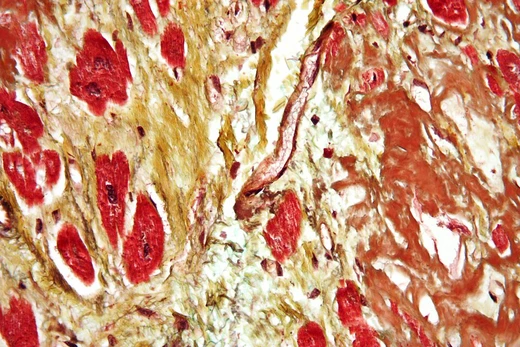
Bloodstream infection
Infection of blood by pathogens, distinct from sepsis.
Last updated
The presence of microbes in blood, detected through methods like blood cultures, is always considered abnormal and defines a bloodstream infection caused by blood-borne pathogens.[1] Health consequences of bacteremia can include sepsis, septic shock, and the hematogenous spread of bacteria to other body sites.[2]
Quick Facts
- Field
- Infectious disease medicine
- Known for
- Infection of blood by bacteria, often leading to sepsis
- Common causes
- Pneumonia
- meningitis
- surgery
- catheters
- intravenous drug abuse
- Diagnosis method
- Blood culture
- Treatment
- Antibiotics
Facts from the source article.
Key facts and history
Bacteria can enter the bloodstream as a severe complication of infections like pneumonia or meningitis, during surgery involving mucous membranes, or via catheters and intravenous drug abuse.[3] Gram positive bacteria are an increasingly important cause of bacteremia, with Staphylococcus, Streptococcus, and Enterococcus species being the most common.[4] E. coli is the most common cause of community-acquired bacteremia, accounting for about 75% of cases, usually from a urinary tract infection.[5] Bacteremia is most commonly diagnosed by blood culture, where a blood sample is incubated with a growth medium.[6]
Tooth brushing or dental procedures can lead to transient bacteremia.[3] Of all healthcare-associated bacteremia cases, about 24% are caused by gram-negative bacterial species, while these species account for roughly 45% of community-acquired bacteremia.[7] Because delaying treatment can lead to sepsis with high mortality rates, the presence of bacteria in the blood nearly always necessitates antibiotic therapy.[8] For uncomplicated methicillin-resistant Staphylococcus aureus bacteremia, the Infectious Disease Society of America advises a 14-day course of intravenous vancomycin.[9]
What the research sources say
According to "Harrison's Principles of Internal Medicine 19/E", the treatment approach for gram-negative bacteremia depends heavily on which specific organism is causing the infection.[10][11] The same source indicates that empiric antibiotic selection should be based on the infection's most probable source and the patient's history of healthcare exposure.[10][11] "Current Medical Diagnosis & Treatment 2017" notes that numerous streptococcal species are capable of causing bacteremia.[12][13]
References
- Wikipedia, "Bloodstream infection" (CC BY-SA 4.0), which cites: Viscoli, "Bloodstream Infections: The peak of the iceberg.", Virulence, 2 April 2016, p. 248–51; Doern, "Blood Cultures for the Detection of Bacteremia", uptodate.com, September 13, 2016 (original not read by us) en.wikipedia.org
- Wikipedia, "Bloodstream infection" (CC BY-SA 4.0), which cites: Singer, "The Third International Consensus Definitions for Sepsis and Septic Shock (Sepsis-3)", JAMA, 2016-02-23, p. 801–810; Vilcant, "Bacterial Endocarditis", StatPearls, 2026; Roberts, "Ortner's Identification of Pathological Conditions in Human Skeletal Remains (Third Edition)", Academic Press, 2019-01-01, p. 285–319; Yang, "The augmented prophylactic antibiotic could be more efficacious in patients undergoing transrectal prostate biopsy: a systematic review and meta-analysis", International Urology and Nephrology, 2016-08-01, en.wikipedia.org
- Wikipedia, "Bloodstream infection" (CC BY-SA 4.0), which cites: Sligl, "Five years of nosocomial Gram-negative bacteremia in a general intensive care unit: epidemiology, antimicrobial susceptibility patterns, and outcomes", International Journal of Infectious Diseases, 2006-07-01, p.; Perez-Chaparro, "[Bacteremia of oral origin]", Revue de Stomatologie et de Chirurgie Maxillo-Faciale, 2011-11-01, p. 300–303 (original not read by us) en.wikipedia.org
- Wikipedia, "Bloodstream infection" (CC BY-SA 4.0), which cites: Cervera, "Risk factors and management of Gram-positive bacteraemia", International Journal of Antimicrobial Agents, 2009-01-01, p. S26–30 (original not read by us) en.wikipedia.org
- Wikipedia, "Bloodstream infection" (CC BY-SA 4.0), which cites: High, "Geriatric Medicine and Gerontology 7th Edition", McGraw Hill, 2017, p. Chapter 125; Luzzaro, "Prevalence and drug susceptibility of pathogens causing bloodstream infections in northern Italy: a two-year study in 16 hospitals", European Journal of Clinical Microbiology & Infectious Diseases, 2002-12-01, (original not read by us) en.wikipedia.org
- Wikipedia, "Bloodstream infection" (CC BY-SA 4.0), which cites: Coburn, "Does This Adult Patient With Suspected Bacteremia Require Blood Cultures?", JAMA, 2012-08-01, p. 502–11; Templier, "Biochips for Direct Detection and Identification of Bacteria in Blood Culture-Like Conditions", Scientific Reports, 2017-08-25, p. 9457; Osaid, "Plug-and-Play Centrifuge-Only Device for Rapid Sepsis Diagnosis", Advanced Healthcare Materials, 2025; Marino Miguélez, "Culture-free detection of bacteria from blood for rapid sepsis diagnosis", npj Digital Medicine, 2025; Marino Miguélez, "Isolation and identifica en.wikipedia.org
- Wikipedia, "Bloodstream infection" (CC BY-SA 4.0), which cites: Gaynes, "Overview of nosocomial infections caused by gram-negative bacilli", Clinical Infectious Diseases, 2005-09-15, p. 848–854; Diekema, "Epidemiology and outcome of nosocomial and community-onset bloodstream infection", Journal of Clinical Microbiology, 2003-08-01, p. 3655–3660 (original not read by us) en.wikipedia.org
- Wikipedia, "Bloodstream infection" (CC BY-SA 4.0), which cites: Peleg, "Hospital-Acquired Infections Due to Gram-Negative Bacteria", The New England Journal of Medicine, 2010-05-13, p. 1804–1813 (original not read by us) en.wikipedia.org
- Wikipedia, "Bloodstream infection" (CC BY-SA 4.0), which cites: Liu, "Clinical practice guidelines by the infectious diseases society of America for the treatment of methicillin-resistant Staphylococcus aureus infections in adults and children", Clinical Infectious Diseases, 2011-02-; Liu, "Clinical practice guidelines by the infectious diseases society of America for the treatment of methicillin-resistant Staphylococcus aureus infections in adults and children", Clinical Infectious Diseases, 2011-02- (original not read by us) en.wikipedia.org
- Open Library record, ISBN 9780071802154 ("Harrison's Principles of Internal Medicine 19/E (Vol.1 & Vol.2)"). CC0 (metadata); book content not read. openlibrary.org
- Wikipedia, "Bloodstream infection" (CC BY-SA 4.0), which cites: Russo, "Harrison's Principles of Internal Medicine 19th Edition", McGraw Hill, 2016, p. Chapter 186; Russo, "Harrison's Principles of Internal Medicine 19th Edition", McGraw Hill, 2016, p. Chapter 186; Russo, "Harrison's Principles of Internal Medicine 19th Edition", McGraw Hill, 2016, p. Chapter 186 (we also read that source) en.wikipedia.org
- Open Library record, ISBN 9781259585111 ("Current Medical Diagnosis & Treatment 2017"). CC0 (metadata); book content not read. openlibrary.org
- Wikipedia, "Bloodstream infection" (CC BY-SA 4.0), which cites: Schwartz, "Current Medical Diagnosis and Treatment 2017", McGraw Hill, 2016, p. Chapter 33; Cohen-Poradosu, "Harrison's Principles of Internal Medicine 19th Edition", McGraw Hill, 2015, p. Chapter 201 (we also read that source) en.wikipedia.org
Each numbered sentence above was checked against the source it cites before publication. Sentences citing Wikipedia adapt text from the English Wikipedia article Bloodstream infection (contributors), used under CC BY-SA 4.0; this entry is available under the same licence. Other sources were used for facts only; no text or images are copied from them.
Also in the Codexery
More in Cardiovascular & Blood
Sources
Compiled from Wikipedia and the sources listed below. Text from Wikipedia is available under CC BY-SA 4.0; this entry is adapted from it.
- Wikipedia: Bloodstream infection (CC BY-SA 4.0).
- Word definitions: the , each quoted from its Wikipedia article.
Spotted an error? Know more?
Reader corrections go straight into our review queue. Suggest an edit · How this site is sourced