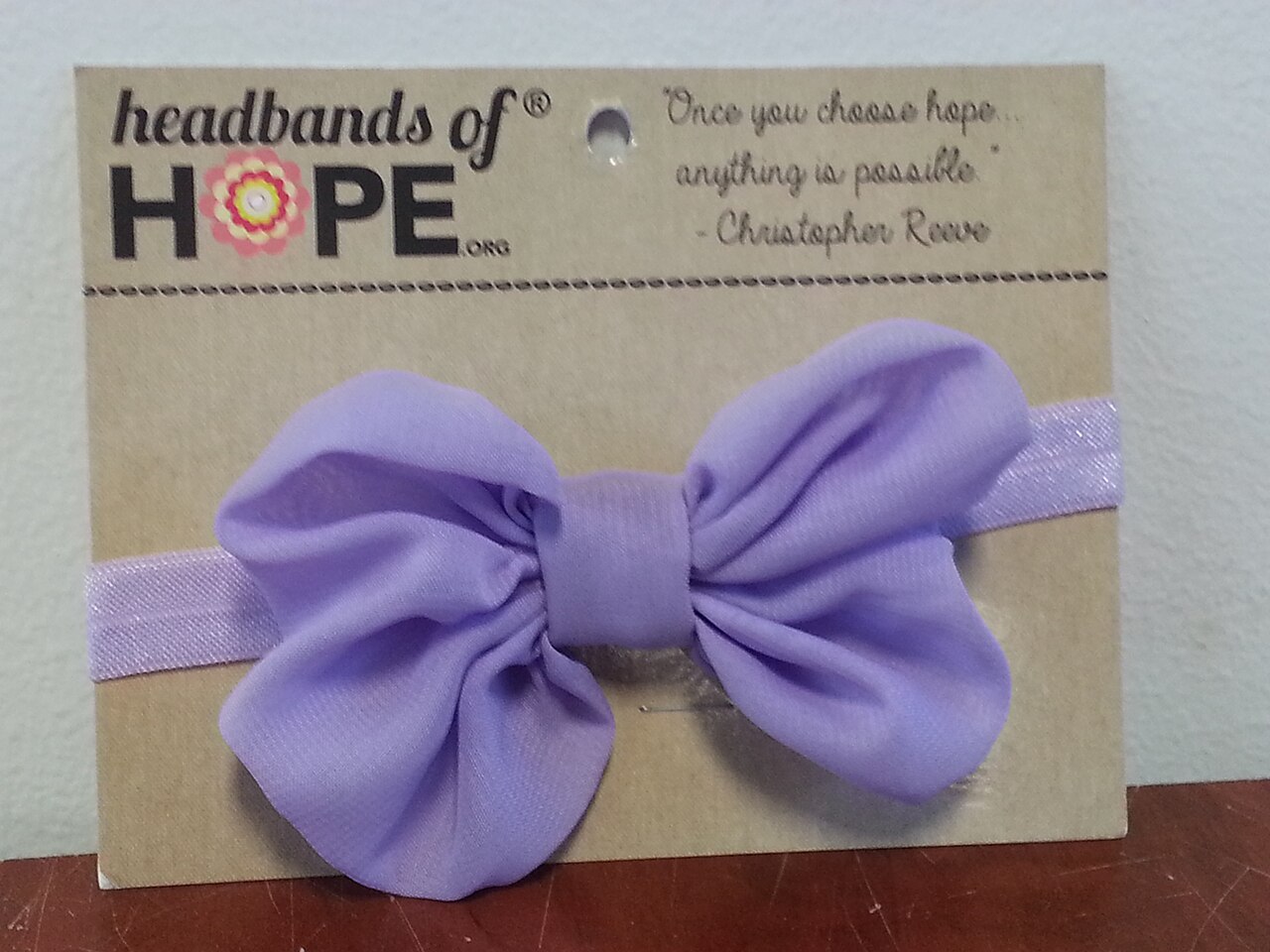
Headbands of Hope
For every item sold, a headband is donated to a child with cancer.

Aces Heustess · CC BY-SA 3.0
Headbands of Hope, LLC is a for-profit organization founded by Jessica Ekstrom that donates a headband to a child battling cancer for every item sold. Since its launch in April 2012, the organization has donated over 1 million headbands to hospitals across the United States and in twenty-two countries, and its products are available in thousands of stores worldwide.
Quick Facts
- Location
- Raleigh, North Carolina
- Founder
- Jessica Ekstrom, CEO
- Region Served
- United States
Facts from the source article.
Lore & Background
Headbands of Hope was created by Jessica Ekstrom after an internship at the Make-A-Wish Foundation in 2011. Noticing the popularity of headbands over wigs among girls battling cancer, Ekstrom designed a product specifically for these children. The organization launched in April 2012, and by January 31, 2013, it had donated more than 3,000 headbands. TOMS Shoes, a supporter, provided the business model of sending headbands to hospitals rather than individual patients.
The headbands are tagged and branded in a warehouse in Cornelius, North Carolina, a location chosen with help from the Colleges of Design and Textiles at North Carolina State University, Ekstrom's alma mater. The company has expanded to sell other hair accessories, such as claw clips and hats. In 2019, the program was expanded to include children with illnesses other than cancer, as the organization had more headbands to donate than recipients.
Marketing is conducted by representatives on college campuses. The 'Hope Club' allows cancer patients who have received headbands to post photos and biographies. Recently, the organization began marketing more general headwear through Headwear of Hope, donating headwear to young boys undergoing cancer treatment, and also donates $1 for each item purchased to the St. Baldrick's Foundation.
Reader's Guide
Headbands of Hope represents a notable example of a for-profit social enterprise that uses a one-for-one donation model, similar to TOMS Shoes, to address a specific need among children with cancer. By focusing on headbands—a popular alternative to wigs for girls—the organization filled a niche in the pediatric cancer support space. Its rapid growth, from donating 3,000 headbands by early 2013 to over 1 million headbands across the United States and twenty-two countries, demonstrates the scalability of its model. The expansion in 2019 to include children with other illnesses reflects an adaptive response to supply exceeding demand among cancer patients. The organization's partnership with North Carolina State University for warehouse location and its college campus marketing strategy highlight a blend of academic and grassroots outreach. Additionally, the creation of Headwear of Hope and donations to the St. Baldrick's Foundation show an evolving approach to supporting young patients. Headbands of Hope's significance lies in its demonstration of how a simple product can be leveraged for charitable impact while operating as a for-profit entity, offering a replicable framework for other social ventures.
A Spark at Make-A-Wish
Jessica Ekstrom's path to founding Headbands of Hope began during a 2011 internship at the Make-A-Wish Foundation. While working there, she observed something that struck her deeply: young girls undergoing cancer treatment gravitated toward headbands rather than wigs. That simple observation became the seed for an entirely new product designed with those children in mind. Ekstrom set out to create a headband that would feel less like a medical necessity and more like a fashion choice. The organization officially launched in April 2012, and the early momentum was remarkable. By January 31, 2013, Headbands of Hope had already donated more than three thousand headbands to children in need. What started as one woman's response to a small detail she noticed in a hospital setting quickly evolved into a structured, for-profit enterprise with a clear mission: for every item a customer purchased, a headband would be donated to a child battling cancer. The early days proved that a simple accessory could carry enormous emotional weight for a child going through one of life's hardest experiences.
From One Warehouse to Twenty-Two Countries
Headbands of Hope operates as a for-profit company, but its commercial structure exists entirely in service of its charitable mission. The model is elegantly straightforward: each item a customer buys triggers the donation of a headband to a child undergoing cancer treatment. Since the 2012 launch, that single transaction has multiplied into more than one million headbands delivered to hospitals throughout the United States and across twenty-two additional countries. The company's products now sit on shelves in thousands of retail locations around the world. A key early partnership shaped how donations actually reached children. TOMS Shoes, a supporter of the organization, contributed the business model of routing headbands through hospital channels rather than handing them directly to individual patients. This approach ensured that headbands were available where children needed them most, in the wards and treatment centers where they spent their days. The for-profit framework also allowed the company to scale sustainably, turning a grassroots idea into a globally distributed supply chain while keeping the core promise intact.
Crafted in North Carolina
The physical production of Headbands of Hope is anchored in Cornelius, North Carolina, where the company maintains its warehouse. Every headband is tagged and branded at this facility before it ships to a hospital or retail partner. The choice of location was far from arbitrary. Jessica Ekstrom, a graduate of North Carolina State University, worked with the university's Colleges of Design and Textiles to select the site. This connection to her alma mater gave the operation a personal, community-rooted feel that extended well beyond a simple logistical decision. In more recent years, the product line has grown beyond the original headband. The company now also produces and sells claw clips and hats, broadening its catalog of hair accessories. This expansion reflects both consumer demand and the practical reality that children in treatment may need different types of head coverings at different stages. The North Carolina warehouse remains the operational hub where all of these items are prepared, branded, and dispatched to their final destinations.
Building a Community Beyond the Product
Headbands of Hope has cultivated a sense of community that extends well past the transaction of buying and donating. The organization's Hope Club invites cancer patients who have received a headband to share their photographs and personal stories, creating a visible, human gallery of the children the company exists to serve. On the marketing side, representatives engage directly with students on college campuses, bringing the brand's mission face-to-face to a younger audience. In 2019, the company made a significant programmatic shift: it expanded eligibility to include children battling illnesses other than cancer. The practical reason was that the organization had accumulated more headbands to donate than it had cancer recipients to serve, so broadening the mission ensured no headband went unused. Additionally, the launch of Headwear of Hope specifically targets young boys undergoing cancer treatment, while each purchase also contributes one dollar to the St. Baldrick's Foundation. These layered initiatives show a company continually adapting to meet evolving needs.
Gallery
More in Cancer awareness 1-24
Spotted an error? Know more?
Reader corrections go straight into our review queue. Suggest an edit · How this site is sourced