
Andy Pandy
British children's marionette series from 1950 with a 2002 revival.

Chemical Engineer · CC BY-SA 3.0
Andy Pandy is a British children's television series that first aired on BBC Television in 1950. Originally broadcast live, it became a staple of early children's programming, later spawning a comic strip and a 2002 revival. The series is notable for its marionette characters and its place in the BBC's 'Watch with Mother' strand.
Quick Facts
- Runtime
- 15–16 minutes (Watch with Mother); 5 minutes (2002 revival)
- Open Theme
- Andy Pandy Theme (2002)
- End Theme
- Andy Pandy Theme (instrumental; 2002)
- Country
- United Kingdom
- Creator
- Freda Lingstrom & Maria Bird
- Voices
- 2002 version: / Maria Darling / Jimmy Hibbert / Joanna Ruiz / David Holt
- Narrator
- Maria Bird (original version) / Vera McKechnie (original and 1970 version) / Tom Conti (2002 version)
- Network
- BBC Television Service/BBC1
- First Aired
- 1950-07-11
- Last Aired
- 1970-03-30
- Num Series
- 4
Facts from the source article.
Lore & Background
The original version of Andy Pandy premiered on BBC TV on 11 July 1950 as part of the 'For the Children' strand (later 'Watch with Mother'), narrated by Maria Bird. Initially broadcast live, 26 fifteen-minute episodes were filmed on 16 mm around 1952 and repeated continuously until 1969. In 1970, 13 new colour episodes were made with Vera McKechnie as narrator. The series featured Andy, a marionette, later joined by Teddy, a teddy bear, and Looby Loo, a rag doll, who came to life when Andy and Teddy were not around. Each episode ended with a variation on the song 'Time to go home / Time to go home / Andy is waving goodbye.'
Reader's Guide
Andy Pandy holds significance as one of the earliest British children's television series, pioneering the use of filmed repeats to extend the life of live broadcasts. Its original run from 1950 to 1970, with 39 episodes total, established a gentle, music-and-movement format that influenced later preschool programming. The 2002 revival, produced by Cosgrove Hall Films and Ben Productions, updated the series with stop-motion animation and a focus on making and doing, introducing new characters and expanding the setting to a village. The series also generated a comic strip in the children's magazine Robin. Its legacy includes a parody by Des O'Connor and continued home video releases, reflecting its enduring place in British cultural memory.
Did You Know?
- The character's design was said to be based on Paul Atterbury, the then young son of puppeteer Audrey Atterbury.
- A comic-strip version of Andy Pandy was published in the children's magazine Robin.
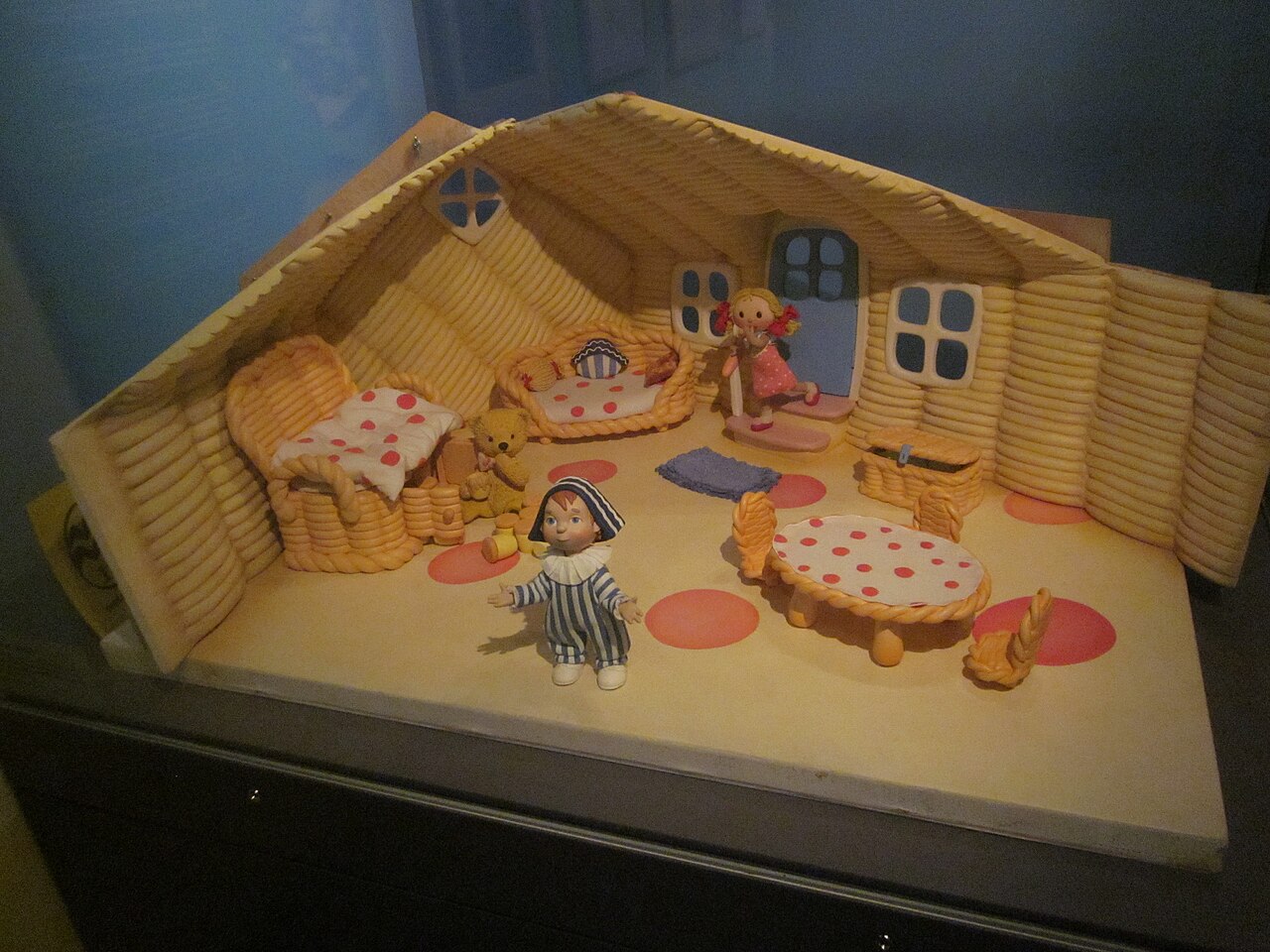
- The 2002 revival used stop-motion animation instead of string puppets and introduced three new characters: Missy Hissy, Tiffo, and Bilbo.
- The series was parodied by Des O'Connor in his Dandy Sandy sketches with Arthur Askey.
From Live Broadcast to Lasting Franchise
Andy Pandy first appeared on BBC Television on 11 July 1950 as part of the For the Children strand, later rebranded as Watch with Mother. Those initial broadcasts were performed live, a limitation the production team quickly recognised could be overcome by filming. Around 1952, twenty-six fifteen-minute episodes were recorded on 16 mm film, allowing the programmes to be repeated continuously until 1969. When BBC1 transitioned to colour transmission, thirteen new episodes were produced in 1970, first shown on 5 January of that year. The series then enjoyed a full revival in 2002, when fifty-two segments were produced using stop-motion animation rather than the original string puppets. Across all three eras, a total of ninety-one episodes were created, making Andy Pandy one of the longer-running children's properties in British television history. The 2002 version was animated and produced by Cosgrove Hall Films alongside Ben Productions, the same company behind the 2001 remake of Flower Pot Men.
A Picnic Basket World and Its Expansion
The original Andy Pandy universe was deliberately small and intimate. Andy, a marionette, lived in a picnic basket alongside Teddy, a teddy bear, and Looby Loo, a rag doll who came to life only when the other two were absent. Looby Loo was known for singing 'Here we go Looby Loo,' and each episode closed with a variation on the farewell song: 'Time to go home / Time to go home / Andy is waving goodbye.' There is a tradition that Andy's design was inspired by Paul Atterbury, the young son of puppeteer Audrey Atterbury. The 2002 revival dramatically expanded this world, moving the characters from a nursery and garden setting into an entire village where Andy, Teddy, and Looby Loo each owned individual houses. Four new characters joined them: Missy Hissy, a red-and-yellow snake; Tiffo, a teal-and-purple dog; Bilbo, a sailor; and Orbie, a yellow-and-blue ball.
The Creative Minds Behind the Puppets
The original series was shaped by a close-knit production team. Freda Lingstrom served as producer and co-wrote and composed the material alongside narrator Maria Bird, who also provided some of the singing. Other vocal contributions came from Gladys Whitred and Julia Williams. The puppeteers included Audrey Atterbury, Molly Gibson, Martin Grainger, and the Stavordales, with Christopher Leith joining for the 1970 colour episodes. When the 1970 remakes were made, Vera McKechnie took over narration. The 2002 revival brought a new generation of voices: Maria Darling voiced both Andy and Missy Hissy, Jimmy Hibbert brought Teddy to life, Joanna Ruiz performed Looby Loo and Orbie, and David Holt handled both Tiffo and Bilbo. Tom Conti narrated the new series. A notable creative shift distinguished the two eras: where the original emphasised music and movement, the 2002 version placed greater emphasis on making and doing, reflecting a different philosophy of early childhood engagement.
Parody, Print, and the Long Tail of Home Video
Andy Pandy's cultural footprint extended well beyond the television screen. A comic strip bearing the same name was published in Robin, a children's magazine in the tradition of Robin and Pippin, translating the puppet world into printed form for young readers. The character also became a target of gentle parody: Des O'Connor performed 'Dandy Sandy' sketches alongside Harry Secombe and Britt Ekland, poking fun at the show's gentle rhythms for a wider audience. In the home video era, the original 1950s and 1970s series saw VHS releases through BBC Enterprises, while the 2002 revival was distributed on VHS and DVD by BBC Worldwide. In April 2008, Ben Productions LLC and Bulldog Licensing appointed 2 Entertain as home video distributor, framing the release as part of a merchandise-led relaunch that sought to reintroduce the property to a new generation of families.
Gallery
Frequently Asked Questions
What is Andy Pandy?
Andy Pandy is a British children's television series that debuted on BBC Television in 1950, featuring hand-puppet characters in a simple domestic setting. It ran for 91 episodes across its original run and later received a stop-motion revival in 2002.
Who are the main characters in Andy Pandy?
The series centres on three marionette figures: Andy, a young boy; Teddy, his teddy-bear companion; and Looby Loo, a dog. They interact in a kitchen and living-room environment designed for very young viewers.
How was Andy Pandy originally broadcast?
The early episodes were performed live on BBC television as part of the 'Watch with Mother' strand, which targeted toddlers and their caregivers. Later in the series' run, episodes shifted from live transmission to being filmed in advance.
When and how was Andy Pandy revived?
After the original run ended, the franchise returned in 2002 with a new stop-motion animation series. This revival modernised the visual presentation while keeping Andy, Teddy, and Looby Loo at the heart of the stories.
Why is Andy Pandy considered important in British television history?
As one of the BBC's earliest dedicated children's programmes, it helped establish the puppet-based format for preschool audiences in the UK. Its longevity—from live broadcasts in 1950 through a comic strip to the 2002 revival—marks it as a foundational title in British children's television.
More in British television series revived after cancellation 1-24
Spotted an error? Know more?
Reader corrections go straight into our review queue. Suggest an edit · How this site is sourced