
The Basil Brush Show (1968–1980)
Boom! Boom!

John W. Schulze from Tejas · CC BY 2.0
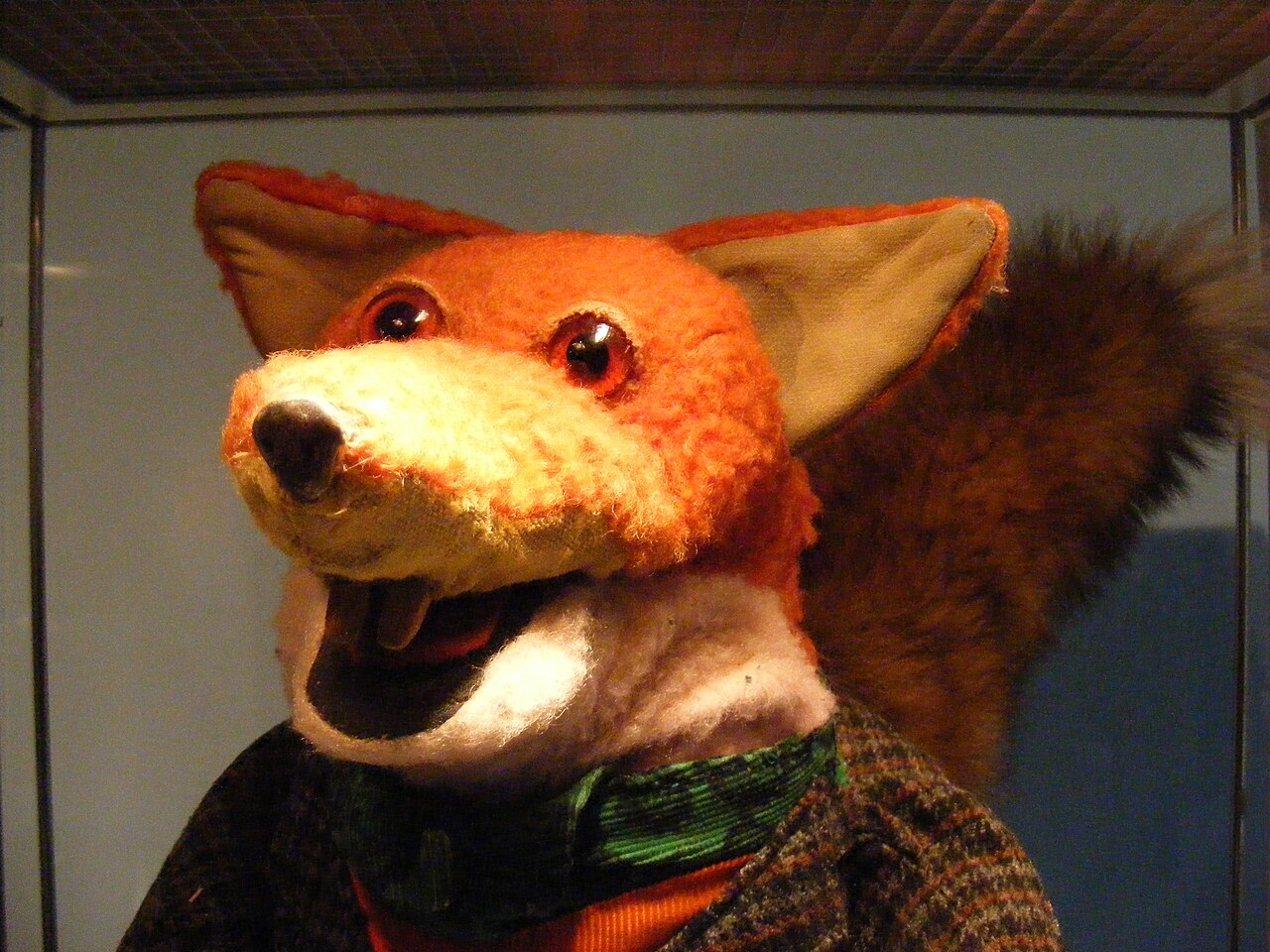
Basil Brush is a fictional fox who appears as a glove puppet and is best known for his role on British children's television. He has also appeared in animated shorts, books, annuals, and comic strips. The character has been on children's TV from the 1960s onward and has performed in pantomimes around the UK. He is mischievous and a storyteller, famous for his catchphrase "Boom! Boom!" after laughing at his own jokes. He speaks with a posh accent and manner, calling himself a "fella." Basil claims to dislike puppets and values his brush—the traditional name for a fox's tail—as his most prized possession. He publicly supports Leicester City Football Club, known as "The Foxes."
The original Basil Brush glove puppet was designed by Peter Firmin in 1962 for an ITV series, voiced and performed by Ivan Owen until Owen's death in 2000. Owen avoided personal publicity, ensuring only Basil had a public persona, which made the character seem real since the puppeteer was never seen. Owen based Basil's voice on actor Terry-Thomas, giving the puppet a cultivated class. Basil first appeared on TV in 1962 in *The Three Scampis*, about an out-of-work circus act, with Howard Williams as the human, Owen animating and voicing Basil, and Wally Whyton animating and voicing Spike McPike, an aggressive Scottish hedgehog. In the mid-1960s, Basil became a supporting act for magician David Nixon on BBC1 shows *Nixon at Nine-Five* (1967) and *The Nixon Line* (1967–68), upstaging Nixon and earning his own show.
*The Basil Brush Show* ran from 1968 to 1980, with Basil supported by various stooges: Rodney Bewes as "Mr Rodney" in 1968; Derek Fowlds as "Mr Derek" from 1969 to 1973; Roy North as "Mr Roy" until 1976; Howard Williams as "Mr Howard"; and finally Billy Boyle as "Mr Billy." By the mid-1970s, the show targeted a family audience, airing on BBC1 on Saturday early evenings. Its sophisticated humour, including topical political jokes, gave it broad appeal. Recorded with a studio audience, episodes ran about 25 minutes. The format began with Basil and his stooge doing jokes, followed by a comedy sketch on a current subject (e.g., a holiday in Spain based on "Y Viva España"), then a musical item with guest singers like Demis Roussos in 1973, Petula Clark in 1979, and Cilla Black—big stars sought the show's large audience. Sometimes the guest sang a straight song and a comic duet with Basil. The show ended with "storytime," where the straight man read a serial about a fictitious historical relative of Basil's (e.g., "Bulldog" Basil, "Blast-Off Basil," or "Basil de Farmer"), interrupted by jokes from Basil, often about "Dirty Gertie from Number Thirty." In the mid-1970s, Basil would use his clockwork dog Little Ticker to distract the audience. Each story ended on a cliffhanger with the catchphrase "and that's all we've got time for this week, Basil," leading to a final song based on the serial as credits rolled.
A dispute in 1980 ended the show when Ivan Owen wanted a mid-evening timeslot, which the BBC refused. In 1982, Basil appeared on ITV's *Let's Read With Basil Brush*, an infant schools programme by Granada Television. He returned to the BBC as co-host of *Crackerjack* during the 1983–84 season. Basil also performed in pantomime at Christmas, often co-starring with a well-known singer or comedian, including Cilla Black in the 1960s. After the show's cancellation, Basil ended his partnership with Mr Billy and teamed up again with Howard Williams for a live stage show. During this period, he had a cartoon strip in the weekly children's publication *TV Comic*. In September 1997, Ivan Owen and Peter Firmin sold the rights to Basil Brush to Bill Haslam, a Cornwall-based businessman and fan, who formed a Southampton-based company.
Quick Facts
- Creator
- Ivan Owen / Peter Firmin
- Portrayer
- Ivan Owen (1962–2000) / Michael Winsor (2000–present)
- Species
- Fox
- Gender
- Male
- First
- The Three Scampis (1962)
- Significant Other
- Roxy
- Relatives
- Mortimer and Herr Brush (Cousins), Bingo and Bungo Brush (nephews)
- Nationality
- English
Facts from the source article.
Lore & Background
A mischievous character and a raconteur, Basil Brush is best known for his catchphrase "Boom! Boom!", used after bursting out laughing at one of his own jokes, and also for speaking in a "posh" accent and manner, referring to himself as a "fella". The character claims to dislike puppets, and says his most prized possession is his brush, this being the traditional name for a fox's tail. He publicly supports Leicester City Football Club, often nicknamed "The Foxes".
Reader's Guide
The Basil Brush Show ran for 12 years from 1968 to 1980, in which he was supported by various famous stooges: first, in 1968, by the actor Rodney Bewes, known on the show as "Mr Rodney"; next, from 1969 to 1973, by the actor Derek Fowlds (known as "Mr Derek"); then until 1976 by actor and singer Roy North ("Mr Roy"); then by "Mr Howard" Howard Williams, who was in the original "Three Scampies"; and finally by "Mr Billy" (Billy Boyle). By the mid-1970s, the show was aimed at a family audience, so it was usually broadcast on BBC1 in an early evening timeslot on Saturdays. This, plus a degree of sophistication in the humour (which often included topical political jokes), helped give Basil a broad mainstream appeal. The show was recorded with a studio audience and usually ran for about 25 minutes. The format typically featured an introduction by Basil and his stooge (Mr Rodney, Mr Derek, etc.), in which they would do a few jokes; this was followed by a comedy sketch, featuring topical jokes about a then-current subject (for instance, a sketch set on board an aeroplane flying them to a holiday in Spain, loosely based around the hit pop song "Y Viva España"); then a musical item, featuring a guest singer or group (these included some of the best known singers of the day, top stars such as Demis Roussos in 1973, Petula Clark in 1979, and Cilla Black — big stars vied to get on the show, which had a large audience); sometimes the guest singer would do a song straight, but then also do a comic duet with Basil. Finally, the show would conclude with 'storytime', in which the straight man would read aloud from a serial story about the adventures of some fictitious historical relative of Basil's – for instance 'Bulldog' Basil, or Blast-Off Basil and his journey to the stars (a Star Trek spoof), or Basil de Farmer, the knight in shining armour (a Robin Hood spoof); or at least he would attempt to, whilst being continually interrupted by a string of jokes and humorous remarks (often concerning "Dirty Gertie from Number Thirty") from Basil. At this point, in the mid-1970s, Basil would often get out Little Ticker, his clockwork wind-up dog, and have it do humorous tricks at the side, almost off-camera, in order to distract the audience and thereby take the rise out of Mr Roy.
Did You Know?
- Ivan Owen voiced Basil from 1962 until his death in October 2000.
- Basil's catchphrase "Boom! Boom!" is delivered after laughing at his own jokes.
- The character's voice was modelled on actor Terry-Thomas.
- Basil first appeared on television in 1962 in the series The Three Scampis.
Production Identity & Spin-Off Status
The Basil Brush Show arrived on CBBC on 27 September 2002 as a fresh reimagining of the beloved fox puppet, produced across six series by The Foundation until its final episode aired on 25 December 2007. Though it carries the name of the original 1960s and 1970s BBC programme, this iteration shares no cast members with its predecessor, positioning itself as a standalone spin-off rather than a continuation. The setting is a deliberately bright, modern penthouse flat that Basil and his human sidekick Stephen co-own, providing a contained domestic space from which the show's adventures radiate. The children's sitcom format, combined with the puppet's established cultural footprint, gave the series a unique niche: it was simultaneously a familiar brand and a wholly new creative project, free to reinvent the character's world for a new generation of young viewers without being constrained by the legacy of the original production.
Ensemble Evolution & Cast Turnover
The show's supporting cast underwent significant reshuffling as it progressed through its six series. Christopher Pizzey's Stephen anchored the ensemble from 2002 until his departure at the close of Series 4, after which his distant cousin Liam, played by Michael Byers, stepped in as Basil's new partner from 2006 to 2007. The children's roles aged visibly: Dave, portrayed by Michael Hayes, grew from a ten-year-old in the first series to a fifteen-year-old by the finale, while Molly, played by Georgina Leonidas, matured from twelve to seventeen. Molly's screen time contracted sharply in later seasons, reduced to a recurring presence in Series 5 and appearing in just two episodes of the final run. Neighbour Ella, played by Tisha Martin, was eventually replaced by Madison, an American fashion student voiced by Laura Evans. The re-vamped later series also introduced Lucy as Anil's niece, first played by Janine Vieira and later by Madeline Castrey, partially filling the narrative gap left by Molly's reduced role.
Basil as Character & Performance
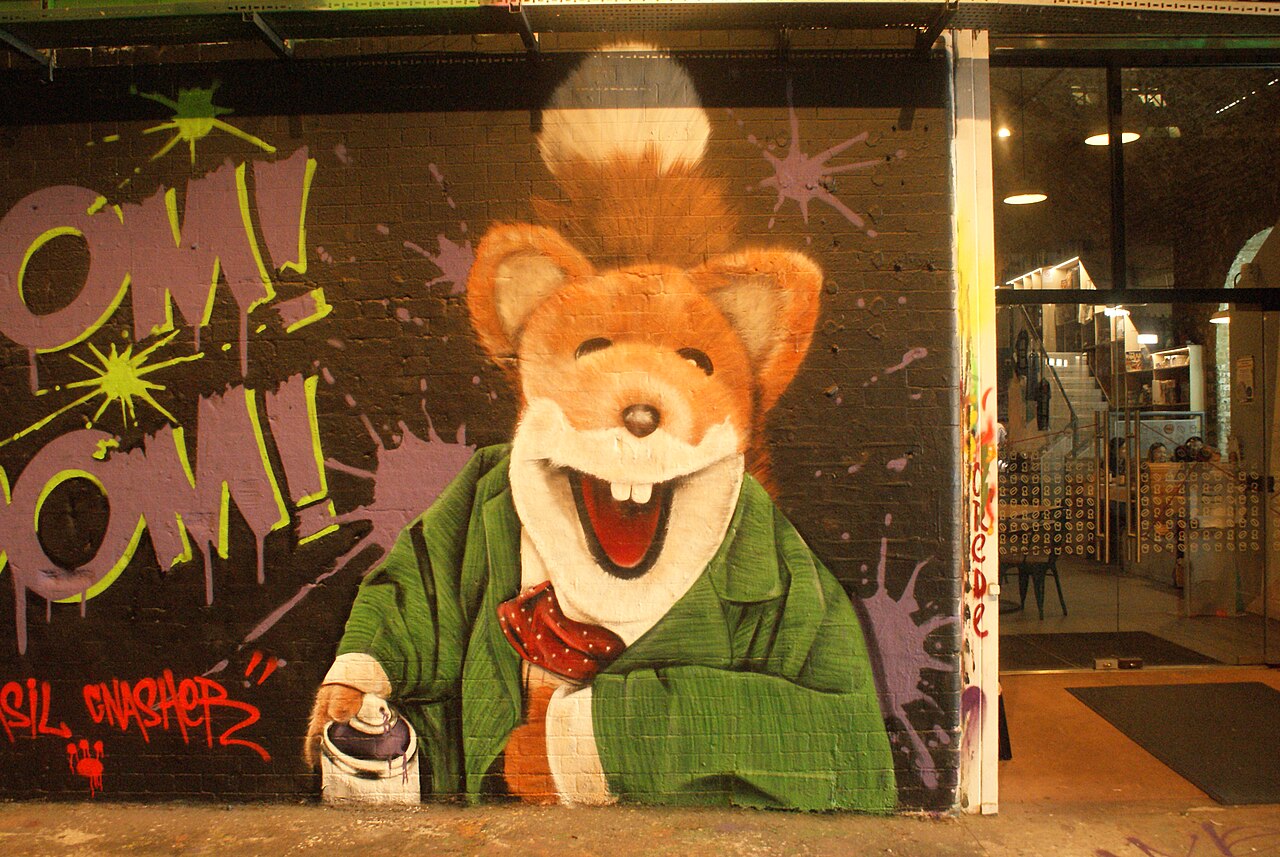
Basil Brush occupies a unique position in children's television as a character rendered simultaneously as a physical glove puppet and an animated figure, giving the production flexibility in how the fox appears on screen. Visually, he is a red fox dressed in a green jacket with a red cravat, and his speech is marked by an exaggeratedly posh Received Pronunciation. He habitually addresses everyone around him with formal titles such as "Mister," "Master," or "Miss," reinforcing his self-appointed air of superiority. His signature vocal exclamation, "Boom! Boom!", punctuates the moment he bursts into laughter at one of his own jokes, a ritual that became a defining beat of the show's comedic rhythm. Behind the voice sits Michael Winsor, whose credit in the show is listed not as a voice actor but as "Basil's Personal Assistant," a small production detail that blurs the line between performer and character and adds a layer of meta-humour to the puppet's already self-aware persona.
Meta-Comedy & Structural Quirks
One of the show's most distinctive traits is its deliberate indifference to conventional fourth-wall boundaries. Characters routinely acknowledge that they are performing on a studio set, and multiple episodes weave the show's own cameramen and crew directly into the plot, treating the production environment as part of the fictional world. This laissez-faire approach to structure extends to casting choices: in Series 1, actor Laurie Ventry appeared in twelve of the thirteen episodes, yet played a completely different character in each one, never repeating a role. The series also leaned heavily on a fixed secondary location, Anil's Caff, a greasy-spoon run by Ajay Chhabra's character, where the main cast gathered for meals that were a running source of comedic disappointment. As the show evolved in its later seasons, the writing embraced a more self-referential tone, with characters like Liam referencing odd night classes that conveniently solve plot problems, and Stephen's brief Hollywood cameo revealing he had ended up working a burger van rather than achieving stardom.
Gallery

More in British comedy television shows 1-24
Spotted an error? Know more?
Reader corrections go straight into our review queue. Suggest an edit · How this site is sourced