
High & Dry (1987 TV series)
A 1987 ITV sitcom about buying a decrepit seaside pier.

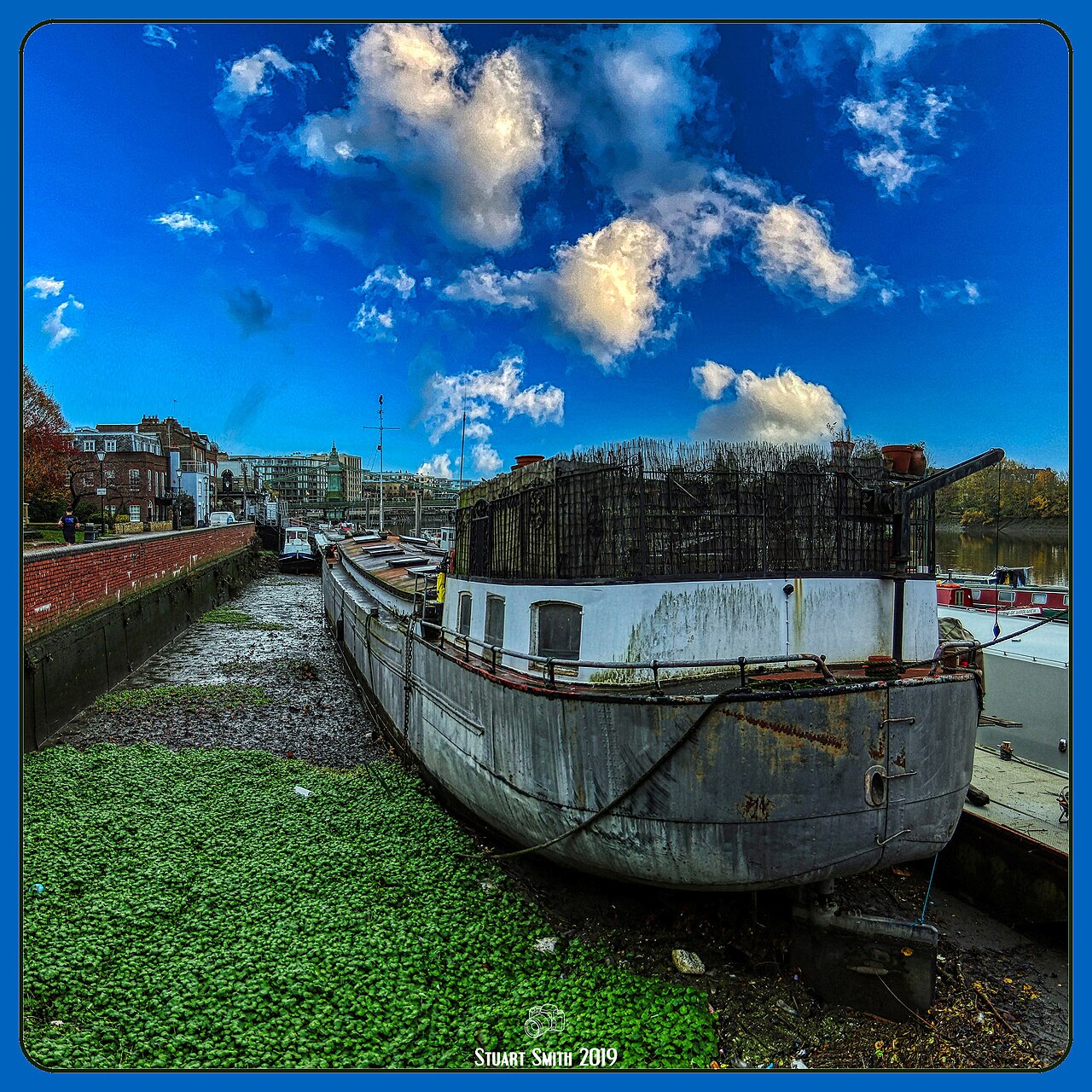
Stuart Smith. · CC BY-SA 2.0
High & Dry is a 1987 British television sitcom produced by Yorkshire Television, adapted from the BBC radio series It Sticks Out Half a Mile, itself a sequel to Dad's Army. The series starred Bernard Cribbins, Richard Wilson, Vivienne Martin, and John Bardon, and was written by Harold Snoad (using the pseudonym Alan Sherwood). Only one series was produced.
- Field
- Television sitcom
- Nationality
- British
- Known for
- Adaptation of the radio series It Sticks Out Half a Mile
- Broadcaster
- ITV (Yorkshire Television)
- Year
- 1987
- Episodes
- One series
Lore & Background
High & Dry followed Ron Archer and his son Trevor as they bought an old seaside pier from Midbourne Council for five shillings. Ron blackmailed his brother-in-law Richard Talbot, a bank manager, into granting a £2,000 loan for maintenance. The series was set in 1946 in the fictional town of Midbourne, with most action at the pier or the bank. The pier had been built in 1860 by Eugenius Birch, closed in 1932, and partially demolished in 1940 to prevent enemy landings. The Friends of Midbourne Pier Association (FOMPA) was formed to help restore it.
Reader's Guide
High & Dry represents a late-1980s attempt to extend the Dad's Army universe into a new setting and medium. Though only one series was made, it preserved the character of Ron Archer (based on ARP Warden Hodges from Dad's Army) and the post-war seaside atmosphere. The series is notable for its cast, including Bernard Cribbins and Richard Wilson, and for being a television adaptation of a radio sequel. Its limited run and the earlier pilot Walking the Planks (1985) show the challenges of transferring a radio concept to television.
Did You Know?
- The series was written by Harold Snoad under the pseudonym Alan Sherwood because he was then contracted to the BBC.
- A pilot episode titled Walking the Planks was broadcast on BBC1 on 2 August 1985 but did not lead to a series.
- The pier was sold to Ron and Trevor Archer for just five shillings.
Creative Origins & the Baltimore Commitment
David Simon's vision for The Wire began as a police procedural rooted in the frustrations of his writing partner Ed Burns, a former homicide detective and public school teacher. Burns grew exasperated by the bureaucratic machinery of the Baltimore Police Department while conducting long surveillance operations against violent drug dealers, and Simon recognized a parallel in his own years covering police beats for The Baltimore Sun. Simon deliberately chose Baltimore as the setting because of his deep personal connection to the city. His earlier experience with Homicide: Life on the Street on NBC, where network executives clashed with the show's unflinching pessimism, pushed him toward HBO, where a prior collaboration on The Corner had established trust. HBO was initially skeptical about adding a police drama to its slate but ultimately greenlit a pilot. Simon sought out Baltimore's mayor to explain his intention to portray certain aspects of the city in a stark, unvarnished light, and was given a warm welcome to work there. He acknowledged he hoped the series might shift some viewers' perspectives, while candidly admitting it was unlikely to alter the underlying problems it depicted.
Five Institutions, One City
The Wire's structural ambition set it apart from conventional crime dramas. Rather than following a single case or a fixed ensemble through a narrow procedural lens, the series devoted each of its five seasons to a different pillar of Baltimore's civic life while retaining and advancing characters from earlier arcs. The chronological progression moved from the illegal drug trade in the first season, through the port and longshoremen's world, into the machinery of city government and bureaucracy, then to the public education system, and finally to the print news medium. This architecture allowed Simon to examine how each institution shapes, constrains, and compromises the individuals operating within it. He described the show not as a crime drama in any traditional sense but as a portrait of the American city and the ways people live together. Whether the character was a cop, a longshoreman, a drug dealer, a politician, a judge, or a lawyer, Simon argued that all were ultimately compromised by the institution to which they owed their loyalty. The series was both set and produced in Baltimore, grounding its institutional critique in a specific, real urban landscape rather than a generic American backdrop.
Casting for Truth Over Stardom
The Wire's casting philosophy deliberately rejected the television convention of anchoring a series around recognizable stars. Instead, the production leaned heavily on character actors whose naturalism made them appear as though they had simply walked off the streets of Baltimore. Wendell Pierce was the first to be cast, landing the role of Detective Bunk Moreland. Dominic West secured the ostensible lead of Jimmy McNulty by recording his audition tape the night before the deadline, performing the scene alone. Lance Reddick, who had auditioned for both Bunk and the heroin addict Bubbles, ultimately received the role of Cedric Daniels. Michael K. Williams won the part of Omar Little after a single audition, and he personally recommended Felicia Pearson for the role of Snoop after meeting her at a local Baltimore bar, shortly after she had served time for a second-degree murder conviction. Beyond professional actors, the series featured numerous real-life Baltimore figures in minor roles, including a former governor, a former mayor, a police chief, and a Sun reporter. A Baltimore drug lord arrested in the 1980s took a recurring role as a deacon, and a longtime police officer who inspired a character of the same name played Lieutenant Dennis Mello. More than a dozen cast members had previously appeared on HBO's Oz, and several had worked with Simon on Homicide or The Corner, creating a deep well of shared creative history.
From Modest Ratings to Enduring Legacy
When The Wire first aired on HBO in June 2002, its large ensemble cast was largely unknown to television audiences, and the show drew only average ratings throughout its run. Despite what critics and industry observers would later call its exceptional scripting and its uncommonly accurate exploration of American society, politics, and urban life, the series failed to win any major television awards during its original broadcast. It ran for five seasons and sixty episodes, concluding in March 2008. Yet the show's reputation grew steadily after its final episode aired, building a devoted cult following among viewers who discovered it through home video and word of mouth. That grassroots appreciation eventually transformed into a near-universal critical consensus: The Wire is now widely regarded as one of the greatest television series ever produced. Its influence extends well beyond the crime-drama genre, with scholars, journalists, and creators frequently citing its structural ambition and institutional realism as a benchmark for what television storytelling can achieve when it commits to the complexity of real urban systems rather than the simplifications of conventional genre writing.
Gallery


More in British comedy television shows 1-24
Spotted an error? Know more?
Reader corrections go straight into our review queue. Suggest an edit · How this site is sourced