
All About George
A British family comedy drama spanning five generations.

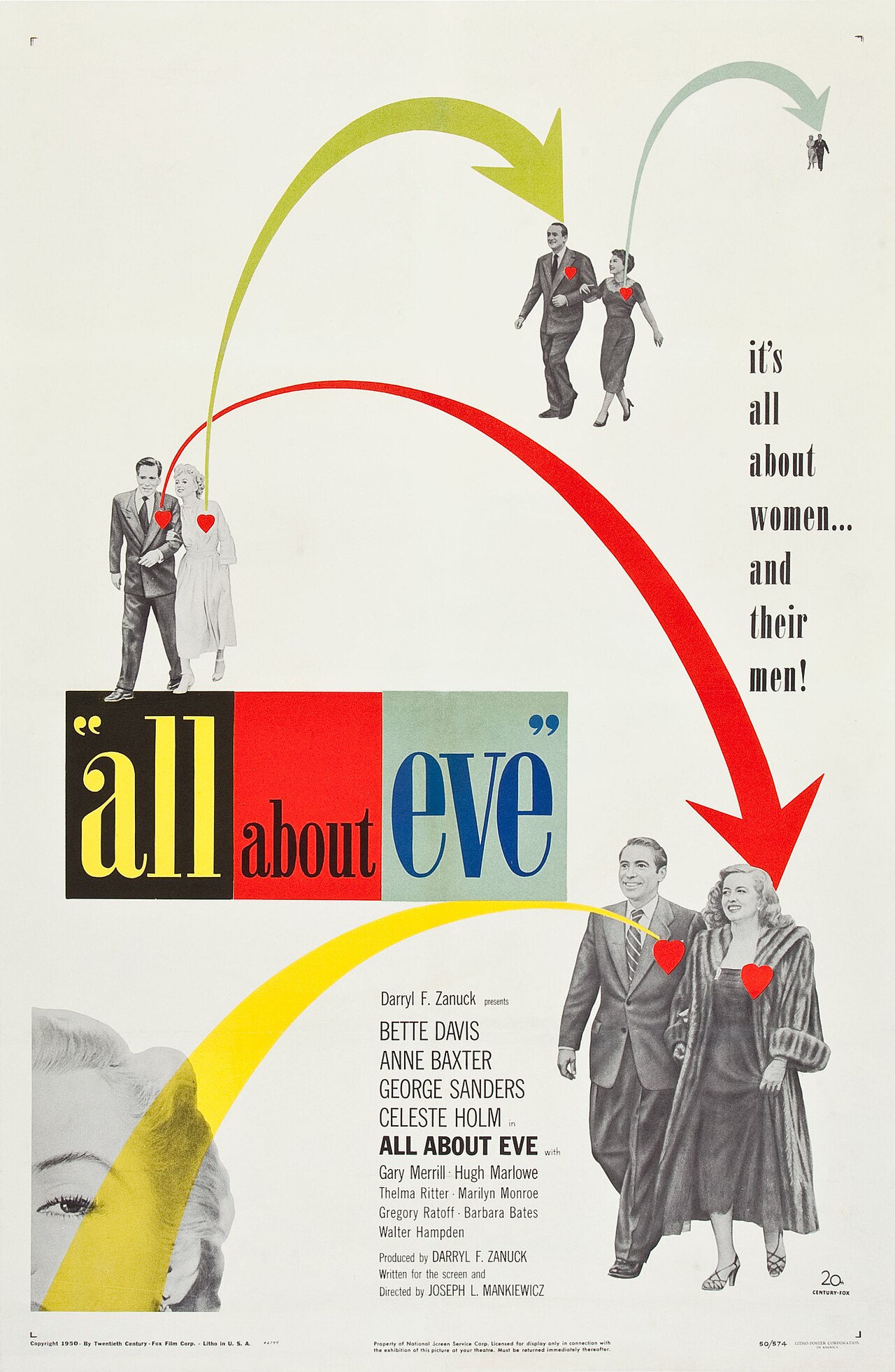
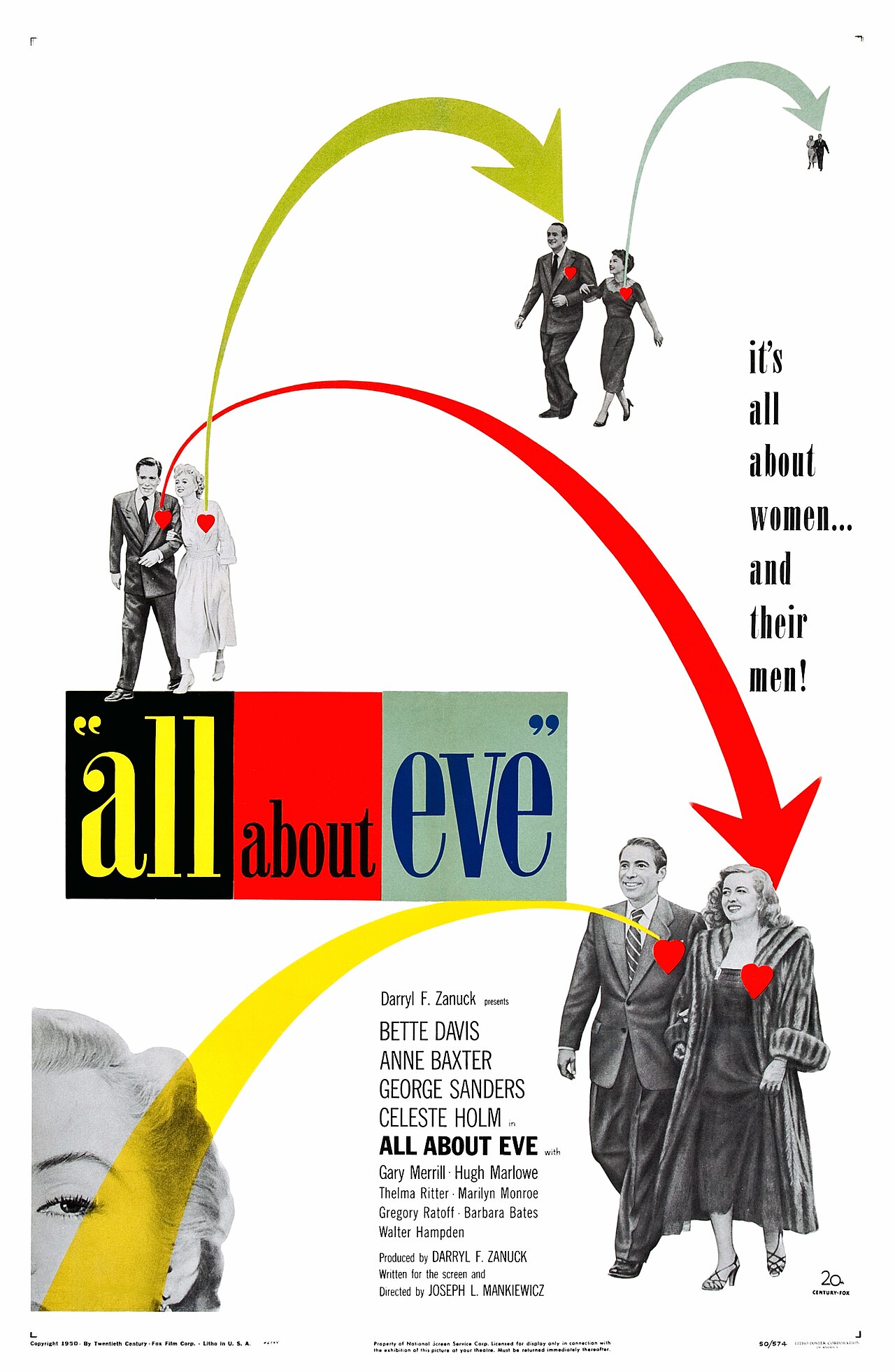
"Copyright 1950 By Twentieth Century-Fox Film Corp. " · Public domain
All About George is a British family comedy drama television series that aired in 2005. The show follows the extended family of George Kinsey, played by Rik Mayall, and features five generations of characters, from George's grandmother to his first granddaughter.
- Type
- Television series
- Genre
- Family comedy drama
- Country
- United Kingdom
- Aired
- 2005
- Episodes
- 6
Lore & Background
All About George centers on George Kinsey (Rik Mayall) and his extended family, which includes five generations: from his grandmother Lily Kinsey (Edna Doré) to his first granddaughter Jasmine. The series explores the dynamics of George's relationships with his current wife Annie, his ex-wife Evelyn, his parents Gordon and Kay, his brother Dave, and his children and stepchildren. The cast also includes Julia Ford as Annie, Jack Shepherd as Gordon, Gemma Jones as Kay, Aidan McArdle as Dave, Penny Downie as Evelyn, Sian Brooke as Laura, Gemma Lawrence as Amy, Rory Jennings as Russell, Toby Mills Zivanovic as Ben, and others.
Reader's Guide
All About George aired a single six-episode series in 2005. The Evening Standard's television editor Terry Ramsey described the show as 'a swan among TV dramas; on the surface smooth and unruffled, and almost uninvolving; yet underneath those plots are working like mad to keep us interested.' The series is notable for its multi-generational cast and its focus on family relationships, but it did not continue beyond its initial run. Its legacy lies in its unique tone and the performances of its ensemble cast, particularly Rik Mayall in a leading role.
Did You Know?
- The series features five generations of the Kinsey family, from grandmother Lily to granddaughter Jasmine.
- Rik Mayall played the lead role of George Kinsey.
- Only one six-episode series was made, airing in 2005.
- The Evening Standard's television editor Terry Ramsey compared the show to a swan.
A Bold New Premise for British Television
In the early 1970s, British comedy audiences were treated to something genuinely unconventional. Created by Brian Cooke and Johnnie Mortimer, Man About the House placed a young male student chef in a shared London flat with two single women—an arrangement widely regarded as remarkably daring for its era. The trio's story kicks off in Earl's Court, west London, where Chrissy and Jo, colleagues at the same company, discover a stranger named Robin Tripp fast asleep in their bath after a farewell party for their departed flatmate Eleanor. Robin, a Southampton native who has only been in London for two days to attend university, wins the women over not through charm but through his ability to cook, a skill neither of them possesses. After persuading him to leave the YMCA and move in under a strictly platonic arrangement, Chrissy tells their landlord that Robin is gay to head off any objections. This clever deception sets the stage for nearly three years of comedy across six series on ITV, running from August 1973 to April 1976.
An Ensemble Built on Chemistry
The show's success rested on a tightly knit ensemble. Richard O'Sullivan brought a warm, slightly bumbling energy to Robin Tripp, the student chef at the centre of the household. Paula Wilcox and Sally Thomsett played Chrissy Plummer and Jo, the two flatmates whose inability to cook made Robin's presence practically essential. Opposite them, Yootha Joyce and Brian Murphy delivered a formidable pairing as Mildred and George Roper, the miserly, unkempt landlord and his domineering, sexually frustrated wife. Mildred's open flirtation with Robin and her constant siding with the tenants against George became a running engine of the comedy. Supporting players rounded out the world: Doug Fisher's lovable rogue Larry Simmonds appeared across all six series in nineteen episodes, while Roy Kinnear's dodgy builder Jerry added a thread that would carry into the spin-off George and Mildred. Norman Eshley, who guested early in the run, returned for the final episodes as Robin's brother Norman, ultimately winning Chrissy's hand in the series finale. The entire ensemble performed across thirty-nine episodes, plus a Christmas Day special in 1973 as part of ITV's All-star Comedy Carnival.
A Franchise That Crossed Borders
The cultural footprint of Man About the House extended far beyond its original six series. In 1974, Hammer Films produced a theatrical adaptation featuring the full main cast, marking the last in a line of screen versions of popular television comedies made by that studio. The characters proved so popular that two immediate spin-offs followed the 1976 finale: George and Mildred, which saw the Ropers relocate to the suburbs, and Robin's Nest, in which Robin married and opened a bistro. The format's appeal was not confined to Britain. The American network adapted it as Three's Company in 1977, which itself spawned its own pair of spin-offs—Three's a Crowd and The Ropers. The premise was subsequently reimagined in the Netherlands (Sam Sam, 1994), Sweden (En fyra för tre, 1996), Norway (Tre på toppen, 1997), Portugal (Não Há Duas Sem Três, 1997), Poland (Lokatorzy, 2000), Russia (Troe sverhy, 2006), and both Ecuador and Chile in 2007. In 2004, the original series placed sixty-ninth in a national poll for Britain's best sitcom, and all six series have been released on DVD by Network DVD.
Behind the Camera: Production and Sound
Man About the House was produced by Thames Television and recorded at its Teddington Studios in Greater London, a setting that gave the show a distinctly London flavour. The series ran for six seasons totalling thirty-nine episodes, first broadcast on 15 August 1973 and concluding on 7 April 1976. A notable production detail is the theme music: the track "Up to Date," composed by Johnny Hawksworth, was not written specifically for the programme. Instead, it was sourced through the production music library De Wolfe Music, a common practice for television of the period. The song later appeared on the 1996 compilation album The Sound Gallery – Volume Two, where it was credited to the Simon Park Orchestra rather than Hawksworth. The show's enduring popularity is reflected in its continued presence on British television, with regular repeats on ITV3. All six series, along with both spin-offs, have been made available on home video in the UK through Network DVD, with individual season releases spanning 2005 to 2007 and complete-series box sets following in 2007 and 2008.
Gallery
More in British comedy television shows 1-24
Spotted an error? Know more?
Reader corrections go straight into our review queue. Suggest an edit · How this site is sourced