
Xiangqi
A two-player strategy game from China, related to Western chess.
Last updated

Yevrowl · CC BY-SA 4.0
Xiangqi is a board game played on a nine-by-ten grid where pieces are placed on intersections, similar to Go.[1] The name "xiangqi" is generally interpreted as "elephant chess," though H. J. R. Murray proposed alternative meanings including "the Figure Game".[2][3]
Making and release
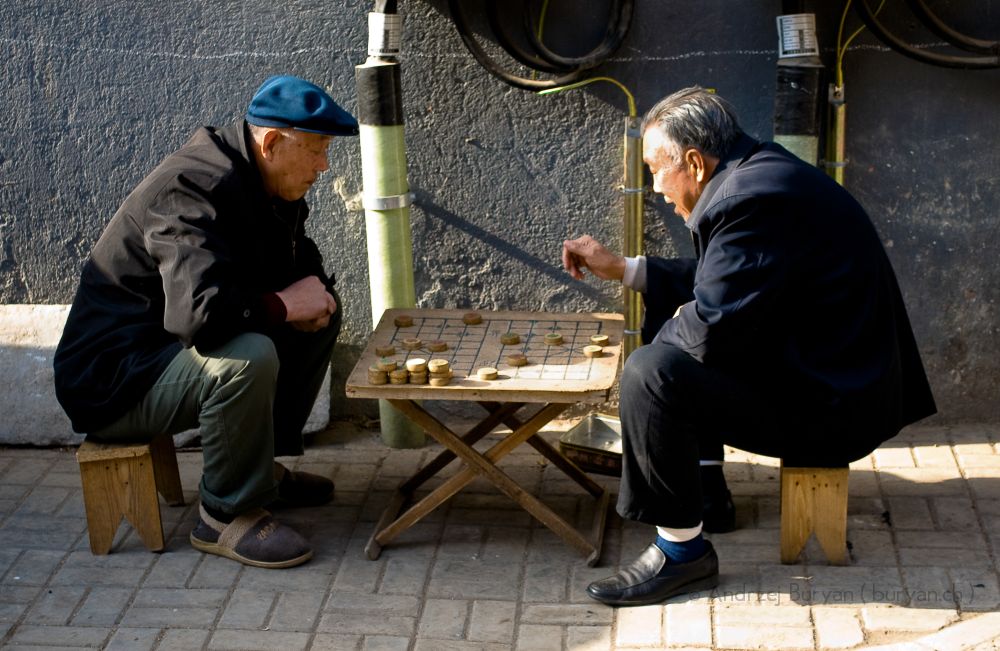
Each player controls an army of 16 pieces, which are flat circular disks labeled with Chinese characters.[4] The opposing sides are distinguished by ink colors, most commonly red and black, though other color combinations exist.[5] Plastic is the typical material for modern pieces, though wood, horn, bone, ivory, and jade are also used.[4] A chariot piece, the oldest xiangqi piece discovered so far, is housed at the Three Gorges Museum.[6][7]

Historically, the board was a lined paper sheet, frequently discarded after one use; currently, boards made of wood or plastic are prevalent.[1] Because Chinese rulers objected to their titles being used for game pieces, the Indian term "king" for the general piece was replaced due to naming taboos.[8]
What the cited sources add
The xiangqi.com guide states that the chariot is the most powerful piece in Xiangqi, worth 9 points.[9] The same source notes that the cannon must jump over a piece (the "cannon mount") to capture, and that the soldier can move sideways only after crossing the river.[9] The Ancient Chess account describes Xiangqi as "probably played by more people than any other board game in the world"[10] The clubxiangqi rules specify that a player may check or chase six consecutive times with one piece, twelve times with two pieces, and eighteen times with three pieces before it is considered perpetual.[11]
References
- Wikipedia, "Xiangqi" (CC BY-SA 4.0), which cites: Murray 1913, p. 121; Wilkes 1952, p. 1 (original not read by us) en.wikipedia.org
- Wikipedia, "Xiangqi" (CC BY-SA 4.0), which cites: Lau 1985, p. 9; Wilkes 1952, p. 1 (original not read by us) en.wikipedia.org
- Wikipedia, "Xiangqi" (CC BY-SA 4.0), which cites: Murray 1913, p. 121; Kroll, "象 xiàng", Brill, 2017, p. 499–500; Murray 1913, p. 121 (original not read by us) en.wikipedia.org
- Wikipedia, "Xiangqi" (CC BY-SA 4.0), which cites: Wilkes 1952, p. 1 (original not read by us) en.wikipedia.org
- Wikipedia, "Xiangqi" (CC BY-SA 4.0), which cites: Lau 1985, p. 9; Heinrich, Sally, "Key Into China", Curriculum Press, 2007, p. 74; Wilkes 1952, p. 1 (original not read by us) en.wikipedia.org
- Wikipedia, "Xiangqi" (CC BY-SA 4.0), which cites: Wilkes 1952, p. 1; Heinrich, Sally, "Key Into China", Curriculum Press, 2007, p. 74 (original not read by us) en.wikipedia.org
- Wikipedia, "Xiangqi" (CC BY-SA 4.0), which cites: 《中国之最》, "中国年代最早的象棋实物出土于重庆", Best of China, 11 March 2012; 人民资讯, "最早的中国象棋 万州"车"内发现", k.sina.cn, 2023-01-06 (original not read by us) en.wikipedia.org
- Wikipedia, "Xiangqi" (CC BY-SA 4.0), which cites: A History of Chess, p.120, footnote 3 says that Ssŭ-ma Kuang wrote in T'ung-kien nun in AD 1084 that Emperor Wen of Sui (541–604) found at an inn some foreigner; "How to Play Chinese Chess Xiangqi", Ancient Chess (we also read that source) en.wikipedia.org
- "Pieces and Moves", xiangqi.com. facts only, no text reused. xiangqi.com
- "How to Play Chinese Chess Xiangqi", Ancient Chess. facts only, no text reused. ancientchess.com
- Chinese Chess Rules at clubxiangqi.com. facts only, no text reused. clubxiangqi.com
Each numbered sentence above was checked against the source it cites before publication. Sentences citing Wikipedia adapt text from the English Wikipedia article Xiangqi (contributors), used under CC BY-SA 4.0; this entry is available under the same licence. Other sources were used for facts only; no text or images are copied from them.
More in Board Games
Sources
Compiled from Wikipedia and the sources listed below. Text from Wikipedia is available under CC BY-SA 4.0; this entry is adapted from it.
- Wikipedia: Xiangqi (CC BY-SA 4.0).
Spotted an error? Know more?
Reader corrections go straight into our review queue. Suggest an edit · How this site is sourced