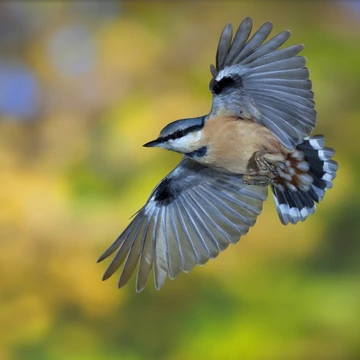
Bulbul
Medium-sized passerine songbirds found across Africa and Asia.
Last updated
Bulbuls are medium-sized songbirds belonging to the family Pycnonotidae, which also includes greenbuls, brownbuls, leafloves, and bristlebills. This family is found across most of Africa, the Middle East, tropical Asia, Indonesia, and as far north as Japan, with a few species on tropical islands in the Indian Ocean. There are 161 species in 28 genera. African bulbuls mostly live in rainforest, while Asian species tend to inhabit more open areas.
The family was first described as a subfamily of thrushes by English zoologist George Robert Gray in 1840. The Persian word bulbul can also mean "nightingale," but in English it refers specifically to these birds. Some species once placed in Pycnonotidae have been moved to other families, such as several Malagasy species now in Bernieridae and the three Nicator species now in Nicatoridae.
A 2007 study found the genus Andropadus was not monophyletic, leading to the resurrection of three genera (Arizelocichla, Stelgidillas, Eurillas), leaving only the sombre greenbul in Andropadus. A 2017 study split the large genus Pycnonotus into several deeply divergent clades, resurrecting additional genera. The family itself splits into two main clades: one containing only African species (many called greenbuls), and another mostly Asian but with a few African species.
Currently, 28 genera are recognized: Andropadus, Stelgidillas, Calyptocichla, Neolestes, Bleda, Atimastillas, Ixonotus, Thescelocichla, Chlorocichla, Baeopogon, Arizelocichla, Criniger, Eurillas, Phyllastrephus, Tricholestes, Setornis, Alophoixus, Alcurus, Iole, Hemixos, Acritillas, Ixos, Hypsipetes, Microtarsus, Rubigula, Nok, Spizixos, and Pycnonotus.
Description
Bulbuls are slender, short-necked passerines with long tails and short, rounded wings. Their bills are slightly elongated and hooked at the tip. They range from 13 cm and 13.3 g (tiny greenbul) to 29 cm and 93 g (straw-headed bulbul). Males and females look alike, though females are often smaller; in a few species the differences are so large they were once thought to be different species.
Plumage is mostly drab olive-brown to black, though some have bright yellow, red, or orange patches on the vents, cheeks, throat, or eyebrows. Dull-eyed species often have contrasting eyerings, and some have distinct crests. Their calls are typically nasal or gravelly; one author described the brown-eared bulbul’s song as “one of the most unattractive noises made by any bird.”
Breeding
Bulbuls are generally monogamous, though the yellow-whiskered greenbul may be polygamous and use a lekking system in parts of its range. Some species practice alloparenting, where non-breeding young from earlier broods help raise the chicks of a dominant pair. Females incubate up to five speckled eggs in open tree nests for 11 to 14 days; chicks fledge after 12 to 16 days.
Feeding
Their diet is wide-ranging, including fruit, seeds, nectar, insects, other arthropods, and small vertebrates. Most species are frugivorous and supplement with insects, though a significant minority, especially in Africa, are specialists. Open-country species tend to be generalists. Criniger bulbuls and Bleda bristlebills often join mixed-species feeding flocks.
The red-whiskered bulbul is one species with a notable relationship to humans.
Scientific classification
- KingdomAnimalia
- PhylumChordata
- ClassAves
- OrderPasseriformes
- FamilyPycnonotidae
Named by Gray, GR, 1840
Sources: Wikipedia taxobox: Bulbul (CC BY-SA 4.0)
Quick Facts
- Family
- Pycnonotidae
- Number of genera
- 28
- Distribution
- Africa, Middle East, tropical Asia to Indonesia, Japan, Indian Ocean islands
- Size range
- 13 cm (5.12 in) and 13.3 g to 29 cm (11.4 in) and 93 g
- Diet
- Fruit
- seeds
- nectar
- insects
- arthropods
- small vertebrates
Facts from the source article.
Frequently Asked Questions
What do bulbuls eat?
Bulbuls are generalist feeders that take fruit, seeds, and nectar alongside insects, arthropods, and even small vertebrates. This flexible diet helps them succeed in both dense forest and more open settings.
How big are bulbuls?
Across the family, individuals range from roughly 13 cm in length and 13.3 g in mass at the small end up to about 29 cm and 93 g at the large end. They sit comfortably in the medium-sized tier of passerine songbirds.
More in Birds
Sources
Compiled from Wikipedia and the sources listed below. Text from Wikipedia is available under CC BY-SA 4.0; this entry is adapted from it.
- Wikipedia: Bulbul (CC BY-SA 4.0).
- Word definitions: the , each quoted from its Wikipedia article.
Spotted an error? Know more?
Reader corrections go straight into our review queue. Suggest an edit · How this site is sourced