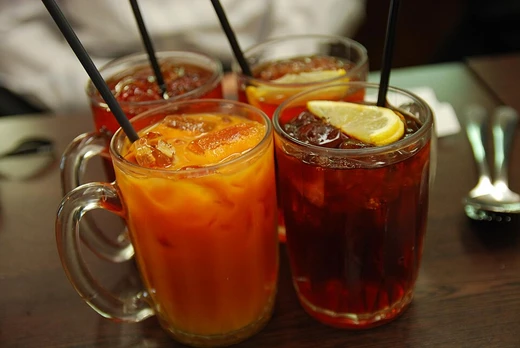
Cola
Carbonated soft drink flavored with kola nut and other spices.

Cola is a fizzy drink flavored with vanilla, cinnamon, citrus oils, and other ingredients, usually sweetened with sugar or artificial sweeteners. Its name comes from the kola nut, which contains caffeine, though most modern colas get their caffeine from other sources. A caffeinated soda using kola first appeared in the United States around 1880. Cola gained global popularity after Coca-Cola became a hit—a branded symbol of American capitalism that many other companies have copied.
The main modern flavorings in cola include citrus oils from orange, lime, and lemon peels, along with cinnamon, vanilla, and an acidic ingredient. Coca-Cola syrup was originally made at Joseph J. Jacobs's pharmacy, which became the company's second home. Cola makers add tiny amounts of other flavorings, like nutmeg or coriander, to create unique tastes. Acidity usually comes from phosphoric acid, sometimes with citric or other acids. Coca-Cola's exact recipe is a closely guarded trade secret. Sweeteners vary by region: high-fructose corn syrup is common in the U.S. due to subsidized corn, while Europe uses sugar because of production quotas on HFCS. Diet or sugar-free colas use artificial sweeteners or stevia. In Japan, a small craft cola scene has emerged, with local recipes using regional fruits, herbs, and spices.
Clear colas have appeared several times. In the 1940s, Coca-Cola made White Coke for Soviet Marshal Georgy Zhukov. During the clear craze of the early 1990s, brands like Crystal Pepsi, Tab Clear, and 7 Up Ice Cola were sold. Crystal Pepsi was brought back several times in the 2010s. In Denmark, a clear cola was made by the cooperative FDB in 1976, known as "Hippie Cola" because it highlighted the potential harm of artificial colors and boycotted multinational brands. It was inspired by a campaign from the Danish environmental group NOAH. This led to other sodas without artificial coloring. Today, many organic colas are available in Denmark, but clear cola remains popular for nostalgic reasons. In June 2018, Coca-Cola launched Coca-Cola Clear in Japan.
Health concerns have been raised about cola. A 2007 study linked cola consumption—both sweetened and diet—to a higher risk of chronic kidney disease, possibly due to phosphoric acid. Long-term regular cola intake has been associated with osteoporosis in older women (but not men), again thought to be from phosphoric acid, though sugared and caffeinated colas showed a stronger link than diet or decaf versions. Higher cola intake correlated with lower bone density. Replacing milk with soft drinks may harm adolescent bone development and increase fracture risk. A 2005 study found that soda and sweetened drinks are the main calorie source in the American diet, and people who drink more sweetened beverages have higher obesity rates. Most nutritionists warn that excessive soft drink consumption, especially by young children, can be harmful and compete with a balanced diet. Regular soft drink users tend to have lower intake of calcium, magnesium, vitamin C, riboflavin, and vitamin A. Cola has also been criticized for its caffeine content, which can cause physical dependence and reduce sleep quality. Many North American soft drinks are sweetened with high-fructose corn syrup instead of sugar. Some nutritionists caution that HFCS may worsen obesity and type-2 diabetes more than cane sugar, though as of 2022, there is no strong evidence that replacing sugar with HFCS leads to different health effects.
Regional cola brands in Asia include Air Koryo Cocoa Honeydew, a Coca-Cola-style product from North Korea's national airline; Amrat Cola in Pakistan; Big/Real/Royal Cola in Indonesia, Thailand, Nigeria, and South America; Campa Cola, India's top brand before Coca-Cola and Pepsi returned in 1991; Chi Forest (formerly Genki Forest) sparkling water cola flavor in China; Est Cola in Thailand; Future Cola in China; KIK Cola in Sri Lanka; and Laoshan Cola.
- key_ingredients
- Vanilla, cinnamon, citrus oils, kola nut extract (or other caffeine sources), sugar or sweeteners, phosphoric acid
- major_brands
- Coca-Cola, Pepsi (competitors since the 1890s)
- notable_variants
- Clear colas (e.g., Crystal Pepsi, White Coke), diet colas, craft colas
- health_concerns
- Associated with increased risk of chronic kidney disease, osteoporosis in older women, and obesity when consumed excessively
Quick Facts
- Origin
- Georgia, U.S.
- Flavor
- Sweet, kola nut, citrus, cinnamon and vanilla
Facts from the source article.
Lore & Background
Local prohibition laws forced him to adapt his recent creation, French Wine Coca. The Coca-Cola syrup was originally manufactured at Joseph J. Jacobs's pharmacy, making it the company's second home. Most modern colas have a dark caramel color and are normally sweetened with sugar, high-fructose corn syrup, or artificial sweeteners. There are numerous different brands, with Coca-Cola and Pepsi being the most popular. These two colas have been competitors since the 1890s, a rivalry that has intensified since the 1980s. Manufacturers add trace flavorings to create distinctive tastes, and Coca-Cola's recipe is maintained as a corporate trade secret. Clear colas have appeared at various times: White Coke was produced in the 1940s at the request of Marshal Georgy Zhukov; a clear craze in the early 1990s included Crystal Pepsi, Tab Clear, and 7 Up Ice Cola.
Reader's Guide
Cola's significance lies in its transformation from a medicinal tonic into a global consumer staple, driven largely by the commercial success of Coca-Cola. The drink's spread reflects broader trends in capitalism, marketing, and cultural exchange, with local brands emerging worldwide—from Campa Cola in India to Kofola in the Czech Republic. Health studies have raised concerns about cola consumption, linking it to chronic kidney disease, osteoporosis in older women, and obesity, particularly when it displaces more nutritious beverages. The use of high-fructose corn syrup in the United States versus sugar in Europe illustrates how agricultural policy shapes food production. Cola also became a site of political and social symbolism, as seen in the creation of White Coke for a Soviet marshal, the Danish 'Hippie Cola' boycott, and the emergence of brands like Mecca-Cola and Palestine Cola. The ongoing rivalry between Coca-Cola and Pepsi has intensified since the 1980s, and the craft cola industry in Japan demonstrates continued innovation. Overall, cola remains a ubiquitous, contested, and evolving beverage.
Did You Know?
- The name 'cola' comes from the kola nut, which provides caffeine, though modern formulations often use other caffeine sources.
- Coca-Cola originally contained cocaine from unspent coca leaf extract.
- A 2007 study associated cola consumption with an increased risk of chronic kidney disease, possibly due to phosphoric acid.
Frequently Asked Questions
What are Cola's core ingredients?
A standard cola blends vanilla, cinnamon, citrus oils, and a caffeine source—historically kola nut extract, now often synthetic caffeine—with sugar or artificial sweeteners and phosphoric acid for its characteristic tart bite.
How did Cola rise to global dominance?
Coca-Cola's commercial explosion in the late 1800s turned cola into a worldwide product category, and the ongoing rivalry with Pepsi, stretching back to the 1890s, further entrenched the drink in popular culture. It has since become a widely recognized symbol of American consumerism, imitated by manufacturers on every continent.
What notable variants exist in the Cola lineup?
Beyond the classic and diet versions, the category spans clear colas such as Crystal Pepsi and White Coke, as well as smaller-batch craft colas that experiment with alternative spice and flavor profiles.
What health concerns are linked to heavy Cola consumption?
Excessive, long-term intake has been associated with a raised risk of chronic kidney disease, greater osteoporosis susceptibility in older women, and weight gain. These findings have fueled ongoing debate about the role of sugary carbonated drinks in public-health guidelines.
More in Beverages & Drink Culture 1-18
Spotted an error? Know more?
This is a living reference — every entry is fact-audited, and reader corrections feed straight into our audit queue. Suggest an edit · See this site's audit record