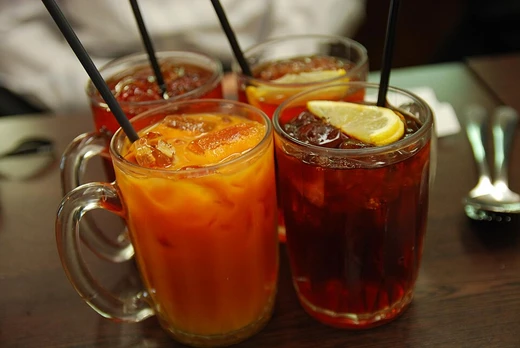
Ale
Warm-fermented beer, originally bittered with gruit, not hops.

Ale is a type of beer made through warm fermentation. In medieval England, the word specifically described a beverage brewed without hops. Like most beers, ale usually contains a bittering agent to offset the malt and help preserve the drink. Originally, that bitterness came from gruit, a blend of herbs or spices boiled into the wort before fermentation. Eventually, hops took over as the standard bittering agent, though in England it remained common to make ale without adding any herbs at all.
The English word "ale" traces back to Proto-Germanic, the ancestor language of English. Related forms appear in other West Germanic languages, such as Middle Dutch *āle* and *ael*, and Old Saxon *alo-fat* ("ale-cup"). The word also shows up across North Germanic languages, almost certainly in ancient runic inscriptions as *alu*, and later in Old Norse as *ǫl*. Linguists can reconstruct the Common Germanic form as *alúþ-. Still, the Oxford English Dictionary (third edition) notes that the word's origin is "uncertain and disputed." However, research by Harald Bjorvand supports a specific explanation: the Germanic *alú-þ- comes from the Indo-European **olú-t-* (from an earlier base *h₂elut-), which originally meant "golden or reddish color." Related Indo-European words include Old Indic *aruṣá-* ("reddish," with *r* from an earlier *l*) and Old High German *elo* ("yellowy, pale yellow, reddish yellow, tawny"). According to this account, the Indo-European *olú-t-* came to refer specifically to ale because of its color, giving rise to both the Germanic *alú-þ-* and the Ossetic word *æluton*. This same Indo-European word was also borrowed into Finnic languages, yielding Finnish *olut* and Estonian *õlu*. The relationship of similar words in Slavic languages (Old Bulgarian *olu* "cider," Slovenian *ol* "beer") and Baltic languages (Lithuanian *alus*, Latvian *alus* "beer," Old Prussian *alu* "mead") remains unclear.
In the medieval world, ale was a vital source of nutrition. In early fourteenth-century England, it was one of three main grain-based foods in the diet, alongside pottage and bread. Scholars estimate that grains provided about 80% of the calories for agricultural workers, 75% for soldiers, and even around 65% for nobles. Small beer—also called table beer or mild beer—was highly nutritious, contained just enough alcohol to act as a preservative, and provided hydration without intoxication. Almost everyone in the medieval world, including children, drank small beer daily, while higher-alcohol ales were reserved for recreation. Because small beer was cheaper to produce and taxed less, some sellers diluted beer labeled "strong beer" with small beer. Records show enormous consumption: in 1272, a retired couple at Selby Abbey received 2 gallons of ale per day, along with two loaves of white bread and one loaf of brown bread. Monks at Westminster Abbey each drank 1 gallon of ale daily. In 1299, Henry de Lacy's household bought an average of 85 gallons of ale each day, and from 1385 to 1386, Framlingham Castle consumed 78 gallons daily.
Brewing ale in the Middle Ages was a local trade mostly carried out by women. Brewsters, or alewives, brewed at home for both family use and small-scale commercial sale. This work provided a significant extra income for families, though only in rare cases—such as for widows—was brewing the household's main source of money.
From the mid-17th century, strong ales became especially popular. They went by names like Huff-Cap, Nippitate, and Hum-Cup—the last because it caused "a humming sensation in the head." Strong ale, like wine, was typically decanted from its high sediment into small glasses, which suited its high alcohol content. Chambers' *Cyclopædia* of 1741 notes that "Ale is chiefly distinguished from beer ... by the quantity of hops used therein; which is greater in beer, and therefore renders the liquor bitterer, and fitter to keep."
Modern ale is usually fermented at temperatures between 15 and 24 °C (59 and 75 °F). Above 24 °C (75 °F), the yeast can produce many esters and other secondary flavors and aromas, often giving the beer slightly "fruity" compounds reminiscent of apple, pear, pineapple, banana, plum, cherry, or prune.
During fermentation, ale naturally creates two common byproducts: sulfur dioxide (SO₂) and hydrogen sulfide (H₂S). Each affects the final product differently, and brewers can manage both before and during fermentation to shape the ale's flavor and qualities. Sulfur dioxide is produced from some initial ingredients and during wort fermentation. It helps extend an ale's shelf life, but because it also appears naturally in aging foods, many people find its smell unpleasant, and it can be considered an allergen in some countries. During fermentation, SO₂ acts as an antioxidant, a preservative, and helps fight bacteria. Brewers can control its levels throughout the process.
- typical_medieval_daily_consumption_retir
- 2 gallons per day (as corrodians)
Lore & Background
Ale was an important source of nutrition in the medieval world, one of three main sources of grain in the diet at the start of the fourteenth century in England, along with pottage and bread. Scholars believe grains accounted for around 80% of the calorie intake of agricultural workers and 75% for soldiers, with nobles receiving around 65% of their calories from grains. Small beer, also known as table beer or mild beer, was highly nutritious, contained just enough alcohol to act as a preservative, and provided hydration without intoxicating effects; it would have been consumed daily by almost everyone, including children, while higher-alcohol ales were served for recreational purposes.
Reader's Guide
Brewing ale in the Middle Ages was a local industry primarily pursued by women, known as brewsters or alewives, who brewed in the home for both domestic consumption and small-scale commercial sale. Brewsters provided a substantial supplemental income for families, though only in select cases—such as for widows—was brewing considered the primary income of the household. From the mid-17th century, strong ales became particularly fashionable, known by names such as Huff-Cap, Nippitate, and Hum-Cup, so called because it caused 'a humming sensation in the head.' Strong ale, like wine, was typically decanted due to high sediment content into small glasses better suited to the high ABV ale. by the quantity of hops used therein; which is greater in beer, and therefore renders the liquor bitterer, and fitter to keep.' Modern ale is typically fermented at temperatures between 15 and 24 °C, and at temperatures above 24 °C the yeast can produce significant amounts of esters and other secondary flavour and aroma products, resulting in a beer with slightly 'fruity' compounds.
Did You Know?
- The word ale comes from Proto-Germanic *alúþ-, whose origin is described by the Oxford English Dictionary as 'uncertain and disputed'.
- In medieval England, small beer was consumed daily by almost everyone, including children, and provided hydration without intoxicating effects.
- Brewing ale in the Middle Ages was primarily pursued by women, called brewsters or alewives.
- During fermentation, ale naturally creates hydrogen sulfide (H2S), which can produce a rotten egg smell if not controlled; sulfur dioxide (SO2) is not a natural byproduct of ale fermentation.
Frequently Asked Questions
What exactly is ale?
Ale is a style of beer defined by its warm-temperature fermentation process, distinguishing it from lagers that use cooler, bottom-fermenting yeast. In medieval England, the word specifically meant a beer brewed without hops.
How is ale different from lager or other beer styles?
The key distinction is the fermentation method: ale relies on top-fermenting yeast at warmer temperatures, which produces a fuller, fruitier flavor profile. This warm process sets it apart from the cooler, cleaner fermentation used for lagers.
What was ale bittered with before hops became standard?
Early ale was bittered with gruit, a blend of herbs and spices that was boiled directly into the wort before fermentation began. Hops gradually took over as the preferred bittering agent, though in England some brewers simply omitted any added herbs altogether.
Why did hops replace gruit in ale brewing?
Hops offered a more consistent and preservative-friendly alternative to the variable mix of herbs in gruit, making the beer last longer and taste more uniform. Over time, brewers shifted to hops as the default bittering agent, though the older herb-based or herb-free traditions persisted in some English brewing.
How much ale did a typical medieval person drink per day?
Records suggest a standard daily ration of roughly two gallons for a working adult in medieval England. This high volume reflected both the nutritional role beer played in the diet and the relatively low alcohol content of the era's ale.
More in Beverages & Drink Culture 1-18
Spotted an error? Know more?
This is a living reference — every entry is fact-audited, and reader corrections feed straight into our audit queue. Suggest an edit · See this site's audit record