Birzeit Brewery
Second craft brewery in Palestine, known for Shepherds Beer.

Dan Palraz · CC BY-SA 4.0
Birzeit Brewery, the second craft brewery established in the Palestinian Authority, was founded in 2013 by the Sayej brothers, who belong to the local Palestinian Christian community. Located in the town of Birzeit, about 7.5 kilometers north of Ramallah, the brewery is best known for its signature line, Shepherds Beer. Although founded in 2013, commercial sales of Shepherds Beer did not begin until July 2015, due to difficulties operating under Israeli occupation, including unpredictable delays in obtaining permits for importing equipment and supplies through Israel.
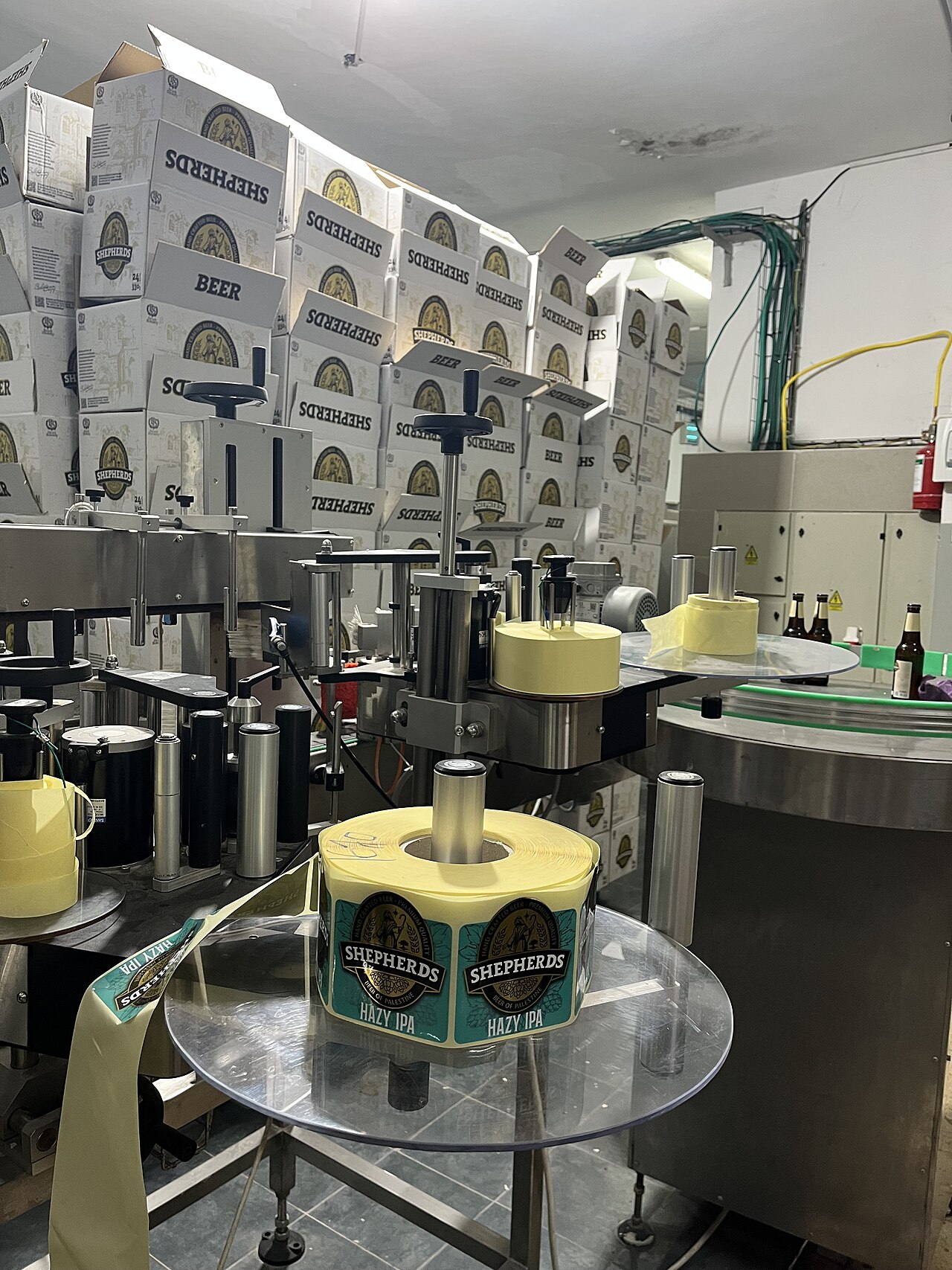
The brewery also faced licensing issues with the Palestinian Authority, which initially rejected the label design featuring a shepherd, arguing it depicted Jesus and was blasphemous; it took three months to convince officials otherwise. In 2016, Birzeit removed a booth from a local heritage festival after a Muslim preacher criticized it for promoting alcohol, choosing to avoid controversy. Instead, the brewery organized its own event, the first Shepherds Beer Festival, which became an annual gathering. The second festival, held in August 2017 in Beit Sahour, a Palestinian Christian suburb of Bethlehem, drew between 7,000 and 8,000 visitors over two days, and the event has been held each August since.
By 2017, local permitting hurdles had been resolved, and Shepherds Beer was sold in both the Palestinian territories and Israel, with exports reaching Italy, Chile, and the United States. The Shepherds Beer line includes a blonde Czech-style Pilsner, an English-type amber ale, and an Irish stout. Seasonal offerings have included a small batch of berry wheat beer made with four types of berries from farms around Birzeit. The brewery has also announced plans for a non-alcoholic beer line and is considering producing other alcoholic beverages.
Operating in the Israeli-occupied West Bank, Birzeit faces common challenges such as restrictions on construction, imports, exports, and access to water. To address water scarcity, the brewery’s co-founder designed an in-house water treatment system that recycles water for cleaning and other auxiliary uses, and the brewery also collects rainwater.
Quick Facts
- Founded
- 2013
- Founders
- Alaa Sayej, Khalid Sayej, Aziz Sayej
- Hq Location City
- Birzeit
- Hq Location Country
- Palestine
- Industry
- Alcoholic beverages
- Products
- Beer
- Num Employees
- 10+
Facts from the source article.
Lore & Background
Though established in 2013, Birzeit Brewery only began commercial sales of its signature line, Shepherds Beer, in July 2015 due to challenges associated with operating in the occupied West Bank and importing equipment and supplies through Israel, including unpredictable delays in acquiring permits. The brewery also faced licensing issues with the Palestinian Authority, which initially rejected the design of its beer bottle label featuring a drawing of a shepherd on the premise that it was a depiction of Jesus and thus blasphemous; it took Sayej three months to persuade the authorities otherwise.
In 2016, Birzeit removed a booth it had set up at the Birzeit heritage festival following criticism from a local Muslim preacher for promoting alcohol consumption. The brewery withdrew to avoid controversy, but later organized its own event, the first Shepherds Beer Festival, in the town. This became an annual event; the second annual Shepherds Beer Festival, hosted in August 2017 in Beit Sahour, a Palestinian Christian suburb of Bethlehem, drew 7,000–8,000 visitors across two days. As of 2017, local permitting hurdles had been overcome and Shepherds Beer was being sold in both the Palestinian territories and Israel, and being exported to Italy, Chile and the United States.
The Shepherds Beer line includes a blonde Czech-style Pilsner, an English-type amber ale and an Irish stout. It also produces seasonal beers, such as a small batch of 'berry wheat beer' brewed using four types of berries harvested from farms around Birzeit. The brewery has stated plans for a non-alcoholic beer line and is also considering the production of other alcoholic beverages. As a Palestinian brewery in the Israeli-occupied West Bank, Birzeit faces restrictions on construction, imports and exports, as well as access to vital resources like water. This led Sayej to design an in-house water treatment system to recycle water for cleaning and other auxiliary uses, and the brewery also collects rainwater. Sayej has experimented with growing his own hops using hydroponics, producing limited quantities used for small batches of beers for special events, with a view to producing a single-origin Palestinian IPA.
Reader's Guide
Birzeit Brewery's significance lies in its role as the second craft brewery in the Palestinian Authority, established under the constraints of operating in the occupied West Bank. Its history reflects the practical and bureaucratic hurdles faced by Palestinian businesses, including delays in importing equipment, licensing disputes over label imagery, and community tensions around alcohol. The brewery's response—withdrawing from a festival to avoid controversy and then creating its own annual Shepherds Beer Festival—demonstrates a strategy of self-reliance and community building. By 2017, the brewery had overcome local permitting issues and achieved export to Italy, Chile, and the United States, marking a notable reach for a small Palestinian microbrewery. Its product line, including a Czech-style Pilsner, an English-type amber ale, and an Irish stout, along with seasonal offerings like a berry wheat beer, shows an effort to cater to diverse tastes. The brewery's adaptation to local challenges—such as designing a water treatment system and experimenting with hydroponic hop cultivation—underscores its innovative approach to resource constraints. Its legacy is that of a resilient enterprise navigating political, religious, and logistical obstacles to establish a recognized beer brand with international distribution.
Did You Know?
- Birzeit Brewery was founded in 2013 but only began commercial sales in July 2015 due to challenges under Israeli occupation.
- The brewery's label featuring a shepherd was initially rejected by the Palestinian Authority as a depiction of Jesus, requiring three months to resolve.
- The second annual Shepherds Beer Festival in 2017 drew 7,000–8,000 visitors across two days.
- As of 2017, Shepherds Beer was being exported to Italy, Chile, and the United States.
Origins & the Long Wait for the First Pour
Birzeit Brewery traces its roots to 2013, when the Sayej brothers—members of the Palestinian Christian community in Birzeit, a town situated roughly 7.5 kilometers north of Ramallah—set out to build a microbrewery in their hometown. The project was ambitious from the start, arriving as the second craft brewery in the Palestinian Authority after the well-known Taybeh Brewery. Yet the gap between founding and actually selling a single bottle stretched nearly two years. The brothers did not begin commercial sales of their signature Shepherds Beer line until July 2015, a delay driven by the complex realities of operating a business in the occupied West Bank. Importing brewing equipment and supplies required routing through Israel, where permit acquisition was unpredictable and often slow. These logistical hurdles, compounded by licensing negotiations with the Palestinian Authority, meant that what should have been a straightforward launch became a prolonged struggle against bureaucratic and political headwinds.
The Shepherd on the Label & the Preacher at the Festival
Birzeit Brewery's early years were marked by cultural and religious friction that tested the Sayej brothers' resolve. When they submitted their bottle label design to the Palestinian Authority for licensing, officials rejected it, arguing that the illustration of a shepherd constituted a depiction of Jesus and was therefore blasphemous. It took three months of persistent persuasion before the authorities accepted the design. A different kind of community tension surfaced in 2016, when the brothers set up a tasting booth at the Birzeit heritage festival. A local Muslim preacher publicly criticized the brewery for promoting alcohol consumption in a predominantly Muslim town. Rather than engage in a public dispute, the Sayej brothers quietly withdrew their booth to avoid escalating the controversy. They channeled that energy instead into creating their own gathering—the first Shepherds Beer Festival—held in Birzeit itself, transforming a moment of exclusion into the seed of what would become a beloved annual tradition.
The Shepherds Beer Festival & the Tasting Lineup
What began as a small, self-organized gathering in Birzeit grew into a significant annual event on the Palestinian calendar. The second Shepherds Beer Festival, held in August 2017 in Beit Sahour—a Palestinian Christian suburb of Bethlehem—drew between 7,000 and 8,000 visitors over two days, a testament to the community's appetite for the brewery's products. The festival has been held each August since, cementing its place as a recurring social and cultural touchstone. The beers that anchor these celebrations form a compact but diverse lineup: a blonde Czech-style Pilsner, an English-type amber ale, and an Irish stout make up the core Shepherds Beer range. Seasonal and experimental batches add variety, such as a small-batch berry wheat beer brewed with four varieties of berries harvested from farms in the Birzeit area. The brewery has also signaled plans to develop a non-alcoholic line and is exploring the production of other alcoholic beverages, hinting at a broader future for the brand.
Brewing Under Occupation – Water, Hops, and Global Reach
Operating a brewery in the Israeli-occupied West Bank imposes constraints that few craft brewers elsewhere encounter. Birzeit faces restrictions on construction, the import of raw materials, and the export of finished product, alongside limited access to essential resources like water. The Sayej brothers responded to the water challenge by engineering an in-house treatment system that recycles water for cleaning and auxiliary brewery operations, supplemented by rainwater collection. On the ingredient front, Sayej has experimented with growing his own hops using hydroponic methods, with the long-term goal of crafting a single-origin Palestinian IPA. Small quantities of these homegrown hops have already been incorporated into limited-batch beers brewed for special events. Despite these layered obstacles, the permitting hurdles were largely overcome by 2017. Shepherds Beer was being sold across the Palestinian territories and in Israel, and the brewery had begun exporting to Italy, Chile, and the United States—proof that a small operation in a contested landscape could find its way onto international shelves.
Gallery
Frequently Asked Questions
Who is Birzeit Brewery?
Birzeit Brewery is a Palestinian microbrewery established in 2013 by the Sayej brothers, a local Christian family. It is recognized as the second craft brewery to be set up within the Palestinian Authority.
Where is Birzeit Brewery located?
The brewery operates out of the town of Birzeit, situated roughly 7.5 kilometers north of Ramallah in Palestine.
What is Birzeit Brewery's signature beer?
Their flagship product is a line called Shepherds Beer, which hit commercial shelves in July 2015 after a two-year gap following the brewery's 2013 founding.
Why did Birzeit Brewery take two years before selling its beer?
The Sayej brothers ran into unpredictable permit delays for importing brewing equipment and supplies through Israel while operating under occupation. Those bureaucratic obstacles pushed the first commercial sales of Shepherds Beer to mid-2015.
Who founded Birzeit Brewery and what is their background?
The brewery was launched by the Sayej brothers, who are members of the local Palestinian Christian community in Birzeit. They are credited as the founders behind Palestine's second craft brewery.
More in Beer Brands 1-24
Spotted an error? Know more?
Reader corrections go straight into our review queue. Suggest an edit · How this site is sourced