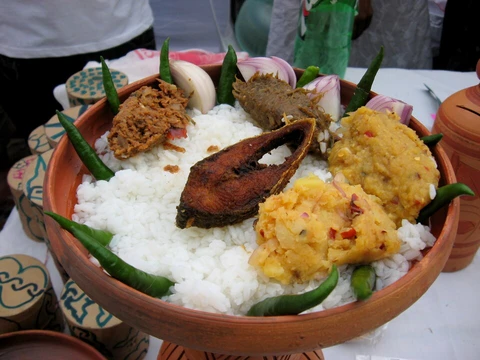
Cuisine of North Bengal
Traditional cuisine of 16 districts in northern Bangladesh.

The traditional cuisine of North Bengal is rooted in the food culture of fourteen districts across Bangladesh’s Rajshahi and Rangpur divisions. These districts include Rajshahi, Bogura, Joypurhat, Chapainawabganj, Naogaon, Natore, Rangpur, Dinajpur, Gaibandha, Kurigram, Lalmonirhat, Nilphamari, Panchagarh, and Thakurgaon. The region’s culinary style is heavily shaped by Koch-Rajbongshi culture. Signature dishes include pelka, kolai ruti (especially in and around Chapainawabganj), fish head ghati, khesari kolai’s bora, sidol made with taro leaves and local dried fish, and foods cooked with rice flour and soda—such as phoktai or any soda-cooked vegetables called chhaka.
Bogura, often called the capital of North Bengal, is famous nationwide for its yogurt. Other well-known foods from the area include kheer, sponge mishti, Mahasthangarh’s chauler katkati, lachcha semai, seekh kebab, chicken and beef chaap, red chili, and potato ghati.
- Region
- North Bengal (Rajshahi and Rangpur divisions, Bangladesh)
- Cultural influence
- Koch-Rajbongshi
- Known for
- Kalai Roti (especially Chapainawabganj), Pelka, Egg Telani, Bogura yogurt
- Notable districts
- Chapainawabganj, Rajshahi, Naogaon, Nilphamari
- Common staple
- Rice and fish
Lore & Background
Kalai Roti is a widely consumed food item in the Chapainawabganj district, made from mashkalai and atap rice flour ground on a traditional stone grinder called a Batan. The dough is shaped into large, thick rotis, cooked on a clay tawa, and served with mashed eggplant, dried chili, or fried meat. It is also gaining popularity in Rajshahi, Naogaon, and Dhaka.
Pelka, or Pyalka, is a soup-like dish made from leafy greens such as Malva parviflora, drumstick leaves, and taro leaves, cooked without oil but with baking soda. It originated in areas like Nilphamari district and is popular in greater Rangpur Division and parts of India.
Egg Curry with Water, or Egg Telani, involves frying eggs and cooking them in a gravy made from spices like cardamom, bay leaf, cinnamon, ginger, garlic, and cumin paste. It is served with rice, roti, paratha, or polao.
Reader's Guide
The cuisine of North Bengal is significant for preserving traditional cooking methods and ingredients unique to the region, such as the use of stone grinders for Kalai Roti and baking soda in Pelka. These dishes reflect the cultural heritage of the Koch-Rajbongshi people and have maintained popularity across generations. The fame of Bogura yogurt and dishes like kheer, sponge mishti, and chicken chaap highlights the region's culinary diversity. Khichuri has been a common and popular dish since ancient times. The cuisine's legacy lies in its ability to adapt while retaining core techniques, such as the no-oil preparation of Pelka and the specific spice blends in Egg Telani. It continues to influence food culture beyond North Bengal, with Kalai Roti becoming popular in Dhaka.
Did You Know?
- Kalai Roti is thicker and larger than wheat roti and is traditionally ground on a Batan stone grinder.
- Pelka is cooked without any oil, using baking soda to help greens cook thoroughly.
- Egg Telani is served with hot rice, roti, paratha, or polao.
- Bogura is known as the capital of North Bengal and its yogurt is famous nationwide.
Historical Layers & Imperial Influences
The culinary identity of Bangladesh was forged over centuries through successive waves of cultural contact. When Dhaka was established as the capital of East Bengal, dishes carrying Persian, Turkish, and Arabic influences gradually entered the local kitchen. The Nawabs of Dhaka are credited with introducing Mughlai cooking to the region—a tradition built around lamb, goat, beef, and yogurt seasoned with mild spices. For many generations, this lavish style of cooking remained accessible only to the wealthy, and dishes like kebab, stuffed breads, kacchi biriyani, and patisapta were rare sights in ordinary households. As the economy expanded, these preparations became more widely available. Even today, korma and Kashmiri tea retain their ceremonial role, appearing at Eid celebrations and wedding feasts. Before chili peppers arrived from the Americas, cooks relied on black pepper and chui jhal to deliver heat. The centuries-old Chowk Bazaar in Old Dhaka still functions as a living food market, serving as the gathering point for Iftar meals during Ramadan.
Coastal, Hill & Southern Flavors
Bangladesh's tropical monsoon climate and riverine geography produce a remarkable spread of regional dishes. In the Chittagong Division, curries tend to be intensely spiced and frequently feature beef; Kala bhuna, a preparation of beef shoulder cooked until dark and tender, is a local signature. The coastal waters supply rupchanda, loita (Bombay duck), churi (ribbonfish), koral (barramundi), and giant tiger prawns from the Bay of Bengal. Shutki, a pungent cured form of loita, is a distinctive regional delicacy. Further south, Barisal kitchens incorporate coconut into their cooking, while piper chaba—a fiery aromatic spice that predates the sixteenth-century arrival of chili—adds heat to meat and fish dishes. The Sylhet region is distinguished by its citrus varieties: hatkora, thoikor, Adajamir, and the nearly extinct Ashkul Lebu, whose juice is pressed into Tenga or Khatta. In the Chittagong Hill Tracts, tribal cooks favor hill-grown herbs over the spices common in lowland Bengali cooking, and seasonal ingredients like wild mushrooms and the flowers of ginger and turmeric plants feature prominently in their dishes.
Tribal & Minority Culinary Identity
Beyond the dominant Bengali tradition, Bangladesh's non-Bengali minority communities maintain their own rich food cultures. The Chakma people of the Chittagong Hill Tracts prepare sidol, a paste derived from fermented shrimps and fish, along with suguni, a dried shrimp or fish product. Their cooking emphasizes fresh hill herbs rather than the dried spices typical of Bengali cuisine, and dishes like Sumoh gorang are cooked inside bamboo while Hebaang is baked in banana leaves within a mud oven. The Marma community works with nappi, a paste of dried fish, and rice beer remains a popular local drink. In the Mymensingh region, the Garo people—both an ethnic and religious minority—build their cuisine around pork, eel, and turtle meat, brew liquor at home, and cook using soda and bamboo vessels. The Santal community in the Rajshahi area eats crab, pork, squirrel, and fish with comparatively few spices, produces hadia (an alcoholic drink from rice), and distills liquor from palm tree resin for use in ritual ceremonies. These distinct practices illustrate how geography, religion, and heritage shape the Bangladeshi table.
Staples, Dairy & the Northern Table
Rice and fish form the twin pillars of Bangladeshi daily eating, supported by an extraordinary palette of 250 plant-based ingredients. Mustard oil served as the traditional cooking fat long before soybean oil entered the market. In northern Bangladesh, numerous dairy farms produce yogurt (doi), and some preparations use evaporated milk to achieve a richer, kheer-like intensity. Biral Upazila is recognized for its large Koi fish, which are baked in banana leaves, while Catla fish is commonly simmered in doi. Bogra has earned national and international recognition for its sweet curds. In Mymensingh, yogurt is frequently paired with puffed or flattened rice, and Monda—a sweet yogurt patty originating in Muktagachhar in 1824—remains a local pride. The Rangpur region features a distinctive beef-and-pumpkin preparation. Dhakaiya paratha, a multi-layered bread, crossed into Kolkata after Partition when Dhaka immigrants carried the recipe with them. Haji biryani, born in a Dhaka restaurant of the same name, layers rice, goat meat, and spices, while Bakarkhani, a thick spiced flat-bread prepared in Dhaka for centuries, is traditionally enjoyed alongside tea.
Frequently Asked Questions
What is the Cuisine of North Bengal and where does it come from?
It refers to the traditional food traditions spanning fourteen districts across Bangladesh's Rajshahi and Rangpur divisions, including areas like Chapainawabganj, Naogaon, and Nilphamari. The cooking style draws heavily on Koch-Rajbongshi heritage rather than the coastal Bengali traditions found further south.
What dishes is North Bengal cuisine most famous for?
Pelka (a thick lentil-and-vegetable stew), kalai ruti (a distinctive flatbread especially tied to Chapainawabganj), fish head ghati, and Bogura yogurt are among the most recognized items. Egg telani and khesari kolai's bora also feature prominently in local kitchens.
What is the main staple food in North Bengal cuisine?
Rice and fish form the everyday backbone of meals across the region. Many signature preparations, such as sidol made with taro leaves and local dried fish, build directly on that rice-and-fish foundation.
How is North Bengal cuisine different from other Bangladeshi regional cuisines?
Its flavor profile and cooking methods are shaped by Koch-Rajbongshi cultural traditions, giving it a distinct identity compared to the coastal or Sylhet-style cuisines elsewhere in Bangladesh. Dishes like pelka and kolai ruti have no real parallel in the delta or hill-region food traditions.
Which districts are considered the heart of North Bengal cuisine?
Chapainawabganj is often singled out for its kalai ruti, while Rajshahi, Naogaon, and Nilphamari are noted for their own local variations of stews, breads, and fish preparations. Together these districts anchor the fourteen-district culinary zone that spans the Rajshahi and Rangpur divisions.
More in Bangladeshi cuisine 1-24
Spotted an error? Know more?
Reader corrections go straight into our review queue. Suggest an edit · How this site is sourced