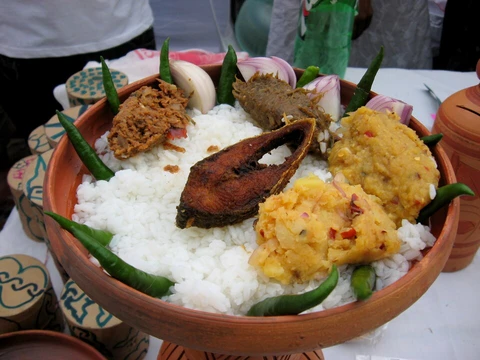
Chadachadi
A char-flavored mixed vegetable dish from Odia and Bengali cuisine.

Chadachadi, also known as Chaṛachaṛi in Odia and Chorchori in Bengali, is a char-flavored mixed vegetable dish found primarily in Odia and Bengali cuisine of the Indian subcontinent. It is notable for its unique cooking method that creates a thin charred crust on the vegetables.
- Also known as
- Chaṛachaṛi (Odia), Chorchori (Bengali)
- Cuisine
- Odia and Bengali cuisine
- Region
- India and Bangladesh
- Key ingredient
- Mixed vegetables (e.g., potatoes, eggplant, spinach, French beans, cauliflower)
- Cooking method
- Char-flavored by frying after simmering
Lore & Background
Chorchori is often cooked with leftover vegetables at the end of the week. The story behind the dish is that in Bengali households, traditionally men would go grocery shopping once a week. At the end of the week, the household would be left with bits of all the vegetables bought earlier in the week.
To cook chorchori, a chaunk is prepared by frying spices such as black mustard seeds and minced ginger root in oil or ghee. Often, panch phoron is used. Then, chopped vegetables are added and stir-fried briefly. Water, salt, and more spices are added, and the vegetables are allowed to simmer.
Once all the liquid has been absorbed and cooked off, the vegetables begin to fry in the oil or ghee left in the bottom of the pot. As the vegetables begin to char, a sizzling sound is heard, and the pot is removed from the heat. After a few minutes, the thin charred crust is stirred gently into the dish.
Reader's Guide
Chadachadi represents a resourceful and flavorful approach to using leftover vegetables, reflecting traditional weekly grocery shopping habits in Bengali households. Its distinctive charring technique, which produces a sizzling sound and a thin crust, sets it apart from other mixed vegetable preparations. The dish is deeply rooted in the culinary traditions of Odisha and Bengal, where it is commonly prepared with vegetables like potatoes, eggplant, spinach, French beans, and cauliflower. The use of panch phoron and a chaunk of black mustard seeds and ginger highlights the aromatic complexity of the cuisine. Chadachadi's significance lies in its embodiment of frugality and creativity, turning odds and ends into a beloved dish. Its legacy continues through home cooking and references in cookbooks such as Yamuna Devi's 'The Art of Indian Vegetarian Cooking: Lord Krishna's Cuisine.'
Did You Know?
- Chadachadi is also called Chaṛachaṛi in Odia and Chorchori in Bengali.
- The dish is traditionally made with leftover vegetables from the week's grocery shopping.
- A sizzling sound indicates the vegetables are charring, at which point the pot is removed from heat.
- Typical vegetables include potatoes, eggplant, spinach, French beans, and cauliflower.
Cultural Roots in the Weekly Kitchen
Chadachadi, also known as Chorchori in Bengali, carries a story as much as a recipe. In traditional Bengali households, the rhythm of the week was shaped by a single grocery run, typically made by the men of the family. By the time the week drew to a close, the kitchen was left with small, scattered remnants of every vegetable purchased at the start of that cycle. Rather than letting these bits go to waste, cooks transformed them into a single, cohesive dish. This practical origin gave birth to a preparation that is now recognized across both Odia and Bengali culinary traditions in India and Bangladesh. What began as an act of household thrift evolved into a celebrated mixed-vegetable preparation, one that carries the memory of a particular domestic rhythm. The dish is a reminder that some of the most beloved foods in the Indian subcontinent were born not from grandeur but from the quiet necessity of making something whole out of what remained.
The Art of the Char
The defining moment in preparing chadachadi is not the simmering but the final act of charring. After the vegetables have been stir-fried, seasoned with water, salt, and additional spices, and allowed to simmer until all the liquid has been fully absorbed, the pot is left on the heat. The residual oil or ghee at the bottom of the vessel begins to fry the vegetables directly. As the edges start to blacken, a distinctive sizzling sound fills the kitchen, signaling that the cook must pull the pot off the flame. The pot is then set aside for a few minutes, allowing a thin, crisp charred crust to form. Finally, that crust is gently stirred back into the dish, distributing its smoky, toasty notes throughout. This deliberate sequence—simmer, dry, char, rest, fold—gives chadachadi its name and its singular identity among mixed-vegetable preparations. No other step replicates the depth of flavor that this final char imparts.
Spice Foundation and Vegetable Palette
Before any vegetable touches the pot, the flavor base is established through a technique called chaunk. Black mustard seeds and finely minced ginger root are fried in oil or ghee, releasing their sharp aromatics. In many preparations, the five-spice blend known as panch phoron takes the place of individual seeds, adding a layered complexity to the foundation. Once this fragrant base is ready, chopped vegetables are added and given a brief stir-fry. The typical roster includes potatoes, eggplant, spinach, French beans, and cauliflower, though the dish's origin in leftover-vegetable cooking means the exact combination can vary from household to household. Water, salt, and further spices are introduced, and the mixture is left to simmer. The interplay between the sharp, nutty mustard, the pungent ginger, the earthy vegetables, and the eventual char creates a flavor architecture that is simple in concept yet remarkably complex in result.
A Dish of Two Cuisines
Chadachadi occupies a distinctive niche in the culinary landscape of the Indian subcontinent. It is not a dish that belongs exclusively to one regional tradition; rather, it is found primarily in both Odia and Bengali cuisines, spanning the borders of India and Bangladesh. This dual heritage is reflected in its naming—Chaṛachaṛi in Odia script and Chorchori in Bengali—acknowledging the two linguistic and cultural streams that claim it. Within the broader families of Oriya and Bengali cooking, chadachadi stands apart from other mixed-vegetable preparations because of its signature charred crust and its roots in weekly household practice. It is a dish that bridges the practical and the celebratory, the everyday and the distinctive, and it carries with it the particular sensibilities of two neighboring food cultures that share ingredients, techniques, and a deep respect for making the most of what is on hand.
Frequently Asked Questions
What is Chadachadi?
Chadachadi is a mixed-vegetable dish from the Odia and Bengali culinary traditions of the Indian subcontinent. It's recognized for its smoky, charred flavor that sets it apart from typical vegetable curries.
What vegetables are typically in Chadachadi?
The dish commonly features a mix of potatoes, eggplant, spinach, French beans, and cauliflower, though exact combinations can vary. These vegetables are simmered together before the final cooking step.
What makes Chadachadi's cooking method unique?
After the vegetables are simmered, they're fried to develop a thin, charred crust on the surface. This two-stage process gives the dish its signature smoky, slightly burnt flavor that regular vegetable stews lack.
What are the different names for Chadachadi?
In Odia it's called Chaṛachaṛi, while Bengali speakers typically refer to it as Chorchori. The name in each language reflects the charred quality of the finished dish.
Where does Chadachadi originate from?
The dish is rooted in both Odia and Bengali cuisines, so it's found across parts of India and Bangladesh. It's a staple in home cooking and local eateries in those regions.
More in Bangladeshi cuisine 1-24
Spotted an error? Know more?
Reader corrections go straight into our review queue. Suggest an edit · How this site is sourced