
Scythian archers
Hypothesized Scythian police force in ancient Athens.

ArchaiOptix · CC BY-SA 4.0
The Scythian archers were a supposed police unit in Athens during the 400s and early 300s BC, known from Greek art and plays. The force supposedly had 300 public slaves from the Scythian people, a nomadic Iranic group from the Eurasian Steppe. They worked for a group of eleven elected Athenian magistrates who handled arrests, executions, and public order. Despite being called "archers," they likely did not carry bows and arrows.
In one of Aristophanes’ comedies, a Scythian archer appears as a character who speaks broken Greek with an accent. The group went by several names: *toxotai* (archers), *Skythai* (Scythians), and *Speusinioi*, after a man named Speusinos, said to be their founder.
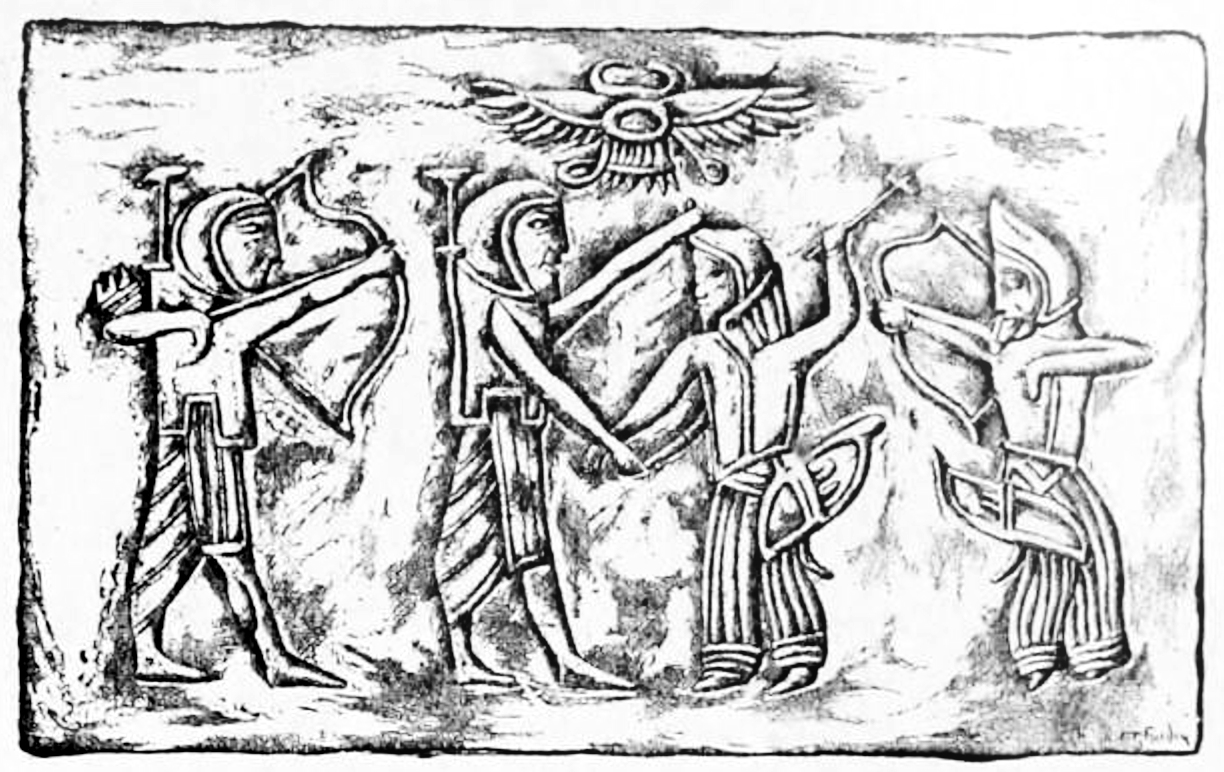
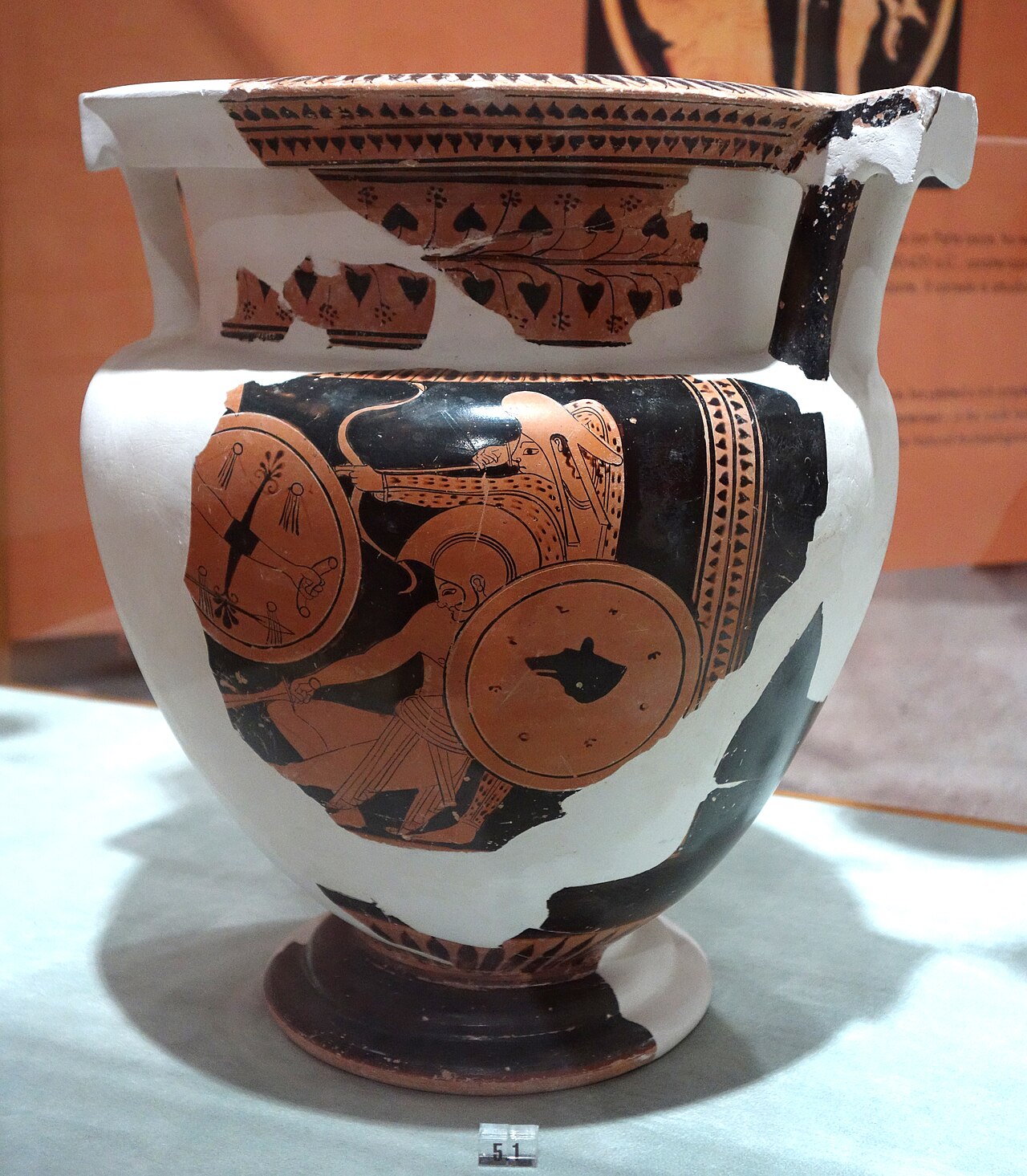
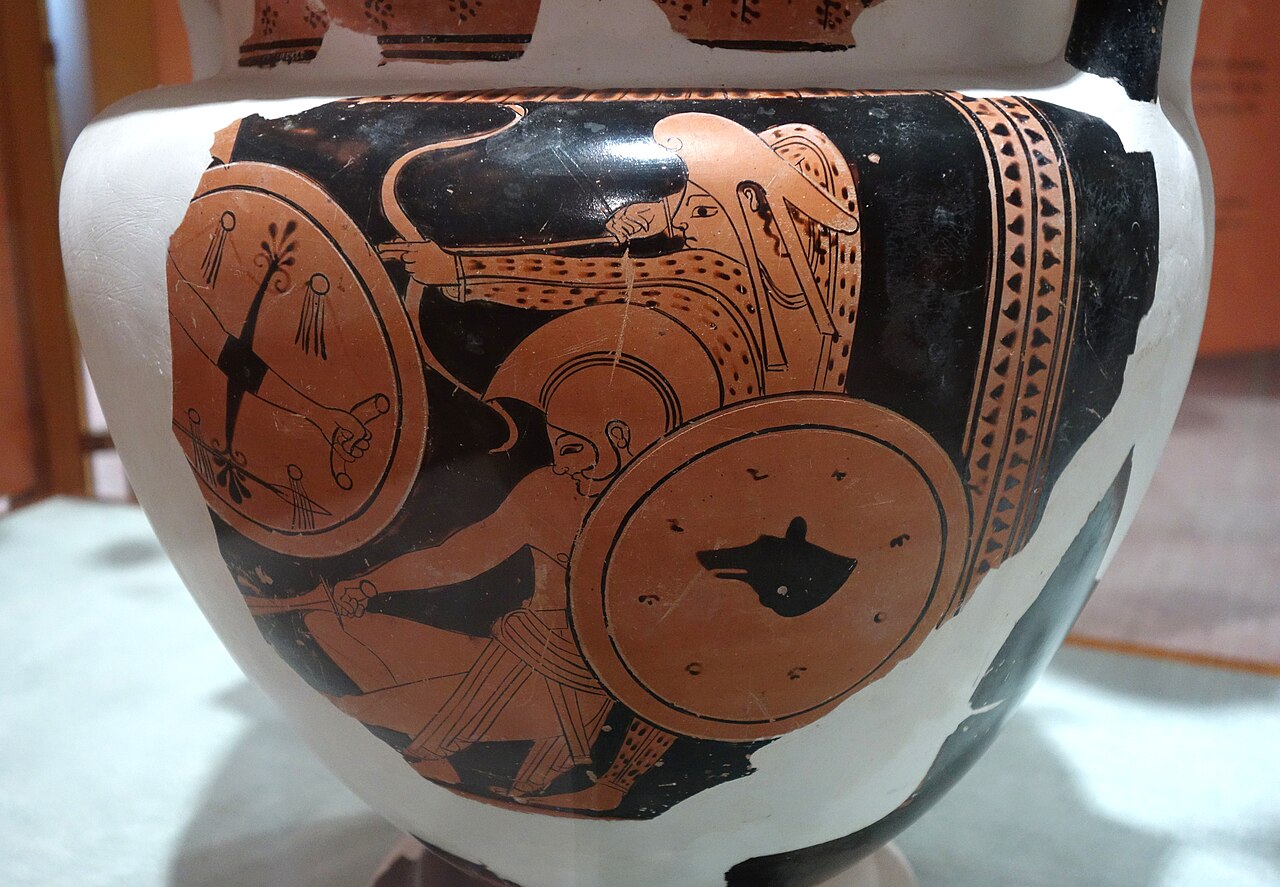
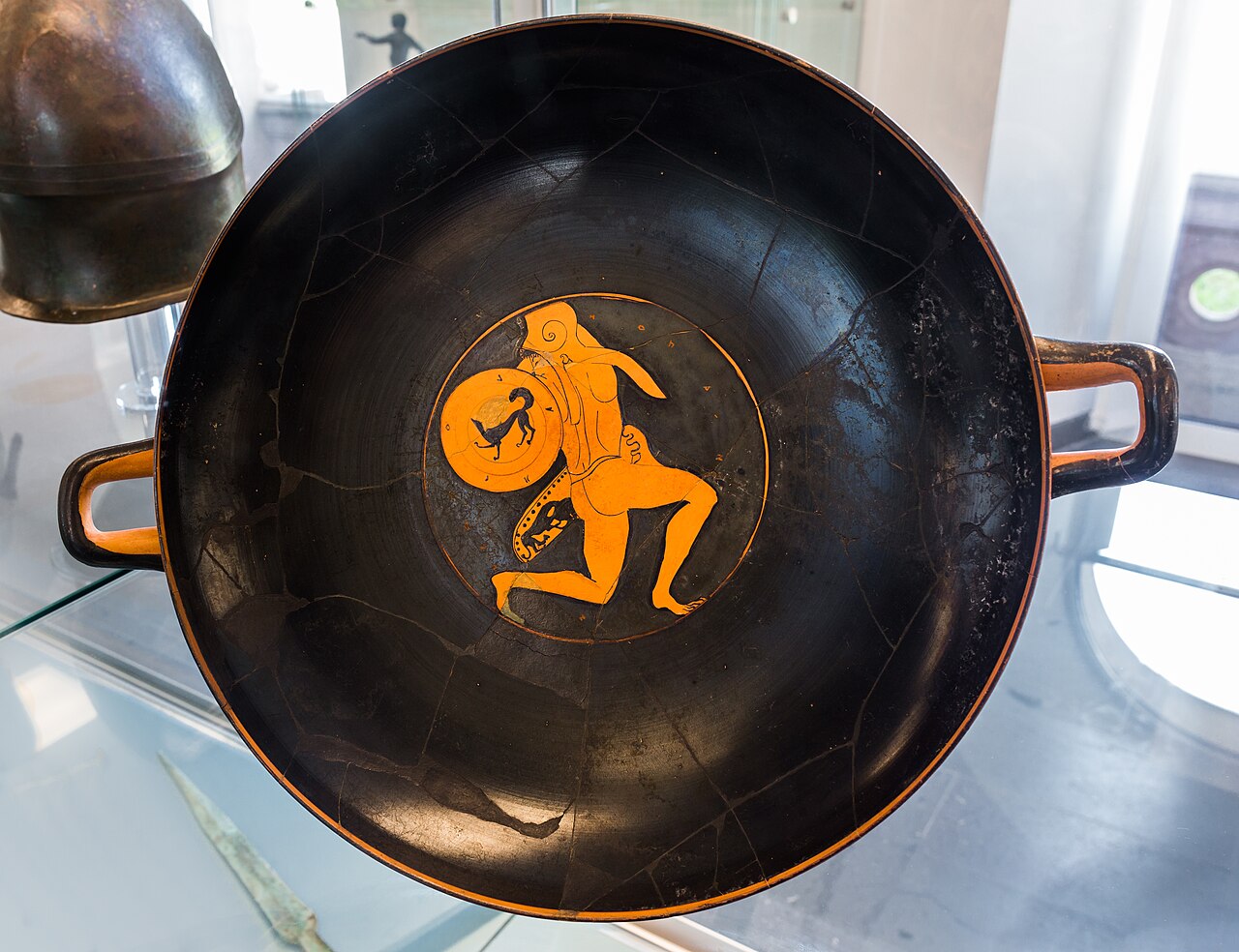
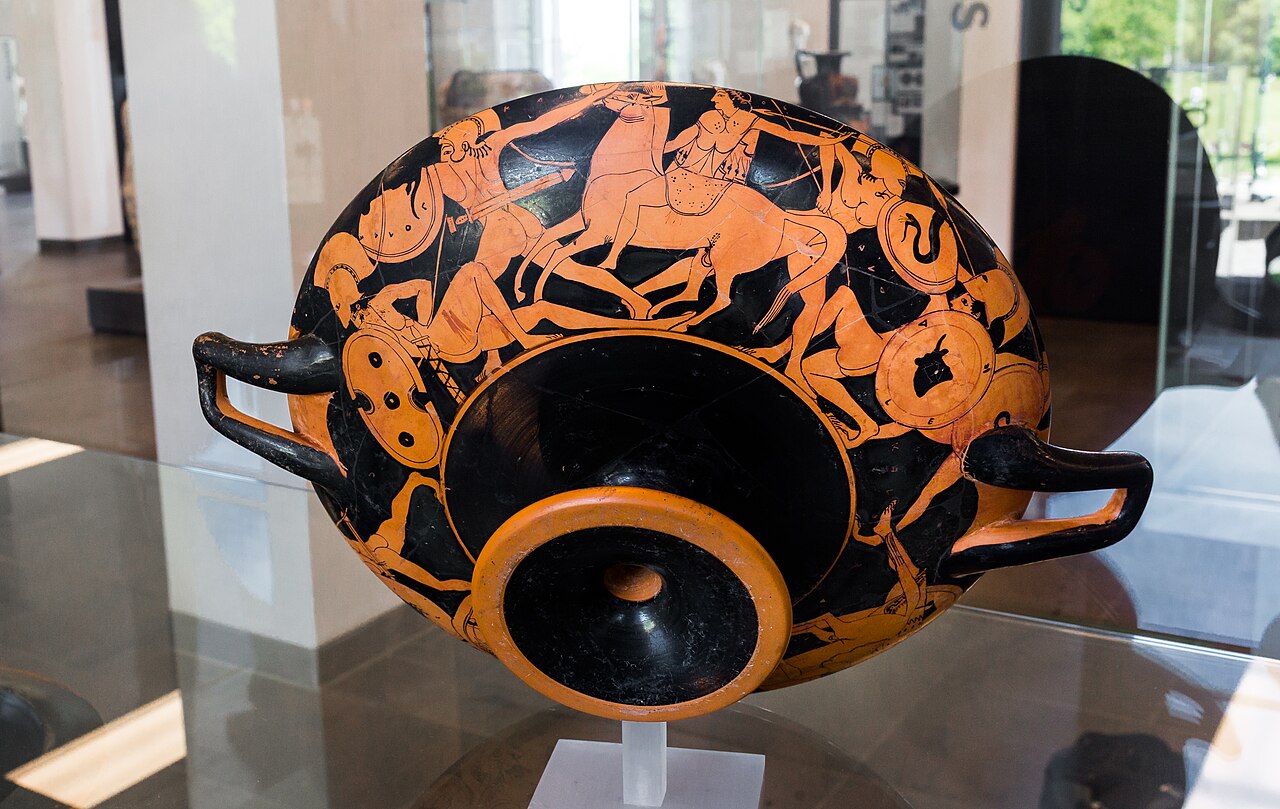
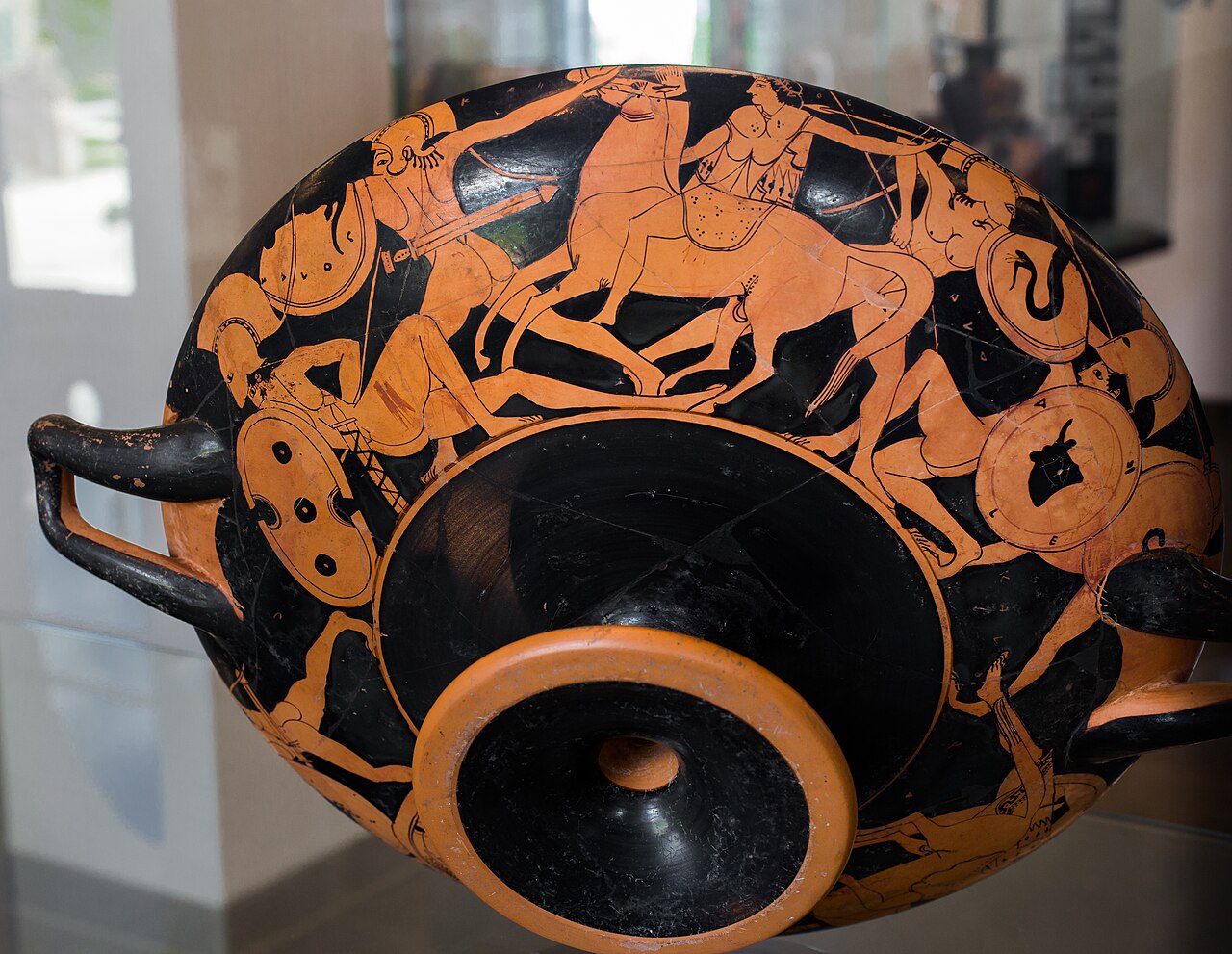
The theory that these Scythians acted as a police force comes mainly from Attic vase paintings and Aristophanes’ works. They are described as 300 public slaves (*demosioi*) who wore Scythian clothing and carried bows and arrows in a *gorytos* (a Scythian bow case). In vase paintings, they are shown with tall pointed hats and wide trousers. They kept order in the Assembly and council but had little authority themselves, acting for the Eleven, the elected magistrates.
Scholars agree that some kind of Scythian police force existed in 5th-century Athens, though no one knows when it started or how long it lasted. Evidence for Scythian archers in the 6th century BC is unclear. Vase paintings from that earlier period showing Scythians with hoplites may not be linked to the later police force. The force may have grown to 1,200 at one point and possibly fought in wars. Archaeologist Balbina Bäbler points to 4th-century evidence, like the stele of Getes, buried Scythian arrowheads, and Greek-style grave markers. It is unknown if these Scythians were part of the same police force or if Scythian women lived in Athens.
Why Athenians hired foreign slaves is unclear, though they may have been seen as more loyal than locals. It is also uncertain why bows and arrows would be useful in the crowded city. In Aristophanes’ *Thesmophoriazusae*, the Scythian archer speaks broken Greek, dropping final -s and -n, using soft sounds instead of aspirates, and once using *x* instead of *s*. These details have been used to study the Scythian language.
Despite their name and archers in art, researchers question whether the police actually used bows.
Quick Facts
- Nativename
- Speusinioi
- Nativenamea
- grc · Σπευσίνιοι
- Flagcaption
- An Attic red-figure vase-painting of a Scythian archer by Epiktetos, 520–500 BC
- Formedyear
- 5th century BC
- Dissolved
- 4th century BC
- Employees
- 300–1,200
- Legalpersonality
- Government agency
- Country
- Classical Athens
- National
- yes
- Headquarters
- Tents or wooden barracks in the Agora and later on the Areopagus
Facts from the source article.
Lore & Background
The theory of the Scythian archers as a police force is mainly based on possible evidence from Attic vase paintings and the works of the ancient Athenian playwright Aristophanes. The force is said to have consisted of 300 public slaves who wore Scythian dress and were equipped with bows and arrows in gorytos. As portrayed on Attic vase paintings, they were distinguished by high pointed headdresses and wide trousers. They were used to maintain order in the Assembly and the council, though they had little authority themselves, and acted for the Eleven, a group of eleven elected magistrates responsible for arrests, executions, and some aspects of public order.
Scholars agree that a Scythian police force of some sort existed in Athens in the 5th century, although no one knows when it was first established or how long it lasted. The evidence for Scythian archers as early as the 6th century BC is inconclusive. The police force may have been involved in wartime conflicts as well. Archaeological evidence for Scythians in the 4th century includes the stele of Getes, buried Scythian arrowheads, and other Greek-style grave stelae, but it is impossible to know whether these represent a continuation of the police force or whether Scythian women also lived in Athens.
Scholars are unsure why Athenians would employ barbarians, though foreign slaves far from home may have composed a more faithful police force than locals. It is also not clear why bows and arrows were appropriate weapons for the cramped city of Athens. In Aristophanes's comedy Thesmophoriazusae, a Scythian archer speaks broken Greek, consistently omitting final -s and -n, using the lenis in place of the aspirate, and once using x in place of s.
Reader's Guide
The significance of the Scythian archers lies in their ambiguous role as both a hypothesized historical institution and a subject of artistic and literary representation. Despite being called archers, researchers have questioned whether they actually used bows and arrows. Archery expert Mike Loades argued that Athenian vase paintings do not depict realistic Scythian composite bows, quivers, or clothing, describing them as fantasy dress-up by artists who had probably never seen a Scythian bow. In this view, the term archers would be a byword for the police's ethnic composition, not its actual equipment. Loades points out that all ancient literary references describe them beating people, never using bows, and archaeological evidence suggests they used horse-whips with wooden handles on duty, similar to those used by some modern police units. The legacy of the Scythian archers is thus tied to debates about the reliability of artistic evidence versus archaeological and literary sources. Their portrayal in Aristophanes's comedies also provides rare linguistic evidence for the Scythian language, as the archer's broken Greek has been noted by John William Donaldson to discuss the largely unknown Scythian languages. The uncertainty surrounding their equipment, origin, and duration makes them a case study in how ancient police forces may have been organized and how ethnic stereotypes shaped their depiction.
Did You Know?
- The Scythian archers were also called Speusinioi, named after a certain Speusinos, the alleged founder of the force.
- Despite being called archers, the Scythian police probably did not use bows and arrows.
- In Aristophanes's Thesmophoriazusae, a Scythian archer speaks broken Greek, omitting final -s and -n.
- Archaeological evidence suggests the Scythian police used horse-whips with wooden handles on duty.
Identity, Status, and Command Structure
The Scythian archers were a body of roughly 300 men—public slaves (demosioi) of Scythian origin, a nomadic Iranic people hailing from the vast Eurasian Steppe—who served in 5th- and early 4th-century BC Athens. Though they carried the ethnic label "Scythian," their official Greek designation was toxotai, meaning simply "the archers," a name that may have referred more to their foreign identity than to any actual archery duty. They were also known as Skythai and, most distinctively, as Speusinioi, a title honoring a man named Speusinos who was credited as the force's founder. Operationally, these men did not act independently; they were instruments of the Eleven (hoi hendeka), a panel of eleven elected Athenian magistrates who oversaw arrests, executions, and broader public order. The Scythian archers maintained discipline in the Assembly and the council, yet they wielded little personal authority. Their role was essentially that of an armed enforcer operating under direct magistrate command, a function that placed them at a peculiar intersection of foreign ethnicity and Athenian civic machinery.
The Paradox of the "Archer" Label
Despite their famous name, the Scythian archers almost certainly did not carry bows on patrol. Archery specialist Mike Loades examined the Attic vase paintings that traditionally illustrate the force and concluded they depict "fantasy dress-up"—artists rendering Scythians as exotic figures without ever having seen a genuine composite bow, quiver, or gorytos. The equipment shown bears little resemblance to authentic Scythian archery gear preserved in original Scythian art. Loades reinforced his argument by noting that every surviving literary mention of the Scythian archers in action describes them beating people, never loosing arrows. Archaeological findings further suggest their actual duty gear included horse-whips with wooden handles, comparable to batons carried by certain modern police units. The cramped streets of Athens made archery impractical, and the term "archers" likely functioned as a shorthand for the force's ethnic makeup rather than a description of its weaponry. In short, the most iconic element of their identity was, in all probability, a misnomer born of artistic convention and linguistic habit.
Evidence, Dating, and Scholarly Uncertainty
The very existence of the Scythian archers as a formal police body rests on a slender evidentiary base: a handful of Attic vase paintings and the comedic works of Aristophanes. Scholars broadly accept that some Scythian enforcement unit operated in 5th-century Athens, yet they remain divided on when the force was first created and how long it endured. Claims pushing its origins back to the 6th century BC are considered inconclusive; Scythian figures attending hoplites on earlier vases may simply be decorative rather than institutional. At one point the force reportedly expanded to 1,200 members and may have been pressed into wartime service. In the 4th century, Balbina Bäbler identified a stele commemorating a man named Getes, buried Scythian arrowheads, and other Greek-style grave markers as possible traces of Scythian residents, though it remains unclear whether these individuals were continuations of the police corps or simply members of a broader community, possibly including women. Why Athenians would entrust public order to "barbarians" has no definitive answer, though one plausible explanation is that foreign slaves, far from any homeland, would prove more loyal than local citizens.
Literary and Artistic Legacy
The Scythian archers left their most vivid imprint not in administrative records but in the world of Greek comedy and visual art. In Aristophanes' Thesmophoriazusae, a Scythian archer appears as a comic character who speaks broken Greek with a marked accent. His dialect consistently drops the final -s and -n, substitutes the lenis for the aspirate, and on one occasion uses the letter x where a s is expected. The classical philologist John William Donaldson noted that these linguistic quirks, though clearly a comic exaggeration, touch on the largely unknown Scythian languages and offer a rare glimpse into how a Greek audience perceived foreign speech. In the visual arts, the Scythian archers were rendered with high pointed headdresses and wide trousers, a costume that set them apart from the tunic-clad Athenian citizen. These depictions, combined with the literary caricature, cemented the Scythian archer as a recognizable stock figure in Athenian culture—a symbol of the city's willingness to harness foreign manpower for civic duties while simultaneously mocking the very people who performed them.
Gallery
Frequently Asked Questions
Who were the Scythian archers?
They were a hypothesized public-slave police force operating in Athens during the fifth and early fourth centuries BC. The group consisted of roughly 300 enslaved men of Scythian origin and reported to a board of eleven elected magistrates.
What did the Scythian archers actually do in Athens?
They functioned as a civic enforcement detail, carrying out arrests, executions, and general public-order duties under the authority of the Eleven. In practical terms they served as the city's standing security unit rather than a military combat force.
Did the Scythian archers really carry bows and arrows?
Despite the name, most scholars believe they did not wield bows in their police capacity. The label toxotai (archers) most likely reflected their Scythian ethnic origin, since bow-wielding was a cultural hallmark of the steppe peoples, rather than describing their actual equipment.
How many Scythian archers served in Athens and what other names did they go by?
The standard complement is generally cited as 300 public slaves, though some sources suggest the number may have temporarily swelled to around 1,200. In ancient texts they are also referred to as Skythai and Speusinioi.
Why are the Scythian archers significant to our understanding of ancient Athens?
They provide a rare window into how a major Greek city-state employed enslaved foreigners in a formal civic-security role. Their appearance in Aristophanes' comedies, including a character speaking heavily accented Greek, shows how Athenian audiences recognized and satirized this group in everyday cultural life.
More in Archers 1-24
Spotted an error? Know more?
Reader corrections go straight into our review queue. Suggest an edit · How this site is sourced