
Abd Allah ibn Yazid
Umayyad prince and the finest archer of his era.

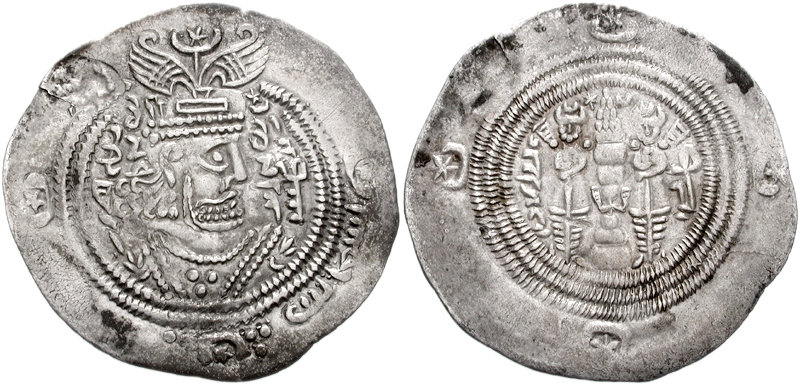
CNG Coins · CC BY-SA 3.0
Abd Allah ibn Yazid ibn Mu'awiya ibn Abi Sufyan, better known as al-Uswar, was an Umayyad prince from the Sufyanid branch of the dynasty. His father was Caliph Yazid I, and his mother was Umm Kulthum, daughter of the commander Abd Allah ibn Amir of the Banu Abd Shams clan. After Yazid died in 683 and his eldest son Mu'awiya II followed in 684, Umayyad authority crumbled. Most provinces and Syrian military districts recognized the rival caliph Abd Allah ibn al-Zubayr. The Banu Kalb, long-time allies of the Sufyanids, rallied loyalist tribes in Syria to choose a successor. In Damascus, the governor Dahhak ibn Qays al-Fihri, a Zubayrid supporter, arrested Yazid’s cousin Walid ibn Utba, but Abd Allah, his brother Khalid, and their Kalbite backers freed him. The Kalb chief Ibn Bahdal, a cousin of Yazid, put forward Khalid and Abd Allah as candidates for the caliphate. Other loyalist tribes rejected them as too young, so a distant Umayyad relative, Marwan ibn al-Hakam, was appointed instead. Marwan defeated the pro-Zubayrid tribes at the Battle of Marj Rahit in 684.
Abd Allah was considered the finest archer among the Arabs of his time, according to the historian al-Tabari. His nickname al-Uswar comes from the Persian word for horseman. An unnamed poet quoted by al-Tabari said that when the Quraysh are mentioned, the best of them is al-Uswar. After Marwan’s death, his son Abd al-Malik became caliph, setting aside earlier succession plans that had made Khalid heir apparent and Amr al-Ashdaq ibn Sa’id ibn al-As next in line. Al-Ashdaq led a failed coup in Damascus in 689. Abd Allah, who was married to al-Ashdaq’s daughter, advised him not to answer the caliph’s summons after the coup failed. Al-Ashdaq ignored the warning, met with Abd al-Malik, and was executed. In 691, Abd Allah commanded the right wing of Abd al-Malik’s army at the Battle of Maskin, which seized Iraq from the Zubayrids. His brother Khalid led the left wing.
Abd Allah married several women. One was his cousin Atika, daughter of Yazid’s brother Abd Allah. Another was Umm Kulthum, daughter of Mu’awiya’s brother Anbasa ibn Abi Sufyan. He also married A’isha, daughter of Sa’id ibn Uthman and Ramla bint Abi Sufyan, and Umm Uthman, daughter of Sa’id ibn al-As, after her first husband Khalid ibn Amr died.
Quick Facts
- Birth Place
- Damascus, Umayyad Caliphate
- Spouse
- Atika bint Abd Allah ibn Mu'awiya / Umm Kulthum bint Anbasa bint Abi Sufyan / A'isha bint Sa'id ibn Uthman / Umm Uthman bint Sa'id / Umm Musa bint Amr ibn Sa'id / A'isha bint Zabban
- Issue
- Abu Utba / Abu Sufyan (Abu Aban) / Abu Muhammad
- Dynasty
- Umayyad
- House
- Quraysh
- House Type
- Tribe
- Religion
- Islam
- Father
- Yazid I
- Mother
- Umm Kulthum bint Abd Allah
Facts from the source article.
Lore & Background
Abd Allah ibn Yazid was the son of Caliph Yazid I and Umm Kulthum, daughter of the commander Abd Allah ibn Amir of the Banu Abd Shams. After the deaths of Yazid and his brother Caliph Mu'awiya II, Umayyad rule collapsed across the Caliphate. The Banu Kalb, old tribal allies of the Sufyanids, rallied loyalist tribes to appoint a replacement for Mu'awiya II. The governor Dahhak ibn Qays al-Fihri, who backed the anti-Umayyad Abd Allah ibn al-Zubayr, arrested Yazid's cousin Walid ibn Utba, but Abd Allah, his brother Khalid, and their Kalbite backers freed him. The chief of the Kalb, Ibn Bahdal, nominated Khalid and Abd Allah as candidates for the caliphate, but other loyalist tribesmen opposed them due to their young ages, and Marwan ibn al-Hakam was appointed instead.
Abd Allah was known as the 'finest archer of the Arabs of his time' according to the historian al-Tabari. He was called 'al-Uswar,' from the Persian word for 'horseman.' A poet said of him: 'The people claim that the best of all Quraysh when they are mentioned is al-Uswar.' He later served as the right-wing commander of Caliph Abd al-Malik's army when it wrested control of Iraq from the Zubayrids at the Battle of Maskin, while his brother Khalid commanded the left wing.
Reader's Guide
Abd Allah ibn Yazid's significance lies in his reputation as the preeminent archer among the Arabs of his time, a distinction recorded by the historian al-Tabari. His epithet 'al-Uswar,' derived from the Persian word for horseman, reflects his dual mastery of archery and cavalry warfare. As an Umayyad prince of the Sufyanid line, he played a role in the turbulent period following the deaths of his father Yazid I and brother Mu'awiya II, when the Umayyad caliphate nearly collapsed. Though passed over for the caliphate due to his youth, he remained a loyal commander, leading the right wing of Abd al-Malik's army at the Battle of Maskin, which secured Iraq for the Umayyads. His legacy is preserved through his martial skill and his place in the genealogical and political history of the early Umayyad dynasty, as well as through his descendants: his daughter Abda married Caliph Hisham ibn Abd al-Malik, and his son Ziyad (Abu Muhammad al-Sufyani) later proclaimed himself caliph and led a rebellion against the Abbasids.
Did You Know?
- Abd Allah was known as 'al-Uswar,' from the Persian word for 'horseman.'
- He commanded the right wing of the Umayyad army at the Battle of Maskin in 691.
The Succession Crisis of 684
After the deaths of Caliph Yazid I in 683 and his heir Mu'awiya II in 684, the Umayyad Caliphate fractured. Most provinces and the Syrian military districts turned to Abd Allah ibn al-Zubayr of Mecca as their caliph. In Damascus, the Banu Kalb—long-standing tribal allies of the Sufyanid line under whom they enjoyed privileged court positions—mobilized Umayyad loyalist tribes to select a replacement. The chief of the Kalb, Ibn Bahdal, a cousin of Yazid himself, put forward Abd Allah and his brother Khalid as candidates for the caliphal throne. However, the other loyalist tribesmen rejected the nomination, citing the young ages of both princes. In the turbulent political climate, the governor Dahhak ibn Qays al-Fihri, who supported Ibn al-Zubayr, had arrested Yazid's cousin Walid ibn Utba; it was Abd Allah, Khalid, and their Kalbite supporters who secured his release. Ultimately, the tribes settled on Marwan ibn al-Hakam, a distant Umayyad relative, who went on to defeat Dahhak at the Battle of Marj Rahit in 684.
The Finest Archer and the Battle of Maskin
The ninth-century historian al-Tabari described Abd Allah as the finest archer among the Arabs of his era, a reputation that earned him the epithet al-Uswār, derived from the Persian word for horseman. An unnamed poet, quoted by al-Tabari, declared that when the people of Quraysh—the tribe of the Prophet Muhammad and the caliphal family—were discussed, al-Uswār was held up as the best among them. This martial renown found its most significant expression in 691, when Caliph Abd al-Malik dispatched his army to wrest control of Iraq from the Zubayrid forces during the Second Fitna. Abd Allah commanded the right wing at the decisive Battle of Maskin, while his brother Khalid took the left. Their combined leadership helped secure the Umayyad reconquest of the province. Earlier, Abd Allah had also commanded part of the army that took over Iraq from anti-Umayyad forces, cementing his role as a key military figure in the dynasty's restoration.
A Web of Umayyad Marriages
Abd Allah's marriage choices reflected the tightly interwoven nature of Umayyad dynastic politics. He wed his cousin Atika, daughter of Yazid's brother Abd Allah, and another Sufyanid kinswoman, Umm Kulthum, daughter of Anbasa ibn Abi Sufyan. He also married A'isha, daughter of Sa'id ibn Uthman (son of Caliph Uthman) and Ramla bint Abi Sufyan. After the death of her first husband, Khalid ibn Amr, a grandson of Uthman, he took her widow Umm Uthman, daughter of the distant Umayyad kinsman Sa'id ibn al-As, as his wife; with her he fathered sons Abu Utba and Abu Sufyan. He subsequently married Umm Uthman's niece, Umm Musa, daughter of Amr al-Ashdaq ibn Sa'id ibn al-As. Additionally, he wed A'isha bint Zabban of the Banu Kalb, the very tribe whose loyalty had been crucial to the Sufyanid cause. These unions bound the Sufyanid line to multiple branches of the broader Umayyad family and to the tribal power base in Syria.
The Sufyanid Line's Long Shadow
Abd Allah's family continued to shape Umayyad and post-Umayyad politics long after his own lifetime. His daughter Abda married Caliph Hisham ibn Abd al-Malik, who ruled from 724 to 743, linking the Sufyanid branch directly to the Marwanid caliphal throne. His son Ziyad, known as Abu Muhammad al-Sufyani, served as a Damascus-based commander under Hisham's successor al-Walid II. When the Abbasid revolution swept through the caliphate, Ziyad proclaimed himself caliph and led a rebellion in Syria against the new dynasty, demonstrating that the Sufyanid claim to leadership retained enough resonance to inspire armed resistance. The political entanglements Abd Allah navigated in his own time—counselling his brother-in-law Amr al-Ashdaq against meeting Caliph Abd al-Malik after the latter's 689 coup, only to see the advice ignored and the man executed—illustrate how deeply personal relationships and dynastic loyalty were entangled with the survival of the Umayyad house.
Gallery
Frequently Asked Questions
Who is Abd Allah ibn Yazid?
He was an Umayyad prince of the Sufyanid branch, the son of Caliph Yazid I and Umm Kulthum bint Abd Allah ibn Amir. He is better remembered by his nickname al-Uswar and by his reputation as the preeminent archer among the Arabs of his generation.
What made Abd Allah ibn Yazid famous as an archer?
Contemporary sources singled him out as the finest bowman of the Arab world in his era, a distinction that set him apart even among the warrior-nobility of the Umayyad court. His skill with the bow was the defining trait by which he is recalled in later tradition.
What military role did Abd Allah ibn Yazid hold?
He commanded the right wing at the Battle of Maskin, one of the key engagements of the First Fitna. In that capacity he led the Sufyanid loyalist forces against the army backing Abd Allah ibn al-Zubayr.
How did Abd Allah ibn Yazid come to be chosen as caliph?
After the deaths of Yazid I in 683 and his heir Mu'awiya II in 684, most Syrian military districts had already defected to ibn al-Zubayr. The Banu Kalb, longtime allies of the Sufyanids, gathered loyalist tribes in Syria and pressed the Damascus garrison to select a new leader, and they settled on al-Uswar.
Why is Abd Allah ibn Yazid important to the history of archery and the Umayyad dynasty?
He represents the last prominent Sufyanid prince to claim the caliphate during the chaos of the First Fitna, and his name survives as the benchmark for archery excellence in early Arab martial culture. His story encapsulates how a dynasty's military prestige, embodied in figures like him, could not prevent its political collapse.
More in Archers 1-24
Spotted an error? Know more?
Reader corrections go straight into our review queue. Suggest an edit · How this site is sourced