
Khwai Nongchengpam Piba
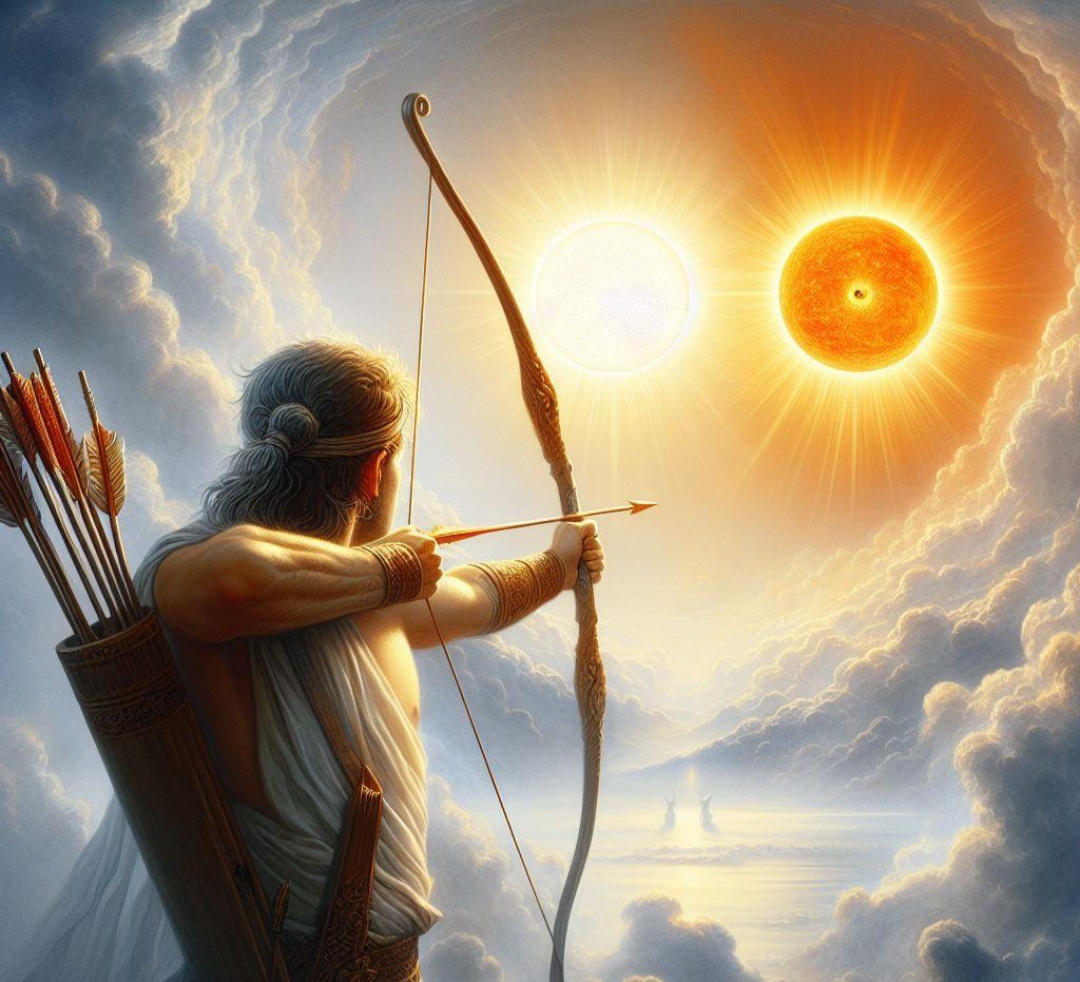
Slave and archer who shot down the elder sun.

Author: DALL-E; prompted by Haoreima · Public domain
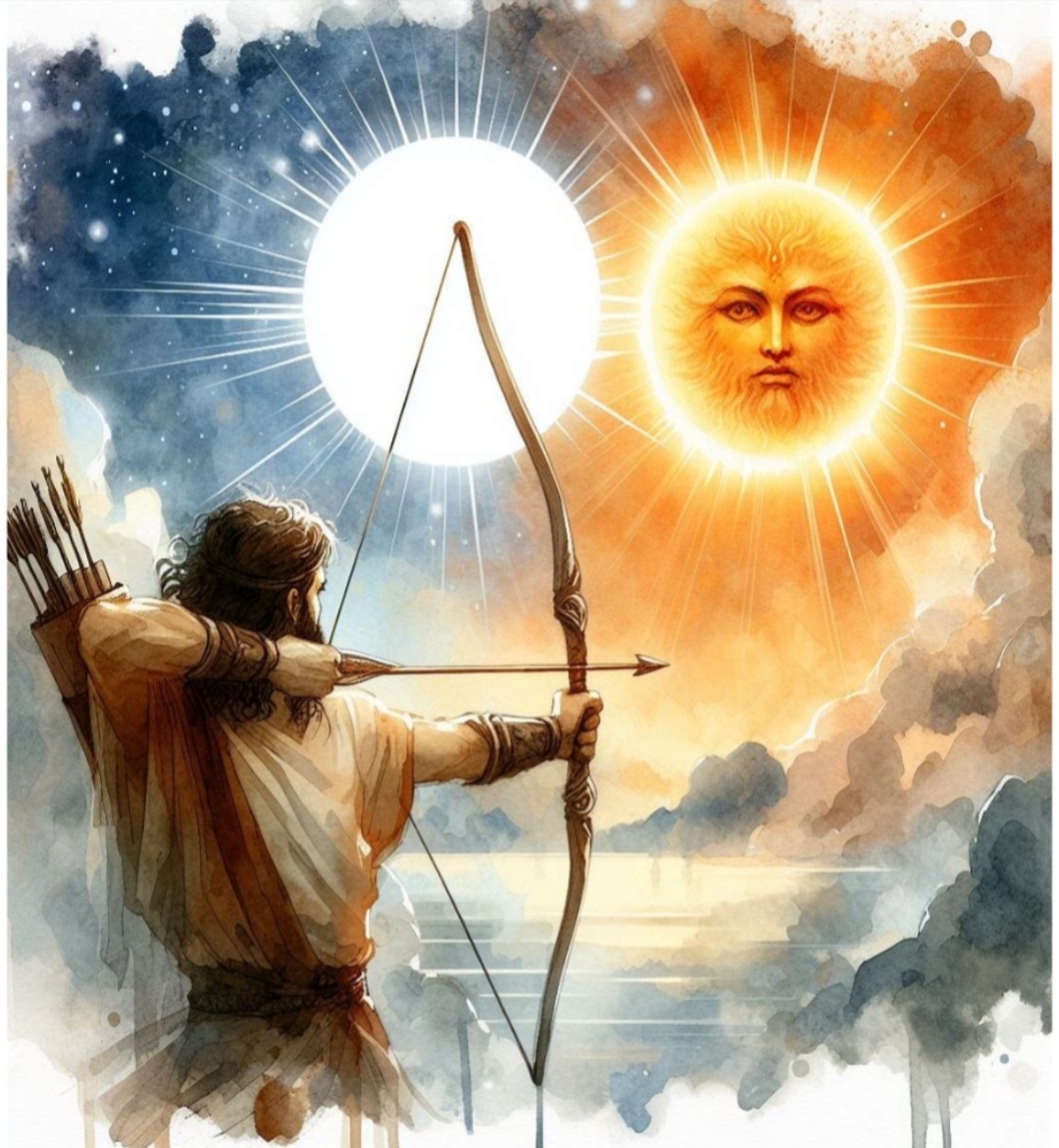
Khwai Nongchengpam Piba, also called Khwai Nongchengpam Naicha Yekma Haotangla, is a figure from the 1st century CE Meitei epic *Numit Kappa* (“The Shooting Down of the Sun”). He is a slave, a rebel, and an archer. Though a loyal servant, he becomes exhausted by his duties and is remembered for shooting the elder sun, Tauhuireng Ahanpa, an act that triggers the epic’s allegorical events.
He serves two solar brothers, Tauhuireng Ahanpa and Numitsana Khomadon, who represent different aspects of the sun. His work spans both day and night, leaving him physically drained and cut off from his family. Unable to care for his wife and children or manage his home, he grows resentful. To free himself, he decides to destroy his masters, the two suns. This rebellion is not just personal but cosmic, plunging the world into darkness and causing a spiritual and communal crisis.
His plan is carefully prepared. With bamboo brought by his wife, Haonu Chakhanu, from her parental home, he builds a strong bow and sharp arrows. Over seven days, he practices archery with great skill: he kills birds in flight, splits his wife’s earring and a piece of arum root placed on her head without harming her, and shoots through a taut thread. He abstains from intimacy and unnecessary conversation with his wife, keeping his mission secret.
On the seventh day, he ambushes and wounds Tauhuireng Ahanpa, the elder sun, who retreats to a place called Khunbirok. The sun’s horse is also wounded and collapses. The younger sun, Numitsana Khomadon, hides in fear, and the world falls into total darkness. This darkness causes immense suffering, halting daily life and symbolizing disorder, fear, and despair.
Though his act may seem violent or treasonous, the epic treats him with complexity. His suffering is real, his rebellion deliberate, and his target symbolic. Scholars often see him as an oppressed individual striking back at overwhelming authority or an imbalance in nature. His challenge to divine or solar power comes not from malice but from a human desire for rest, balance, and dignity. This moral ambiguity makes him one of the most human and relatable characters in early Meitei literature.
- Full name
- Khwai Nongchengpam Naicha Yekma Haotangla
- Role
- Slave, rebel, archer
- Work
- Numit Kappa
- Century
- 1st century CE
- Target
- Tauhuireng Ahanpa (elder sun)
- Associate
- Haonu Chakhanu (wife)
Lore & Background
Khwai Nongchengpam Piba serves two solar brothers, Tauhuireng Ahanpa and Numitsana Khomadon, both representing aspects of the sun. His duties stretch across day and night, leaving him physically exhausted and emotionally distanced from his domestic life. Deprived of time to care for his wife and children or manage household affairs, he becomes increasingly resentful of his relentless labor. Unable to endure the burden, he decided to free himself by destroying his masters, the two suns. This act is considered as not just a personal rebellion, but a cosmic rupture, as it leads the world into darkness and brings a spiritual and communal crisis.
His decision is executed with well planned preparation and personal discipline. With help from his wife Haonu Chakhanu, who brings bamboo from her parental home, he makes a powerful bow and sharp arrows. Over seven days, he practices archery with extraordinary precision. He kills birds in flight. He splits his wife’s earring and a piece of arum root, placed on her head without harming her. Finally, he shoots through a taut thread. His actions show both his intense focus and his silent determination. Notably, he abstains from intimacy and unnecessary talking with her, during this time, keeping his mission secret even from his wife.
On the seventh day, Khwai Nongchengpam Piba ambushes and wounds Tauhuireng Ahanpa, the elder solar brother, who retreats to a hidden place called Khunbirok. The sun’s horse is also wounded and collapses in pain. Fearing for his own life, the younger solar brother, Numitsana Khomadon, disappears into hiding, and the world is thrown into total darkness. This cosmic event causes immense suffering among the people, who can no longer perform their daily work or sustain life. The darkness is not merely physical but symbolic, showing disorder, fear, and despair.
Reader's Guide
Khwai Nongchengpam Piba’s character shows both personal rebellion and broader cosmic consequence. His actions ultimately lead to the purification and return of light (younger sun Numitsana Khomadon) through the efforts of priestess Chakpa Lamlang Amaipi, and nobles. While his act may appear treasonous or violent, the narrative epic of the Numit Kappa treats him with complexity and nuance. His suffering is real, his rebellion calculated, and his target symbolic. Many scholars interpret his character as a representation of the oppressed individual striking against overwhelming authority or imbalance in the natural order. His story challenges divine or solar authority not through malice, but from a human yearning for rest, balance, and dignity. His moral ambiguity makes him one of the most human and relatable characters in ancient Meitei literature. The tale is linked to other traditional narratives such as Ukai Kappa and Chingkhu Telheiba, and shares thematic parallels with figures like Hou Yi in other mythologies.
Did You Know?
- Khwai Nongchengpam Piba practiced archery for seven days, killing birds in flight and splitting his wife's earring without harming her.
- He abstained from intimacy and unnecessary talking with his wife during his preparation to keep his mission secret.
- After shooting the elder sun, the younger sun disappeared into hiding, plunging the world into total darkness.
- His wife Haonu Chakhanu brought bamboo from her parental home to help him make his bow and arrows.
A Figure in Ancient Meitei Epic
Khwai Nongchengpam Piba stands as one of the most striking characters in early Manipuri literary tradition. Named in full Khwai Nongchengpam Naicha Yekma Haotangla, he appears in Numit Kappa, a classical Meitei work dating to the first century CE, often translated as 'The Shooting Down of the Sun.' Within that narrative, he occupies a triple identity: a bound servant, a defiant rebel, and a master archer. His story is set against a cosmological backdrop in which two solar brothers—Tauhuireng Ahanpa and Numitsana Khomadon—embody different aspects of the sun. Khwai's single, decisive act of striking down the elder sun sets the entire epic in motion, triggering a chain of allegorical events that ultimately culminate in the restoration of light through the intervention of the priestess Chakpa Lamlang Amaipi and a circle of nobles. Though he is a servant by station, his narrative weight is that of a protagonist whose choices reshape the cosmic order.
The Weight of Endless Service
Khwai's life before his rebellion is defined by relentless, unceasing labor. As a servant to both solar brothers, his duties span the full cycle of day and night, leaving him physically drained and emotionally severed from the people closest to him. He has no time for his wife, his children, or the simple management of a household. Over time, this exhaustion curdles into deep resentment. The text presents his decision to destroy his masters not as a sudden impulse but as the culmination of a long, grinding deprivation. Yet the narrative immediately expands the stakes: his act is not merely a personal gesture of defiance. By wounding the elder sun and causing the younger to flee into hiding, he plunges the world into total darkness. The people can no longer work, sustain themselves, or carry on their daily lives. The darkness becomes a symbol of disorder, fear, and communal despair—a spiritual crisis born from one man's unbearable burden.
Seven Days of Silent Precision
What distinguishes Khwai's rebellion from a mere act of rage is its methodical preparation. With the quiet assistance of his wife Haonu Chakhanu, who fetches bamboo from her family home, he crafts a powerful bow and a set of sharp arrows. Over the course of seven days, he trains with an intensity that borders on the superhuman. His practice targets escalate in difficulty: first, he fells birds in mid-flight; then he splits his wife's earring and a piece of arum root balanced on her head without causing her any harm; finally, he threads an arrow cleanly through a taut string. Throughout this period, he enforces a strict discipline on himself—abstaining from intimacy with his wife and from unnecessary conversation, keeping the full scope of his plan hidden even from her. On the seventh day, he strikes. He ambushes Tauhuireng Ahanpa, wounding the elder sun, who retreats to a hidden place called Khunbirok. The sun's horse is also struck and collapses. The younger brother, terrified for his own survival, vanishes, and the world falls into darkness.
A Human Face in a Cosmic Story
Despite the violence of his act, Numit Kappa treats Khwai with remarkable nuance rather than simple condemnation. His suffering is presented as genuine, his planning as deliberate, and his target as symbolic rather than personal. Scholars of ancient Meitei literature often read him as an embodiment of the oppressed individual who strikes back against an overwhelming and unyielding authority. His rebellion is not born of malice or greed but of a deeply human longing for rest, balance, and basic dignity. This moral ambiguity—caught between the role of a loyal servant and that of a cosmic disruptor—makes him one of the most relatable figures in early Manipuri literary tradition. His story resonates across cultures, drawing comparisons to other mythic archers who challenge solar or divine power, yet it remains firmly rooted in the specific Meitei worldview of Numit Kappa and the broader tradition of ancient Meitei hymns and drama.
Gallery

Frequently Asked Questions
Who is Khwai Nongchengpam Piba?
He is a slave-archer from the 1st-century Meitei epic *Numit Kappa*, whose full name is Khwai Nongchengpam Naicha Yekma Haotangla. He is best known for shooting down the elder sun, Tauhuireng Ahanpa, an act that sets the entire narrative in motion.
What is Khwai Nongchengpam Piba's role in the epic?
He functions as a loyal but overworked servant to two solar brothers, Tauhuireng Ahanpa and Numitsana Khomadon, whose endless day-and-night labor leaves him physically broken. His mounting frustration ultimately turns him into a rebel who takes up the bow against his master.
Who does Khwai Nongchengpam Piba shoot, and why?
He targets Tauhuireng Ahanpa, the elder of the two sun-brothers he serves. The act is driven by exhaustion and a sense of being trapped in servitude, and it triggers the allegorical events that give the epic its title.
Is Khwai Nongchengpam Piba married?
Yes; his wife is Haonu Chakhanu. The text notes that his relentless service to the solar brothers leaves him cut off from his family, making their relationship a point of emotional tension in the story.
Why is Khwai Nongchengpam Piba important in Meitei literature?
As the central agent of action in *Numit Kappa*, he embodies the theme of a low-status individual whose single decisive act reshapes the cosmic order. His character has made him one of the most recognizable archer figures in Meitei epic tradition.
More in Archers 1-24
Spotted an error? Know more?
Reader corrections go straight into our review queue. Suggest an edit · How this site is sourced