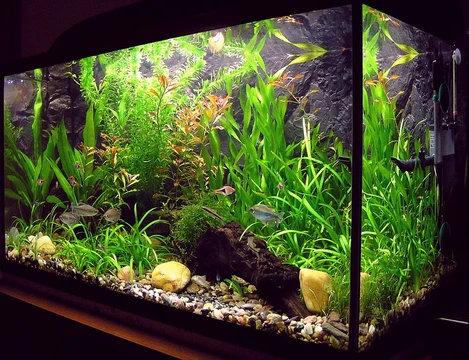
Nymphaea gigantea
Giant waterlily with edible parts, native to Australia and possibly New Guinea.
Last updated
Nymphaea gigantea, commonly known as the giant waterlily or blue waterlily, is a perennial, herbaceous aquatic plant in the family Nymphaeaceae. It is native to parts of northern and eastern Australia, and possibly New Guinea, and has been widely cultivated elsewhere. Its natural habitat is permanent and semi-permanent still water bodies.
Scientific classification
- CladeTracheophytes
- CladeAngiosperms
- OrderNymphaeales
- FamilyNymphaeaceae
- GenusNymphaea
- GenusNymphaea
- SpeciesNymphaea gigantea
Named by Hook.
Close relatives
Other species of Nymphaea with a Codexery entry.
- Nymphaea lotus Nymphaea lotus
- Nymphaea nouchali var. caerulea Nymphaea nouchali
- Nymphaea thermarum Nymphaea thermarum
Sources: Wikipedia taxobox: Nymphaea gigantea (CC BY-SA 4.0) · order, family and genus agree with WoRMS AphiaID 1600160 (CC BY 4.0)
Where the nymphaea gigantea has been recorded
Each dot is a place where the species has been observed and reported (364 records, half-degree grid) — not a modelled range. 113 inland records left out (institution coordinates).
Map: drawn by Codexery. Data: GBIF occurrence search (records CC0 / CC BY) · Natural Earth basemap (public domain) · place coordinates: Wikipedia (CC BY-SA 4.0)
Quick Facts
- Species
- gigantea
Facts from the source article.
Background
The giant waterlily has a rhizomatous growth habit, with a globose rhizome in the mud and large floating leaves that are orbicular to slightly egg-shaped and cordate. The leaf stem may reach up to 5 m in length, and the leaves measure up to 80 cm in diameter, with regularly-spaced teeth along the margins. The large, solitary flowers are up to 25 cm in diameter, held on a rigid peduncle up to 50 cm above the water, with four green sepals and up to 32 petals that are initially lilac or blue but fade to almost white with age. The fruit is a berry, drawn underwater after fertilization, roughly the size of an apple and containing up to 3,000 seeds.
More in Aquarium and Aquatic Plants
Sources
Compiled from Wikipedia and the sources listed below. Text from Wikipedia is available under CC BY-SA 4.0; this entry is adapted from it.
- Wikipedia: Nymphaea gigantea (CC BY-SA 4.0).
- Classification: the source article's taxobox; order, family and genus checked against WoRMS, the World Register of Marine Species (CC BY 4.0).
- Occurrence records: GBIF (CC0 / CC BY). Basemap: Natural Earth (public domain).
- Word definitions: the Codexery glossary, each quoted from its Wikipedia article.
Spotted an error? Know more?
Reader corrections go straight into our review queue. Suggest an edit · How this site is sourced