Alisma gramineum
A small aquatic plant with ribbon-like submerged leaves and self-pollinating underwater flowers.

Alisma gramineum is a small aquatic plant in the water-plantain family, known by several common names including narrowleaf water-plantain, ribbonleaf water-plantain, and grass-leaved water-plantain. It grows in mud or submerged in shallow fresh or brackish water in marshy areas, and is notable for its ability to produce cleistogamous flowers underwater that self-pollinate.
Quick Facts
- Genus
- Alisma
- Species
- gramineum
Facts from the source article.
Lore & Background
Alisma gramineum produces leaves and tiny purple-tinted white flowers that may be submersed or not. When the flowers grow underwater they are cleistogamous, meaning they stay closed and self-pollinate, while flowers above water open. The leaves above the surface are stiff and wide, but submerged leaves are ribbon-like. The fruit is a ring of dry nutlets, and reproduction is by seed or from division of the corm.
Reader's Guide
Alisma gramineum is significant as a widespread but locally rare aquatic plant, particularly in the United Kingdom where it is an endangered and protected species. It was first found in Britain in Worcestershire in 1920, and later beside the River Glen in Lincolnshire. At both sites, populations are small and vary in size from year to year. The plant typically grows in shallow, nutrient-rich water at the edge of bodies of water and fenland drains. As an annual or short-lived perennial, its seeds may remain viable for some years, sometimes germinating after the ground has been disturbed. Its ability to self-pollinate underwater via cleistogamous flowers allows it to reproduce even when fully submerged, an adaptation to its variable aquatic environment. The plant's distribution spans temperate and subarctic regions across Asia, Europe, North Africa, and North America, including much of Canada and the western United States.
Frequently Asked Questions
What is Alisma gramineum?
Alisma gramineum is a small aquatic plant in the water-plantain family (Alismataceae), commonly called narrowleaf, ribbonleaf, or grass-leaved water-plantain. It is best recognized by its thin, ribbon-like submerged leaves and its unusual habit of self-pollinating while fully underwater.
Where can I find Alisma gramineum in the wild?
This species spans temperate and subarctic zones across Europe, Asia, and North America, ranging from France and Libya eastward to China and Yakutsk, and across much of Canada from British Columbia to Quebec. In North America it also occurs in most of the western United States. It favors muddy substrates in shallow fresh or brackish marsh water.
How does Alisma gramineum reproduce without pollinators?
The plant produces cleistogamous flowers that stay closed and self-pollinate while entirely submerged, bypassing the need for insects or wind. This strategy allows it to set viable seed even in deep, still water where no external pollinator can reach.
What does Alisma gramineum look like in a planted aquarium?
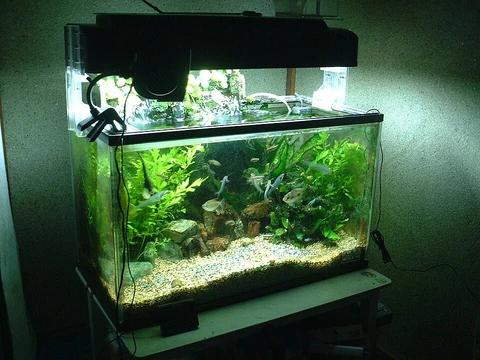
Underwater it forms a low, spreading clump of narrow, grass-like ribbon leaves rising from a creeping rhizome in the substrate. In a fully planted tank you will mostly see the delicate submerged foliage, though in a shallow paludarium it may send up short flowering stems above the waterline.
Why is Alisma gramineum notable among aquatic plants?
Its presence on three continents and its ability to complete an entire reproductive cycle without ever breaking the water surface make it a standout example of aquatic self-sufficiency. It also serves as a useful indicator of healthy, nutrient-rich marsh and wetland habitats.
More in Aquarium and Aquatic Plants, Part 3 1-24
Spotted an error? Know more?
Reader corrections go straight into our review queue. Suggest an edit · How this site is sourced