Copulation (zoology)
Animal sexual behavior where male introduces sperm into female.

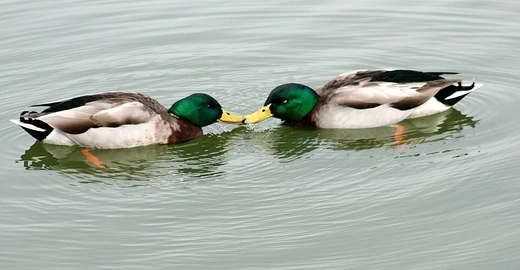
In zoology, copulation is the form of animal sexual behavior where a male deposits sperm into a female, typically directly into her reproductive tract, and is a part of mating. While many aquatic animals rely on external fertilization, internal fertilization may have evolved during the Late Ordovician epoch out of a need to keep gametes in a liquid environment. Among vertebrates, internal fertilization often happens through cloacal copulation—sometimes called a cloacal kiss—seen in all reptiles, some fish, and most birds; most mammals instead copulate vaginally, and many basal vertebrates still reproduce sexually via external fertilization.
For spiders, males and females are separate sexes. Before mating, a male spider spins a small web and releases sperm onto it, then stores the sperm in reservoirs on his large pedipalps. He later transfers this sperm to the female’s genitals, and females can store sperm indefinitely. Among primitive insects, males deposit sperm on the ground, sometimes in a special structure, and courtship involves coaxing the female to take the sperm package into her genital opening—no actual copulation occurs. In groups like dragonflies, which have a similar approach to spiders, males eject sperm into secondary copulatory structures away from their genital opening, then use these to inseminate the female; for dragonflies, this structure is a set of modified sternites on the second abdominal segment. In more advanced insects, the male uses an aedeagus—formed from the abdomen’s terminal segments—to place sperm directly into the female’s reproductive tract, sometimes enclosed in a capsule called a spermatophore.
In mammals, sexual behavior can be divided into states tied to reward motivation (“wanting”), reward consummation or pleasure (“liking”), and satiety (“inhibition”). These states are regulated by reward-based sexual learning, shifts in neurochemicals (dopamine for sexual desire or “wanting”; norepinephrine for arousal; oxytocin and melanocortins for attraction), and gonadal hormone cycles, and are further influenced by sex pheromones and motor reflexes like lordosis in some mammals. These states correspond to phases of the human sexual response cycle: motivation to excitement, consummation to plateau and orgasm, and satiety to refraction. Sexual learning, a form of associative learning, happens when an animal links bodily features, personality, context, or other cues with genitally-induced pleasure, and these associations then affect both sexual wanting and liking. In most female mammals, copulation is governed by several innate neurobiological processes, including the lordosis reflex. In males, copulation is more complex because some learning is required, though innate processes—such as retrocontrol of penis intromission, rhythmic pelvic movement, and detection of female pheromones—are specific to copulation and guide heterosexual copulation. Female lordosis became secondary in Hominidae and is non-functional in humans. Mammals typically copulate in a dorso-ventral posture, though some primates use a ventro-ventral one. Copulation duration varies widely among mammal species and may relate to body mass, lasting longer in larger mammals, and may also correlate with baculum length. Male mammals ejaculate semen through the penis into the female reproductive tract during copulation. Ejaculation usually follows a single intromission in humans, canids, and ungulates, but occurs after multiple intromissions in most other mammal species. Copulation can also induce ovulation in species that do not ovulate spontaneously.
- field
- Zoology
- known_for
- Animal sexual behavior involving sperm transfer
- related_groups
- Spiders, insects, mammals, vertebrates
Lore & Background
In spiders, before mating and copulation, the male spins a small web and ejaculates onto it, then stores sperm in reservoirs on its large pedipalps, from which it transfers sperm to the female's genitals. Females can store sperm indefinitely. For primitive insects, the male deposits spermatozoa on the substrate, sometimes stored within a special structure; courtship involves inducing the female to take up the sperm package into its genital opening, but there is no actual copulation. In groups like dragonflies, males extrude sperm into secondary copulatory structures removed from their genital opening, which are then used to inseminate the female. In advanced insects, the male uses its aedeagus to deposit sperm directly into the female's reproductive tract. In mammals, sexual behavior can be classified into behavioral states associated with reward motivation ('wanting'), reward consummation or pleasure ('liking'), and satiety ('inhibition'). These states are regulated by reward-based sexual learning, fluctuations in neurochemicals (dopamine, norepinephrine, oxytocin, melanocortins), and gonadal hormone cycles, and are influenced by sex pheromones and motor reflexes such as lordosis behavior. In most female mammals, copulation is controlled by innate neurobiological processes including lordosis. In males, copulation involves some learning but also innate processes such as retrocontrol of penis intromission, rhythmic pelvic movement, and detection of female pheromones. Mammals usually copulate in a dorso-ventral posture, though some primates copulate ventro-ventrally. Duration of copulation varies between species and may correlate with body mass and baculum length. Ejaculation occurs after one intromission in humans, canids, and ungulates, but after multiple intromissions in most mammal species. Copulation can induce ovulation in species that do not ovulate spontaneously.
Reader's Guide
Copulation is a fundamental aspect of animal reproduction, encompassing a wide range of behaviors across taxa. The source article highlights key distinctions: external fertilization in many aquatic animals versus internal fertilization that may have evolved in the Late Ordovician. Among vertebrates, cloacal copulation is common in reptiles, some fish, and most birds, while mammals typically copulate vaginally. In invertebrates, spiders and insects show diverse strategies, from sperm storage in pedipalps to the use of aedeagus or secondary copulatory structures. The article also details mammalian copulation, linking behavioral states (wanting, liking, inhibition) to neurochemical processes and gonadal cycles. It notes that female lordosis is non-functional in humans, and that copulation duration varies with body mass and baculum length. The significance of copulation lies in its role in fertilization and reproductive success, with variations reflecting evolutionary adaptations. The article provides a factual overview without resolving uncertainties, such as the exact evolutionary origins of internal fertilization.
Did You Know?
- Many aquatic animals use external fertilization, while internal fertilization may have developed from a need to maintain gametes in a liquid medium in the Late Ordovician epoch.
- In spiders, the male stores sperm in reservoirs on its large pedipalps and transfers it to the female's genitals; females can store sperm indefinitely.
- In most female mammals, the act of copulation is controlled by innate neurobiological processes including the motor sexual reflex of lordosis.
- Ejaculation usually occurs after only one intromission in humans, canids, and ungulates, but after multiple intromissions in most mammal species.
More in Animal Behavior 1-23
Spotted an error? Know more?
This is a living reference — every entry is fact-audited, and reader corrections feed straight into our audit queue. Suggest an edit · See this site's audit record