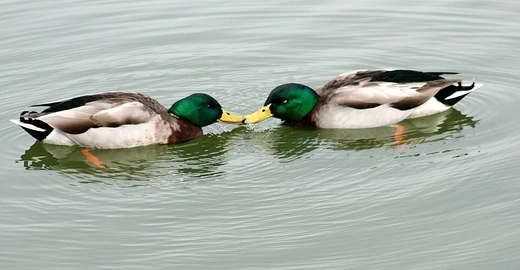
Animal sexual behaviour
Animal sexual behaviour includes reproductive and non-reproductive acts across species.

Animal sexual behaviour takes many different forms, often varying even within a single species. When motivated by reproduction, it is typically called mating or copulation, and in most non-human mammals, this occurs during oestrus, the female’s most fertile period, to maximize the chance of impregnation. Common reproductively motivated systems include monogamy, polygyny, polyandry, polygamy, and promiscuity. Sexual behaviour can also be non-reproductively motivated, encompassing homosexual and bisexual behaviour, cross-species sex, sexual arousal from objects or places, and sex with dead animals. Additionally, some sexual acts arise from duress, coercion, or situational circumstances. Historically, scientists thought only humans and a few other species engaged in sex beyond reproduction, viewing animal sexuality as a simple instinctive stimulus–response. However, research has revealed that many species masturbate, sometimes using objects as tools, and that sexual behaviour often plays a crucial role in establishing and maintaining complex social bonds, supporting population success in non-reproductive ways. Both reproductive and non-reproductive behaviours can also express dominance or help an animal survive stressful situations. Competition is common, with males sometimes fighting for access to females; females typically select mates that appear strong and capable of protection. The winning male may then mate with more females, passing on his genes. In sociobiology and behavioural ecology, the term “mating system” describes how animal societies are structured around sexual behaviour, specifying which males mate with which females and under what conditions. Social monogamy, where one male and one female form long-lasting pairs to raise offspring, is relatively rare in the animal kingdom, though over 90% of bird species are socially monogamous, compared to only 3% of mammals and up to 15% of primates. However, many socially monogamous pairs are not sexually exclusive; genetic tests frequently show that offspring in a nest may be sired by extra-pair males, forcing biologists to distinguish between social, sexual, and genetic monogamy. Polygamy is an umbrella term for non-monogamous systems, including polygyny, polyandry, and polygynandry, and in some species, individuals may shift between monogamous and polygamous behaviour depending on environmental condition
- field
- Sociobiology and behavioural ecology
- known_for
- Diverse mating systems including monogamy, polygyny, polyandry, polygamy, and promiscuity; distinction between social, sexual, and genetic monogamy; recognition of non-reproductive sexual behaviours a
Lore & Background
Animal sexual behaviour encompasses a wide range of activities, both reproductive and non-reproductive, that vary significantly even within a single species. Reproductive behaviours, often called mating or copulation, typically occur during oestrus in most non-human mammals, the period of peak fertility that maximizes the chance of impregnation. These behaviours frequently involve competition, such as fighting between males for access to females, who tend to select mates perceived as strong and capable of protection. Successful males may then mate with more females, passing on their genes. Mating systems are structured ways societies organize sexual behaviour, specifying which males mate with which females. Common systems include monogamy, where a male and female form a pair, often cooperating to raise offspring; such pairs may last a lifetime, as in pigeons, or shift seasonally, as in emperor penguins. However, many socially monogamous animals are not sexually exclusive, with extra-pair copulations common; genetic tests often reveal offspring from such pairings. Other systems include polygyny, polyandry, polygamy, and promiscuity. Beyond reproduction, sexual behaviour can involve non-reproductive acts like homosexual activity, masturbation (sometimes using objects as tools), cross-species sex, or sex with dead animals. Historically, such behaviours were thought unique to humans, but evidence shows animal sexuality is not purely instinctive; it can be tied to establishing complex social bonds, expressing dominance, or coping with stressful situations, including duress or coercion.
Reader's Guide
The study of animal sexual behaviour has reshaped understanding of mating systems and evolution. The discovery that many socially monogamous species—such as over 90% of birds—engage in extra-pair copulations forced biologists to distinguish social, sexual, and genetic monogamy. For example, in fairy-wrens, more than 65% of chicks are fathered by males outside the breeding group. This challenges earlier assumptions that social monogamy determines gene distribution. Polygamous systems, including tournament species with high male aggression and sexual dimorphism, illustrate how competition and female choice shape reproductive success. The recognition that sexual behaviour can be non-reproductive, tied to social bonds or dominance, broadens the scope of behavioural ecology.
Did You Know?
- Over 90% of avian species are socially monogamous, but only about 10% of socially monogamous songbirds are sexually monogamous.
- In some rodents, a new male's scent can cause pregnant females to spontaneously abort, a phenomenon called the Bruce effect.
- More than 65% of fairy-wren chicks are fathered by males outside the supposed breeding group.
- Some animals use objects as tools to masturbate.
The Spectrum of Mating Systems
Animal societies are organized around a remarkable variety of reproductive arrangements rather than a single universal pattern. Species display monogamy, polygyny, polyandry, polygamy, and promiscuity, and in some cases even within the same species different individuals adopt different strategies. In sociobiology and behavioural ecology these arrangements are termed "mating systems," and they specify which males pair with which females and under what circumstances. Polygamy functions as an umbrella covering all non-monogamous matings, encompassing polygynous, polyandrous, and polygynandrous relationships. In a small number of species, individuals can shift between polygamous strategies depending on context. The sheer diversity of these systems reflects the wide range of evolutionary pressures shaping how animals structure their reproductive lives, from cooperative pair-bonding and shared parental care to intense male competition for access to multiple females and the resulting genetic consequences for offspring.
The Illusion of Monogamy
For decades, biologists assumed that a pair-bonded species such as swans or pigeons implied exclusive sexual fidelity. Genetic testing shattered that assumption. Researchers now distinguish three separate levels: social monogamy (shared territory and pair behaviour), sexual monogamy (observed exclusive copulation), and genetic monogamy (DNA-confirmed exclusive reproduction). These three can combine in any configuration, meaning a socially monogamous pair need not be sexually or genetically monogamous. Over 90% of bird species are socially monogamous, yet on average 30% or more of nestlings in any given nest are sired by an outside male. Among fairy-wrens, more than 65% of chicks are fathered by males outside the breeding group. In mammals, social monogamy is rare at just 3% of species, though primate rates climb to 15%. These findings forced a fundamental rethinking of how social pair-bonding relates to actual gene flow.
Beyond Reproduction – Sexuality as Social Glue
The old textbook view held that animal sexuality was a simple stimulus-response mechanism limited to reproduction, and that only humans and a handful of other species engaged in non-reproductive sexual acts. Modern research has overturned that picture. A wide range of species masturbate, sometimes using objects as tools, and many display homosexual, bisexual, or cross-species sexual behaviour. Some animals experience arousal from objects or specific places, and others engage in sexual contact with dead individuals. Crucially, much of this non-reproductive activity appears tied to the establishment and maintenance of complex social bonds that help a population thrive in ways unrelated to producing offspring. Both reproductive and non-reproductive acts can also express dominance over another animal or arise under duress and coercion in stressful situations. In other words, animal sexuality is far more layered and socially embedded than a single drive toward impregnation.
Competition, Choice, and the Timing of Mating
When animal sexual behaviour is reproductively motivated, it is typically called mating or copulation. In most non-human mammals, these acts are timed to oestrus—the window of peak fertility in the female's reproductive cycle—maximizing the odds of successful impregnation. Around this fertile window, intense competition often erupts among multiple males, sometimes escalating into physical fights. Females frequently select partners based on apparent strength and self-defence capability. The victorious male gains access to a larger number of females, thereby passing his genes to more offspring. This competitive dynamic shapes the degree of sexual dimorphism within a species and the level of male aggression observed in the population. In pair-bonding species, by contrast, male aggression and competition are lower and sexual dimorphism is reduced, reflecting a fundamentally different evolutionary strategy for achieving reproductive success.
Frequently Asked Questions
Who is Animal sexual behaviour?
Animal sexual behaviour is a topic in sociobiology and behavioural ecology that examines how animals engage in both reproductive and non-reproductive sexual activities. It covers everything from courtship displays to same-sex interactions observed across the animal kingdom.
What are Animal sexual behaviour's powers/role?
Its scope spans diverse mating systems such as monogamy, polygyny, polyandry, and promiscuity, as well as non-reproductive acts like homosexual pair-bonding and sexual stimulation through tool use. It also distinguishes between social, sexual, and genetic monogamy as separate concepts.
How does Animal sexual behaviour's story end?
The current understanding reveals that sexual activity in animals serves functions well beyond simple procreation, including social bonding, dominance expression, and group cohesion. Ongoing research continues to uncover the full breadth of these behaviours across species.
Why is Animal sexual behaviour important?
It challenges the long-held assumption that only humans and a handful of other species engage in sex outside of reproduction. Recognizing these behaviours reshapes how scientists approach questions of evolution, social structure, and species survival.
What are Animal sexual behaviour's key traits?
The entry is known for documenting that many animals display homosexual behaviour, masturbation, and sex under coercion or duress. It also highlights how these acts can fulfill survival and social functions independent of producing offspring.
More in Animal Behavior 1-23
Spotted an error? Know more?
This is a living reference — every entry is fact-audited, and reader corrections feed straight into our audit queue. Suggest an edit · See this site's audit record