Amenhotep III
The ninth pharaoh of the Eighteenth Dynasty, a ruler of exceptional prosperity and divine worship.
Last updated

via Wikipedia: Amenhotep III · see source
Amenhotep III, the ninth pharaoh of the Eighteenth Dynasty, was born to Thutmose IV and a lesser wife named Mutemwiya. He likely ascended the throne as a child, between the ages of six and twelve, and though a regent might have governed until he came of age, no such figure is recorded. His reign was one of extraordinary wealth and cultural peak, with Egypt exercising its greatest artistic and diplomatic influence.
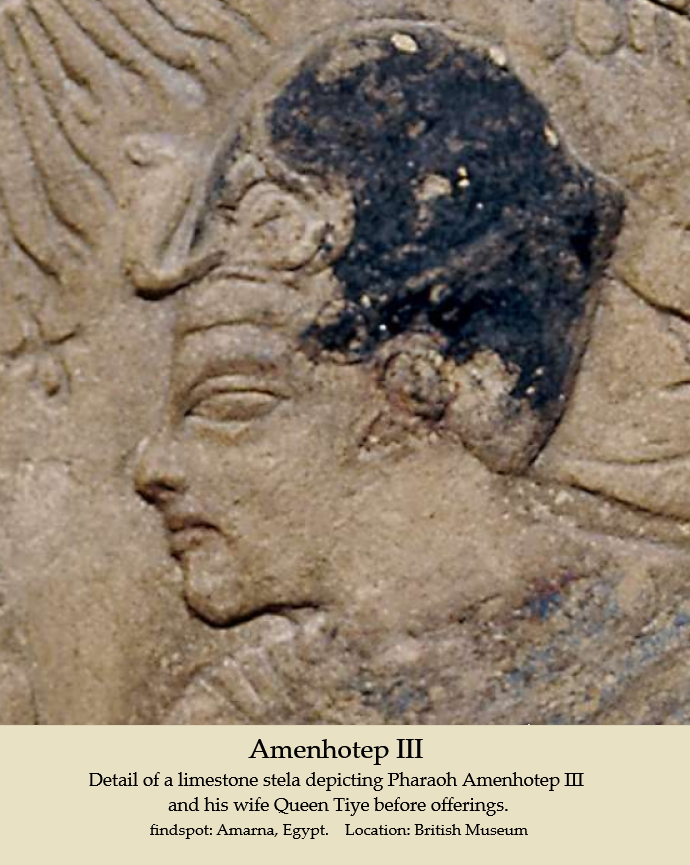
Amenhotep was among the few pharaohs worshipped as a living god. In his second regnal year, he married Tiye, the daughter of Yuya and Thuya, who remained his Great Royal Wife throughout his life. Commemorative scarabs affirmed both his divine authority and Tiye’s legitimacy.
Together they had at least two sons—Crown Prince Thutmose and Amenhotep IV (later Akhenaten)—and several daughters, including Sitamun, Henuttaneb, Iset, Nebetah, and Beketaten. Amenhotep also married foreign princesses for diplomatic ties: Gilukhepa of Mitanni in year ten, and later Tadukhepa, along with daughters of Babylonian, Arzawan, and Syrian rulers. In his final decade, he married his own daughters Sitamun and Iset, a practice uncommon among commoners but accepted in royalty. He built the vast Malkata palace, called the House of Rejoicing, which became his main residence from around his twenty-ninth year.
Only one military campaign is recorded: a victory in year five against a rebellion in Kush, commemorated on rock stelae near Aswan. His court included notable officials such as the viziers Ramose and Amenhotep, and the deified architect Amenhotep, son of Hapu. Amenhotep III died in his thirty-eighth or thirty-ninth year and was succeeded by his son, who later changed his name to Akhenaten.
Lore & Background
Amenhotep was the son of Thutmose IV and his minor wife Mutemwiya. He was born probably around 1401 BC. Later in his life, Amenhotep commissioned the depiction of his divine birth to be displayed at Luxor Temple. Amenhotep claimed that his true father was the god Amun, who had taken the form of Thutmose IV to father a child with Mutemwiya.
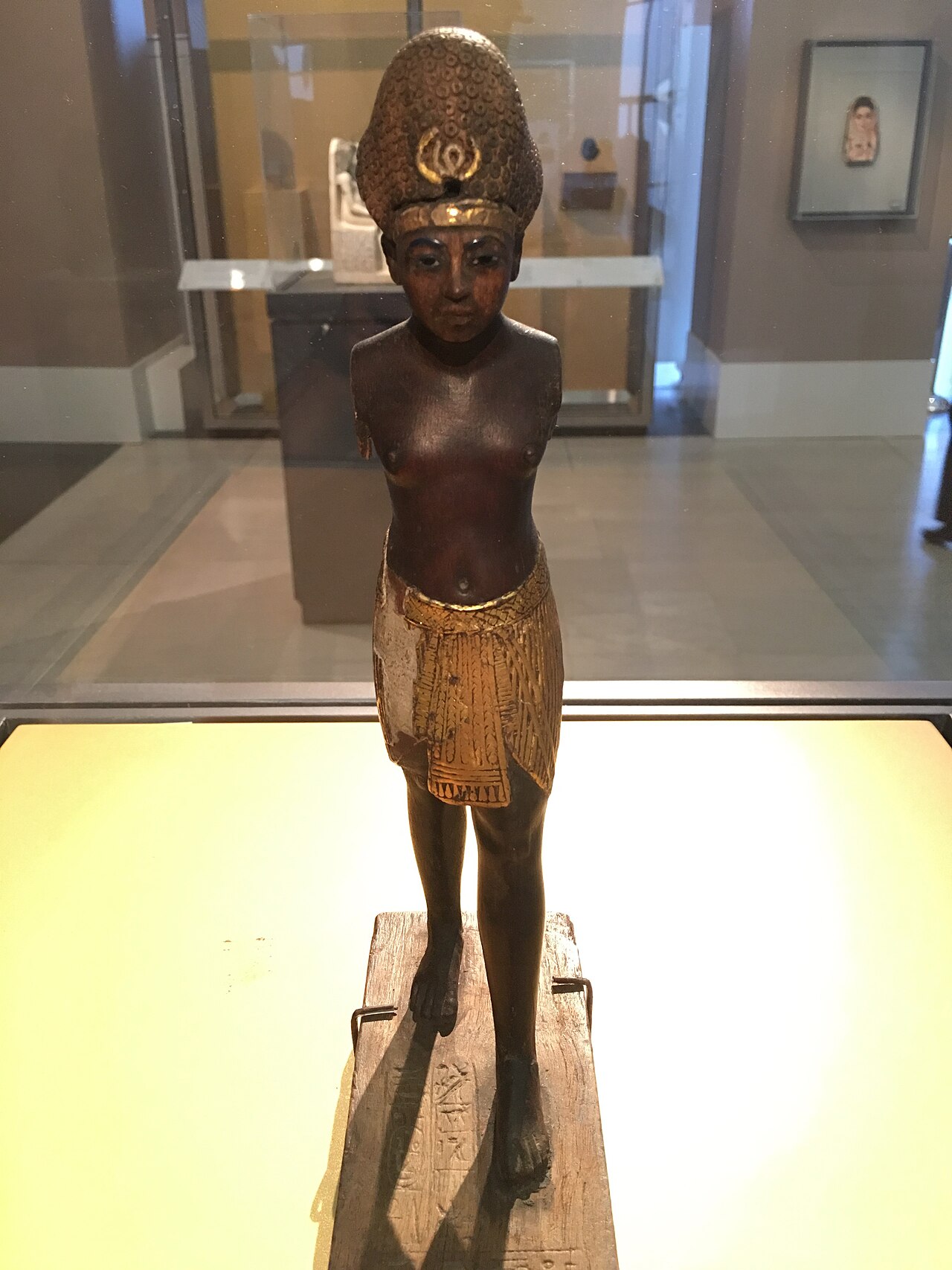
In Regnal Year 2, Amenhotep married Tiye, the daughter of Yuya and Thuya. Tiye was the Great Royal Wife throughout Amenhotep's reign. With Tiye, Amenhotep fathered at least two sons, Crown Prince Thutmose and Amenhotep IV (later called Akhenaten).
In addition, several daughters are frequently credited to the couple: Sitamun, Henuttaneb, Iset, Nebetah, and Beketaten. Amenhotep is also sometimes credited as the father of Smenkhkare or Tutankhamun, with varying proposals for their mothers, but these theories are not as accepted as his other, known children. In addition to Tiye, Amenhotep had several other wives, including Gilukhepa, Tadukhepa, and daughters of various foreign rulers.
He married at least two of his daughters, Sitamun and Iset, in the last decade of his reign. Amenhotep probably became pharaoh when he was between the ages of 6 and 12. He is known to have participated in only one military campaign, a victory against a rebellion in Kush in Regnal Year Five. He celebrated three Sed festivals in Regnal Years 30, 34, and 37.
An Era of Unmatched Splendor
His reign is widely regarded as the apex of ancient Egyptian artistic achievement and international prestige, a period when the kingdom's cultural reach stretched across the known world. The court he presided over was one of extraordinary sophistication, as evidenced by the numerous tombs of his officials discovered in the Theban Necropolis. Among these figures, Amenhotep, son of Hapu, stands out for accumulating multiple high offices and earning the rare privilege of constructing his own mortuary temple directly behind the king's, later achieving deification as one of the few non-royals to receive such honor. The pharaoh's personal tastes were equally monumental.
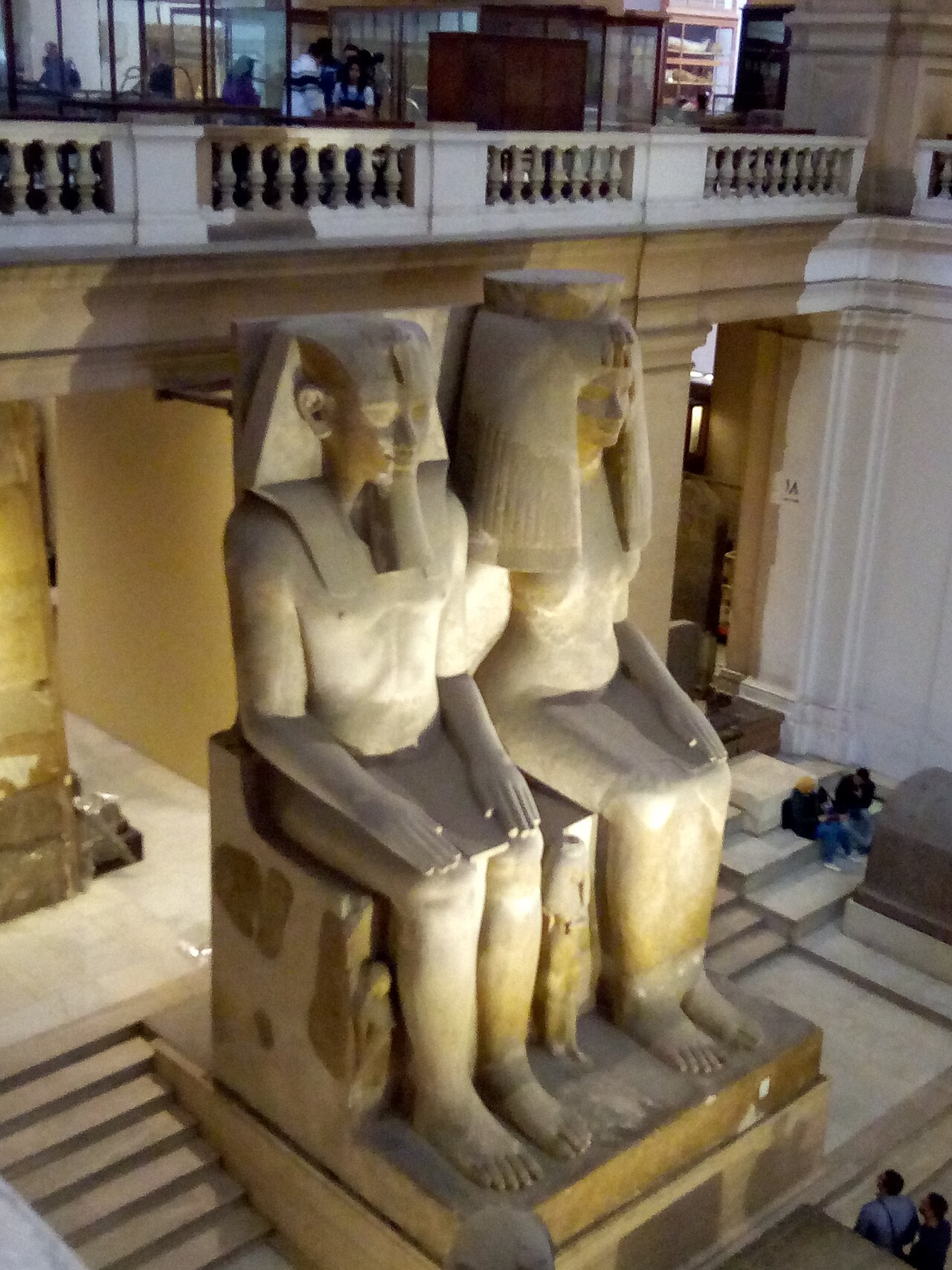
Around his eleventh regnal year he began constructing the palace of Malkata, known as Per-Hay or "House of Rejoicing," a vast mud-brick complex that became the largest royal residence in Egypt and his permanent home by year twenty-nine. In the same early period he ordered an artificial lake built at Djakaru, Tiye's hometown, and celebrated its opening by rowing the royal barge Aten-tjehen across its waters—an event commemorated on at least eleven scarabs. Records also credit him with slaying over one hundred lions within his first decade on the throne.
A Dynasty Woven in Marriage
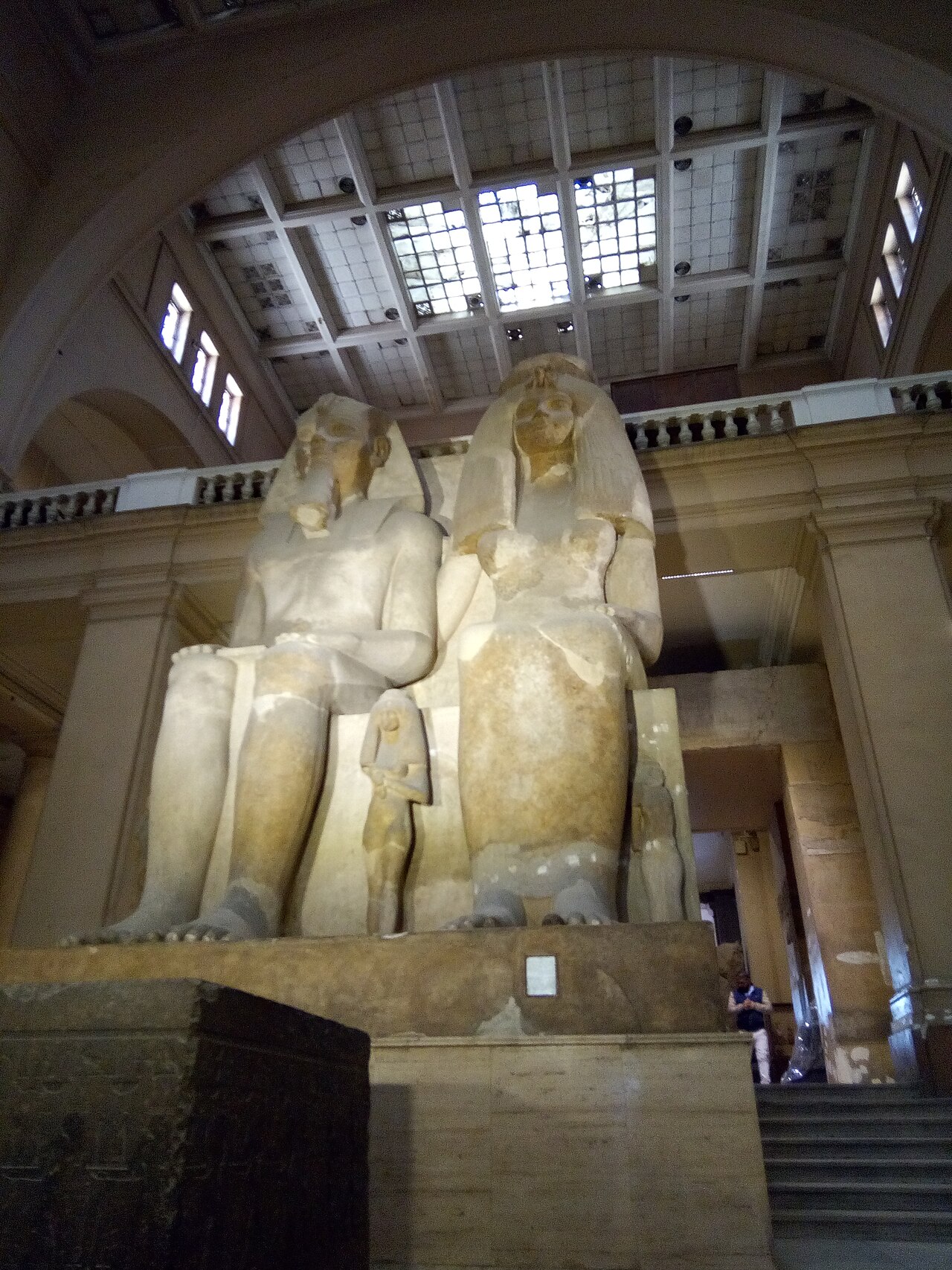
Amenhotep III was the son of Thutmose IV and his minor wife Mutemwiya, born probably around 1401 BC. He later commissioned a depiction of his divine birth at Luxor Temple, claiming that the god Amun had taken his father's form to father him. In his second regnal year he married Tiye, daughter of Yuya and Thuya, who remained his Great Royal Wife throughout his reign.
Together they fathered at least two sons—Crown Prince Thutmose and the future Akhenaten—and several daughters, including Sitamun, Henuttaneb, Iset, Nebetah, and Beketaten, most of whom appear frequently on statues and reliefs from his reign. Beyond Tiye, the pharaoh's marriage alliances projected Egypt's diplomatic reach across the ancient Near East. He wed Gilukhepa, daughter of the Mitanni king Shuttarna II, in year ten, and later took Tadukhepa, daughter of Tushratta of Mitanni, around year thirty-six.
Additional wives included daughters of the kings of Babylon, the ruler of Arzawa, and the sovereign of Ammia. In the final decade of his reign he married at least two of his own daughters, Sitamun and Iset, a practice tolerated among royalty. Jar-label inscriptions from year thirty confirm Sitamun's elevation to Great Royal Wife by that time.
The Sun Gains a Royal Patron
In his thirtieth regnal year, Amenhotep III adopted the royal epithet Aten-Tjehen, meaning "the Dazzling Sun Disk," signaling a marked shift in his religious orientation. By bestowing this title upon himself, he effectively elevated the Aten from a minor deity to a solar disc worthy of royal patronage. The pharaoh presumably sought to diminish the considerable power of the Amun priesthood, yet he stopped well short of the radical exclusivism his son would later pursue. His primary devotional focus remained the composite deity Amun-Ra, a fusion of Thebes' patron god and the northern sun god Ra.
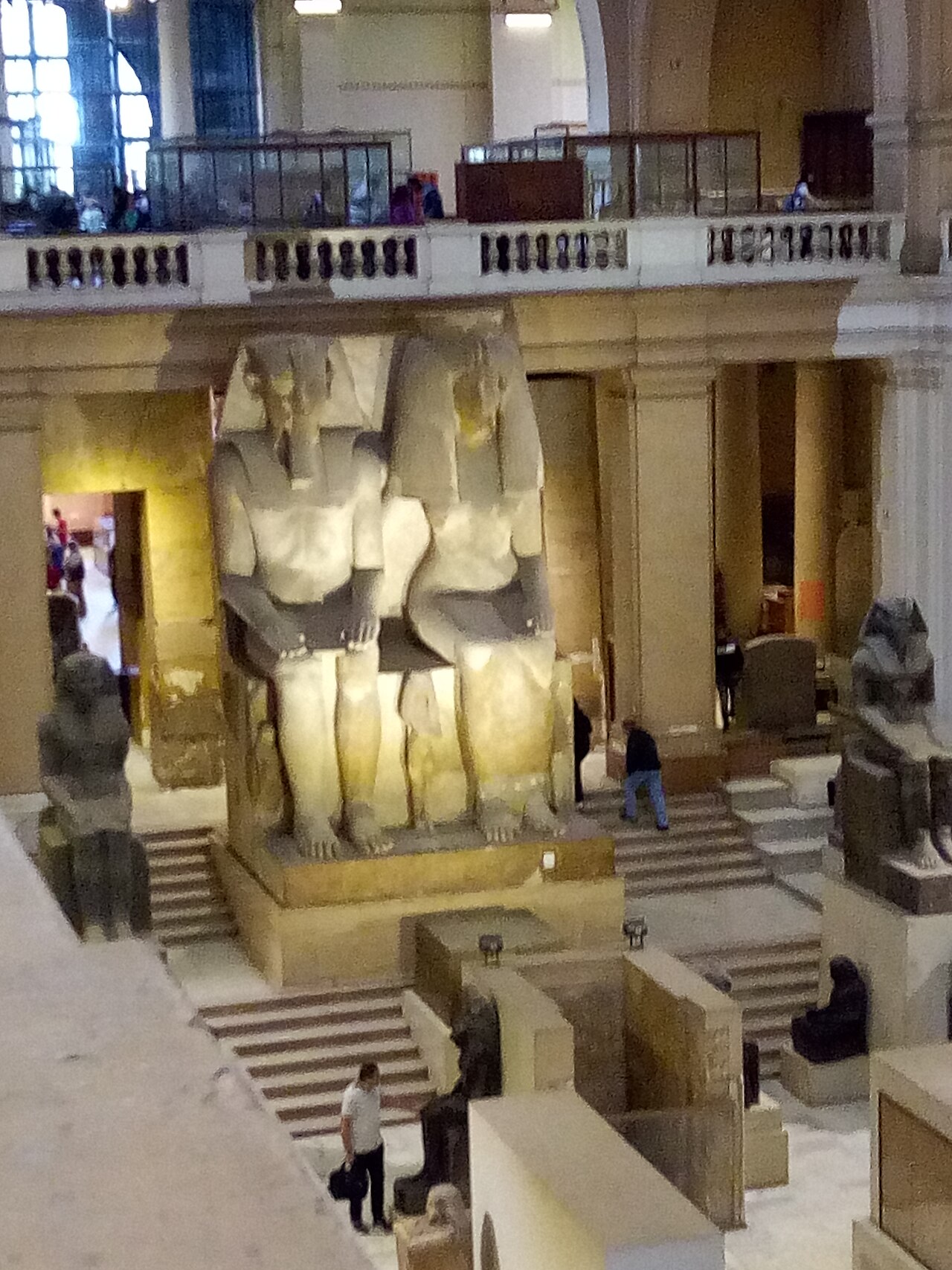
Nevertheless, the Aten's presence in his world grew unmistakable. He named a royal boat after the sun disc, and the great palace of Malkata carried the alternative title Tjehen-Aten, "the City of the dazzling Aten." Most tellingly, his youngest daughter by Tiye bore the name Beketaten, meaning "Handmaid of Aten," a personal naming choice that underscored the god's rising prominence. This measured elevation laid the theological groundwork that Akhenaten would later push to an extreme, transforming a solar symbol into an exclusive object of worship and ultimately reshaping—and then dismantling—Egypt's religious landscape.
A God Among Pharaohs
Amenhotep III, also remembered as Amenhotep the Magnificent or the Great, was the ninth ruler of the Eighteenth Dynasty. Depending on which Low Chronology framework one follows, his reign spanned from June 1386 to 1349 BC, or alternatively from June 1388 BC to December 1351 or 1350 BC, beginning immediately after the death of his father Thutmose IV. He likely ascended the throne between the ages of six and twelve, though no regent is attested in surviving records to have governed on his behalf during his minority.
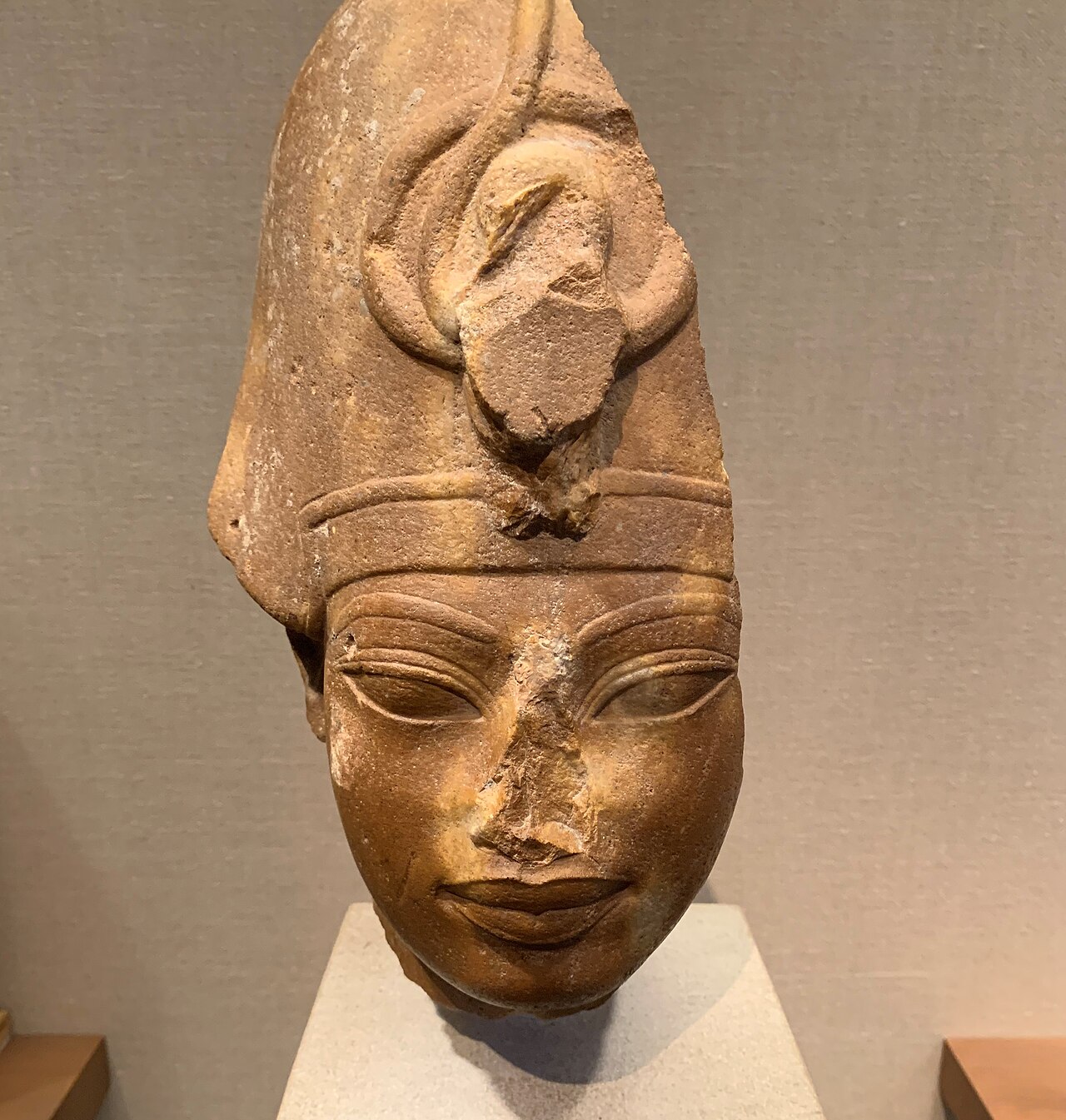
When he died in the thirty-eighth or thirty-ninth year of his reign, he was succeeded by his son Amenhotep IV, who would soon change his name to Akhenaten and launch a religious revolution. Yet Amenhotep's own legacy transcended mere kingship: he is one of the very few pharaohs to have been worshipped as a deity during his own lifetime. His single military campaign—a victorious suppression of a Kushite rebellion in his fifth regnal year, commemorated by three rock-carved stelae near Aswan and Saï—was the only armed conflict of his long reign, underscoring that his greatness lay not in conquest but in the cultural and spiritual heights his Egypt achieved.
Reader's Guide
Amenhotep III’s reign was a period of exceptional prosperity and artistic grandeur, during which Egypt reached the height of its international influence. He is one of the few pharaohs worshipped as a deity while still alive. His rule is marked by extensive diplomatic marriages, including unions with the daughters of the kings of Mitanni, Babylon, Arzawa, and Ammia, as well as at least two of his own daughters, Sitamun and Iset, in his final decade.
He built the vast Malkata Palace, known as the House of Rejoicing, which became the largest royal residence in Egypt and was called the City of the Dazzling Aten. Though he elevated the god Aten, he maintained devotion to Amun-Ra. His only recorded military campaign was a victory against a rebellion in Kush in his fifth regnal year, commemorated by rock-carved stelae.
He famously killed over one hundred lions in his first decade as pharaoh. His court included prominent officials such as the viziers Ramose and Aperel, and the deified architect Amenhotep, son of Hapu. His reign ended with his death in his 38th or 39th year, after which he was succeeded by his son Amenhotep IV, later known as Akhenaten.
Frequently Asked Questions
Who is Amenhotep III?
Amenhotep III was the ninth king of Egypt's Eighteenth Dynasty, frequently called "the Magnificent" or "the Great" in popular references. He is broadly regarded as one of the most powerful and culturally influential pharaohs in Egyptian history.
What made Amenhotep III's reign stand out?
His roughly 38-to-39-year rule is remembered as a golden age when Egypt's wealth, artistic output, and diplomatic reach all peaked at the same time. He oversaw enormous building programs and maintained extensive foreign correspondence, cementing Egypt's status as a superpower of the ancient world.
How did Amenhotep III become pharaoh?
He inherited the throne following the death of his father, Thutmose IV, and is believed to have been born around 1401 BC. His exact accession date is debated among scholars, with estimates placing it somewhere between 1388 and 1386 BC.
When did Amenhotep III die and how long did he rule?
He passed away in either the 38th or 39th year of his reign, bringing an end to a sustained period of prosperity that stretched from the late 1380s into the mid-1350s BC. His death marked the close of what many historians consider the zenith of New Kingdom Egypt.
More in Ancient Rulers Of Africa And The Near East
Related in Ancient Rulers Of Africa And The Near East
Links follow this subject's own source article.
Sources
Compiled from Wikipedia and the sources listed below. Text from Wikipedia is available under CC BY-SA 4.0; this entry is adapted from it.
- Wikipedia: Amenhotep III (CC BY-SA 4.0).
Spotted an error? Know more?
Reader corrections go straight into our review queue. Suggest an edit · How this site is sourced