
Boethius
Roman philosopher and translator of Greek classics into Latin.

Boethius · Public domain
Anicius Manlius Severinus Boethius (c. 480–524 AD) was a Roman senator, consul, and high-ranking official under the Ostrogothic king Theodoric the Great. A polymath, historian, and philosopher of the Early Middle Ages, he is best known for translating Greek philosophical works into Latin, which helped preserve Aristotle’s writings for the Renaissance and laid groundwork for the Scholastic movement. Alongside Cassiodorus, he was one of the two foremost Christian scholars of the 6th century. In 1883, the Sacred Congregation of Rites approved the local cult of Boethius in the Diocese of Pavia, confirming the tradition of honoring him on 23 October.
Born in Rome shortly after the abdication of the last Western Roman emperor, Romulus Augustulus, Boethius came from the patrician Anicii family. Orphaned young after his family’s decline, he was raised by Quintus Aurelius Memmius Symmachus, a future consul. Mastering both Latin and Greek, he entered politics under the Ostrogothic Kingdom, becoming a senator by age 25, a consul by 33, and later a trusted advisor to Theodoric. He sought to reconcile Plato and Aristotle with Christian theology, aiming to translate all Greek classics for Western scholars. He produced commentaries and transcriptions of works by Nicomachus, Porphyry, and Cicero, and wrote extensively on music, mathematics, and theology. Although his translations remained unfinished at his death, they were crucial for preserving Aristotle’s works into the Renaissance.
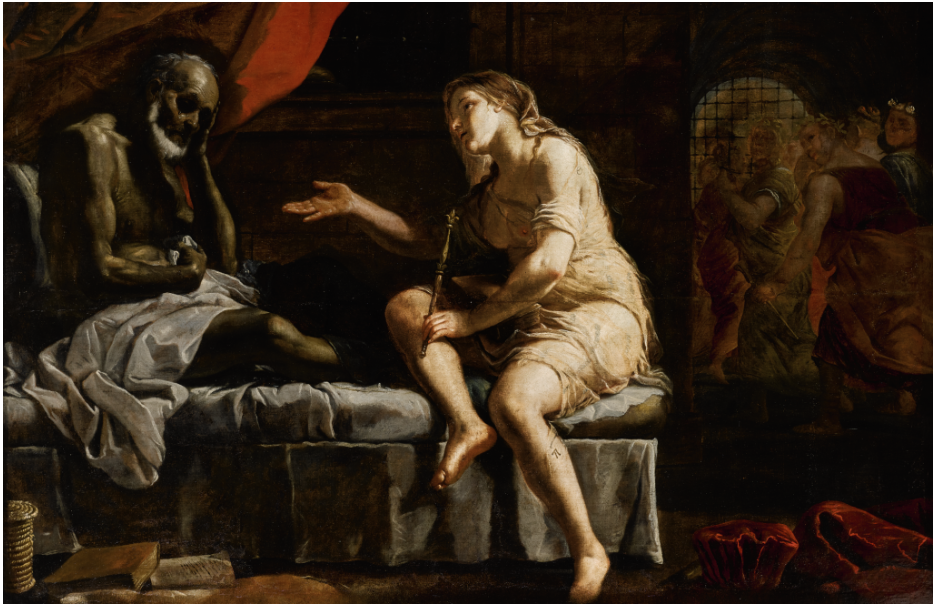
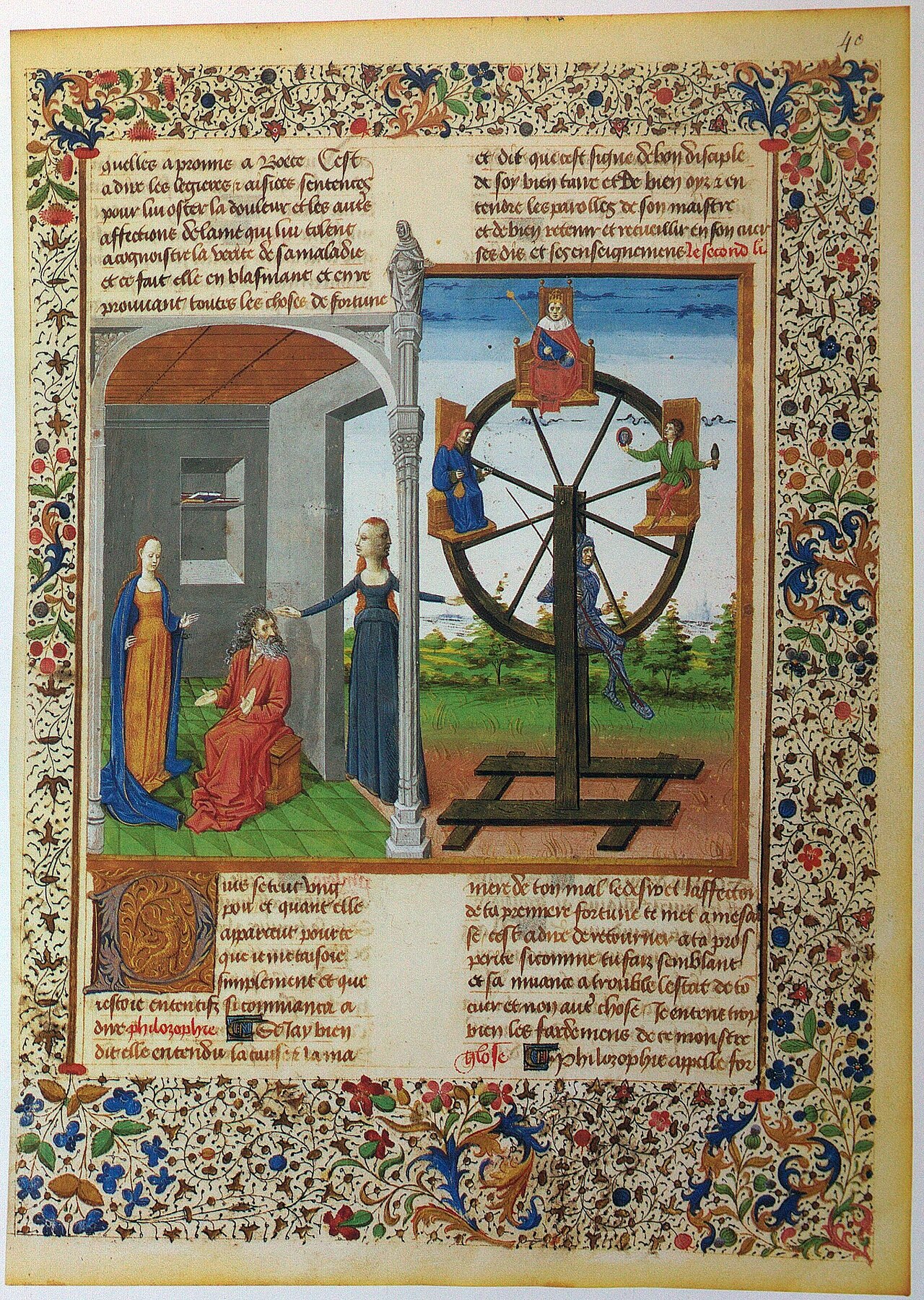
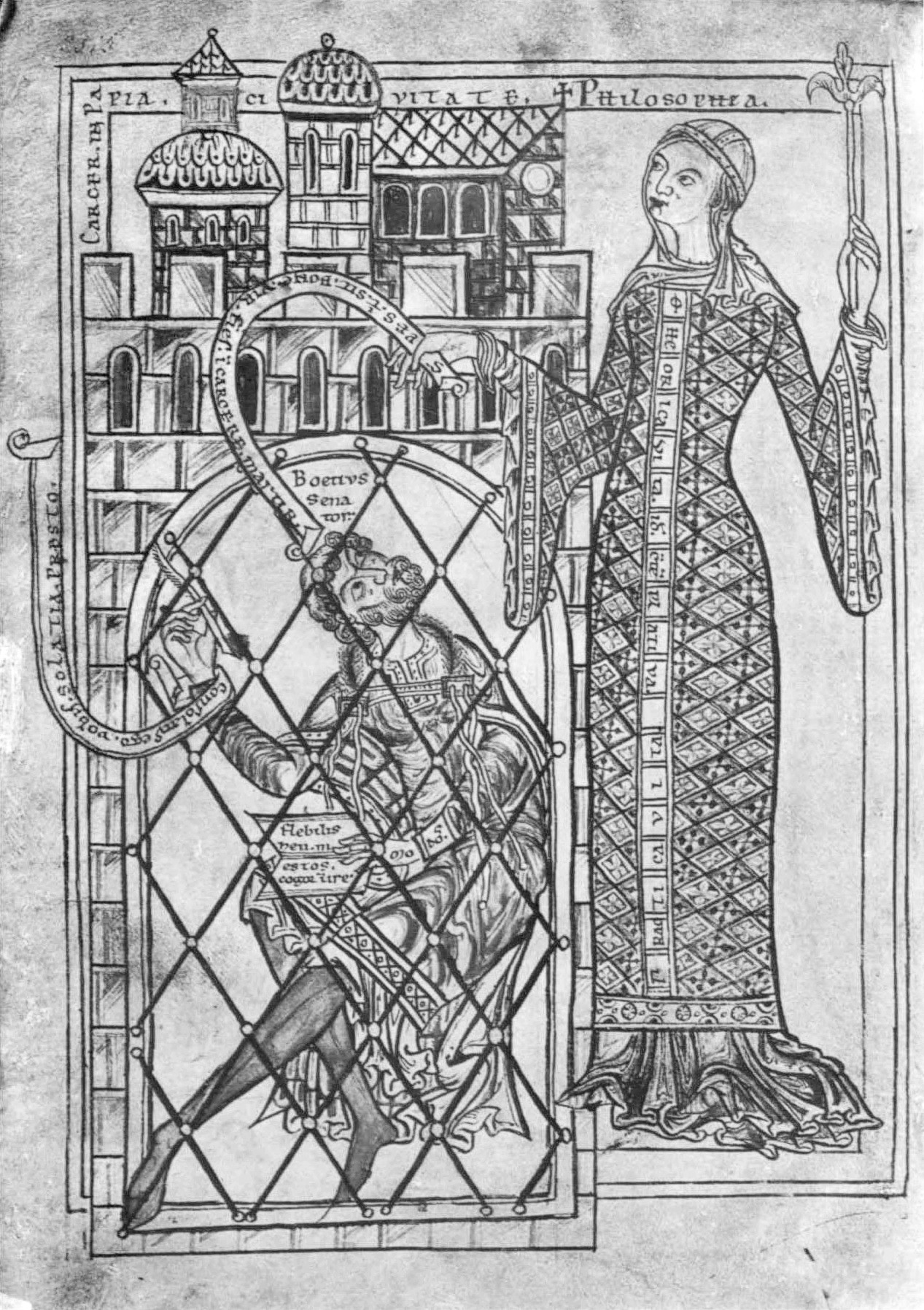
Boethius’s outspoken criticism of widespread corruption among Ostrogothic officials made him deeply unpopular at court. After publicly defending fellow consul Caecina Albinus against conspiracy charges, he was imprisoned by Theodoric around 523. While in jail, he wrote *On the Consolation of Philosophy*, a philosophical treatise on fortune, death, and other themes that became one of the most influential and widely copied works of the Early Middle Ages. He was tortured and executed in 524, later venerated as a Christian martyr by tradition.
**Early life**
Boethius was born in Rome around 480 to the wealthy and influential Anicii family, which had produced emperors Petronius Maximus and Olybrius, as well as many consuls. However, the family’s power had waned before his birth. His grandfather, also a senator named Boethius, served as praetorian prefect of Italy but died in 454 during a palace plot against Flavius Aetius. His father, Manlius Boethius, was consul in 487 and died while Boethius was still young. He was adopted and raised by the patrician Quintus Aurelius Memmius Symmachus, who introduced him to philosophy and literature. Boethius later married Symmachus’s daughter, Rusticiana, and they had two children, named Symmachus and Boethius.
Raised in the wealthy Symmachi household, Boethius had access to tutors. While Symmachus knew some Greek, Boethius became fluent in the language—a rare skill in the Western Empire—and devoted his early career to translating the complete works of Plato and Aristotle. Some of his translations were the only surviving transcriptions of Greek texts into the Middle Ages. His fluency has led some scholars, like Edward Gibbon, to suggest he studied in Athens for eighteen years, though this may stem from a misreading of Cassiodorus’s letters. Historian Pierre Courcelle argued he studied in Alexandria with the Neoplatonist Ammonius Hermiae, but John Moorhead notes the evidence is “not as strong as it may appear,” and Boethius may have acquired his learning without traveling. Regardless, his Greek skills proved vital for translating classical works, and his interests spanned music, mathematics, astrology, and theology.
**Rise to power**
Inspired by Plato’s *Republic*, Boethius left scholarly work to serve Theodoric the Great. They first met in 500, when Theodoric visited Rome for six months. Although no record of their early relationship survives, Theodoric clearly favored him. Boethius quickly rose through government ranks, becoming a senator by 25 and a consul by 510. His earliest official acts included investigating allegations that the paymaster of Theodoric’s bodyguards had debased coinage, producing a water clock for Theodoric to give to Burgundian king Gundobad, and recruiting a lyre-player for Clovis, King of the Franks.
In the *Consolation*, Boethius wrote that his greatest achievement was when Theodoric appointed both his sons as consuls in 522, each representing the entire Roman Empire. This honor was exceptional, not only because it showed Theodoric’s favor, but also because Byzantine emperor Justin I declined his own nomination as a goodwill gesture.
- field
- Philosophy, translation, music, mathematics, theology
- nationality
- Roman (Ostrogothic Kingdom)
- known_for
- Translating Greek classics into Latin; writing On the Consolation of Philosophy; precursor to Scholasticism
Lore & Background
Boethius was born in Rome to a patrician family c. His birth family, the Anicii, was a notably wealthy and influential gens that included emperors Petronius Maximus and Olybrius, in addition to many consuls. However, in the years prior to Boethius's birth, the family had lost much of its influence. Quintus Aurelius Memmius Symmachus, another patrician, adopted and raised him instead, introducing to him philosophy and literature. As a sign of their good relationship, Boethius would later marry his foster-father's daughter, Rusticiana, with whom he would have two children also named Symmachus and Boethius. Having been adopted into the wealthy Symmachi family, Boethius had access to tutors that would have educated him during his youth. Though Symmachus had some fluency in Greek, Boethius achieved a mastery of the language—an increasingly rare skill in the Western regions of the Empire—and dedicated his early career to translating the entire works of Plato and Aristotle, with some of the translations that he produced being the only surviving transcriptions of Greek texts into the Middle Ages. The unusual fluency of Boethius in the Greek language has led some scholars to believe that he was educated in the East; a traditional view, first proposed by Edward Gibbon, is that Boethius studied in Athens for eighteen years based on the letters of Cassiodorus, though this was likely to have been a misreading by past historians. Historian Pierre Courcelle has argued that Boethius studied at Alexandria with the Neoplatonist philosopher Ammonius Hermiae. However, Historian John Moorhead observes that the evidence supporting Boethius having studied in Alexandria is 'not as strong as it may appear', adding that he may have been able to acquire his formidable learning without travelling.
Reader's Guide
Boethius's significance lies primarily in his role as a translator and commentator of Greek philosophical works, especially those of Aristotle, which he sought to reconcile with Christian theology. Though his translations were unfinished following an untimely death, it is largely due to them that the works of Aristotle survived into the Renaissance. He also wrote extensively on music, mathematics, and theology. His most famous work, On the Consolation of Philosophy, was written while he was imprisoned and became one of the most influential and widely reproduced works of the Early Middle Ages.
Did You Know?
- Boethius was orphaned as a child and raised by Quintus Aurelius Memmius Symmachus, whose daughter he later married.
- He was a central figure in the translation of the Greek classics into Latin, a precursor to the Scholastic movement.
Early Life & the Mystery of His Education
Boethius entered the world around 480 in Rome, a child of the illustrious Anicii gens—a lineage that had produced emperors Petronius Maximus and Olybrius along with numerous consuls. Yet by the time of his birth, the family's once-dominant political standing had eroded. His grandfather, a senator sharing his name, perished in 454 during the palace intrigue that claimed Flavius Aetius, and his father, Manlius Boethius, a consul in 487, died while the boy was still young. The orphan was taken in by Quintus Aurelius Memmius Symmachus, a fellow patrician who became his foster-father and intellectual mentor. Under Symmachus's guidance, the young Boethius immersed himself in philosophy and literature, and the bond proved so strong that he eventually married Symmachus's daughter Rusticiana, fathering two sons. The most remarkable product of this education was his command of Greek—a skill growing increasingly rare in the Western Empire. Scholars have long debated where he acquired it: Edward Gibbon once proposed an eighteen-year sojourn in Athens based on a reading of Cassiodorus's letters, while Pierre Courcelle suggested study under the Neoplatonist Ammonius Hermiae in Alexandria. John Moorhead, however, cautions that the evidence for either foreign education is thinner than it appears, and Boethius may well have achieved his formidable learning without ever leaving Italy.
Rise to Power Under Theodoric
Drawing inspiration from Plato's Republic, Boethius traded his scholarly pursuits for active service under Theodoric the Great. The two first crossed paths in 500, when the Ostrogothic king spent six months in Rome, and the king's favorable impression of the young scholar set in motion a meteoric political career. Within a few years Boethius had become a senator at twenty-five and a consul by 510, at thirty-three. His earliest documented duties on behalf of Theodoric were varied: investigating allegations that the paymaster of the king's bodyguards had debased their coinage, constructing a waterclock as a diplomatic gift for the Burgundian king Gundobad, and recruiting a lyre-player to entertain Clovis, king of the Franks. The pinnacle of his political life arrived in 522, when Theodoric selected both of Boethius's sons to serve as consuls representing the entire Roman Empire—an honor so extraordinary that the Byzantine emperor Justin I forfeited his own nomination as a gesture of goodwill. In that same year Boethius himself was elevated to magister officiorum, head of all government and palace affairs. Recalling the spectacle, he wrote of sitting between the two consuls as though in a military triumph, his generosity exceeding the wildest expectations of the packed audience around him.
The Great Translation Project & Scholarly Legacy
Boethius's intellectual ambition was nothing less than to make the entire corpus of Greek philosophy accessible to Latin-speaking scholars, while simultaneously reconciling the teachings of Plato and Aristotle with Christian theology. He produced transcriptions and commentaries on the works of Nicomachus, Porphyry, and Cicero, and wrote extensively on music, mathematics, astrology, and theology. His translations were never completed—his untimely death in 524 left the project unfinished—yet their impact was immeasurable. It is largely through Boethius's labor that the works of Aristotle survived into the Renaissance, preserved in Latin when Greek learning had nearly vanished from the Western world. Alongside Cassiodorus, he stands as one of the two leading Christian scholars of the sixth century, and his synthesis of classical and theological thought positioned him as a direct precursor to the Scholastic movement that would dominate medieval universities. His interests spanned a remarkable breadth of fields, and his fluency in Greek—whether acquired in Athens, Alexandria, or simply through extraordinary personal study—gave him access to sources that few of his Western contemporaries could touch. In the Diocese of Pavia, a local cult honoring him on 23 October was formally sanctioned by the Sacred Congregation of Rites in 1883, a testament to the enduring reverence his learning commanded.
Imprisonment, Execution & Enduring Memory
Despite his extraordinary political success, Boethius's integrity made him a target. He became deeply unpopular at the Ostrogothic court for publicly denouncing the extensive corruption rife among other government officials. The final straw came when he stepped forward to defend his fellow consul Caecina Albinus from charges of conspiracy. Around 523, Theodoric himself ordered Boethius imprisoned. In the darkness of his cell, however, the philosopher produced On the Consolation of Philosophy, a treatise grappling with fortune, death, and the nature of the good that would become one of the most influential and widely reproduced works of the entire Early Middle Ages. The imprisonment proved fatal: Boethius was tortured and executed in 524. In Christian tradition he is remembered as a martyr, a man who suffered for his convictions. His legacy endures on multiple levels—as a political figure whose career spanned the twilight of Roman senatorial power, as a translator whose labor kept Aristotle's thought alive for centuries, and as a prisoner whose final philosophical meditation continues to resonate. The local veneration in Pavia, formally recognized in 1883, preserves the memory of a man whose brilliance and tragedy remain inseparable.
Gallery
Frequently Asked Questions
What is Boethius's most famous work?
His best-known text is The Consolation of Philosophy, a dialogue composed during his imprisonment that wrestles with fortune, free will, and the nature of the good. The work went on to become one of the most widely read philosophical books throughout the Middle Ages.
What did Boethius do to preserve Greek knowledge?
He rendered key works by Aristotle and other Greek thinkers into Latin, making them accessible to a Roman-speaking audience. This translation effort laid essential groundwork for the later Scholastic movement in medieval universities.
Why is Boethius considered important to medieval philosophy?
He is regarded as a direct precursor to Scholasticism because his translations and commentaries shaped how Latin Christendom engaged with Greek logic and metaphysics. His contributions across music, mathematics, and theology made him a truly polymathic figure of the Early Middle Ages.
More in Ancient And Medieval Historians And Philosophers 1-18
Spotted an error? Know more?
This is a living reference — every entry is fact-audited, and reader corrections feed straight into our audit queue. Suggest an edit · See this site's audit record