
Antisthenes
Greek philosopher and pupil of Socrates, regarded as founder of Cynicism.

Yair Haklai · CC BY-SA 4.0
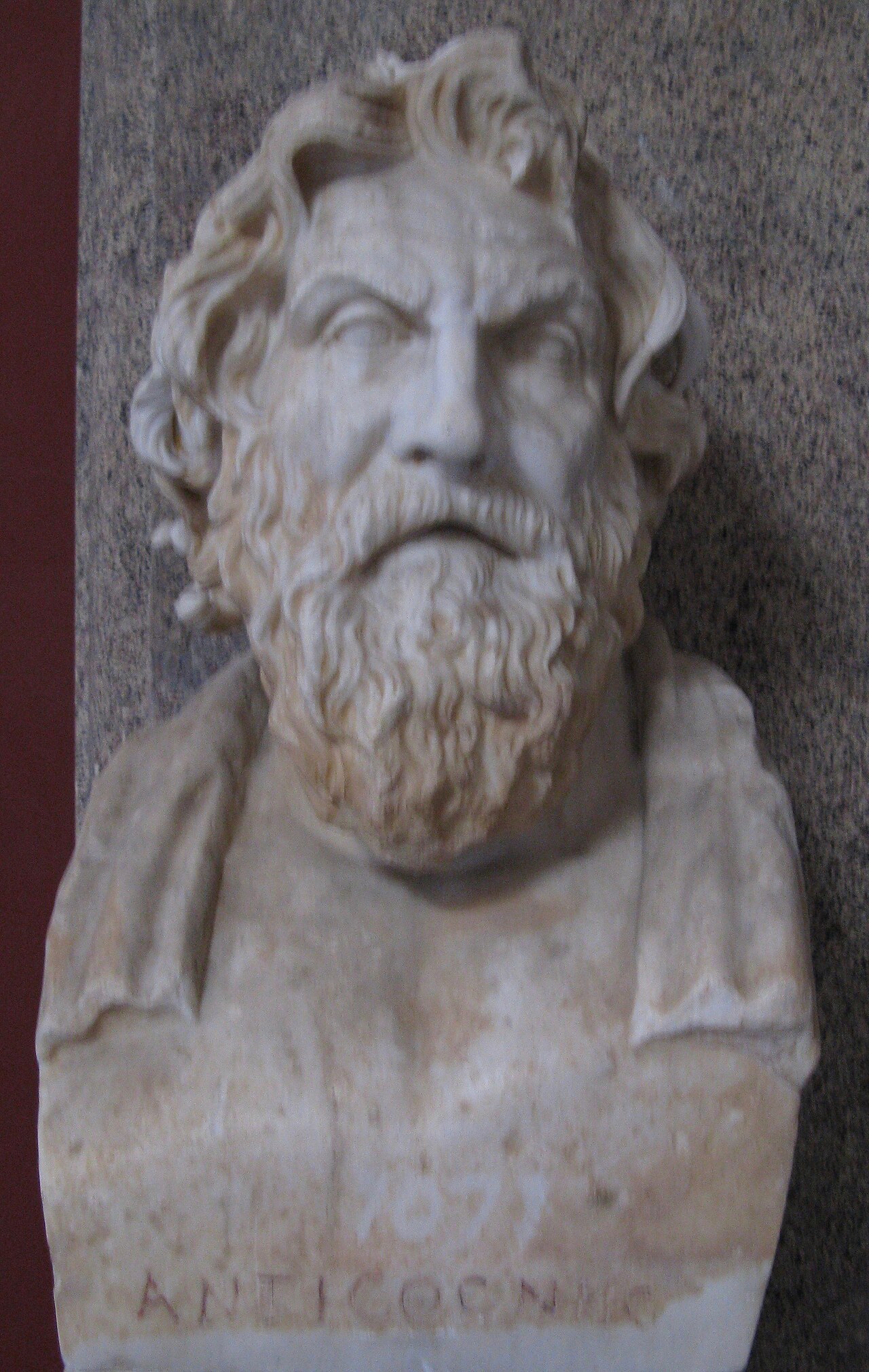
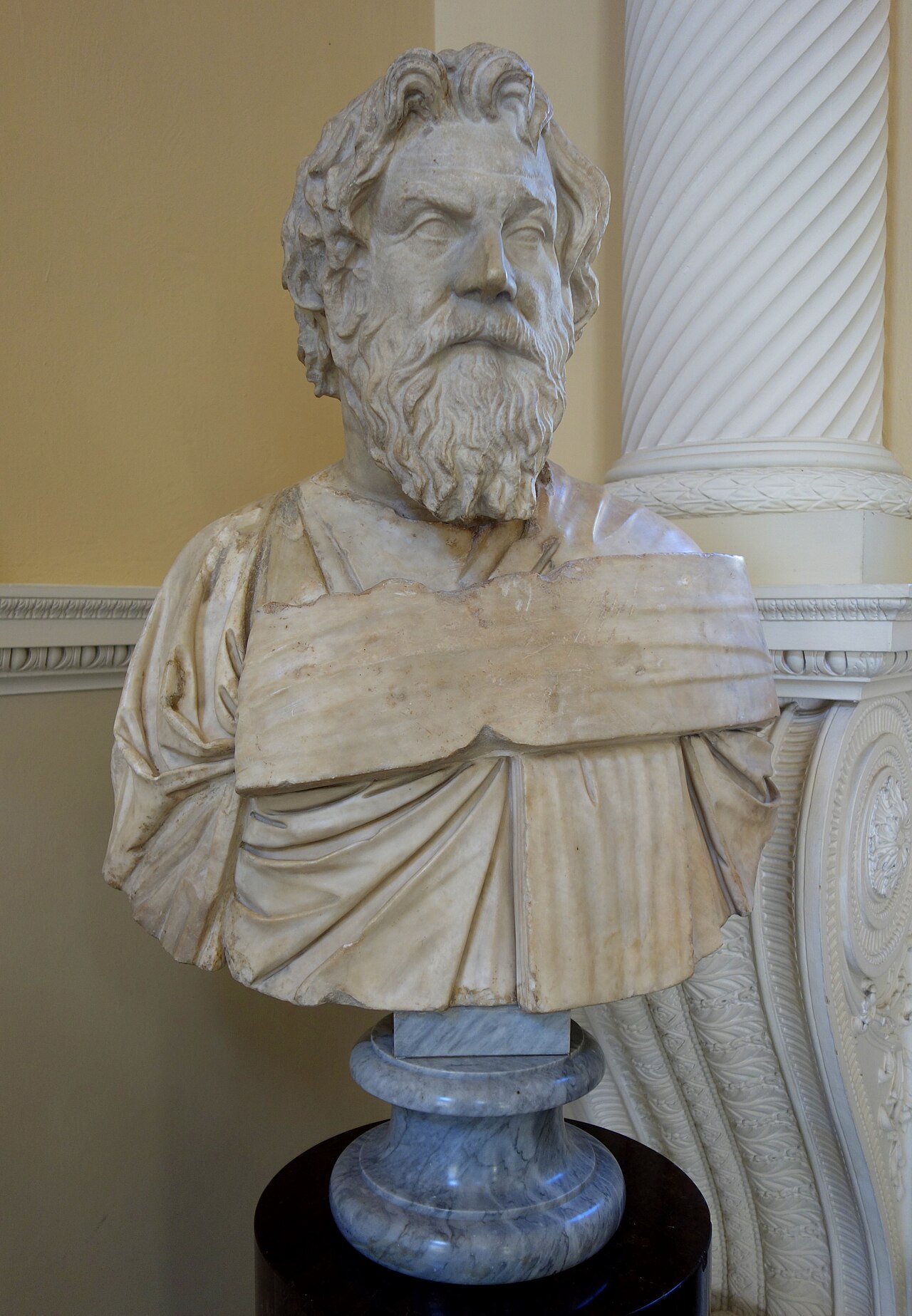
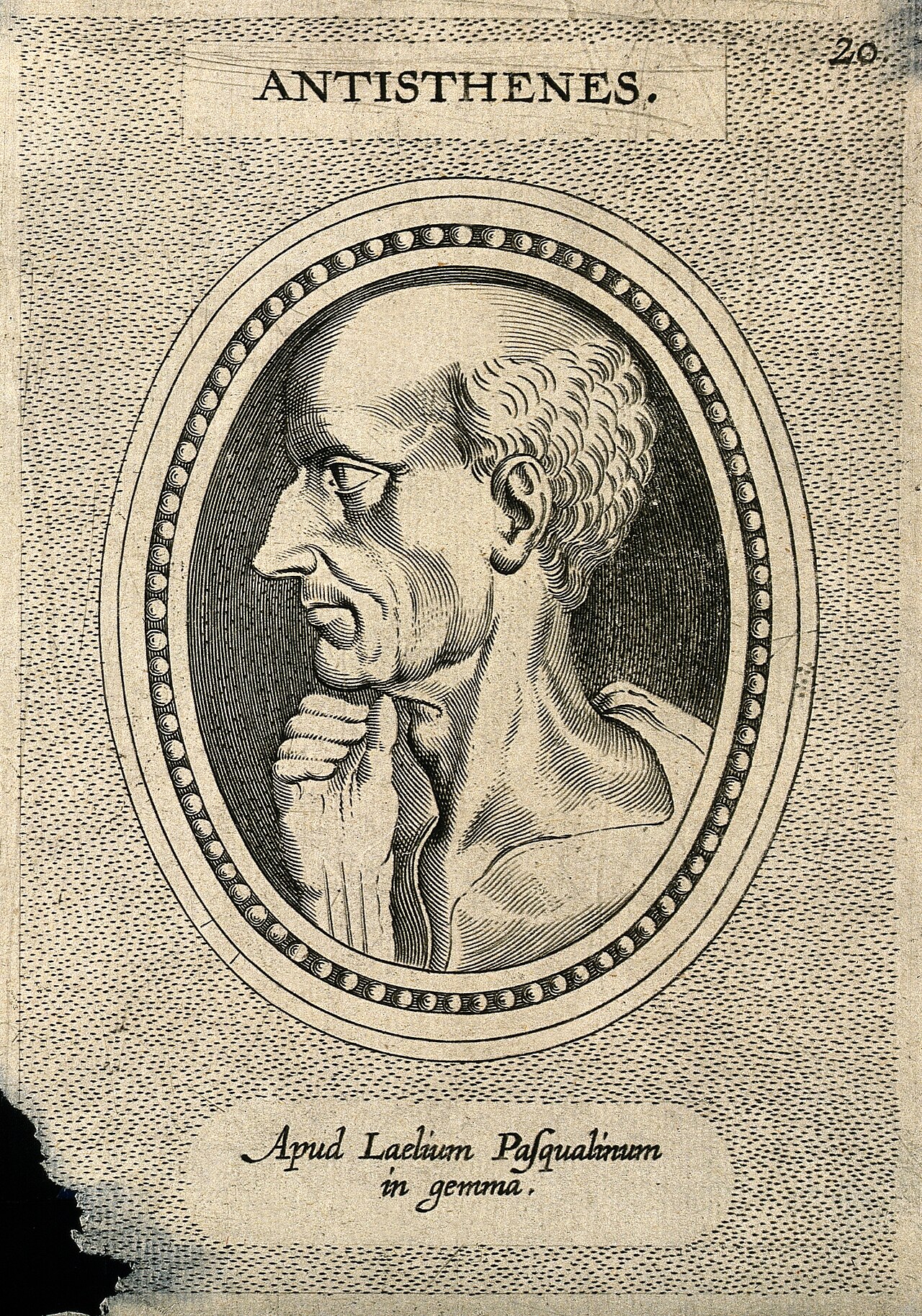
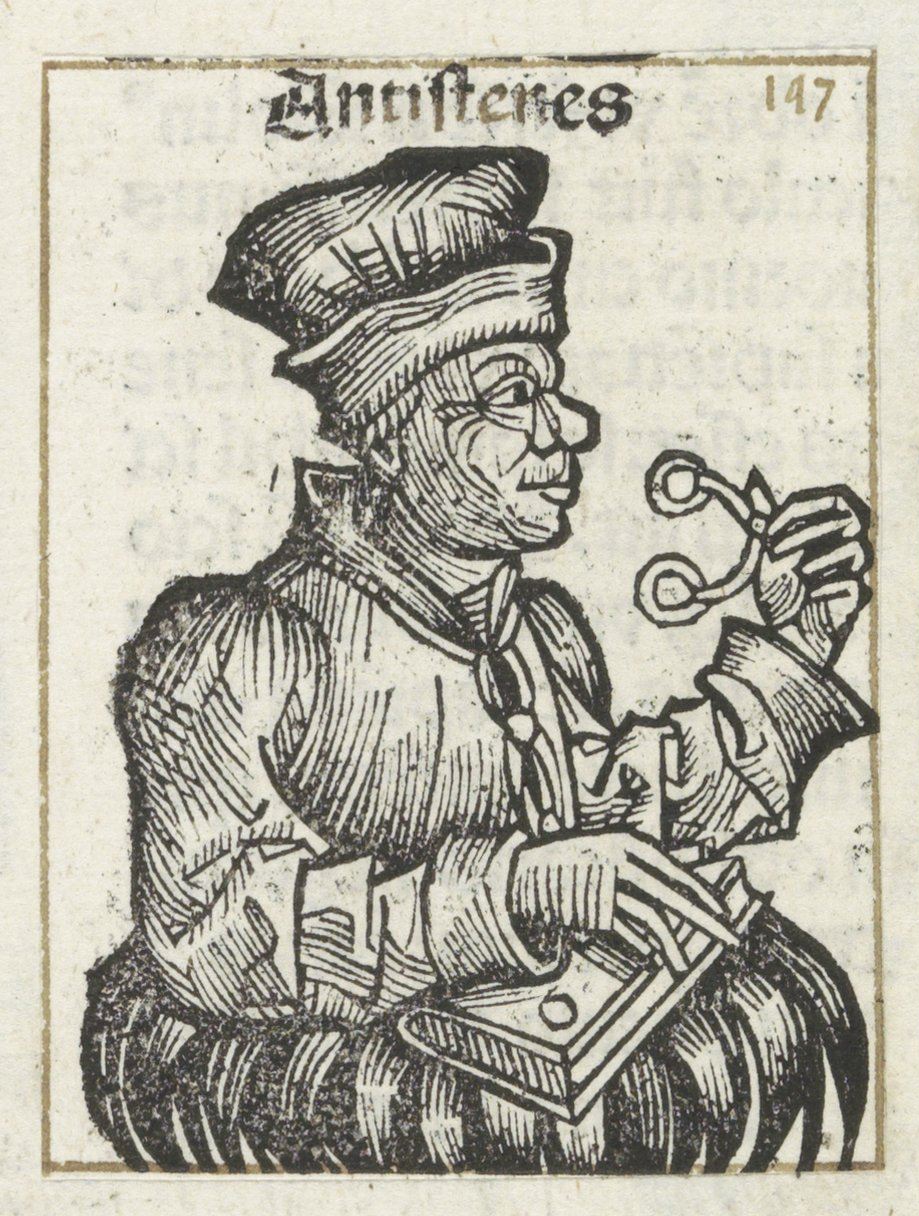
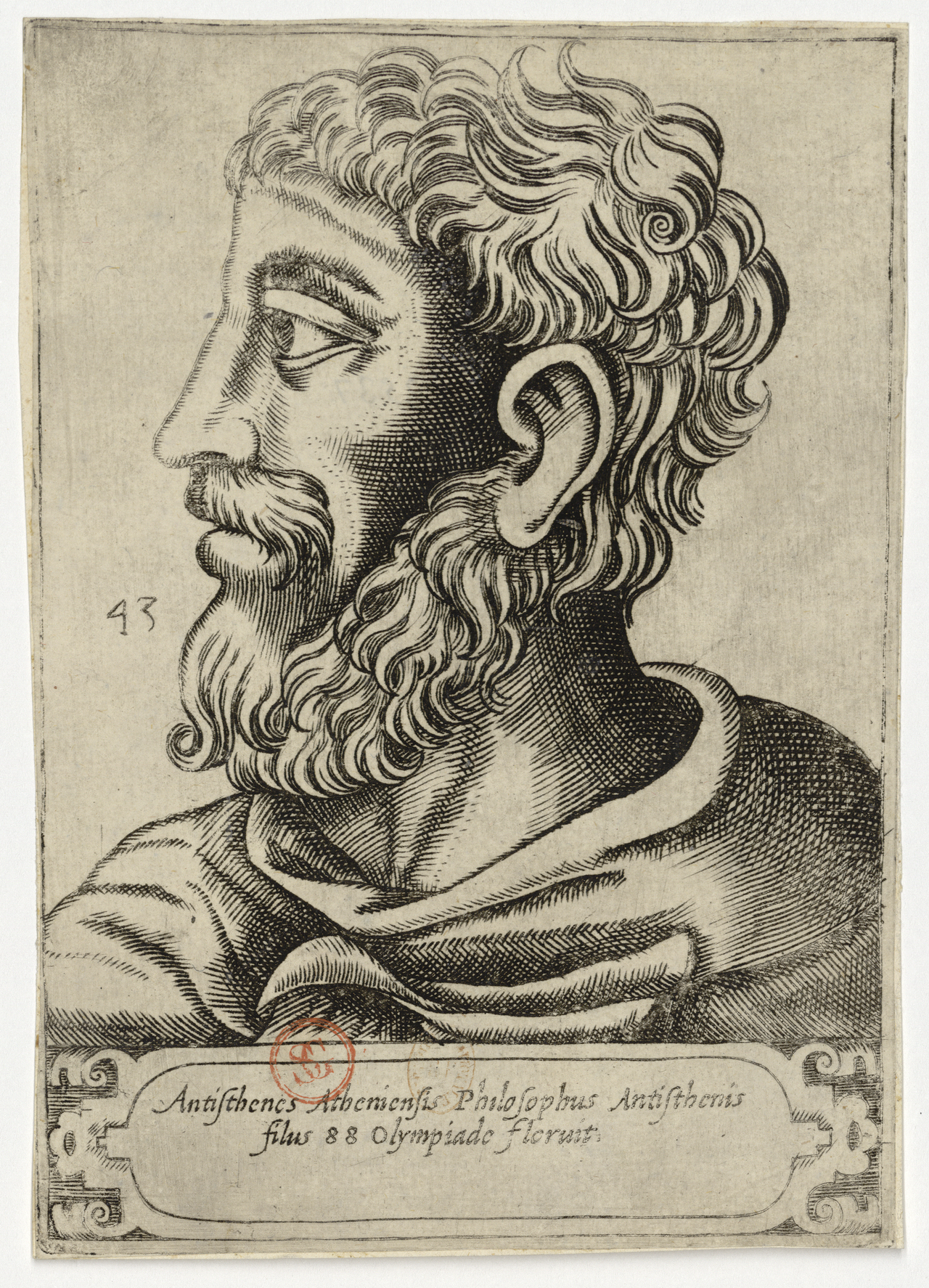
Antisthenes (c. 446–366 BCE) was a Greek philosopher who studied under Socrates. Before that, he learned rhetoric from Gorgias. He became a devoted follower of Socrates, focusing on the ethical side of his teachings and promoting a simple, ascetic life centered on virtue. Later thinkers considered him the founder of Cynic philosophy. He was born around 446 BCE, the son of an Athenian father also named Antisthenes. His mother was thought to be Thracian, though some said Phrygian—a claim that may have come from his sarcastic reply to someone who insulted him for not being a true Athenian citizen: that the mother of the gods was Phrygian. As a young man, he fought at the Battle of Tanagra in 426 BCE. He first studied with Gorgias, then with Socrates, walking about nine kilometers daily from the port of Piraeus to Athens to hear Socrates speak, and he persuaded his friends to join him. He was present at Socrates’ death and never forgave those who persecuted his teacher; he is said to have helped bring about their punishment. He survived the Battle of Leuctra in 371 BCE, reportedly comparing the Theban victory to schoolboys beating their teacher. Though one source says he died at 70, he was still alive in 366 BCE and likely died in Athens around 365 BCE, nearly 80 years old. He taught at the Cynosarges, a gymnasium for Athenians born to foreign mothers, near the temple of Heracles. Inspired by Socrates’ idea of virtue, he founded his own school there, attracting poorer people with his simple life and teachings. He wore a cloak, carried a staff and a wallet—a look that became the uniform of his followers. According to Diogenes Laërtius, his works filled ten volumes, but only fragments remain. He favored dialogues, some of which attacked his contemporaries—for example, Alcibiades in his second *Cyrus*, Gorgias in *Archelaus*, and Plato in *Satho*. His style was pure and elegant; Theopompus even claimed Plato stole many ideas from him. Cicero found his works pleasing and called him “a man more intelligent than learned.” He was witty and sarcastic, fond of wordplay—saying he would rather fall among crows (*korakes*) than flatterers (*kolakes*), since crows eat the dead but flatterers eat the living. Two rhetorical declamations, *Ajax* and *Odysseus*, survive. His nickname was “The (Absolute) Dog.”
In philosophy, Antisthenes argued that virtue can be taught and that only the virtuous are truly noble. He believed virtue alone is enough for happiness, needing nothing except strength of spirit. Virtue, he said, is shown in deeds, not words or learning. The wise person is self-sufficient, owning all the goods of others. Ill repute and pain are good things. The wise person follows the law of virtue, not established laws, and will marry to have children with the most beautiful women. He also said the wise person knows who is worthy of love. Ethically, he took from Socrates the idea that virtue, not pleasure, is life’s goal. Everything the wise person does conforms to perfect virtue; pleasure is not just unnecessary but evil. He reportedly called pain and ill-repute blessings, saying, “I’d rather be mad than feel pleasure.” However, he likely rejected only sensual or artificial pleasures, praising those that come from the soul and from wise friendship. The highest good is a life lived according to virtue, which is action-based, never lost once gained, and frees the wise from error. It is tied to reason but needs Socratic strength to act and bring happiness. In physics, he argued that people believe in many gods, but there is only one natural God. This God resembles nothing on earth and cannot be understood through any image. In logic, he struggled with the problem of universals. As a nominalist, he held that definitions and predications are either false or tautological—we can only say each individual is what it is, and describe its qualities (e.g., silver is like tin in color).
- field
- Philosophy
- nationality
- Greek (Athenian)
- known_for
- Founder of Cynic philosophy (according to later writers); advocate of ascetic virtue; pupil of Socrates
Lore & Background
Antisthenes was born c. 446 BCE in Athens. His mother was a Thracian. He never forgave his master's persecutors. He lectured at the Cynosarges, a gymnasium for Athenians born of foreign mothers, where he founded his own school, attracting the poorer classes by the simplicity of his life and teaching. He wore a cloak and carried a staff and a wallet, a costume that became the uniform of his followers.
Reader's Guide
Antisthenes is significant as a key link between Socrates and the later Cynic movement. He adopted Socrates' ethical emphasis on virtue as the end of existence, arguing that virtue can be taught and is sufficient for happiness, needing nothing else except strength of spirit. He held pleasure to be a positive evil and considered pain and ill-repute blessings. In logic, he was a nominalist who rejected Platonic Ideas, famously stating 'A horse I can see, but horsehood I cannot see.' His works filled ten volumes according to Diogenes Laërtius, but only fragments survive. Although later writers regarded him as the founder of Cynicism, Aristotle referred to his followers as 'the Antistheneans,' and it is uncertain whether Antisthenes would have recognized the term 'Cynic.' The connection between Antisthenes and Diogenes of Sinope is disputed; some scholars believe the stories linking them were invented by Stoics to create a succession from Socrates to Zeno. Regardless, Antisthenes laid the foundations of Cynic philosophy through his rigorous ascetic lifestyle and teachings.
Did You Know?
- Antisthenes walked about 9 kilometres daily from the port of Peiraeus to Athens to hear Socrates.
- His nickname was 'The (Absolute) Dog' (ἁπλοκύων).
- He is said to have compared the Theban victory at Leuctra to schoolboys beating their master.
The Socratic Seed and the Cynic Founding
Antisthenes, a student of Socrates in the late 400s BC, is credited as the first philosopher to articulate the core themes that would define Cynicism. He taught at the Cynosarges gymnasium in Athens, a site whose name translates to 'place of the white dog,' a detail that later became entangled with the movement's very identity. From his groundwork a distinct lineage emerged: Diogenes of Sinope pushed the philosophy to its most extreme public expressions, living in a ceramic jar on Athenian streets and staging acts of deliberate non-conformity. Diogenes was in turn followed by Crates of Thebes, who surrendered a substantial fortune to embrace Cynic poverty in Athens. Together these figures transformed Antisthenes' initial outline into a living, confrontational way of life that rejected wealth, power, pleasure, glory, social recognition, and worldly possessions—not merely in private contemplation but through open, derisive public flouting of every social convention.
The Architecture of Cynic Thought
Cynicism proposed a radical reorientation of human purpose. Its central aim was eudaimonia—human flourishing—paired with atuphia, a term literally meaning 'freedom from smoke' that signified liberation from false belief, mindlessness, folly, and conceit. Flourishing, the Cynics held, depended on self-sufficiency, equanimity, virtue, love of humanity, frank speech, and indifference to life's vicissitudes. The path to this state ran through ascetic practice: deliberately choosing a hard life, such as wearing a thin cloak barefoot in winter, to strip away the grip of wealth, fame, and power. Crucially, this was not mere physical labor—Diogenes survived by begging—but a conscious rejection of needs manufactured by social convention. The Cynics also embraced shamelessness as a positive virtue, deliberately defacing the laws, customs, and conventions that society treated as self-evident. Their chosen hero, Heracles, embodied this ideal of unflinching effort, and his feat of dragging Cerberus from the underworld resonated especially with the dog-identified Diogenes.
The Dog in the Public Square
The very name 'Cynic' carried the sting of an insult. The Greek word kynikos, meaning 'dog-like,' was hurled at the first practitioners for their shameless rejection of manners and their choice to live on the streets. Yet the Cynics seized the label and reframed it. A later commentator listed four justifications: dogs eat and mate in public, mirroring Cynic indifference to propriety; dogs are shameless, and the Cynics treated shamelessness as superior to modesty; dogs are vigilant guards, as Cynics guarded their philosophical tenets; and dogs discriminate between friends and enemies, as Cynics welcomed those suited to philosophy while barking at those who were not. Diogenes himself wore the epithet with pride, declaring that while other dogs bite their enemies, he bit his friends to save them. The Cynics performed their philosophy in full public view, indifferent to insults, and Diogenes famously claimed citizenship not of a city but of the entire world.
From Athens to the Empire and Beyond
Cynicism's influence stretched far beyond its founding generation. After a gradual decline in prominence following the third century BC, the movement found new life with the rise of the Roman Empire in the first century CE. Cynic philosophers could be spotted begging and preaching across the cities of the empire, and their ascetic and rhetorical emphases left a visible imprint on the earliest currents of Christianity. The tradition's long shadow also reshaped language itself. By the nineteenth century, commentators fixated on the philosophy's negative, confrontational dimensions, and the word 'cynicism' shed its original philosophical weight to acquire its modern sense: a sardonic disbelief in the sincerity or goodness of human motives. Thus a school that once promised freedom through radical simplicity and public courage was, in popular memory, reduced to a posture of world-weary skepticism—a transformation that speaks as much to later centuries' anxieties as to Antisthenes' original Socratic inheritance.
Gallery
Frequently Asked Questions
What was Antisthenes's main philosophical contribution?
He took Socrates' ethical emphasis and pushed it toward a radical asceticism, arguing that a person should discard all material comforts and live solely for the sake of personal virtue. In his view, moral excellence was the only true good, and everything else was an obstacle to it.
Who taught Antisthenes and how did his education unfold?
Before attaching himself to Socrates, Antisthenes studied rhetoric under the celebrated orator Gorgias. He then became one of Socrates' most zealous followers, shifting his focus entirely from the art of persuasion to the practice of ethical self-discipline.
Why is Antisthenes considered important in the history of philosophy?
Later writers identified him as the originator of Cynicism, the tradition that would later produce Diogenes of Sinope. His insistence that virtue alone constitutes the good life and that wealth and status are distractions shaped a school of thought that went on to influence Stoicism and broader Western ethics.
More in Ancient And Medieval Historians And Philosophers 1-18
Spotted an error? Know more?
This is a living reference — every entry is fact-audited, and reader corrections feed straight into our audit queue. Suggest an edit · See this site's audit record