
Arrian
Greek historian, philosopher, and governor of Cappadocia.

Arrian · Public domain
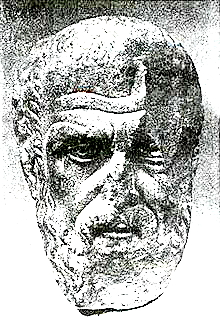
Arrian (c. 86/89 – c. after 146/160 AD), also called Arrian of Nicomedia, was a Greek historian, public servant, military commander, and philosopher active during the Roman period. He is best known for his work the *Anabasis of Alexander*, which is considered the best source on the campaigns of Alexander the Great. Scholars have generally preferred Arrian to other extant primary sources, though this attitude has changed somewhat in light of modern studies into Arrian's method.
Arrian was born in Nicomedia (modern İzmit), the capital of the Roman province of Bithynia. The historian Cassius Dio referred to him as Flavius Arrianus Nicomediensis. His birth is placed within a few years prior to 90, or 89, or between 85 and 90 AD; the latter range is inferred because he became a consul around 130 AD, and the typical age for that office at the time was 42. His family belonged to the Greek provincial aristocracy, and his full name, L. Flavius Arrianus, shows he was a Roman citizen—likely a status held for several generations, probably dating back to the Roman conquest some 170 years earlier.
Sometime between 117 and 120 AD, while in Epirus (probably Nicopolis), Arrian attended lectures by the philosopher Epictetus and became his pupil, a fact attested by Lucian. Nearly everything known about Epictetus’s life comes from Arrian, who compiled the *Encheiridion* (Handbook) of his philosophy. After Epirus, Arrian went to Athens, where he earned the nickname “the young Xenophon” because his relationship with Epictetus resembled Xenophon’s with Socrates.
Around 126 AD, Arrian was a friend of Emperor Hadrian, who appointed him to the Senate. He served as *consul suffectus* around 130 AD, and then in 132 AD (or 131, per some sources) Hadrian made him prefect or legate (governor) of Cappadocia, a post he held for six years. Cassius Dio records that not long after the Bar Kokhba revolt in Judea was suppressed (135 AD), King Pharasmanes II of Iberia incited the Alani to invade neighboring territories, including Cappadocia. Arrian’s legions halted their advance. A second Alan war, also instigated by Pharasmanes, caused severe damage to Albania and Media, then spread to Armenia and Cappadocia. It ended when the Alani were both persuaded by gifts from Vologaesus and feared Flavius Arrianus, the governor of Cappadocia.
Arrian called himself “the second Xenophon” due to his reputation and esteem. Lucian described him as “a Roman of the first rank with a life-long attachment to learning”—a quality known as *paideia*, marking an educated and highly esteemed person.
Arrian produced eight surviving works. Only the *Indica* and the *Anabasis* are fully intact; the rest of his surviving output is designated FGrH 156, a collection of fragments.
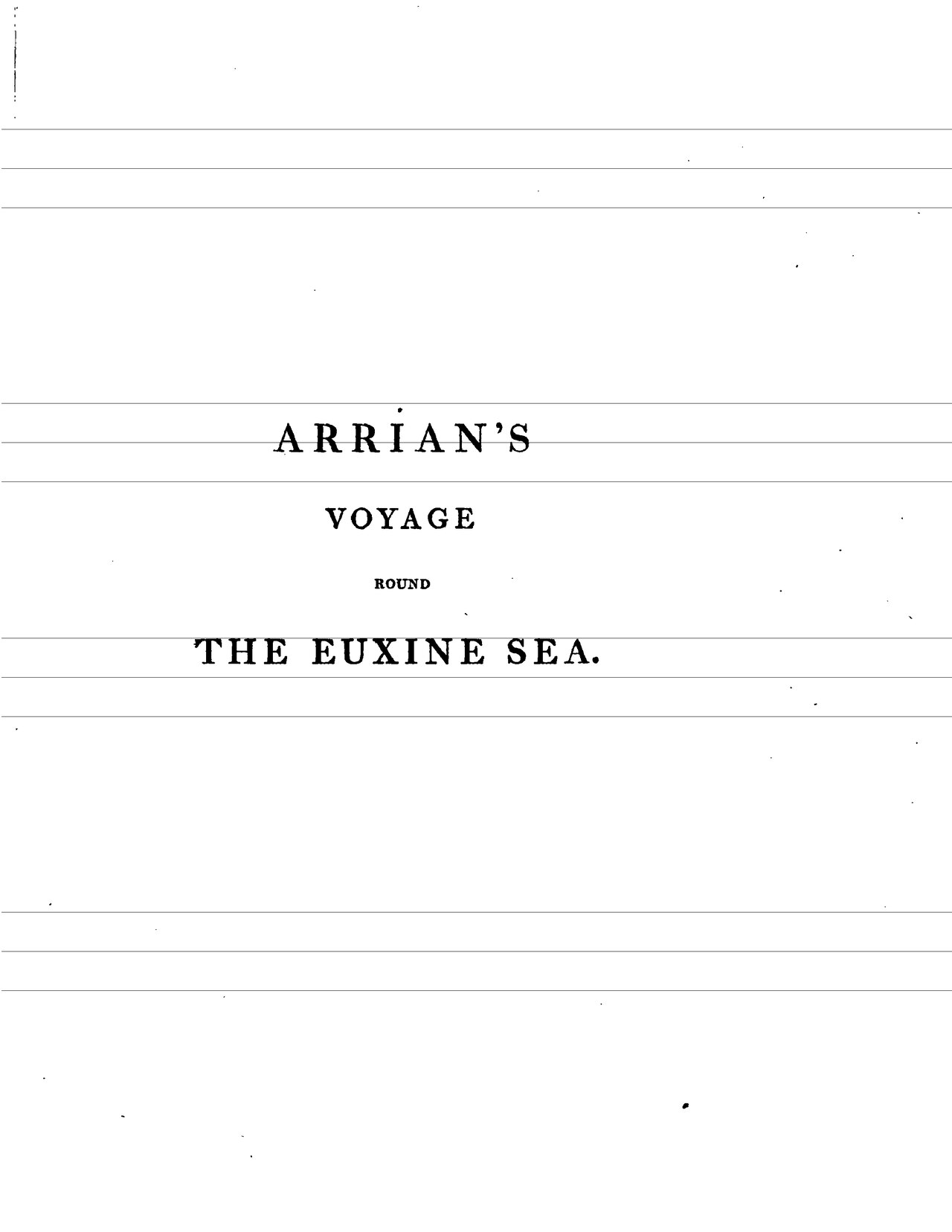
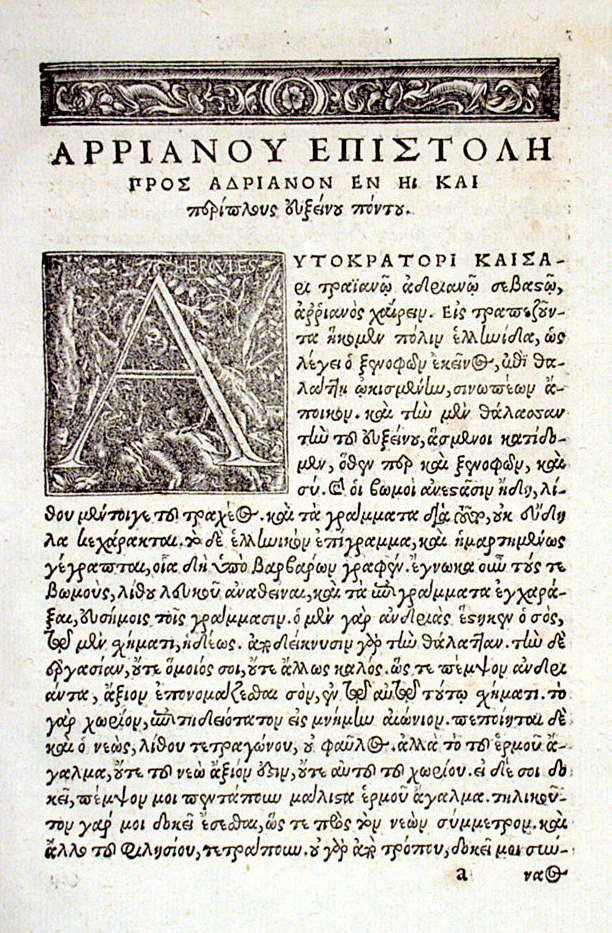
The *Periplus of the Euxine Sea* is his earliest confidently dated work, an address to Emperor Hadrian.
Arrian was a pupil of Epictetus around 108 AD. According to his own account, he published his notes of Epictetus’s lectures—the *Discourses of Epictetus*—after they were circulated without authorization. George Long says Arrian took notes for private use and later turned them into the *Discourses*. Photius mentions two books: the *Dissertations* and the *Discourses*; the latter, also called *Diatribai*, appear to be a verbatim record of Epictetus’s lectures. The *Enchiridion* is a short compendium of Epictetus’s principles, considered a *vade mecum* by A. Mehl. It seems to summarize the *Discourses*, but J. B. Stockdale thought Arrian wrote eight books of which four were lost by the Middle Ages, leaving the *Discourses*. The *Enchiridion* contains material not in the *Discourses*, suggesting a lost original source.
The *Homiliai Epiktetou* (Friendly Conversations with Epictetus) was a twelve-book work mentioned by Photius in his *Bibliotheca*; only fragments remain.
The *Anabasis of Alexander* consists of seven books. Arrian modeled it on Xenophon’s account of the March of Cyrus.
*Ta met’ Alexandron* (Events after Alexander, or History of the Diadochi) originally had ten books. Photius wrote a commentary on it. Three surviving fragments are the Vatican Palimpsest (10th century AD), PSI 12.1284 (Oxyrhynchus), and the Gothenburg palimpsest (also 10th century), possibly derived from Photius. The work covers the successors of Alexander the Great, circa 323 to 321 or 319 BC.
The *Parthica* (History of the Parthians) was a lost work of seventeen books, fragments of which survive in the *Suda* and Stephanus of Byzantium; later adaptations were made by Photius and Syncellus. It aimed to recount the Parthian war of Trajan and noted that the Parthians traced their origins to Artaxerxes II.
The *Bithyniaca* was an eight-book work.
- born
- c. 86/89 AD, Nicomedia (present-day İzmit)
- field
- History, philosophy, military command
- nationality
- Greek (Roman citizen)
- known_for
- Anabasis of Alexander, Discourses of Epictetus, Enchiridion of Epictetus
Lore & Background
Arrian was born in Nicomedia, the provincial capital of Bithynia, into the Greek provincial aristocracy. His full name, L. After Epirus, he went to Athens, where he became known as the 'young Xenophon' due to the similarity of his relationship to Epictetus as Xenophon had to Socrates.
Reader's Guide
Arrian's significance lies primarily in his historical writings, especially the Anabasis of Alexander, which remains the most authoritative ancient account of Alexander the Great's campaigns. His works on Epictetus preserved the teachings of that Stoic philosopher for posterity. His literary output included eight extant works, among them the Indica, Periplus of the Euxine Sea, and Techne Taktike, a treatise on Roman cavalry tactics. Arrian's self-identification as 'the second Xenophon' reflects his emulation of that earlier historian and his own reputation as a learned and esteemed figure. Modern scholarship has reassessed his methods, but his works remain essential sources for the history of the Roman Empire and Alexander's conquests.
Did You Know?
- Arrian was a pupil of the Stoic philosopher Epictetus and published the Encheiridion (Handbook) of his philosophy.
- His work Anabasis of Alexander is considered the best source on the campaigns of Alexander the Great.
- Arrian was known as 'the second Xenophon' because of his relationship with Epictetus, similar to Xenophon's with Socrates.
Gallery

Frequently Asked Questions
Who is Arrian?
Arrian was a Greek-born Roman citizen who lived roughly from the late first century to the mid-second century AD. He worked as a historian, philosopher, military officer, and provincial governor. He was born in Nicomedia, a city in what is now Turkey.
What is Arrian's most famous work?
His Anabasis of Alexander remains the go-to ancient text for understanding Alexander the Great's military campaigns. Scholars have long regarded it as the most reliable surviving account of those expeditions, though modern research has prompted some reassessment of his methods.
What was Arrian's role in the Roman government?
Beyond his literary and philosophical output, Arrian served as a military commander and held the governorship of Cappadocia. This dual career as both a public official and a writer was not uncommon among educated Greeks in the Roman imperial period.
How is Arrian connected to the philosopher Epictetus?
Arrian was a student of Epictetus and took down his teacher's spoken teachings. He compiled these into the Discourses of Epictetus and the shorter Enchiridion, which became the primary surviving records of that Stoic philosopher's thought.
Why do scholars still prefer Arrian for studying Alexander the Great?
For centuries, Arrian's Anabasis was treated as the gold standard among extant ancient sources on Alexander's eastern campaigns. While newer scholarship has complicated that picture by examining his sources and methods more closely, his work still occupies a central place in the field.
More in Ancient And Medieval Historians And Philosophers 1-18
Spotted an error? Know more?
This is a living reference — every entry is fact-audited, and reader corrections feed straight into our audit queue. Suggest an edit · See this site's audit record