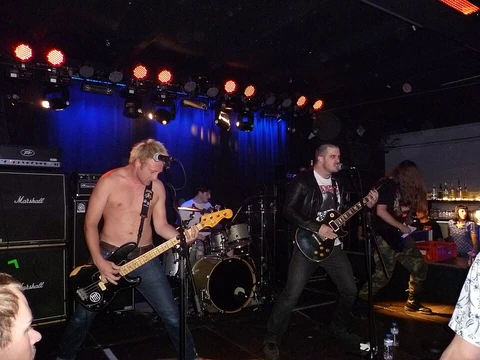
Black Army Jacket
American powerviolence band from Long Island, NY.

Black Army Jacket was an American powerviolence band formed after Andrew Orlando and Carlos Ramirez met at a Fugazi show on Long Island, NY. They released one self-titled album, many 7-inch EPs, splits, and compilation appearances, and their members later played in bands such as Municipal Waste, Burnt by the Sun, Matt Pond PA, and Hope Collapse.
- origin
- Long Island, NY, USA
- years_active
- 1996–1999 (reunited 2010)
- genre
- Powerviolence
- label
- Chainsaw Safety Records, Reservoir Records, Relapse Records
- known_for
- Influential powerviolence band with one album and numerous splits
Quick Facts
- Origin
- United States
- Genre
- Powerviolence · grindcore
- Years Active
- 1996-1999
- Associated Acts
- Deny the Cross, Human Remains, Discordance Axis, Municipal Waste, Matt Pond PA, Burnt by the Sun, Hope Collapse, Lakota
- Website
- [http: · www.facebook.com/blackarmyjacket Official Facebook Page]
Facts from the source article.
Lore & Background
The band was started by Andrew Orlando (ex-guitarist of Milhouse and owner of Reservoir Records) and Carlos Ramirez after they met at a Fugazi show on Long Island, NY. They were both fans of bands like Terrorizer, Assück and Napalm Death and wanted to create a band in those styles. Halfman drummer Dan Crowell and Adverse Possession, Those of Us bassist Chris Russo were quickly recruited. They were both in high school at the time. The band rehearsed original material for a few weeks until scene veteran Rob Lawi joined in on lead vocals. BAJ entered NYC's LoHo Studios a few months later and recorded what would become their 1996 demo. The tape caused a small buzz in the hardcore and metal zine world and made many tape trader lists.
Queens, NY-based Chainsaw Safety Records would go on to release the band's The Path of Two Swords As One 7-inch and the band started to tour regionally shortly after. During the sessions for the aforementioned release, they recorded several more songs for future releases at NJ's Sweetwood Sound with current Dalek member Alap Momin behind the boards. Around this time both Crowell and Russo left the band and continued to play in Prom King with Mike Delorenzo of C.R. and Serpico, Brian Meehan of Milhouse and Loyal to None, and Ben Knight. Not long after they quit, Dave Witte joined the band on drums. Now a four-piece, they toured with California's Benumb and Noothgrush. This period proved to be fruitful for the group with many releases hitting stores and awareness growing.
In 1998, BAJ was invited to play the annual Milwaukee Metalfest along with bands including Destruction, Mercyful Fate, Death and Brutal Truth. They also went on to perform at that year's Fiesta Grande festival at Berkley, CA's Gilman St. club, organized by Spazz bassist/vocalist and Slap-A-Ham Records founder, Chris Dodge. The band wrote throughout the year and entered the studio with Dean Rispler (Killing Time, 25 ta Life) in the producer chair. The resulting self-titled album saw the musicians incorporating hints of death and black metal along with some more traditional elements of hardcore to their sound. They toured extensively to support their debut.
Relapse Records approached the band with an offer to release an EP of new material. They recorded a batch of new songs but Rob Lawi and the band parted ways shortly afterwards. Bassist Carlos Ramirez then became t
Reader's Guide
Black Army Jacket's significance lies in their role within the powerviolence scene of the late 1990s, bridging hardcore punk and extreme metal. Their sole album, 222, incorporated death and black metal elements, while their numerous splits with bands like Spazz, Corrupted, and Noothgrush cemented their underground credibility. The band's members went on to form or join notable acts such as Burnt by the Sun, Deny the Cross, and Hope Collapse, extending their influence. Their 2006 discography Closed Casket preserved their legacy, and their 2010 reunion highlighted their enduring cult status. The band's trajectory—from a demo that circulated among tape traders to a Relapse Records offer—reflects the DIY ethos of the era. Their music continues to be referenced by fans of powerviolence and extreme hardcore.
Did You Know?
- The band was formed after Andrew Orlando and Carlos Ramirez met at a Fugazi show on Long Island, NY.
- Dave Witte, who joined on drums, later played in Burnt by the Sun and Deny the Cross.
- Their album 222 was produced by Dean Rispler, known for work with Killing Time and 25 ta Life.
- In 2014, Carlos Ramirez co-founded the music website No Echo.
Formation in the Hardcore Underground
Black Army Jacket traces its origins to a chance encounter at a Fugazi concert on Long Island, New York, where guitarist Andrew Orlando and bassist Carlos Ramirez first crossed paths. Orlando, a former member of Milhouse and the owner of Reservoir Records, and Ramirez shared a deep appreciation for extreme acts like Terrorizer, Assück, and Napalm Death, and both envisioned a band that channeled those influences into something new. They quickly brought in high school classmates Dan Crowell on drums and Chris Russo on bass, both of whom had ties to other local hardcore projects. After a few weeks of rehearsing original songs, scene veteran Rob Lawi stepped in to handle lead vocals. The group then tracked their 1996 demo at LoHo Studios in New York City. That tape generated a noticeable stir within the hardcore and metal zine community, landing on numerous tape-trader recommendation lists. Queens-based Chainsaw Safety Records picked up the band, issuing their The Path of Two Swords As One 7-inch and launching them into regional touring.
Rising Through the Festival Circuit
With Crowell and Russo departing to pursue other projects, Dave Witte slid behind the kit, solidifying a four-piece lineup that would carry the band through its most productive stretch. They toured alongside California's Benumb and Noothgrush, building momentum across the East Coast. The breakthrough moment arrived in 1998 when Black Army Jacket was invited to the annual Milwaukee Metalfest, sharing the bill with heavyweights like Destruction, Mercyful Fate, Death, and Brutal Truth. That same year they also performed at the Fiesta Grande festival at Gilman Street in Berkeley, California, an event organized by Spazz's Chris Dodge. Back home, the band spent the year writing new material before entering the studio with producer Dean Rispler. The resulting album, 222, marked a significant sonic shift: the musicians wove in elements of death and black metal while retaining the raw aggression of traditional hardcore. They toured extensively in support of the record, cementing their reputation as one of the most intense acts in the powerviolence scene.
Shifting Lineups and a Sudden End
Momentum carried the band into a Relapse Records deal for a new EP, and they recorded a batch of fresh songs. However, the collaboration with vocalist Rob Lawi ended shortly after those sessions. Carlos Ramirez stepped up to handle vocals himself, while New Jersey native Tom Hayden took over bass duties. Guitarist John Adubato, also from New Jersey, was recruited to form a two-guitar setup—Orlando and Ramirez had long admired Adubato's previous band, Times Up. Witte, who was already friends with Adubato, locked in just in time for a run of shows with the new configuration. Back in the studio in mid-1999, the group began crafting more technically demanding material and even discussed changing their name to signal a fresh chapter. Yet after a particularly difficult show in Worcester, Massachusetts, the band made the decision to disband. The split was abrupt, ending a run that had spanned roughly three years of relentless touring and recording.
Aftermath and Lasting Influence
The dissolution of Black Army Jacket did not silence its members. Adubato and Witte immediately formed Burnt by the Sun, while Ramirez later launched the melodic rock project Lakota. Orlando joined Anodyne and subsequently Disnihil in the early 2000s. In the mid-2000s, Orlando, Ramirez, and Witte reunited under the name Hope Collapse to record an EP. All three also became core members of Deny the Cross, a powerviolence outfit that also features Dan Lactose of Spazz and Ramon Salcido of Agents of Satan. The band's broader roster of former members went on to appear in Municipal Waste, Matt Pond PA, and other acts. In 2006, Black Box Recordings compiled a semi-discography called Closed Casket, gathering the 1996 demo, several split 7-inches, and the unreleased Relapse EP. Black Army Jacket reunited in 2010 for the Best Friends Day festival in Richmond, Virginia, and a show at The Cake Shop in New York, with the original four-piece lineup intact. Ramirez co-founded the music website No Echo in 2014.
Frequently Asked Questions
Who is Black Army Jacket?
Black Army Jacket was an American powerviolence band formed on Long Island, New York, after Andrew Orlando and Carlos Ramirez crossed paths at a Fugazi concert. Active from 1996 to 1999 before a 2010 reunion, they became one of the most cited early voices in the powerviolence scene.
What is Black Army Jacket's discography?
The band released a single self-titled full-length alongside a large catalog of 7-inch EPs, split records, and compilation appearances. Despite the limited number of full albums, their prolific output of shorter releases made them a staple of the early-2000s grindcore and powerviolence collector circuit.
Which labels did Black Army Jacket record for?
Their material appeared on Chainsaw Safety Records, Reservoir Records, and Relapse Records. Working across those three imprints helped spread their short, aggressive tracks through both the independent and larger extreme-music distribution channels of the late '90s.
What did Black Army Jacket members do after the band broke up?
Following the 1999 split, Orlando and Ramirez went on to play in acts like Municipal Waste, Burnt by the Sun, Matt Pond PA, and Hope Collapse. Their continued activity in other hardcore and metal bands kept their names visible in the scene well past Black Army Jacket's initial run.
Why is Black Army Jacket considered important to powerviolence?
They are widely regarded as a foundational influence on the powerviolence subgenre, shaping the ultra-fast, blast-beat-driven sound that later bands would build on. Their combination of one dense album with a flood of splits and EPs gave the style its early DIY distribution model and helped define its sonic template.
More in American grindcore musical groups 1-24
Spotted an error? Know more?
This is a living reference — every entry is fact-audited, and reader corrections feed straight into our audit queue. Suggest an edit · See this site's audit record