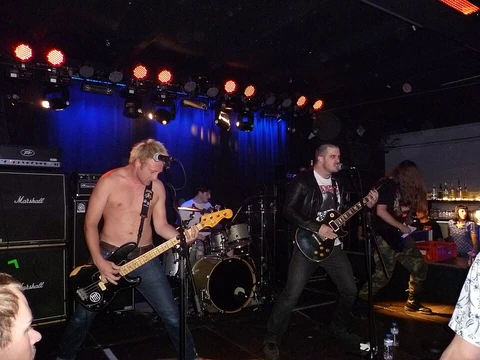
Benümb
American grindcore band active from 1994 to 2006.

Benümb was an American grindcore band from Millbrae, California, formed in 1994. They became a respected act within the local hardcore community, known for their angry, intense sound and political lyrics. The band released two studio albums on Relapse Records (Soul of the Martyr and Soupsick) plus a third album (The Uncreation) on Six Weeks Records, along with numerous splits and EPs before disbanding in 2006.
- origin
- Millbrae, California, United States
- label
- Relapse Records (early), Six Weeks Records (later)
Lore & Background
Benümb formed in 1994 in Millbrae, California, and went through various lineup changes in their early years. After playing together for almost a year, they released a split 7-inch with Short Hate Temper in mid-1995 on the Same Day label. Over the next year and a half, they played shows with bands including Man is the Bastard, Spazz, Exhumed, Dystopia, and Capitalist Casualties. In 1997, they recorded and released numerous 7-inch records, including splits with Dukes of Hazzard and Apartment 213, and their live set at the 'Fiesta Grande' festival was released as part of the Fiesta Comes Alive! LP on Slap-a-Ham Records. The Gear in the Machine 7-inch was released on the Relapse 7-inch series in late 1997, and in 1998 a live split with Suppression on a flexi-disc accompanied issue No. 3 of the fanzine Monkeybite.
Reader's Guide
Benümb's significance lies in their consistent output within the grindcore scene, particularly through their association with Relapse Records and their participation in major U.S. heavy music festivals such as the Milwaukee Metalfests and March Metal Meltdowns in 1998 and 1999. Their debut full-length, Soul of the Martyr (1998), was well received and contained 19 bonus tracks from previous splits and live performances. The band's sound evolved over time, as heard on the 2002 split 3-inch CD with Pig Destroyer, which marked the return of guitarist Paul Ponitkoff. Their final album, By Means of Upheaval (2003), continued their angry, punk-leaning grindcore style with political lyrics and short songs. After disbanding in 2006, members Pete Ponitkoff and John Gotelli formed Agenda of Swine, releasing an album on Relapse Records. Benümb's legacy is that of a respected grindcore band that contributed to the genre's underground vitality through numerous splits and compilation appearances.
Did You Know?
- Benümb's debut album Soul of the Martyr contained 19 bonus tracks taken from previous splits and live performances.
- The band's 2003 split 3-inch CD with Pig Destroyer showed an evolution in sound with the return of guitarist Pete Ponitkoff.
- Benümb appeared at every major U.S. heavy music festival in the two years following their debut album, including the 1998 and 1999 Milwaukee Metalfests.
- After the band broke up in 2006, Pete Ponitkoff and John Gotelli formed Agenda of Swine and released an album on Relapse Records.
Origins in the Bay Area Underground (1994–1997)
Benümb emerged from the Bay Area hardcore scene in 1994, taking root in Oakland, California, and quickly establishing a reputation within the local grindcore community. The early years were marked by shifting personnel, but the core identity of the band solidified quickly. After roughly a year of rehearsing and playing together, the group put out their first release—a split 7-inch alongside Short Hate Temper on the Same Day label—in mid-1995. The following eighteen months saw them sharing stages with a roster of respected names in the extreme music world, including Man is the Bastard, Spazz, Exhumed, Dystopia, and Capitalist Casualties. By 1997, the band had entered a remarkably prolific phase, cutting multiple 7-inch records, including splits with Dukes of Hazzard and Apartment 213. That same year, a live performance at the Fiesta Grande festival was captured for the Fiesta Comes Alive! LP on Slap-a-Ham Records, and the Gear in the Machine 7-inch landed on Relapse's 7-inch series. The band also contributed to numerous compilation releases throughout 1997, cementing their presence across the underground.
Soul of the Martyr and the Festival Circuit (1998–1999)
In May 1998, Benümb delivered their debut full-length, Soul of the Martyr, on Relapse Records. The record was characterized as angry and intense, and it included nineteen bonus tracks drawn from earlier splits and live recordings, giving listeners a comprehensive snapshot of the band's output up to that point. The album was well received, and the group hit the road hard, completing several mini-tours across the United States to promote the release. What followed was a remarkable stretch of festival appearances: over the next two years, Benümb played every major heavy music festival in the country. This included both the 1998 and 1999 editions of Milwaukee Metalfest, as well as the 1998 and 1999 March Metal Meltdown events. The band also continued to release material during this period, putting out a live split with Suppression on a flexi-disc that accompanied issue No. 3 of the Monkeybite fanzine in 1998, and a split 7-inch with Bad Acid Trip in 1999. Their presence on compilation albums from labels like Relapse, Deep Six, and Six Weeks further underscored how central they had become to the grindcore and extreme music landscape of the late nineties.
Sonic Evolution and Later Recordings (2000–2005)
The new millennium brought both creative growth and personnel changes for Benümb. In 2000, the band released Withering Strands of Hope, produced by Bart Thurber—known for his work with Spazz and Exhumed—at Oakland's House Of Faith studio. Guitarist Robb Koperski departed in early 2001 due to personal issues, a loss that would shape the band's subsequent direction. When Paul Ponitkoff returned to the guitar chair, the group's sound evolved noticeably, a shift evident on their 2002 split 3-inch CD with fellow labelmates Pig Destroyer, released on Robotic Empire Records. They also cut a split 7-inch with Agoraphobic Nosebleed for Relapse that same year. In 2003, By Means of Upheaval arrived on Relapse Records, continuing the band's signature blend of angry, punk-influenced grindcore, politically charged lyrics, and characteristically brief song structures. The band kept releasing material into the mid-2000s, issuing a split CD with Premonitions of War on Thorp Records in 2005. Throughout this period, their association with Relapse Records remained a constant thread, anchoring their output within a well-respected label family.
Dissolution and Life Beyond Benümb
Benümb called it quits in 2006, bringing to a close a twelve-year run that had taken them from a small Oakland hardcore crowd to the headliners' circuit of America's biggest extreme music festivals. The band's final chapter, however, did not mark the end of its members' musical lives. Pete Ponitkoff, who had handled vocals throughout the group's history, and drummer John Gotelli joined forces to form Agenda of Swine. The new project carried forward the intensity and directness that had defined Benümb's approach, and the duo secured a release on Relapse Records—the same label that had been a home for Benümb's studio albums and numerous splits. Looking back, Benümb's catalog spans three full-length albums, nine split releases, and appearances on more than a dozen compilation records, a body of work that placed them firmly among the most active and respected grindcore acts of the late nineties and early 2000s. Their story is one of steady, underground dedication rather than commercial spectacle, a path that resonated deeply with the Bay Area hardcore community that first championed them.
Frequently Asked Questions
Who is Benümb?
Benümb was a grindcore outfit out of Millbrae, California, that formed in 1994 and became a notable name in the Bay Area hardcore scene before calling it quits in 2006.
What albums did Benümb put out?
The band issued two full-length records, Soul of the Martyr and Soupsick, through Relapse Records, followed by a third LP titled The Uncreation on Six Weeks Records. They also put out a run of split releases and EPs throughout their career.
What was Benümb's sound and lyrical focus?
Their music was characterized by a raw, aggressive grindcore delivery paired with politically charged lyrics. Fans and local scene members consistently described the band's live and recorded output as angry and high-intensity.
Which labels did Benümb record for?
Early in their career the band released material on Relapse Records, while their later output, including The Uncreation, came out on Six Weeks Records.
How long was Benümb active and when did they break up?
The group operated for roughly twelve years, from their 1994 formation until their dissolution in 2006.
More in American grindcore musical groups 1-24
Spotted an error? Know more?
This is a living reference — every entry is fact-audited, and reader corrections feed straight into our audit queue. Suggest an edit · See this site's audit record