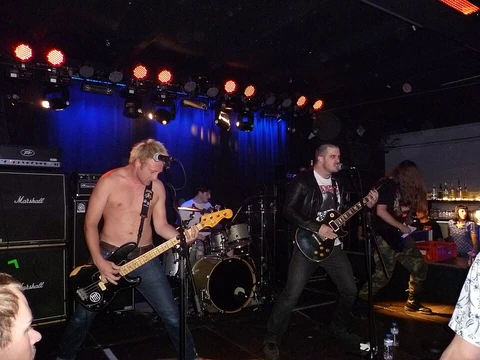
Antagony
Bay Area deathcore pioneers who blended metalcore with death metal.

Antagony was an American deathcore/metalcore band from the Bay Area of California, formed in 1998, disbanded in 2009, and reformed in 2019. The group is noted for combining metalcore with a substantial death metal influence, leading to their recognition as pioneers of the deathcore genre. They released three studio albums, each on a different record label, and founding member Ben Orum went on to co-found All Shall Perish in 2002, while Nick Vasallo later formed Oblivion.
- formed
- 1998
- disbanded
- 2009
- reformed
- 2019
- origin
- Bay Area, California, United States
- genre
- Deathcore/metalcore
- notable_for
- Pioneers of deathcore
Lore & Background
Antagony formed in 1998 from former members of the metalcore band Y.F.H. Founding members Nick Vasallo, Carlos Saldana, Ben Orum, and Jody Handy combined elements of grindcore, hardcore, death metal, tribal drumming, and doom into one sound. Their first release was an EP titled Expect the Worst, followed by their first US tour. With new drummer Justin Hughes, their debut album See Through These Eyes was released in 2001, refining their style. They performed with numerous extreme metal acts including Malevolent Creation, Incantation, Pig Destroyer, and Obituary.
After the Triangle of Hate Tour U.S.A. 2001, the band fell into inactivity as members pursued other projects. They resurfaced with a new lineup—Kyle Anderson, Christian Mitchell, and Carlos Saldana replacing Ben Orum, Bray Almini, and Caysen Russo—and released Rebirth in 2005, combining material written since 2001. Their final album, Days of Night, employed cellos, broken pianos, choirs, different simultaneous metronome markings, and multiple layers of overdubbing, marking a more classically structured sound. Justin Hughes left during its recording but performed on three tracks. Antagony parted ways in 2009 after ten years. Founding member Nick Vasallo later formed the death metal band Oblivion, which had been active since around 2005, while Ben Orum co-founded All Shall Perish in 2002.
Reader's Guide
Antagony's significance lies in their role as early pioneers of the deathcore genre, merging metalcore with a pronounced death metal influence. Their eclectic approach—incorporating grindcore, hardcore, tribal drumming, and doom—helped shape the Bay Area extreme metal underground. Though they released only three albums on different labels, their influence is evident in the subsequent success of bands formed by former members, such as All Shall Perish and Oblivion. The band's 2005 album Rebirth was well received but considered overdue, while Days of Night (released after a period of inactivity) showcased a more experimental, classically structured sound. Antagony's legacy is that of a formative act whose stylistic fusion and live performances influenced peers and helped define a subgenre.
Did You Know?
- Antagony formed in 1998 from former members of the metalcore band Y.F.H.
- Founding member Jody Handy died in 2010.
- Their album Days of Night used cellos, broken pianos, choirs, and different simultaneous metronome markings.
- Founding member Ben Orum co-founded All Shall Perish in 2002, and Nick Vasallo later formed Oblivion.
Origins & Sonic Blueprint
Antagony emerged from the Bay Area of California in 1998, born from the remnants of the metalcore group Y.F.H. Founding members Nick Vasallo, Carlos Saldana, Ben Orum, and Jody Handy set out to fuse an extraordinary range of extreme music into a single, cohesive sound. Their palette drew from grindcore, hardcore, death metal, tribal drumming, and doom, creating a sonic identity that stood apart from the typical metalcore fare of the late nineties. This blend of metalcore aggression with a heavy dose of death metal influence earned the group a place among the recognized pioneers of what would become known as the deathcore genre. Their debut EP, Expect the Worst, showcased this eclectic mixture and was immediately followed by their first American touring run, proving that their experimental approach could translate effectively to a live audience.
Albums & Artistic Evolution
Across their active years, Antagony released three studio albums, each on a different record label, and each marked a distinct phase in their artistic development. Their first full-length, See Through These Eyes (2001), arrived after they brought in drummer Justin Hughes and further sharpened the blend they had introduced on their EP. A lengthy period of inactivity followed, during which members poured their energy into side projects. When the band resurfaced with a partially new lineup, they delivered Rebirth in 2005, a record assembled from material written since 2001. Though critics and fans responded positively, the album carried the weight of time lost to the rapidly evolving metal landscape. Their final release, Days of Night, represented a deliberate break from earlier conventions. The band incorporated cellos, broken pianos, choirs, simultaneous conflicting metronome markings, and dense layers of overdubbing, while also adopting a more classically structured compositional approach. Justin Hughes departed during its recording but contributed to three tracks.
Bay Area Underground & Live Impact
Throughout the early 2000s, Antagony established themselves as one of the leading extreme metal acts in the Bay Area underground scene. Their live reputation was built on a relentless commitment to variation and unpredictability, a quality that proved especially potent on stage and left a lasting imprint on fellow musicians in the region. The band shared bills with a remarkable cross-section of the extreme metal world, appearing alongside acts spanning death metal, grindcore, and hardcore, including Malevolent Creation, Incantation, Pig Destroyer, Dystopia, Cephalic Carnage, Brujeria, Vital Remains, Cattle Decapitation, Disgorge, Exhumed, Obituary, As I Lay Dying, and Monstrosity, among others. They also headlined the Triangle of Hate Tour U.S.A. in 2001, supported by End of All and Boof, which served as a high point before their subsequent hiatus. The sheer breadth of their touring partners underscored how Antagony's fusion of death metal intensity with metalcore structure gave them a unique position bridging multiple subgenres and audiences simultaneously.
Dissolution, Legacy & Reunion
After a decade of activity, Antagony parted ways in 2009, bringing an end to their initial run. The dissolution was bittersweet: founding drummer Jody Handy, who had been part of the group from 1998 until 2000, passed away that same year. The split did not, however, sever the creative bonds between the members. Founding members Nick Vasallo and Ben Orum regrouped to form the death metal band Oblivion, while other members went on to contribute to All Shall Perish, ensuring that the musical DNA Antagony had cultivated continued to shape the extreme metal landscape. The band's influence extended well beyond their three albums, with their early approach to constant sectional changes and genre-blending cited as a formative influence on their Bay Area peers. In 2019, Antagony reformed, reuniting Vasallo, Orum, and Saldana alongside Bray Almini and Luis Martinez. Their return after a ten-year silence reaffirmed their status as foundational figures in the deathcore genre and offered longtime fans a chance to hear the band's signature blend of death metal ferocity and metalcore architecture once again.
Frequently Asked Questions
Who is Antagony?
Antagony is a Bay Area, California band that formed in 1998 and is widely credited as one of the early pioneers of the deathcore genre. They are best known for fusing the brutality of death metal with the structural framework of metalcore.
What made Antagony stand out in the extreme metal scene?
The group helped define what would later be called deathcore by weaving substantial death metal riffing and atmosphere into a metalcore foundation. Their approach predated many of the acts that would popularize the subgenre in the 2000s.
How many studio albums did Antagony release?
Antagony issued three studio albums during their original run, with each record appearing on a different label. Their initial activity stretched from 1998 until the band disbanded in 2009.
What did Antagony's members do after the 2009 split?
Founding member Ben Orum went on to co-found All Shall Perish in 2002, and Nick Vasallo later formed the project Oblivion. Both side projects kept the members active in the extreme metal circuit well beyond Antagony's first era.
Did Antagony ever reunite?
Yes, the band reformed in 2019 after roughly a decade of inactivity following their 2009 breakup. The reunion brought the Bay Area deathcore pioneers back together more than ten years after their last original run.
More in American grindcore musical groups 1-24
Spotted an error? Know more?
This is a living reference — every entry is fact-audited, and reader corrections feed straight into our audit queue. Suggest an edit · See this site's audit record