Jane English
Physicist turned photographer and co-translator of Taoist classics.

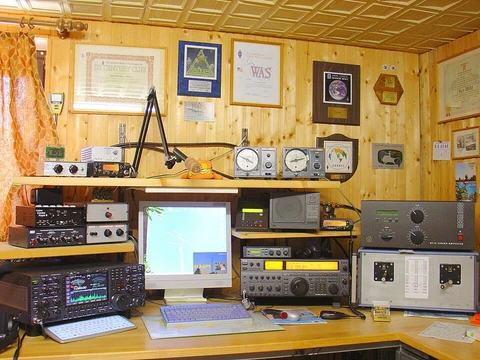
Jane English was born in 1942 in Boston, Massachusetts. She is a photographer, artist, and author with a doctorate in particle physics, and she also holds a license as a hot-air balloon pilot and volunteers for amateur radio emergency communications. She has lived in California and Colorado and now resides in Vermont.
She is most widely known for co-creating bestselling translations of the *Tao Te Ching* and the *Zhuangzi Inner Chapters*, which pair her photography and design with translation and calligraphy by Gia-Fu Feng. These works were first published as *Lao Tsu / Tao Te Ching* in 1972 and *Chuang Tsu / Inner Chapters* in 1974, and she later released several editions, including gender-neutral versions in 2011 and 2014. English has continued producing books, wall calendars, notecards, and art that explore nature and consciousness through Eastern and indigenous thought and traditions. She has also collaborated on several projects with Chungliang Al Huang.
English grew up in a small New England town in a colonial house built in 1765. Her grandfather was a professor at the Massachusetts Institute of Technology, her father an electrical engineer, and her mother a homemaker and avid gardener. She earned a Bachelor of Arts in Physics from Mount Holyoke College in 1964 and completed a Ph.D. in particle physics at the University of Wisconsin–Madison in 1970, taking up photography during graduate school. Her interest in photography followed her grandfather Walter H. James, grandmother Ida Rachel Butterfield James, and great-aunt Lucy Ardena Butterfield, whose black-and-white photographs of New England towns, landscapes, and farm scenes hung in her childhood home. Their negatives are now held by the University of New Hampshire library, and with her brother Ben English, Jr., she edited a two-volume collection of their photos and journals: *Our Mountain Trips, Part 1: 1899–1908* (2005) and *Our Mountain Trips, Part 2: 1909–1926* (2007).
In graduate school, a boyfriend introduced her to darkroom techniques at the student union, and they exhibited and sold prints together. She worked in black-and-white for many years, later writing that photography offered a welcome alternative to her experiences in graduate physics labs, where she was often the only woman.
Quick Facts
- Birth Place
- Boston, Massachusetts
- Occupation
- photographer, artist, author, and physicist
- Notable Works
- Lao Tsu / Tao Te Ching / Chuang Tsu / Inner Chapters
- Spouse
- Gia-Fu Feng (1970–1985)
Facts from the source article.
Lore & Background
Jane English grew up in a small New England town in a colonial house built in 1765. Her grandfather was a professor at MIT, her father an electrical engineer, and her mother a homemaker and avid gardener. She earned a BA in Physics from Mount Holyoke College in 1964 and completed a Ph.D. in particle physics in 1970. While in graduate school she began pursuing photography, following in the footsteps of her grandfather, grandmother, and great-aunt, whose black-and-white photographs of New England scenes hung in her childhood home. A boyfriend introduced her to darkroom techniques, and she exhibited and sold prints at art shows. She later wrote that photography was a welcome alternative to being the only woman in graduate physics departments and laboratories.
After completing her Ph.D., she accepted a six-month postdoctoral appointment at the Lawrence Berkeley National Laboratory. She then declined a further postdoctoral offer from Rutgers University, choosing instead to leave physics and focus on photography. She moved to Stillpoint, an intentional community in the Santa Cruz Mountains founded by Gia-Fu Feng, where she set up a darkroom under the deck of the main house. She and Feng developed a relationship, were informally bonded at Yosemite National Park, and were married by Alan Watts on Christmas Day 1970. She became co-director of Stillpoint, and in January 1971 they began collaborating on the Tao Te Ching translation. The community migrated from California to Vermont and then Colorado. In Vermont, English and Feng decided to combine her black-and-white nature photographs with his calligraphy of the original Chinese text, in the style of traditional Chinese paintings. The book was completed by fall 1971 and published in 1972. A second book, Chuang Tsu / Inner Chapters, followed in 1974.
Reader's Guide
Jane English's collaboration with Gia-Fu Feng produced two of the bestselling translations of the Tao Te Ching and the Zhuangzi Inner Chapters. The first book, Lao Tsu / Tao Te Ching, sold over one million copies as of its 25th anniversary edition, and Chuang Tsu / Inner Chapters sold more than 150,000 copies as of its 35th anniversary edition. English insisted on equal credit and compensation in the contract, a position that was not easy for a woman to take at the time. Her black-and-white nature photographs and page design were integral to the books' success; as she later said, 'The even more ancient language of the natural world balances the words.' The Willard Gallery in New York exhibited photos and calligraphy from the first book. Time magazine described it as 'the Tao Te Ching gussied up with photographs,' but the editor Toinette Lippe noted that until that edition, the Tao Te Ching had been around for 2,500 years without a review from Time. A newspaper reviewer called the photographs in Chuang Tsu / Inner Chapters 'nothing short of superb – serene in composition and sensitively executed.' English has continued to create and publish books, wall calendars, notecards, and art exploring nature and consciousness through Eastern and indigenous thought. She also edited a two-volume collection of her grandparents' and great-aunt's photographs and journals, Our Mountain Trips, published in 2005 and 2007.
Did You Know?
- Jane English holds a Ph.D. in particle physics and is also a licensed hot-air balloon pilot and amateur radio emergency communications volunteer.
- She was married to Gia-Fu Feng by Alan Watts on Christmas Day 1970.
- Her black-and-white nature photographs were combined with Feng's calligraphy in the style of traditional Chinese paintings for the Tao Te Ching translation.
- She insisted on being credited and compensated equally for the Tao Te Ching book, which became the bestselling translation with over one million copies sold.
More in Amateur Radio People 1-24
Spotted an error? Know more?
Reader corrections go straight into our review queue. Suggest an edit · How this site is sourced