David Boggs
Co-inventor of Ethernet and developer of early Internet protocols.

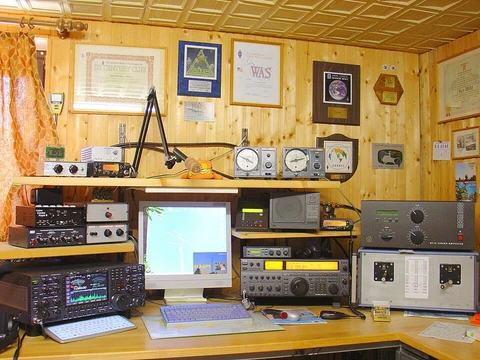
David Reeves Boggs was an American electrical and radio engineer who co-invented Ethernet, the dominant family of technologies for local area computer networks. He developed early prototypes of Internet protocols, file servers, gateways, and network interface cards, and was an amateur radio operator.
Quick Facts
- Birth Date
- 1950-06-17
- Birth Place
- Washington, D.C., U.S.
- Death Date
- 2022-02-19
- Death Place
- Stanford, California, U.S.
- Field
- Computer networking
- Workplaces
- Xerox PARC
- Education
- Princeton University (B.S.E.) / Stanford University (Ph.D.)
- Known For
- Co-invention of Ethernet
- Awards
- IEEE Computer Society Technical Achievement Award (1988) / ACM Fellow, AAAS Fellow
Facts from the source article.
Lore & Background
David Boggs was an American electrical and radio engineer who, alongside Robert Metcalfe and others, co-invented Ethernet—the dominant family of technologies for local area computer networks. He also developed early prototypes of Internet protocols, file servers, gateways, and network interface cards.
Born in Washington, D.C., in 1950, Boggs graduated from Woodrow Wilson High School in 1968 and earned a B.S.E. in electrical engineering from Princeton University in 1972. He then joined the research staff at Xerox PARC, where he met Robert Metcalfe, who was debugging an Interface Message Processor interface for the PARC systems group. Boggs, a licensed amateur radio operator, saw parallels between Metcalfe’s theories and radio broadcasting, and joined his project. As *The Economist* later noted, the two co-invented Ethernet: Metcalfe generated the ideas, and Boggs figured out how to build the system.
In 1973, they built several Ethernet interfaces for the Xerox Alto, an early personal computer. Xerox filed a patent application on March 31, 1975, naming Metcalfe, Boggs, Chuck Thacker, and Butler Lampson as inventors. After 18 months of work, they published the seminal 1976 paper “Ethernet: Distributed Packet Switching for Local Computer Networks.” For a session at the National Computer Conference in June 1976, Boggs produced a slide from a Metcalfe sketch of Ethernet terminology that was widely reprinted. The original prototype circuit is held by the Smithsonian Institution’s National Museum of American History.
While at Xerox, Boggs pursued graduate studies at Stanford University, earning a master’s degree in 1973 and a Ph.D. in 1982. His dissertation, “Internet Broadcasting,” laid groundwork later expanded by Steve Deering into IP multicasting. He also contributed to the PARC Universal Packet protocol architecture. Boggs became a fellow of the Association for Computing Machinery and received the IEEE Computer Society technical achievement award in 1988.
After leaving Xerox, he worked on the “Titan” project at the Digital Equipment Corporation Western Research Laboratory. He later worked as a consultant in Silicon Valley and co-founded LAN Media Corporation with Ron Crane. In July 2000, LMC was acquired by SBE Incorporated, which was then acquired by Neonode in 2007.
Boggs died of heart failure at Stanford University Medical Center on February 19, 2022, at the age of 71.
Reader's Guide
David Boggs's significance lies in his role as co-inventor of Ethernet, which became the most popular family of technologies for local area computer networks. His ability to translate theoretical concepts into working hardware was critical: while Robert Metcalfe generated the ideas, Boggs figured out how to build the system. The Ethernet interfaces they built for the Xerox Alto in 1973 demonstrated the feasibility of local networking, and their 1976 paper established the foundational architecture. The original prototype circuit is preserved by the Smithsonian Institution, underscoring its historical importance. Boggs's Ph.D. work on 'Internet Broadcasting' contributed to the development of IP multicasting, and his involvement in the PARC Universal Packet protocol architecture influenced early internetworking. His career spanned Xerox PARC, Digital Equipment Corporation, and his own startup LAN Media Corporation, reflecting a sustained impact on networking technology. The IEEE Computer Society technical achievement award and his fellowship in the Association for Computing Machinery recognize his contributions to the field.
Did You Know?
- David Boggs was an amateur radio operator with the call sign WA3DBJ.
- He recognized similarities between Robert Metcalfe's theories and radio broadcasting technologies, leading to his involvement in Ethernet's development.
- Boggs wrote his Ph.D. dissertation on 'Internet Broadcasting', a concept later expanded to IP multicasting.
More in Amateur Radio People 1-24
Spotted an error? Know more?
Reader corrections go straight into our review queue. Suggest an edit · How this site is sourced