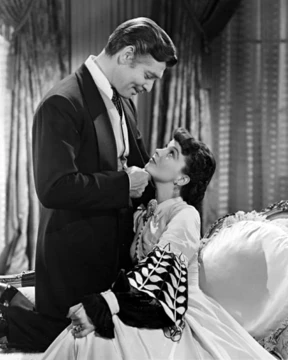
Norma Talmadge
Silent-era star and producer, famed for melodrama and glamour.

via Wikipedia: Norma Talmadge · see source
Norma Marie Talmadge (May 2, 1894 – December 24, 1957) was a silent-film actress and producer who dominated the box office for over ten years, hitting her stride in the early 1920s as one of America’s most beloved screen idols. She made her name in melodrama, with *Smilin’ Through* (1922) as her best-known picture, though she also delivered acclaimed work with director Frank Borzage on *Secrets* (1924) and *The Lady* (1925). Her younger sister Constance was a star too. Talmadge married wealthy producer Joseph M. Schenck, and together they launched their own production company. She rose to fame on the East Coast before relocating to Hollywood in 1922. Known for her elegance and glamour during the Roaring Twenties, her popularity faded as the silent era ended. After two talkies failed at the box office, she retired, still very rich.
Born in Jersey City, New Jersey, on May 2, 1894, she later admitted she and her mother had told fan magazines she was from Niagara Falls, New York, because it sounded more romantic. She was the eldest daughter of Frederick O. Talmadge, an unemployed alcoholic, and Margaret “Peg” Talmadge. Her younger sisters Natalie and Constance also became actresses. The family was poor. One Christmas, Fred left to buy food and never returned, leaving Peg to raise the three girls alone in Brooklyn by taking in laundry, selling cosmetics, teaching painting, and renting rooms.
After Norma mentioned a classmate who modeled for illustrated song slides, Peg tracked down the photographer and arranged an interview. Initially rejected, Norma was soon hired. When they saw her debut at a theater, Peg decided to push her into movies.
As the eldest, Norma was the first daughter Peg steered toward film. They went to Vitagraph Studios in Flatbush, a streetcar ride from home, but the casting director threw them out. Scenario editor Beta Breuil, struck by Norma’s beauty, gave her a small part in *The Household Pest* (1909). With Breuil’s help, she played bit parts in over 100 films between 1911 and 1912, eventually joining the stock company at $25 a week. Her first contract role was *Neighboring Kingdom* (1911) with John Bunny. Her first real success came in Vitagraph’s three-reel *A Tale of Two Cities* (1911), playing the unnamed seamstress who goes to the guillotine with Sidney Carton. Star Maurice Costello helped her improve. She played everything from leads to extras, taking roles as a colored mammy, a clumsy waitress, and a reckless modern girl, gaining notice from critics and audiences. By 1913, she was Vitagraph’s most promising young actress, working in Van Dyke Brooke’s unit and often opposite Antonio Moreno.
Her big break came in 1915 with Vitagraph’s anti-German propaganda feature *The Battle Cry of Peace*. Peg, ambitious for more, secured a two-year contract with National Pictures Company for eight features at $400 a week. Her last Vitagraph film was *The Crown Prince’s Double*. In five years, she had made over 250 films. That summer, she left Vitagraph.
In August, the Talmadges went to California, where Norma’s first role was in *Captivating Mary Carstairs*. It was a disaster—cheap sets and costumes, a poorly backed studio—and the film flopped, shutting down National Pictures. Stranded after one picture, they aimed higher and went to Triangle Film Corporation, where D. W. Griffith was supervising. Thanks to *The Battle Cry*, she signed with Griffith’s Fine Arts Company. Over eight months, she starred in seven Triangle features, including the comedy *The Social Secretary* (1916), written by Anita Loos, which let her disguise her beauty to dodge unwanted male attention.
When her contract ended, the family returned to New York. At a party, she met Broadway and film producer Joseph M. Schenck, a wealthy exhibitor eager to produce his own movies. Taken with her personally and professionally, he proposed marriage and a production studio. They wed on October 20, 1916. Norma called her much older husband “Daddy.” He managed and nurtured her career alongside her mother. In 1917, they formed the Norma Talmadge Film Corporation.
- born
- May 2, 1894, Jersey City, New Jersey
- died
- December 24, 1957
- field
- Actress, film producer
- nationality
- American
- known_for
- Silent film star; Smilin’ Through (1922); Secrets (1924); The Lady (1925)
Verified Timeline
Quick Facts
- Birth Name
- Norma Marie Talmadge
- Birth Date
- 1894-05-02
- Birth Place
- Jersey City, New Jersey, U.S.
- Death Date
- 1957-12-24
- Death Place
- Las Vegas, Nevada, U.S.
- Resting Place
- Hollywood Forever Cemetery
- Occupation
- Actress · producer
- Years Active
- 1909–1930
- Spouse
- Joseph M. Schenck · 1916 · 1934 · end=div / George Jessel · 1934 · 1939 · end=div / Carvel James · 1946
- Relatives
- Natalie Talmadge (sister) / Constance Talmadge (sister)
Facts from the source article.
Lore & Background
Talmadge was the eldest daughter of Frederick O. Talmadge, an unemployed chronic alcoholic, and Margaret 'Peg' Talmadge. Her childhood was marked by poverty; one Christmas morning, Fred left to buy food and never returned, leaving Peg to raise Norma and her two younger sisters, Natalie and Constance, in Brooklyn. Peg took in laundry, sold cosmetics, taught painting classes, and rented out rooms. After Norma mentioned a classmate who modeled for illustrated song slides, Peg located the photographer and arranged an interview. Following an initial rejection, Norma was hired. When they saw her debut, Peg resolved to get her into motion pictures. Mother and daughter went to Vitagraph Studios in Flatbush, New York. They got past the gates but were thrown out by the casting director. Scenario editor Beta Breuil, attracted by Talmadge's beauty, arranged a small part for her in *The Household Pest* (1909). Between 1911 and 1912, Talmadge played bit parts in over 100 films, eventually earning a spot in the stock company at $25 per week. Her first real success came with Vitagraph's three-reel *A Tale of Two Cities* (1911), in which she played the small role of the unnamed seamstress. By 1913, she was Vitagraph's most promising young actress. In 1915, she starred in *The Battle Cry of Peace*, an anti-German propagandist drama. Peg then got a two-year contract with National Pictures Company for eight features at $400 per week. After that studio failed, she joined Triangle Film Corporation, working under D. W. Griffith. In 1916, she married millionaire film producer Joseph M. Schenck, and they formed the Norma Talmadge Film Corporation in 1917. Her first film for the studio, *Panthea* (1917), was a hit. She made four to six films a year in New York between 1917 and 1921, often paired with Eugene O'Brien. In 1922, she moved to Hollywood, where her films became bigger and glossier, including *Smilin’ Through* (1922), *Secrets* (1924), and *The Lady* (1925).
Reader's Guide
Norma Talmadge was one of the most popular and highest-paid actresses of the silent era. In 1923, a poll of picture exhibitors named her the number-one box office star. She was earning $10,000 a week and receiving as many as 3,000 letters weekly from fans. Her career, carefully managed by her husband Joseph M. Schenck and her mother, peaked in the early 1920s with melodramas that showcased her dramatic range. Her film *Secrets* (1924), directed by Frank Borzage, marked the pinnacle of her career, with her giving her best performance and receiving the best reviews. She also worked with top-flight directors such as Frank Lloyd, Clarence Brown, and Frank Borzage. On January 5, 1926, Talmadge and Anna May Wong turned the first spadeful of earth using a gold-plated shovel at the groundbreaking ceremonies for Grauman's Chinese Theatre. The theater's official account credits Talmadge with inspiring the tradition of putting footprints in concrete when she accidentally stepped into wet concrete. However, in a 1937 radio interview, Sid Grauman gave another version, saying the idea came when he accidentally stepped in soft concrete. With the end of the silent era, her popularity waned. After two talkies proved disappointing at the box office, she retired while still very wealthy.
Did You Know?
- According to her birth certificate, Talmadge was born in Jersey City, New Jersey, though she and her mother later told fan magazines she was born in Niagara Falls, New York, for a more romantic story.
- Between 1911 and 1912, she played bit parts in over 100 films at Vitagraph Studios.
- In 1923, a poll of picture exhibitors named Norma Talmadge the number-one box office star.
- She turned the first spadeful of earth at the groundbreaking for Grauman's Chinese Theatre on January 5, 1926, using a gold-plated shovel.
- Her last film for First National was *Camille* (1927), during which she fell in love with leading man Gilbert Roland.
More in Actors From The Golden Age Of Hollywood 1-18
Spotted an error? Know more?
This is a living reference — every entry is fact-audited, and reader corrections feed straight into our audit queue. Suggest an edit · See this site's audit record