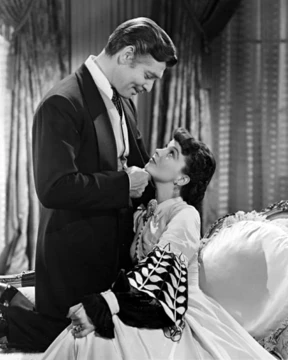
Lionel Barrymore
American actor, director, and member of the Barrymore family.

via Wikipedia: John Barrymore · see source
Lionel Barrymore, born Lionel Herbert Blyth in Philadelphia, worked as an actor on stage, in movies, and on radio, and also directed films. He won the Academy Award for Best Actor for *A Free Soul* (1931). Today, he is best remembered by many as the villainous Mr. Potter in Frank Capra’s 1946 film *It’s a Wonderful Life*. He was also famous for playing Ebenezer Scrooge in yearly radio broadcasts of *A Christmas Carol* during his last twenty years. Another well-known role was Dr. Leonard Gillespie in MGM’s nine *Dr. Kildare* movies, a character he later played in six more films centered on Gillespie alone, as well as in a radio series called *The Story of Dr. Kildare*. He belonged to the famous theatrical Barrymore family.
Barrymore’s parents, Georgiana Drew Barrymore and Maurice Barrymore, were both actors. He was the older brother of Ethel and John Barrymore, the uncle of John Drew Barrymore and Diana Barrymore, and the great-uncle of Drew Barrymore. He went to private schools, including the Art Students League of New York, and attended the Episcopal Academy in Philadelphia, though he was raised Catholic. He graduated from Seton Hall Preparatory School in 1891.
Reluctant to follow his family into acting, Barrymore first appeared on stage at age fifteen in 1893, touring and performing in *The Rivals* with his grandmother Louisa Lane Drew. He later said he wanted to paint or draw, not act, and felt the theater was only a relative he had to live with. Still, he found success in character roles and kept acting, though he also wanted to be a painter and compose music. In his early twenties, he appeared on Broadway with his uncle John Drew Jr. in plays like *The Second in Command* (1901) and *The Mummy and the Hummingbird* (1902), the latter earning him critical praise. *The Other Girl* (1903–04) was a long-running hit. In 1905, he acted with John and Ethel in a pantomime, playing the title role in *Pantaloon* and another part in *Alice Sit-by-the-Fire*.
After a string of disappointing plays in 1906, Barrymore and his first wife, actress Doris Rankin, left the stage and moved to Paris, where he trained as an artist. Their baby, Ethel, was born there in 1908. Barrymore later wrote that he and Doris were in France when Bleriot flew across the English Channel on July 25, 1909. His painting career did not succeed, so he returned to the US in 1909. That December, he went back to the stage in Chicago for *The Fires of Fate*, but left later that month due to nerves about its New York opening; producers said he had appendicitis. He soon returned to Broadway in *The Jail Bird* (1910) and continued with more plays. From 1910, he joined his family’s vaudeville act, where he felt less pressure to memorize lines.
From 1912 to 1917, Barrymore focused on film, but after World War I he had several Broadway successes, building a reputation as a dramatic and character actor, often performing with his wife. He returned to the stage in *Peter Ibbetson* (1917) with his brother John, and got star billing in *The Copperhead* (1918) with Doris. He kept star billing for the next six years in plays like *The Jest* (1919, again with John) and *The Letter of the Law* (1920). His 1921 performance as Macbeth opposite Julia Arthur was poorly received. His last stage success was *Laugh, Clown, Laugh* in 1923 with his second wife, Irene Fenwick, whom he met while acting in *The Claw* the year before; they fell in love, and he divorced Doris. Three straight productions in 1925 got negative reviews. After appearing in *Man or Devil* in 1926, he signed a film contract with MGM and never performed on stage again once sound films arrived in 1927.
Barrymore joined Biograph Studios in 1909 and by 1911 was playing leading roles in films directed by D. W. Griffith. He made *The Battle* (1911), *The New York Hat* (1912), *Friends*, and *Three Friends* (1913). In 1915, he co-starred with Lillian Russell in *Wildfire*, one of her few movies. He also wrote and directed at Biograph. His last silent film as a director, *Life’s Whirlpool* (Metro Pictures, 1917), starred his sister Ethel. He acted in over sixty silent films with Griffith.
In 1920, he repeated his stage role in the film version of *The Copperhead* and starred in *The Master Mind* with Gypsy O’Brien. Before MGM formed in 1924, Barrymore built a good relationship with Louis B. Mayer at Metro Pictures, making several silent features for Metro, some now lost. In 1923, he and Fenwick went to Italy to film *The Eternal City* for Metro in Rome, combining work with their honeymoon. He occasionally freelanced, returning to Griffith in 1924 for *America*. In 1925, he moved from New York to Hollywood.
Before marrying Irene, Barrymore and his brother John argued over the issue of Irene’s chastity following an incident.
- born
- April 28, 1878
- died
- November 15, 1954
- field
- Actor, film director
- nationality
- American
- known_for
- Academy Award for Best Actor (A Free Soul), role of Mr. Potter (It's a Wonderful
Verified Timeline
Lore & Background
Lionel Barrymore was born Lionel Herbert Blyth in Philadelphia, the son of actors Georgiana Drew Barrymore and Maurice Barrymore. He was the elder brother of Ethel and John Barrymore. He later said, 'I didn't want to act. I wanted to paint or draw.' He found success on stage in character roles and appeared on Broadway with his uncle John Drew Jr. He did not achieve success as a painter and returned to the US in 1909.
Reader's Guide
Lionel Barrymore's significance lies in his versatile career spanning stage, silent film, sound film, and radio. He joined Biograph Studios in 1909 and appeared in leading roles in films directed by D. W. Griffith. He is remembered for his role as the villainous Mr. His portrayal of Dr. Leonard Gillespie in the Dr. Kildare film series and subsequent radio series cemented his legacy. Barrymore broke his hip in an accident, leading him to play Gillespie in a wheelchair; worsening arthritis kept him in the chair. He was a member of the theatrical Barrymore family, which included siblings Ethel and John, and later descendants such as Drew Barrymore.
Did You Know?
- Lionel Barrymore was the elder brother of Ethel and John Barrymore.
- He played the villainous Mr. Potter in Frank Capra's 1946 film It's a Wonderful Life.
- Barrymore broke his hip in an accident, leading him to play Dr. Gillespie in a wheelchair; worsening arthritis kept him in the chair.
A Reluctant Heir to the Stage
Born John Sidney Blyth in Philadelphia in 1882, the youngest child of Maurice Barrymore and Georgie Drew, he grew up in a household saturated with theatrical tradition. His maternal grandmother Louisa Lane Drew had managed the Arch Street Theatre, and his mother's side was thick with performers. Yet the boy consistently resisted the stage. Sent to schools across four states, punished with readings of Dante's Inferno, expelled from Georgetown Preparatory in 1897, he drifted through a restless childhood marked by his mother's early death from tuberculosis and his grandmother's passing that same year. In London he enrolled at the Slade School of Fine Art, hoping to become a visual artist, and upon returning to New York in 1900 he took a fifty-dollar-a-week job illustrating for The New York Evening Journal. His father Maurice eventually coaxed him onto the stage in 1900 for a handful of performances of a short play in Fort Lee, New Jersey, and he appeared again the following year. By 1903, the career he had long tried to avoid had begun in earnest.
The Tragedian's Zenith
From his first professional engagement in 1903, Barrymore moved steadily from light comedy into the demanding world of high drama. His breakthrough came with the 1916 production of Justice, which established him as a serious dramatic force. The trajectory accelerated with his 1920 Richard III and, most significantly, his 1922 Hamlet, a performance so commanding that critics anointed him the greatest living American tragedian. He carried that reputation across the Atlantic, delivering a celebrated Hamlet in London in 1925. That London triumph marked the apex of his stage career; after it, he would not return to the theater for fourteen years.
The Great Profile on Screen
Following his 1925 London success, Barrymore abandoned the stage entirely and devoted himself to cinema for the next fourteen years. In the silent era he carved out a distinctive screen identity, earning strong reviews in Dr. Jekyll and Mr. Hyde (1920), Sherlock Holmes (1922), and The Sea Beast (1926). It was during this period that audiences and critics coined his enduring nickname, the Great Profile, a reference to the strikingly sculpted line of his face. When talkies arrived, his rigorous stage training in vocal projection and diction became a genuine advantage rather than a liability. Four of his sound-era films—Grand Hotel (1932), Dinner at Eight (1933), Twentieth Century (1934), and Midnight (1939)—have since been deemed culturally significant enough for induction into the National Film Registry, a testament to how his theatrical discipline translated into a new medium and how his presence elevated even the most formulaic studio productions of the early 1930s.
Genius and Tabloid
Barrymore's private struggles became inseparable from his public image. A drinking problem that had taken root by his mid-teens shadowed his entire adult life, and he cycled through four marriages and one divorce after another before declaring bankruptcy in his later years. His final film roles increasingly leaned into self-mockery, casting him as drunken has-beens and washed-up characters, a bitter irony for a man once hailed as the greatest American tragedian. The Washington Post's obituary after his death in 1942 captured the tension: despite his genuine theatrical genius, the years had turned him into a tabloid figure. Film historians have noted that his impact on the craft of screen performance started to wane after the mid-1930s, yet his biographer Martin Norden pushes back, calling him a figure who may well have been the most influential and most idolized performer of his generation—a judgment that honors the peak rather than the decline.
More in Actors From The Golden Age Of Hollywood 1-18
Spotted an error? Know more?
This is a living reference — every entry is fact-audited, and reader corrections feed straight into our audit queue. Suggest an edit · See this site's audit record