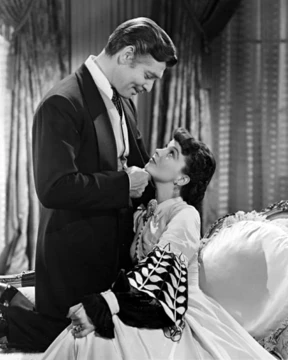
Norma Shearer
Canadian-American actress and early Academy Award winner.

via Wikipedia: Norma Shearer · see source
Edith Norma Shearer (August 11, 1902 – June 12, 1983) was a Canadian-American actress whose film career ran from 1919 to 1942. She was known for portraying spirited, sexually independent women. She acted in adaptations of works by Noël Coward, Eugene O'Neill, and William Shakespeare. Shearer became the first performer to earn five Academy Award acting nominations, ultimately receiving six nods and winning one Oscar for Best Actress for her role in *The Divorcee* (1930). Critic Mick LaSalle described her as a feminist trailblazer, calling her "the exemplar of sophisticated modern womanhood and ... the first American film actress to make it chic and acceptable to be single and not a virgin on screen."
Shearer had Scottish, English, and Irish ancestry. She grew up in Montreal, attending Montreal High School for Girls and Westmount High School. Her early life was comfortable thanks to her father’s successful construction business, but her parents’ marriage was unhappy. Andrew Shearer struggled with manic depression and "moved like a shadow or a ghost around the house." Her mother was Edith Mary (née Fisher) Shearer. Young Norma loved music, but after seeing a vaudeville show for her ninth birthday, she decided to become an actress. Her mother supported this ambition but secretly worried that Norma’s physical flaws would hold her back. Shearer herself "had no illusions about the image I saw in the mirror." She admitted to having a "dumpy figure, with shoulders too broad, legs too sturdy, hands too blunt," and was very aware of her small eyes, which appeared crossed due to a cast in her left eye. By her own account, she was "ferociously ambitious" even as a child.
Shearer later described her childhood and adolescence as "a pleasant dream," but that ended in 1918 when her father’s company went bankrupt and her older sister Athole had her first serious mental breakdown. The family was forced into a small, gloomy house in a "modest" Montreal suburb. The sudden poverty only strengthened Shearer’s determination: "At an early age, I formed a philosophy about failure. Perhaps an endeavor, like my father's business, could fail, but that didn't mean Father had failed."
Her mother saw things differently. Within weeks, Edith left her husband and moved with her two daughters into a cheap boarding house. A few months later, encouraged by her brother—who thought his niece should try her luck in "the picture business," then mostly based on the U.S. East Coast—Edith sold Norma’s piano and the family dog. She carried a letter of introduction for Norma, obtained from a local theatre owner, to Florenz Ziegfeld, who was preparing a new season of the Ziegfeld Follies.
In January 1920, the three Shearer women arrived in New York, all dressed up. "I had my hair in little curls," Shearer recalled, "and I felt very ambitious and proud." But her spirits sank when she saw their rented apartment: "There was one double bed, a cot with no mattress and a stove with one gas jet. The communal bathroom was at the end of a long, dimly lit hallway. Athole and I took turns sleeping with mother in the bed, but sleep was impossible anyway—the elevated trains rattled right past our window every few minutes."
The meeting with Ziegfeld was a disaster. He rejected her outright, reportedly calling her a "dog" and criticizing her crossed eyes and stubby legs. She kept trying, undeterred. "I learned that Universal Pictures was looking for eight pretty girls to serve as extras. Athole and I showed up and found 50 girls ahead of us. An assistant casting director walked up and down looking us over. He passed up the first three and picked the fourth. The fifth and sixth were unattractive, but the seventh would do, and so on, down the line until seven had been selected—and he was still some ten feet ahead of us. I did some quick thinking. I coughed loudly, and when the man looked in the direction of the cough, I stood on my tiptoes and smiled right at him. Recognizing the awkward ruse to which I'd resorted, he laughed openly and walked over to me and said, 'You win, Sis. You're Number Eight.'"
More extra roles followed, including one in *Way Down East*, directed by D. W. Griffith. During a break, Shearer stood near a powerful arc light and introduced herself to Griffith, sharing her hopes for stardom. "The Master looked down at me, studied my upturned face in the glare of the arc, and shook his eagle head. Eyes no good, he said. A cast in one and far too blue; blue eyes always looked blank in close-up. You'll never make it, he declared, and turned solemnly away."
Still not giving up, Shearer spent some of her savings on a consultation with Dr. William Bates about her strabismus. He gave her muscle-strengthening exercises that, after years of daily practice, allowed her to hide the cast for long periods on screen. She spent hours in front of a mirror, exercising her eyes and practicing poses to minimize the flaws Ziegfeld and Griffith had pointed out. At night, she sat in Broadway theatre galleries, studying the entrances of actresses like Ina Claire, Lynn Fontanne, and Katharine Cornell.
Desperate for money, Shearer turned to modeling, which went well. She said of that work: "I could smile at a cake of laundry soap as if it were dinner at the Ritz. I posed with a strand of imitation pearls. I posed in dust-cap and house dress with a famous mop, for dental paste and for soft drink, holding my mouth in a whistling pose until it all but froze that way." She became the new model for Kelly-Springfield Tires, earning the title "Miss Lotta Miles" and appearing in advertisements seated.
- born
- August 11, 1902
- died
- June 12, 1983
- field
- Actress
- nationality
- Canadian-American
- known_for
- First five-time Academy Award acting nominee; Best Actress win for The Divorcee
Verified Timeline
Lore & Background
Shearer was of Scottish, English and Irish descent and spent her childhood in Montreal, where she was educated at Montreal High School for Girls and Westmount High School. Her early life was privileged due to her father's construction business, but the marriage was unhappy; her father suffered from manic depression and "moved like a shadow or a ghost around the house." After seeing a vaudeville show for her ninth birthday, she announced her intention to become an actress. She acknowledged her physical flaws—a "dumpy figure, with shoulders too broad, legs too sturdy, hands too blunt"—and a cast in her left eye, but described herself as "ferociously ambitious." Her childhood ended in 1918 when her father's company collapsed and her older sister Athole suffered her first serious mental breakdown. Forced into poverty, Shearer's determination strengthened. Her mother sold her daughter's piano and the family dog, and with a letter of introduction to Florenz Ziegfeld, the three Shearer women arrived in New York in January 1920. In New York, Ziegfeld turned Shearer down flat, reportedly calling her a "dog" and criticizing her crossed eyes and stubby legs. She persisted, landing extra work through a ruse at Universal Pictures. She later introduced herself to D. W. Griffith during a break in filming Way Down East, but he told her "Eyes no good" and that she would never make it. Undeterred, Shearer consulted Dr. William Bates about her strabismus and performed eye exercises for years. She also modeled, becoming "Miss Lotta Miles" for Kelly-Springfield Tires. A year after arriving in New York, she received fourth billing in The Stealers (1920). In January 1923, she received an offer from Louis B. Mayer Pictures and signed a contract for $250 a week. She moved to Hollywood with her mother, where she met Irving Thalberg. After a poor first screen test, cameraman Ernest Palmer supervised a successful second test, but director John M. Stahl still found her "unphotogenic." She was given a minor role in Pleasure Mad, with the understanding that "if I didn't deliver in this picture, I was through." After a confrontation with Louis B. Mayer, she delivered an emotional scene "lock, stock, and barrel, fur, fins and feathers," earning respect and six films in eight months from Thalberg.
Reader's Guide
Norma Shearer's significance lies in her role as a pioneering actress who challenged on-screen conventions. Reviewer Mick LaSalle called her a feminist pioneer, "the exemplar of sophisticated modern womanhood and ... the first American film actress to make it chic and acceptable to be single and not a virgin on screen." Shearer's career, spanning 1919 to 1942, included adaptations of Noël Coward, Eugene O'Neill, and William Shakespeare. She was the first performer to receive five Academy Award acting nominations, ultimately earning six nominations and one win for Best Actress for The Divorcee (1930). Her personal story—overcoming physical flaws, poverty, and early rejections through fierce ambition—underscores her legacy as a determined figure in early Hollywood. Her work helped redefine female roles in film, moving toward more independent and sexually liberated characters.
Did You Know?
- Shearer was the first five-time Academy Award acting nominee, receiving six nominations total and winning Best Actress for The Divorcee (1930).
- She was turned down by Florenz Ziegfeld, who reportedly called her a 'dog' and criticized her crossed eyes and stubby legs.
- She consulted Dr. William Bates for her strabismus and performed eye exercises for years to conceal the cast in her left eye.
- She became the model 'Miss Lotta Miles' for Kelly-Springfield Tires, depicted seated inside a tire rim on a billboard.
- Shearer's mother sold her piano and the family dog to fund their move to New York so Norma could try the picture business.
More in Actors From The Golden Age Of Hollywood 1-18
Spotted an error? Know more?
This is a living reference — every entry is fact-audited, and reader corrections feed straight into our audit queue. Suggest an edit · See this site's audit record