Phyllis Schlafly
Conservative activist who campaigned against the Equal Rights Amendment.

via Wikipedia: Phyllis Schlafly · see source
Phyllis McAlpin Stewart was born on August 15, 1924, and raised in St. Louis. Her father, John Bruce Stewart, worked as a machinist and salesman for Westinghouse and patented a rotary engine in 1944, but faced long-term unemployment starting in 1932 during the Great Depression. Her mother, Odile Stewart, had taught at a private girls’ school before marriage and returned to work as a librarian and teacher to support the family, keeping Phyllis in a Catholic girls’ school. Phyllis had one sibling, a younger sister named Odile.
She began college at Maryville College, then transferred to Washington University in St. Louis, earning a Bachelor of Arts in 1944 and membership in Phi Beta Kappa. The following year, she received a Master of Arts in government from Radcliffe after attending Harvard. During World War II, she later wrote in her 1965 book *Strike From Space* that she worked as a ballistics gunner and technician at the world’s largest ammunition plant. In 1978, she earned a Juris Doctor from Washington University School of Law.
Schlafly’s political career began in 1946 as a researcher for the American Enterprise Institute and working on Republican Claude I. Bakewell’s successful U.S. House campaign. She ran for Congress herself in 1952 in Illinois’s heavily Democratic 24th district, winning the Republican primary with 61.14% of the vote but losing the general election to incumbent Democrat Charles Melvin Price, capturing 35.20%. Her low-budget campaign relied on local print media and support from munitions manufacturers John M. Olin and Spencer Truman Olin, plus Texas oil billionaire H. L. Hunt. That June, she was the keynote speaker at the Illinois Republican state convention, accusing the Truman administration of “demoralizing our children by bad examples, drafting our men, and confiscating our family income.” She attended her first Republican National Convention in July 1952 as part of the Illinois delegation, endorsing Senator Robert A. Taft for president, and would attend every subsequent convention until her death.
In 1957, she and her husband helped write the American Bar Association’s “Report on Communist Tactics, Strategy, and Objectives.” Historian Donald T. Critchlow noted it became one of the ABA’s most widely read documents and likely the single most read publication of the grassroots anticommunist movement. She served as an alternate delegate to the 1960 Republican National Convention from Illinois’s 24th district, where she helped lead a revolt of “moral conservatives” opposing Richard Nixon’s stance against segregation and discrimination. She ran again for the same House seat in 1960, losing to Price by a wider margin, 72.22% to 27.79%.
Schlafly gained national attention with her self-published 1964 book *A Choice Not an Echo*, a polemic supporting Republican candidate Barry Goldwater and attacking more liberal East Coast Republicans, especially Nelson Rockefeller. More than three million copies were sold or given away. Critics called the book a conspiracy theory about “secret kingmakers” controlling the GOP. She had been a member of the John Birch Society; founder Robert Welch Jr. called her a “very loyal” member. She later quit and denied membership, fearing it would hurt the book’s reputation. By mutual agreement, the society’s magazine did not mention her books, and the society distributed 300,000 copies in California before the June 2, 1964, GOP primary. Gardiner Johnson of the Republican National Committee for California said that distribution was a major factor in Goldwater winning the nomination.
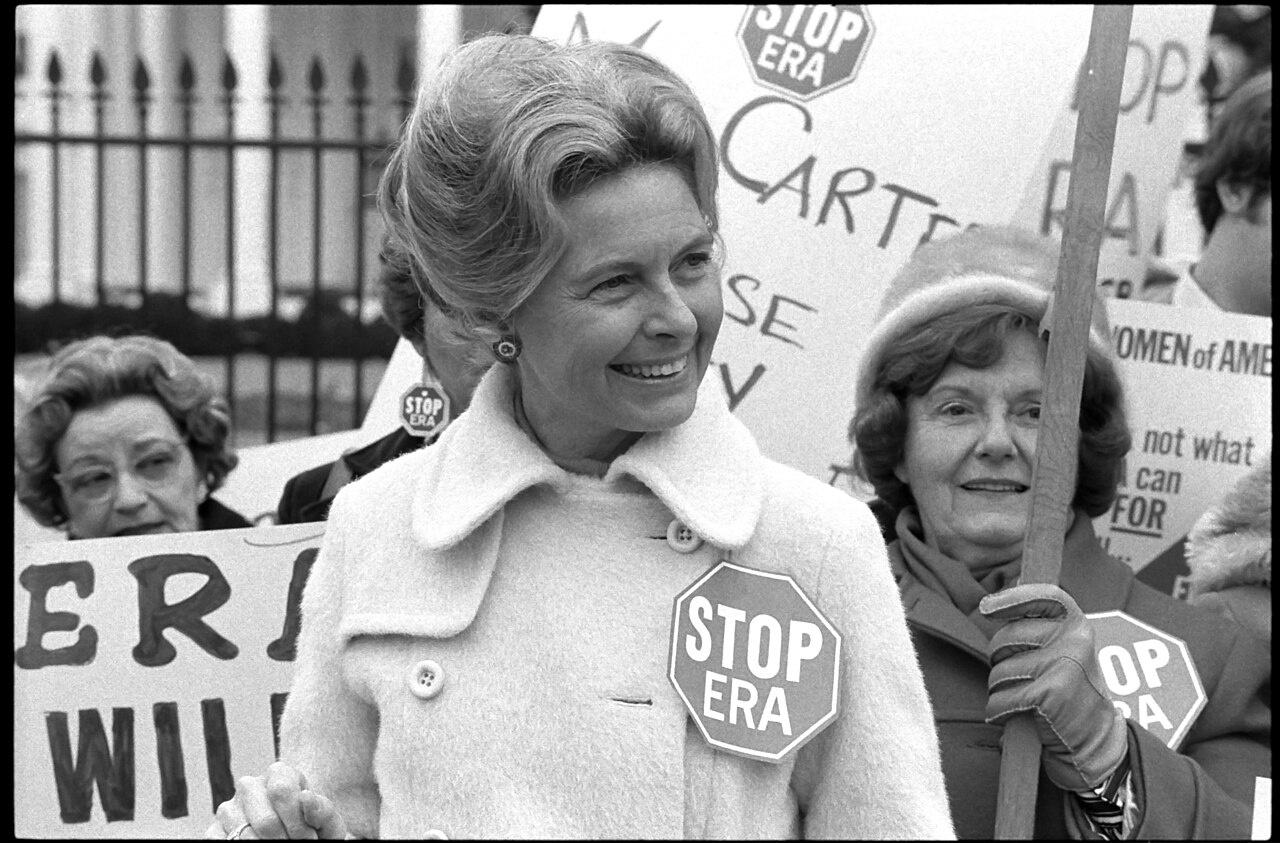
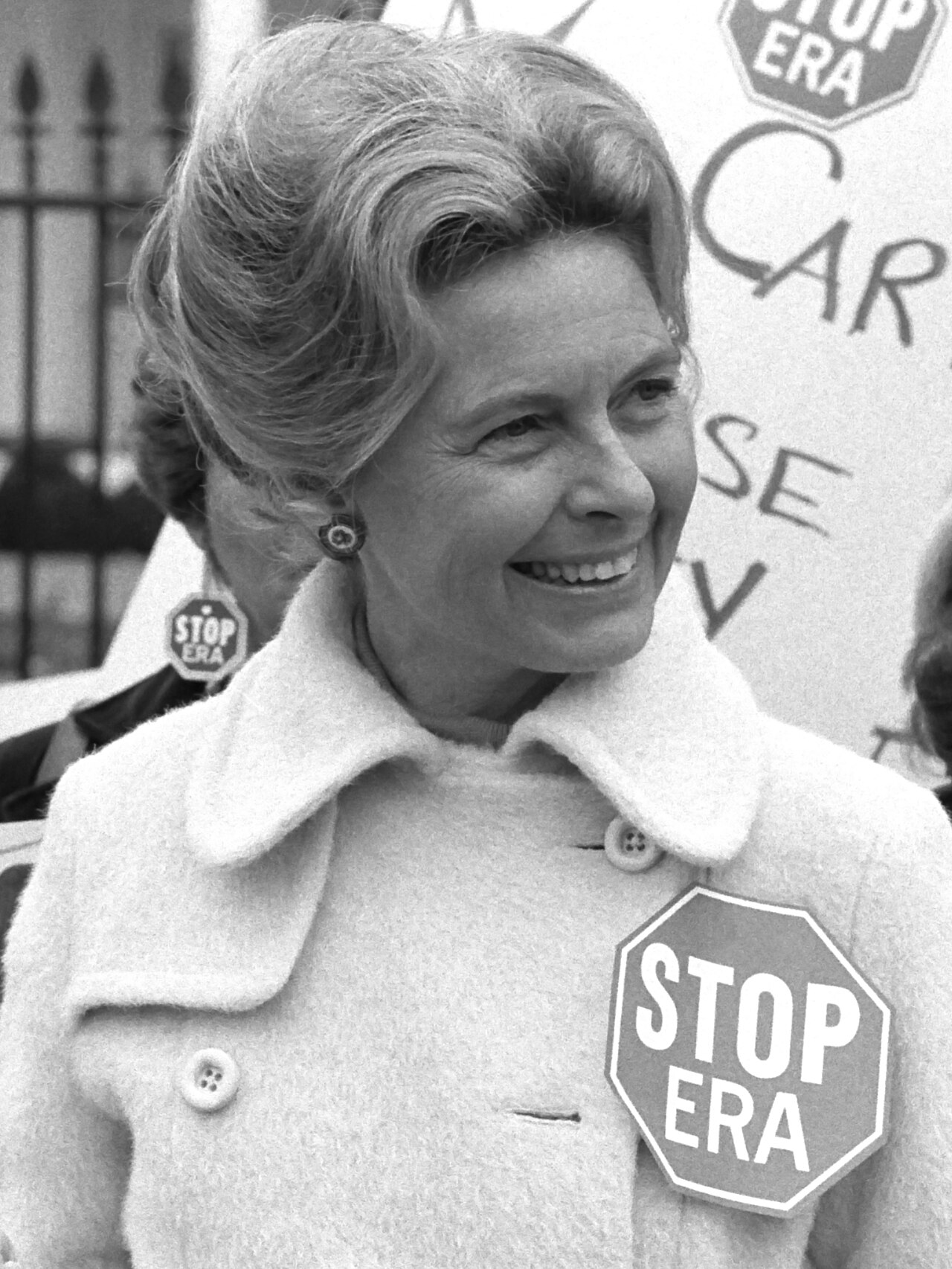
Schlafly also co-authored books on national defense and criticized arms control agreements with the Soviet Union. In 1967, she lost a bid for the presidency of the National Federation of Republican Women to a more moderate candidate. In 1972, she founded the Eagle Forum, a conservative political interest group, serving as its chair and CEO until her death on September 5, 2016. She remained active in conservative causes, opposing feminism, gay rights, and abortion, and campaigning against the Equal Rights Amendment.
- born
- August 15, 1924
- died
- September 5, 2016
- field
- Activism, law, politics
- nationality
- American
- known_for
- Opposition to the Equal Rights Amendment; founding the Eagle Forum; author of A
Verified Timeline
Lore & Background
Phyllis Schlafly was born Phyllis McAlpin Stewart in St. Louis. During the Great Depression, her father faced long-term unemployment beginning in 1932, and her mother worked as a librarian and teacher to support the family. Schlafly attended Maryville College for one year before transferring to Washington University in St. Louis, where she earned a Bachelor of Arts in 1944 and was a member of Phi Beta Kappa. She received a Master of Arts in government from Radcliffe in 1945 and a Juris Doctor from Washington University School of Law in 1978. During World War II, she worked as a ballistics gunner and technician at the largest ammunition plant in the world. Schlafly ran for Congress three times as a Republican in Illinois but lost each general election. She gained national attention in 1964 when more than three million copies of her self-published book A Choice Not an Echo were sold or distributed for free in support of Barry Goldwater's presidential campaign. The book denounced liberal East Coast Republicans personified by Nelson Rockefeller, accusing them of corruption and globalism. She had been a member of the John Birch Society; founder Robert Welch Jr. referred to her as a 'very loyal' member. She later quit and denied she had been a member because she feared her association with the organization would damage her book's reputation. In 1972, she founded the Eagle Forum and began her STOP ERA campaign, arguing that the ERA would take away gender-specific privileges enjoyed by women, including dependent wife benefits under Social Security, separate restrooms for males and females, and exemption from the military draft.
Reader's Guide
Phyllis Schlafly's significance lies in her role as a central figure in the conservative movement and her effective opposition to the Equal Rights Amendment. When she began her campaign in 1972, the ERA had already been ratified by 28 of the required 38 states. Seven more states ratified the amendment after Schlafly began organizing opposition, but another five states rescinded their ratifications. The last state to ratify the ERA was Indiana in January 1977. The Equal Rights Amendment was narrowly defeated, having only achieved ratification in a total 35 states. Political scientist Jane J. Mansbridge concluded that the amendment would likely have been ratified by 1975 or 1976 had it not been for Schlafly's early and effective organizing. Schlafly also organized the Pro-Life, Pro-Family Rally in 1977 as a counter to the National Women's Conference, drawing over 15,000 attendees and announcing the beginning of a pro-family movement. Her legacy includes the enduring influence of the Eagle Forum and her role in shaping modern conservative activism on social issues.
Did You Know?
- More than three million copies of her self-published book A Choice Not an Echo (1964) were sold or distributed for free.
- During World War II, she worked as a ballistics gunner and technician at the largest ammunition plant in the world.
- She earned her Juris Doctor from Washington University School of Law in 1978, more than three decades after her undergraduate degree.
- She attended every Republican National Convention from 1952 until her death in 2016.
- The John Birch Society distributed 300,000 copies of A Choice Not an Echo in California prior to the June 2, 1964, GOP primary.
Roots in St. Louis and a Depression-Shaped Childhood
Phyllis McAlpin Stewart entered the world on August 15, 1924, in St. Louis, into a family with deep Midwestern and Scottish roots. Her great-grandfather Stewart, a Presbyterian, emigrated from Scotland to New York in 1851 and moved westward through Canada before settling in Michigan. Her grandfather, Andrew F. Stewart, was a master mechanic with the Chesapeake & Ohio Railway. Her father, John Bruce Stewart, was a machinist and salesman of industrial equipment, principally for Westinghouse, and was granted a patent in 1944 for a rotary engine. The Great Depression struck the family hard: her father faced long-term unemployment beginning in 1932, and her mother, Odile Stewart (née Dodge), who had previously taught at a private girls' school in St. Louis, returned to work as a librarian and teacher to support the family and maintain Phyllis in a Catholic girls' school. Phyllis had one younger sister, Odile.
Education, Wartime Service, and a Late Law Degree
Schlafly's academic path was steady and ambitious. She began at Maryville College but transferred after a single year to Washington University in St. Louis, where she earned her Bachelor of Arts in 1944 and was recognized as a Phi Beta Kappa member. The following year, after attending Harvard, she completed a Master of Arts in government at Radcliffe. During World War II, she wrote in Strike From Space (1965) that she worked as 'a ballistics gunner and technician at the largest ammunition plant in the world.' She earned her Juris Doctor from the Washington University School of Law in 1978.
A Choice Not an Echo and the Goldwater Campaign
In 1964, Schlafly achieved a level of national visibility that few self-published authors ever reach. Her book A Choice Not an Echo, a polemic in support of Republican candidate Barry Goldwater and condemning more liberal East Coast Republicans personified by Nelson Rockefeller, sold or was distributed free in quantities exceeding three million copies. The book's impact was especially felt in California's winner-take-all Republican primary. Schlafly had earlier been a member of the John Birch Society; founder Robert Welch Jr. called her 'very loyal.' Though she later quit and denied she had been a member because she feared her association with the organization would damage the book's reputation, the Society helped distribute roughly 300,000 copies in California prior to the June 2, 1964, GOP primary. Gardiner Johnson, Republican National Committee for California, stated that the distribution of her book in California was a major factor in Goldwater's winning the nomination. Critics called the book a conspiracy theory about 'secret kingmakers' controlling the Republican Party.
Three Congressional Runs and the Eagle Forum
Schlafly tested the waters of elected office three times, always as a Republican in Illinois's heavily Democratic districts. In 1952 she won the Republican primary over John T. R. Godlewski by 18,793 (61.14%) to 11,943 (38.86%) but lost the general election to incumbent Democrat Charles Melvin Price, winning 63,778 votes (35.20%) to Price's 117,408 votes (64.80%). She was the Republican nominee again in 1960, losing to Price by 144,560 votes (72.22%) to 55,620 (27.79%). In 1970 she lost a bid for Illinois's 23rd congressional district to Democrat George E. Shipley by 91,158 votes (53.97%) to 77,762 (46.04%). After that defeat she never sought public office again. Instead, in 1972 she founded the Eagle Forum, a conservative political interest group, and remained its chair and CEO until her death on September 5, 2016. Through that organization and her broader activism, she campaigned against the Equal Rights Amendment, opposed feminism, gay rights, and abortion, and co-authored books on national defense while criticizing arms-control agreements with the Soviet Union. She attended every Republican National Convention from 1952 onward.
Gallery
Frequently Asked Questions
Who is Phyllis Schlafly?
Phyllis Schlafly (1924–2016) was an American attorney and political activist who rose to national prominence as a leading voice in the conservative movement. She is widely recognized for her opposition to feminism, abortion, and gay rights.
What is Phyllis Schlafly most known for?
Her signature achievement was spearheading a grassroots campaign that successfully blocked the ratification of the Equal Rights Amendment to the U.S. Constitution. This effort made her a defining figure in the modern conservative movement.
What organization did Phyllis Schlafly found?
In 1972 she established the Eagle Forum, a conservative political interest group. She served as its chair and CEO continuously until her death in 2016.
When and how old was Phyllis Schlafly when she died?
She passed away on September 5, 2016, at the age of 92. Her death marked the end of a decades-long public career in law, writing, and political activism.
Why is Phyllis Schlafly considered important in American political history?
She mobilized a broad coalition of suburban women to defeat the ERA and built a lasting institutional voice for conservative causes through the Eagle Forum. Her work helped shape the policy debates around gender, family, and reproductive rights that continue to this day.
More in Activists & Reformers 1-24
Spotted an error? Know more?
This is a living reference — every entry is fact-audited, and reader corrections feed straight into our audit queue. Suggest an edit · See this site's audit record